
Diplomat (Ralph Fiennes) refuses to leave well enough alone in THE CONSTANT GARDENER
THE CONSTANT GARDENER (Fernando Meirelles, 2005)
MoMA Film, Museum of Modern Art
11 West 53rd St. between Fifth & Sixth Aves.
Saturday, May 5, 7:30, and Monday, May 7, 4:30
Series runs through May 20
Tickets: $12, in person only, may be applied to museum admission within thirty days, same-day screenings free with museum admission, available at Film and Media Desk beginning at 9:30 am
212-708-9400
www.moma.org
www.focusfeatures.com
 Fernando Meirelles knows how to make movies. His previous film, the remarkable City of God (2002), was deservedly nominated for an Oscar for Best Foreign Language Film, and he earned a nod for Best Director as well, sending him off to Hollywood for his first English-language effort. The result is this exciting tale of a low-level British diplomat who becomes obsessed with investigating his radical wife’s murder. As he uncovers more and more information, he learns surprising things about his wife — and the British government. Based on John Le Carré’s novel, The Constant Gardener opens with the murder of Tessa Quayle (Rachel Weisz); her husband, Justin (Ralph Fiennes), is a diplomat stationed in Kenya who prefers not to ruffle any feathers. As he is told what might have happened to her, he continues watering his plants, tending to his garden. Tessa’s death is ruled a crime of passion, allegedly committed by a peace worker, Dr. Arnold Bluhm (Hubert Koundé), but Justin believes there’s more to it. He soon finds himself in the middle of a complex conspiracy that puts him in the cross hairs of some very powerful — and dangerous — people. Meirelles alternates between the past and the present, using flashbacks to reveal Justin and Tessa’s complicated, often mysterious relationship. By focusing on the characters instead of the conspiracy, Meirelles has crafted an exciting spy thriller with a heart. Nominated for four Oscars, The Constant Gardener is screening May 5 and 7 at MoMA as part of the series “Focus Features: 10th Anniversary Salute,” which pays tribute to the New York-based distributor responsible for such cutting-edge independent films as Michel Gondry’s Eternal Sunshine of the Spotless Mind, Gus Van Sant’s Milk, Lisa Cholodenko’s The Kids Are All Right, and David Cronenberg’s Eastern Promises, all of which are part of this festival, which runs through May 20.
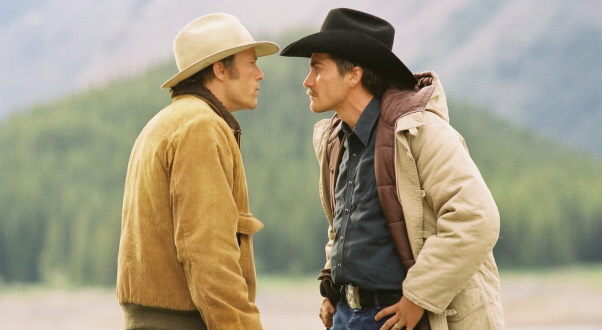
 >In the summer of 1963, two cowboys head up Brokeback Mountain in Wyoming to watch over a herd of sheep. Ennis Del Mar (an outstanding Heath Ledger) and Jack Twist (Jake Gyllenhaal) have never met before, but it doesn’t take long for them to jump into each other’s arms when it gets mighty cold up there. Their brief but powerful affair haunts them when they each return to their lives — Ennis marries his fiancee, Alma (Michelle Williams), and starts a family, while Jack settles down with Lureen (Anne Hathaway) in a clearly loveless relationship. As time moves on, their desperate need to be together only grows stronger — and more dangerous. Based on Annie Proulx’s New Yorker story and directed by Ang Lee (Hulk, The Ice Storm, Crouching Tiger, Hidden Dragon), Brokeback Mountain is an emotional tale of forbidden love that will break your heart. However, it’s not quite as great as you’ve heard; Ennis and Jack’s physical relationship starts way too soon, without enough buildup, and Lee doesn’t quite know how to end it (it’s at least twenty minutes too long). But he gets one heckuva wrenching performance from Ledger as a tough man afraid to let go of traditional values and follow his dreams. Brokeback Mountain is screening May 3 and 6 at MoMA as part of the series “Focus Features: 10th Anniversary Salute,” which pays tribute to the New York-based distributor responsible for such cutting-edge independent films as Michel Gondry’s Eternal Sunshine of the Spotless Mind, Gus Van Sant’s Milk, Lisa Cholodenko’s The Kids Are All Right, and David Cronenberg’s Eastern Promises, all of which are part of this festival, which runs May 3-20. The May 3 screening of Brokeback Mountain will be followed by a Q&A by longtime Lee producer and Focus Features CEO James Schamus.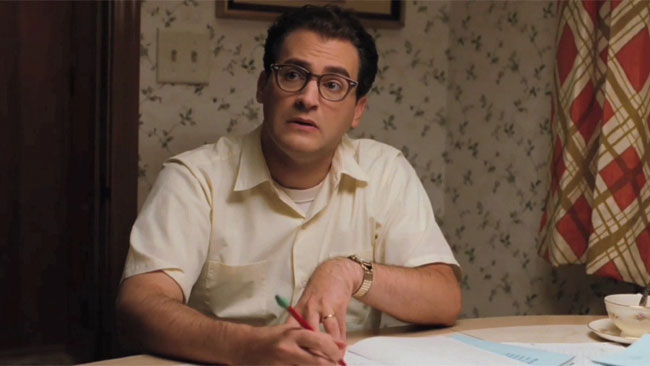
 The Coen brothers take their unique brand of dry, black comedy to a whole new level with A Serious Man. Poor Larry Gopnik (a remarkably even-keeled Michael Stuhlbarg) just keeps getting dumped on: His wife, Judith (Sari Lennick), wants to leave him for, of all people, touchy-feely Sy Ableman (Fred Melamed); his brother, Arthur (Richard Kind), keeps hogging the bathroom so he can drain his cyst; his son, Danny (Aaron Wolf), won’t stop complaining that F-Troop isn’t coming in clearly and is constantly on the run from the school drug dealer (Jon Kaminsky Jr.); his daughter, Sarah (Jessica McManus), wants to get a nose job; one of his students (David Kang) has bribed him for a passing grade; his possible tenure appears to be in jeopardy; and he gets no help at all from a series of funnier and funnier rabbis. But Larry keeps on keepin’ on in the Jewish suburbs of Minnesota in 1967, trying to make a go of it as his woes pile higher and higher. Joel and Ethan Coen have crafted one of their best tales yet, nailing the look and feel of the era, from Hebrew school to Bar Mitzvah practice, from office jobs to parking lots, from the Columbia Record Club to transistor radios, from television antennas to the naked neighbor next door. The Coens get so many things right, you won’t mind the handful of mistakes in the film, and because it’s the Coens, who’s to say at least some of those errors weren’t intentional? A Serious Man is a seriously great film, made by a pair of seriously great filmmakers. And while you don’t have to be Jewish and from Minnesota to fall in love with it, it sure can’t hurt. A Serious Man is screening May 3 and 4 at MoMA as part of the series “Focus Features: 10th Anniversary Salute,” which pays tribute to the New York-based distributor responsible for such cutting-edge breakthrough independent films as Ang Lee’s Brokeback Mountain, Fernando Meirelles’s The Constant Gardener, Roman Polanski’s The Pianist, and Sofia Coppola’s Lost in Translation, all of which are part of this festival, which runs May 3-20.
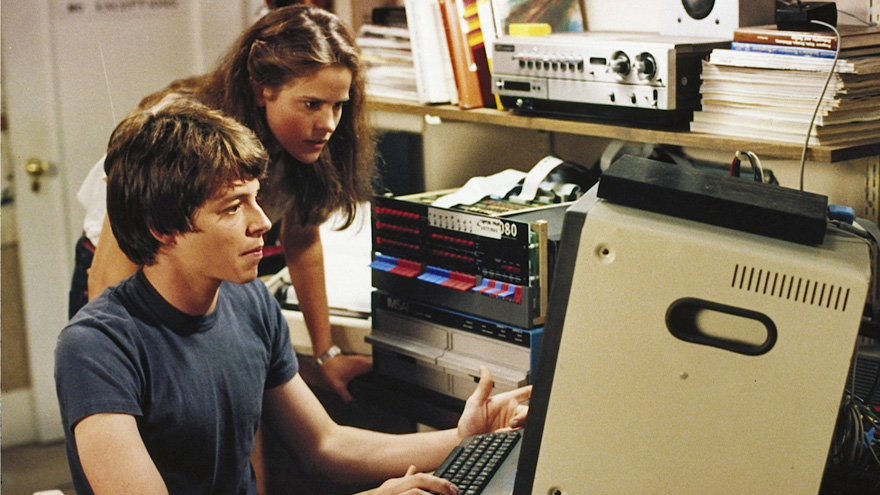
 Everyone has a few movies that they can’t turn off when they find it playing on cable. For us, John Badham’s 1983 computer thriller, WarGames, is one of those flicks. Matthew Broderick stars as David Lightman, a Seattle high school techno-geek who spends most of his time goofing around on his desktop computer. When his extremely cute classmate Jennifer Mack (Ally Sheedy) comes over, he impresses her with his mad skills, first adjusting their grades, then battling a talking computer in a pleasant game of thermonuclear war, and finally booking a trip to Europe. Unfortunately, it turns out David accidentally hacked into the Air Force’s WOPR defense system at NORAD, and soon he and Jennifer are on the run, trying to escape the grasp of blowhard Dr. John McKittrick (Dabney Coleman), who is sure they are enemy spies. As General Beringer (Barry Corbin) keeps lowering the DEFCON level, it becomes more than possible that the world might actually be on the brink of WWIII, all because of what started out as a friendly game of chess. Broderick and Sheedy are absolutely adorable in the lead roles, growing closer and closer as danger lurks around every corner, but it’s Corbin who gets most of the memorable lines, including the classic, “Hell, I’d piss on a spark plug if I thought it’d do any good.” WarGames is having a special twentieth-anniversary screening at the Tribeca Film Festival on April 28 at 1:30, followed by a panel discussion with director Badham, star Sheedy, bitcoin developer Gavin Andresen, retired Air Force intelligence officer Major William Casebeer, and hacker and futurist Pablos Holman, moderated by Craig Hatkoff.