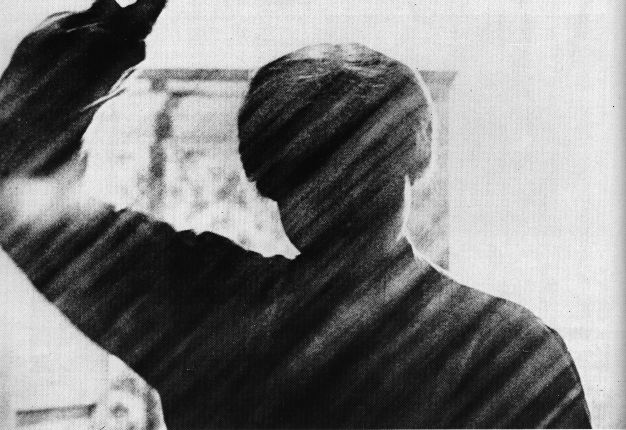
“It’s not like my mother is a maniac or a raving thing. She just goes a little mad sometimes. We all go a little mad sometimes. Haven’t you?”
Friday, June 1 Films on the Green: OSS 117: Cairo Nest of Spies (Michel Hazanavicius, 2006), Cedar Hill, Central Park
Friday, June 8 Films on the Green: The Snows of Kilimanjaro (Robert Guédiguian, 2011), Washington Square Park
Saturday, June 9 City Parks Foundation: Brooklyn Boheme (Diane Paragas & Nelson George, 2011) and live performance by Talib Kweli and his band, Herbert Von King Park, 7:00
Friday, June 15 Films on the Green: War of the Buttons (Yves Robert, 1962), Washington Square Park
Monday, June 18 Bryant Park Summer Film Festival: Psycho (Alfred Hitchcock, 1960), Bryant Park Lawn
Monday, June 18 Movie Nights on the Elevated Acre: Stella Days (Thaddeus O’Sullivan, 2011), 55 Water St.
Friday, June 22 Films on the Green: The Axe (Costa-Gavras, 2005), Tompkins Square Park
Saturday, June 23 Tropfest New York, hosted by Hugh Jackman, advance registration required, Bryant Park, 3:00 – 11:00
Saturday, June 23 Movies in the Park: Hugo (Martin Scorsese, 2011), Frederick B Judge Playground
Monday, June 25 Bryant Park Summer Film Festival: Butch Cassidy and the Sundance Kid (George Roy Hill, 1969), Bryant Park Lawn
Monday, June 25 Movie Nights on the Elevated Acre: Collaborator (Martin Donovan, 2011), 55 Water St.
Friday, June 29 Films on the Green: Donkey Skin (Jacques Demy, 1970), Tompkins Square Park
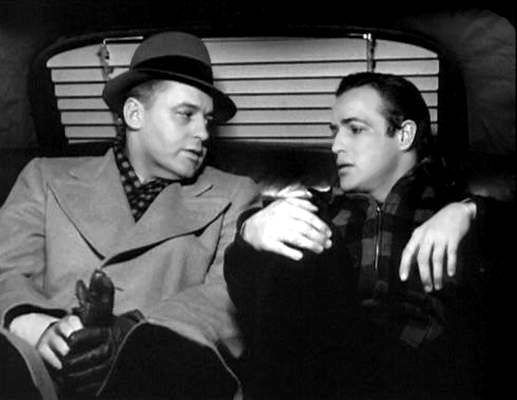
“So what happens? He gets the title shot outdoors in the ballpark and what do I get? A one-way ticket to Palookaville.”
Monday, July 2 Bryant Park Summer Film Festival: The Wizard of Oz (Victor Fleming, 1939), Bryant Park Lawn
Monday, July 2 Rooftop Films — Coney Island Flicks on the Beach: Ghostbusters (Ivan Reitman, 1984), 3059 West 12th St., music at 7:00, film at 8:30
Monday, July 2 Movie Nights on the Elevated Acre: The Runway (Ian Power, 2011), 55 Water St.
Wednesday, July 4 Outdoor Cinema: The American Experience: United States, with live music by Dustin Wong and Arturo en el Barco and Kansas City style BBQ from John Brown Smokehouse, Socrates Sculpture Park
Thursday, July 5 Films in Tompkins: Exit Through the Gift Shop (Banksy, 2010), with Church of Betty, Tompkins Square Park
Thursday, July 5 Syfy Movies with a View: E.T.: The Extra-Terrestrial (Steven Spielberg, 1982) and CatCam (Seth Keal), with DJ Ayres, Brooklyn Bridge Park
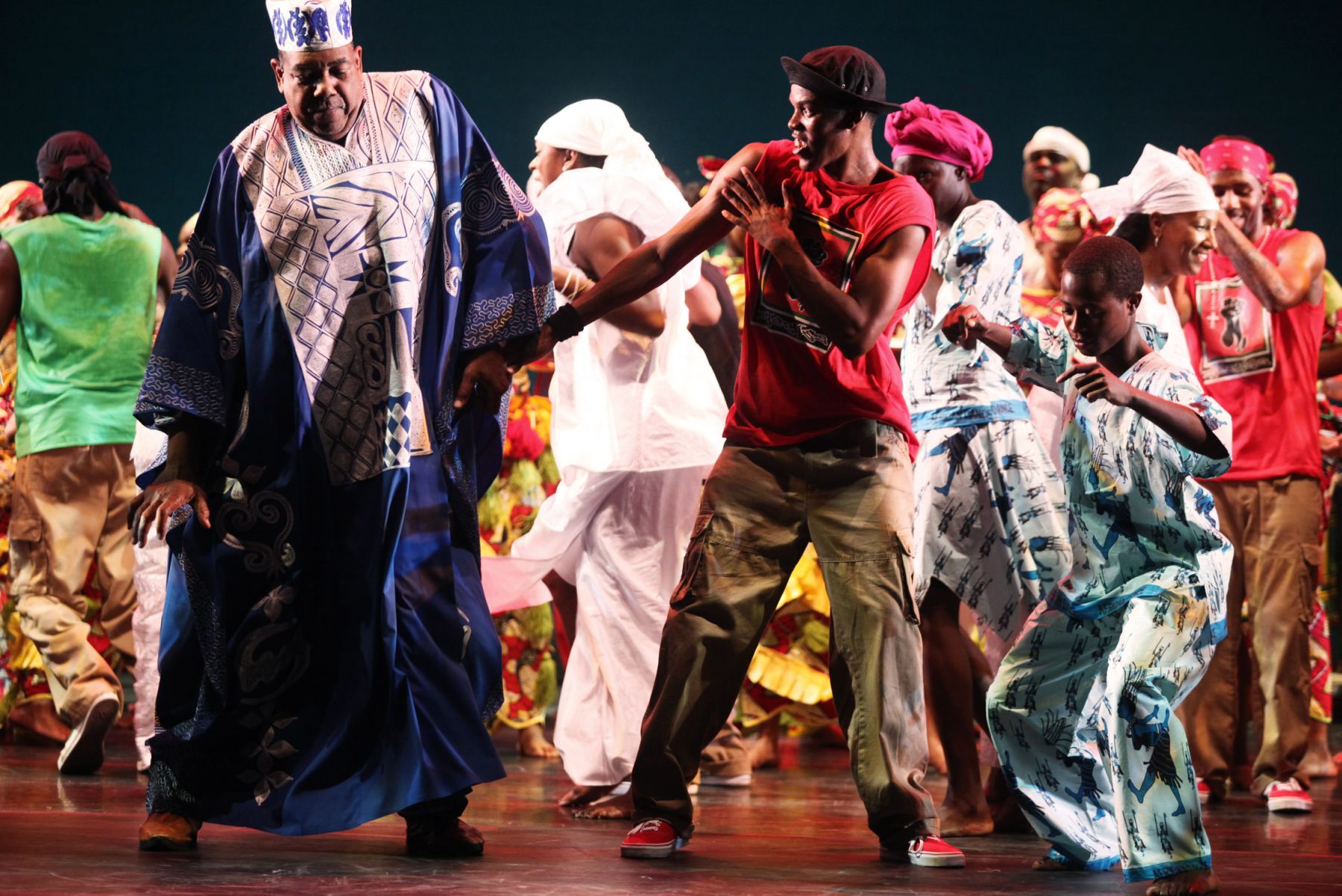
Friday, July 6 Passport Fridays: Haiti, with dance by ASE Dance Theatre Collective, music by DJA-Rara, and screening of When the Drum Is Beating (Whitney Dow, 2011), Queens Museum
Friday, July 6 Rooftop Films: New York Filmmakers Shorts Program, Brooklyn Metrotech Commons, music at 8:30, film at 9:00
Friday, July 6 Films on the Green: Tell No One (Guillaume Canet, 2006), Riverside Park, Pier 1 at 70th St.
Monday, July 9 Rooftop Films — Coney Island Flicks on the Beach: Edge of the City: Underground NY Shorts by the Sea, 3059 West 12th St., music at 7:00, film at 8:30
Monday, July 9 Bryant Park Summer Film Festival: On the Waterfront (Elia Kazan, 1954), Bryant Park Lawn
Monday, July 9 Movie Nights on the Elevated Acre: Side by Side (Daniel Johnson, 2011), 55 Water St.
Tuesday, July 10 Red Hook Flicks: The Lost Boys (Joel Schumacher, 1987), Valentino Pier
Wednesday, July 11 Outdoor Cinema: Soul Kitchen (Fatih Akin, 2009), with live music and ethnic food, Socrates Sculpture Park
Wednesday, July 11 SummerScreen: Cruel Intentions (Roger Kumble, 1999), McCarren Park
Wednesday, July 11 River Flicks for Grown-Ups: Moneyball (Bennett Miller, 2011), Hudson River Park, Pier 63
Wednesday, July 11 Movies Under the Stars: Cinema Paradiso (Giuseppe Tornatore, 1988), Riverside Park, Pier 1 at 70th St.
Thursday, July 12 Films in Tompkins: Fantastic Mr. Fox (Wes Anderson, 2009), with Dandy Wellington, Tompkins Square Park
Thursday, July 12 Syfy Movies with a View: To Kill A Mockingbird (Robert Mulligan, 1962) and Eye on the Stars (Rauch Brothers), with DJ $mall Change, Brooklyn Bridge Park
Friday, July 13 Passport Fridays: México, with music by Las Cafeteras and screening of Alamar (Pedro González-Rubio, 2009), Queens Museum
Friday, July 13 River Flicks for Kids: Kung Fu Panda 2 (Jennifer Yuh, 2011), Hudson River Park, Pier 46
Friday, July 13 Films on the Green: Persepolis (Vincent Paronnaud & Marjane Satrapi, 2007), Riverside Park, Pier 1 at 70th St.
Friday, July 13 Summer Movie Series: Spider-Man (Sam Raimi, 2002), Intrepid Sea, Air & Space Museum
Saturday, July 14 Rooftop Films — Coney Island Flicks on the Beach: Bound for Glory (Hal Ashby, 1976), 3059 West 12th St., music at 7:00, film at 8:30
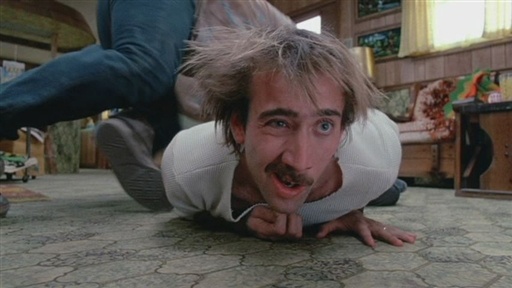
“Edwina’s insides were a rocky place where my seed could find no purchase.”
Monday, July 16 Rooftop Films — Coney Island Flicks on the Beach: Manhattan (Woody Allen, 1979), 3059 West 12th St., music at 7:00, film at 8:30
Monday, July 16 Bryant Park Summer Film Festival: Roman Holiday (William Wyler, 1953), Bryant Park Lawn
Tuesday, July 17 Red Hook Flicks: Tremors (Ron Underwood, 1990), Valentino Pier
Wednesday, July 18 [CANCELED DUE TO WEATHER CONDITIONS] Outdoor Cinema: Lemonade Joe (Oldrich Lipský, 1964), with live music and ethnic food, Socrates Sculpture Park
Wednesday, July 18 SummerScreen: Raising Arizona (Joel & Ethan Coen, 1987), McCarren Park
Wednesday, July 18 River Flicks for Grown-Ups: Super 8 (J. J. Abrams, 2011), Hudson River Park, Pier 63
Wednesday, July 18 Movies Under the Stars: The Flying Scotsman (Douglas Mackinnon, 2006), Riverside Park, Pier 1 at 70th St.
Thursday, July 19 Films in Tompkins: Summer of Sam (Spike Lee, 1999), with the Debonairs and Brendan O’Hara, Tompkins Square Park
Thursday, July 19 Syfy Movies with a View: Slumdog Millionaire (Danny Boyle, 2008) and Odysseus’ Gambit (Àlex Lorca Cercos), with DJ Emch Subatomic, Brooklyn Bridge Park
Friday, July 20 River Flicks for Kids: Superman: The Movie (Richard Donner, 1978), Hudson River Park, Pier 46
Friday, July 20 Rooftop Films: Coming Home Shorts Program, Brooklyn Metrotech Commons, music at 8:30, film at 9:00
Friday, July 20 Passport Fridays: Cuba, with dance and music by Oyu Oro and screening of Suite Habana (Fernando Pérez, 2003), Queens Museum
Friday, July 20 Summer Movie Series: Star Trek (J. J. Abrams, 2009), Intrepid Sea, Air & Space Museum
Monday, July 23 Rooftop Films — Coney Island Flicks on the Beach: The Muppets (James Bobbin, 2011), 3059 West 12th St., music at 7:00, film at 8:30
Monday, July 23 Bryant Park Summer Film Festival: The Maltese Falcon (John Huston, 1941), Bryant Park Lawn
Tuesday, July 24 Red Hook Flicks: How to Train Your Dragon (Dean DeBlois & Chris Sanders, 2010), Valentino Pier
Tuesday, July 24 Rooftop Films: The Waiting Room (Peter Nicks, 2012), Dag Hammarskjold Plaza, Second Ave. at 47th St.
Wednesday, July 25 Outdoor Cinema: Her Master’s Voice (Nina Conti, 2012), with live music and ethnic food, Socrates Sculpture Park
Wednesday, July 25 SummerScreen: Dirty Dancing (Emile Ardolino, 1987), McCarren Park
Wednesday, July 25 River Flicks for Grown-Ups: Bridesmaids (Paul Feig, 2011), Hudson River Park, Pier 63
Wednesday, July 25 Movies Under the Stars: Quicksilver (Thomas Michael Donnelly, 1986), Riverside Park, Pier 1 at 70th St.
Thursday, July 26 Films in Tompkins: Goldfinger (Guy Hamilton, 1964), with the Luddites, Tompkins Square Park
Thursday, July 26 Syfy Movies with a View: Clueless (Amy Heckerling, 1995) and Once It Started It Could Not End Otherwise (Kelly Sears), with DJ Ronin, Brooklyn Bridge Park
Friday, July 27 River Flicks for Kids: Hugo (Martin Scorsese, 2011), Hudson River Park, Pier 46
Friday, July 27 Passport Fridays: Egypt, with dance and music by Egyptian Celebration Company and screening of Microphone (Ahmad Abdalla, 2010), Queens Museum
Friday, July 27 Summer Movie Series: The Muppets (James Bobin, 2011), Intrepid Sea, Air & Space Museum
Sunday, July 29 City Parks Foundation: Africa United (Debs Paterson, 2010) and live performances by Taj Weekes & Adowa, Shine & the Moonbeams, and Randolph Mathews, Springfield Park, 7:00
Monday, July 30 Rooftop Films — Coney Island Flicks on the Beach: Girl Walk / All Day, 3059 West 12th St., music at 7:00, film at 8:30
Monday, July 30 Bryant Park Summer Film Festival: Rebel Without a Cause (Nicholas Ray, 1955), Bryant Park Lawn
Tuesday, July 31 Red Hook Flicks: Alien (Ridley Scott, 1979), Valentino Pier
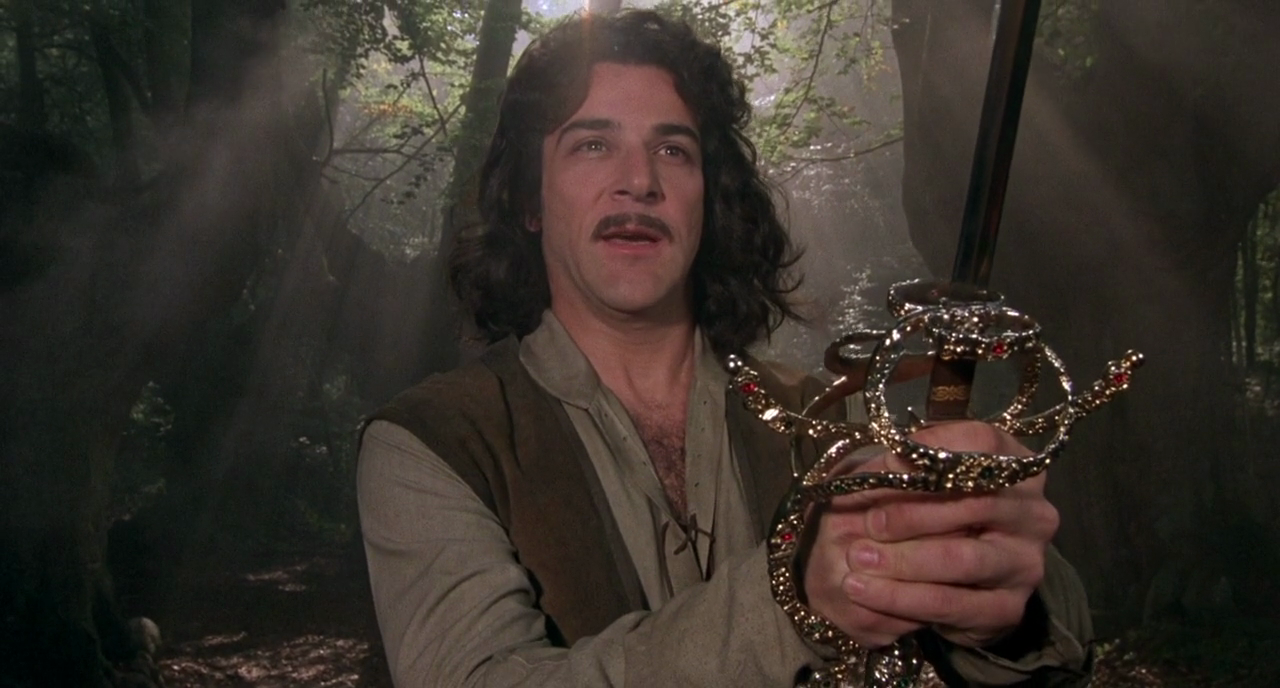
“My name is Inigo Montoya. You killed my father. Prepare to die.”
Wednesday, August 1 Outdoor Cinema: Senna (Asif Kapadia, 2010), with live music and ethnic food, Socrates Sculpture Park
Wednesday, August 1 SummerScreen: The Princess Bride (Rob Reiner, 1987), McCarren Park
Wednesday, August 1 River Flicks for Grown-Ups: Limitless (Neil Burger, 2011), Hudson River Park, Pier 63
Wednesday, August 1 Movies Under the Stars: Amélie (Jean-Pierre Jeunet, 2001), Riverside Park, Pier 1 at 70th St.
Thursday, August 2 Syfy Movies with a View: Wet Hot American Summer (david Wain, 2011) and Summer Bummer (Bill Plympton), with DJ Conquerrah, Brooklyn Bridge Park
Thursday, August 2 Films in Tompkins: Donnie Darko (Richard Kelly, 2001), with the Rad Trads and free Two Boots pizza, Tompkins Square Park
Thursday, August 2 Celebrate Brooklyn! Music & Movies: Romeo and Juliet (Franco Zeffirelli, 1968) and the Love Show, Prospect Park Bandshell, 7:30
Friday, August 3 River Flicks for Kids: Puss in Boots (Chris Miller, 2011), Hudson River Park, Pier 46
Friday, August 3 Rooftop Films: Inocente (Sean Fine) and Burt Talks to the Bees (Isabella Rossellini), Brooklyn Metrotech Commons, music at 8:30, film at 9:00
Friday, August 3 Summer Movie Series: Jurassic Park (Steven Spielberg, 1993), Intrepid Sea, Air & Space Museum
Friday, August 3 Passport Fridays: West Indies, with dance by Something Positive, music by Village Drums of Freedom, and screening of Fire in Babylon (Stevan Riley, 2011), Queens Museum
Monday, August 6 Rooftop Films — Coney Island Flicks on the Beach: Mission: Impossible — Ghost Protocol (Brad Bird, 2011), 3059 West 12th St., music at 7:00, film at 8:30
Monday, August 6 Bryant Park Summer Film Festival: The Adventures of Robin Hood (Michael Curtiz, 1938), Bryant Park Lawn
Tuesday, August 7 Red Hook Flicks: Zombieland (Ruben Fleischer, 2009), Valentino Pier
Wednesday, August 8 Outdoor Cinema: Summer Wars (Mamoru Hosoda, 2009), with live music and ethnic food, Socrates Sculpture Park
Wednesday, August 8 SummerScreen: Top Gun (Tony Scott, 1986), McCarren Park
Wednesday, August 8 River Flicks for Grown-Ups: Cowboys & Aliens (Jon Favreau, 2011), Hudson River Park, Pier 63
Wednesday, August 8 Movies Under the Stars: Pee Wee’s Big Adventure (Tim Burton, 1985), Riverside Park, Pier 1 at 70th St.
Thursday, August 9 Syfy Movies with a View: Barefoot in the Park (Gene Saks, 1967) and Love Competition (Brent Hoff), with DJ Lupe Loop, Brooklyn Bridge Park
Thursday, August 9 Films in Tompkins: The Big Lebowski (Joel Coen, 1998), with Main Squeeze Orchestra and free Two Boots pizza, Tompkins Square Park
Friday, August 10 River Flicks for Kids: Rango (Gore Verbinski, 2011), Hudson River Park, Pier 46
Friday, August 10 Passport Fridays: Taiwan, with dance by Nai-Ni Chen Dance Company, music by Taiwanese Music Ensemble of New York, and screening of Fishing Luck (Wen-chen Tseng, 2005), Queens Museum
Sunday, August 12 City Parks Foundation: Doin’ it in the Park: Pick-Up Basketball, NYC (Bobbito Garcia & Kevin Couliau, 2012), with live performances by YERBABUENA and DJ Bobbito Garcia a.k.a. Kool Bob Love, Marcus Garvey Park, 7:00
Monday, August 13 Bryant Park Summer Film Festival: All About Eve (Joseph L. Mankiewicz, 1950), Bryant Park Lawn
Monday, August 13 Movie Night in Astoria Park: Cars (John Lasseter & Joe Ranft, 2006), Astoria Park
Tuesday, August 14 Movies Under the Bridge: Dolphin Tale (Charles Martin Smith, 2011), Little Bay Park
Tuesday, August 14 SummerStage: Come Back Africa (Lionel Rogosin, 1959), with live performances by Goapele and Yolanda Zama, Rumsey Playfield, Central Park, 7:00
Tuesday, August 14 Red Hook Flicks: Blade (Stephen Norrington, 1998), Valentino Pier
Wednesday, August 15 Outdoor Cinema: Certified Copy (Abbas Kiarostami, 2010), with live music and ethnic food, Socrates Sculpture Park
Wednesday, August 15 NYC Parks Summer Movie Series: Judy Moody and the Not Bummer Summer (John Schultz, 2011), Bloomingdale Park
Wednesday, August 15 SummerScreen: Audience Pick: Empire Records (Allan Moyle, 1995), with music by Ducktails, McCarren Park
Wednesday, August 15 River Flicks for Grown-Ups: Crazy, Stupid Love (Glenn Ficarra, 2011), Hudson River Park, Pier 63
Wednesday, August 15 Movies Under the Stars: Triplets of Belleville (Sylvain Chomet, 2003), Riverside Park, Pier 1 at 70th St.
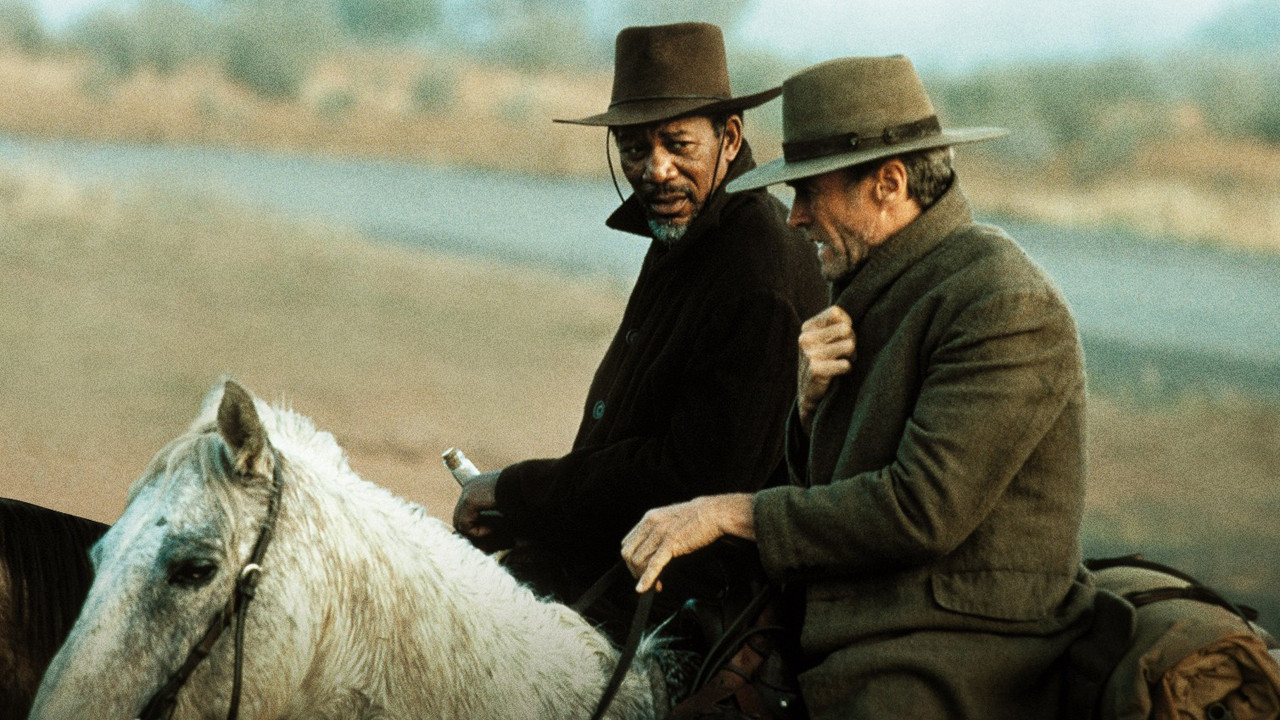
“That’s right. I’m just a fella now. I ain’t no different than anyone else no more.”
Thursday, August 16 Syfy Movies with a View: The Big Chill (Lawrence Kasdan, 1983) and Aquadettes (Drea Cooper and Zack Canepari), with DJ Hahn Solo, Brooklyn Bridge Park
Thursday, August 16 Films in Tompkins: Poltergeist (Tobe Hooper, 1982), with Timbila, Tompkins Square Park
Friday, August 17 River Flicks for Kids: Back to the Future (Robert Zemeckis, 1985), Hudson River Park, Pier 46
Friday, August 17 Summer Movie Series: The Goonies (Richard Donner, 1985), Intrepid Sea, Air & Space Museum
Friday, August 17 Passport Fridays: Dominican Republic, with music by Irka & the Women of Fire and Los Calientes and screening of Louis Vargas: Santo Domingo Blues (Alex Wolfe, 2004), Queens Museum
Monday, August 20 Bryant Park Summer Film Festival: Raiders of the Lost Ark (Steven Spielberg, 1981), Bryant Park Lawn
Monday, August 20 Movie Night in Astoria Park: Thunder Soul (Mark Landsman, 2010), Astoria Park
Tuesday, August 21 Red Hook Flicks: E.T. The Extra-Terrestrial (Stevevn Spielberg, 1982), Valentino Pier
Tuesday, August 21 Central Park Conservancy Film Festival: Do the Right Thing (Spike Lee, 1989), introduced by Danny Aiello, Central Park landscape north of Sheep Meadow
Tuesday, August 21 Movies Under the Bridge: The Adventures of Tin Tin (Steven Spielberg, 2011), Little Bay Park
Wednesday, August 22 SummerScreen: Raising Arizona (Joel Coen, 1987), with music by Tin Harrington and Dustin Wong, McCarren Park
Wednesday, August 22 Outdoor Cinema: Spring, Summer, Fall, Winter . . . Spring (Kilm Ki-duk, 2003), with live music and ethnic food, Socrates Sculpture Park
Wednesday, August 22 Central Park Conservancy Film Festival: Pee Wee’s Big Adventure (Tim Burton, 1985), Central Park landscape north of Sheep Meadow
Wednesday, August 22 River Flicks for Grown-Ups: Horrible Bosses (Seth Gordon, 2011), Hudson River Park, Pier 63
Thursday, August 23 Syfy Movies with a View: Unforgiven (Clint Eastwood, 1992) and The Hunter (Marieka Walsh), with DJ Geko Jones, Brooklyn Bridge Park
Thursday, August 23 Central Park Conservancy Film Festival: The Big Lebowski (Joel Coen, 1988), Central Park landscape north of Sheep Meadow
Friday, August 24 River Flicks for Kids: The Smurfs (Raja Gosnell, 2011), Hudson River Park, Pier 46
Friday, August 24 Central Park Conservancy Film Festival: Animal House (John Landis, 1978), Central Park landscape north of Sheep Meadow
Friday, August 24 Passport Fridays: Puerto Rico, with dance by Bombazo Dance Company, music by Orquesta Rovira, and screening of Cayo (Vicente Juarbe, 2005), Queens Museum
Saturday, August 25 Central Park Conservancy Film Festival: Viewers’ Choice: Coming to America (John Landis, 1988) or Clerks (Kevin Smith, 1994), Central Park landscape north of Sheep Meadow
Monday, August 27 Movie Night in Astoria Park: Footloose (Herbert Ross, 1984), Astoria Park
Tuesday, August 28 Red Hook Flicks: Young Frankenstein (Mel Brooks, 1974), Valentino Pier
Thursday, August 30 Syfy Movies with a View: Public Vote, with DJ Ripley, Brooklyn Bridge Park
Friday, September 6 Films on the Green: Jules and Jim (François Truffaut, 1962), Columbia University, Low Library steps
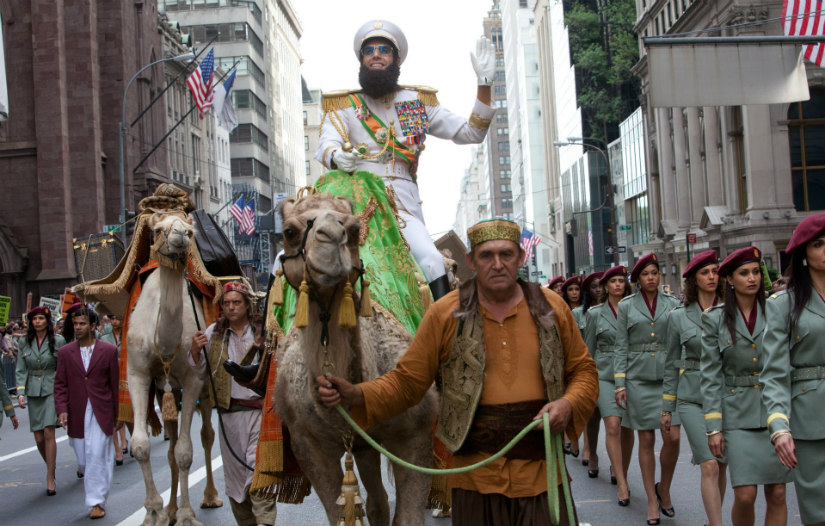
 Actor and writer Sacha Baron Cohen creates indelible, outrageous characters that go where no one has gone before. Starting out with the hip-hop prankster Ali G and continuing with Kazakh journalist Borat and Austrian fashion reporter Brüno, Baron Cohen has skewered the sociopolitical scene, religion, and everything else that lies in his hysterical path. In his latest film, The Dictator, he plays Admiral General Hafez Aladeen, the Supreme Leader of the fictional North African nation of Wadiya. Obsessed with sex and celebrities ― and sex with celebrities ― Aladeen, who has ruled the desert country since he was a child, is determined that it not become a democracy. When he arrives in New York to give a speech about the future of Wadiya to the United Nations, he is kidnapped by a Secret Service agent (John C. Reilly) and replaced by a ditzy double who will do the bidding of his longtime right-hand man, the greedy and power-hungry Tamir (Sir Ben Kingsley). Soon Aladeen is working in a Park Slope food coop for radical feminist Zoey (Anna Faris) and plotting to regain his throne and protect his reign. Influenced by such classic sociopolitical comedies as Woody Allen’s Bananas and Charlie Chaplin’s The Great Dictator, Baron Cohen and director Larry Charles (Borat: Cultural Learnings of America for Make Benefit Glorious Nation of Kazakhstan, Brüno) serve up far fewer hits than misses in The Dictator, but there are still more than enough belly laughs and clever jokes to make the film work. Charles and Baron Cohen are by now expert at turning racism, anti-Semitism, sexism, religious fundamentalism, capitalism, and other isms inside out in riotous ways, never hesitating to cross a line to make their point ― and try to get a laugh in the meantime. Though often too silly for its own good, The Dictator saves itself with a grand finale that one-ups even Chaplin. The excellent soundtrack includes Arabic versions of songs by REM and Al Green, while the film features all-star cameos by Megan Fox, Edward Norton, Chris Elliott, Fred Armisen, J. B. Smoove, Aasif Mandvi, Chris Parnell, and others.
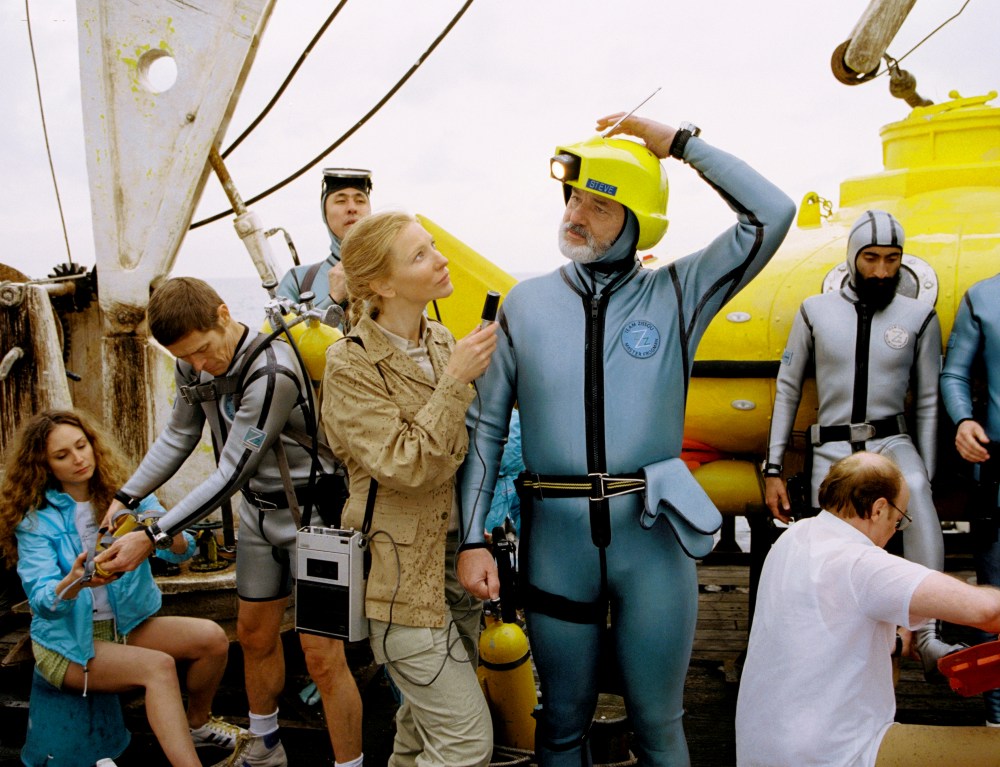
 Wes Anderson’s fourth film, following Bottle Rocket, Rushmore, and The Royal Tenenbaums, is, once again, zany, unique, offbeat, and creative, although in this case the sum of the parts do not add up to a worthwhile whole. Bill Murray stars as Steve Zissou, a minor-league Jacques Cousteau type who has been making cult underwater documentaries for years, but his last adventure could turn out to be his final one in more ways than one. His crew includes longtime right-hand man Klaus Daimler (Willem Dafoe), who is jealous of the new guy in Steve’s life, a pipe-smoking Kentucky pilot who might be his son (Owen Wilson); a pregnant reporter profiling Steve for an oceanography magazine (Cate Blanchett); a Brazilian safety expert who has a fondness for playing acoustic versions of David Bowie songs in Portuguese (Seu Jorge); the bond company stooge protecting his company’s investment (Bud Cort); and Zissouss mad producer (Michael Gambon), among others. There’s also wealthy rival Alistair Hennessey (Jeff Goldblum), who used to be married to Zissou’s wife Eleanor (Anjelica Huston). After Zissou’s best friend, Esteban (Seymour Cassel), gets eaten supposedly by the rare “jaguar shark,” Zissou goes on a personal mission of underwater vengeance that is just too dry for its own good. Henry Selick (The Nightmare Before Christmas) did the stop-motion animation of the sea creatures. The Life Aquatic with Steve Zissou is screening May 26-27 as part of the Museum of the Moving Image retrospective “Wes Anderson’s Worlds,” being held in conjunction with the opening of Anderson’s latest, Moonrise Kingdom, which hits theaters May 25.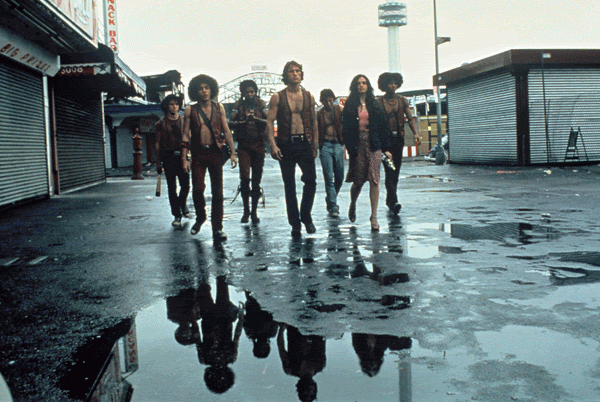
 At a huge gang meeting in the Bronx (actually shot in Riverside Park), the Warriors are wrongly accused of having killed Cyrus (Roger Hill), an outspoken leader trying to band all the warring factions together to form one huge force that can take over the New York City borough by borough. The Warriors then must make it back to their home turf, Coney Island, with every gang in New York lying in wait for them to pass through their territory. This iconic New York City gang movie is based on Sol Yurick’s novel, which in turn is loosely based on Xenophon’s Anabasis, which told of the ancient Greeks’ retreat from Persia. Michael Beck stars as Swan, who becomes the de-facto leader of the Warriors after Cleon (Dorsey Wright) gets taken down early. Battling Swan for control is Ajax (Dexter’s James Remar) and tough-talking Mercy (Too Close for Comfort’s Deborah Van Valkenburgh). Serving as a Greek chorus is Lynne (Law & Order) Thigpen as a radio DJ, and, yes, that young woman out too late in Central Park is eventual Oscar winner Mercedes Ruehl. Among the cartoony gangs of New York who try to stop the Warriors are the roller-skating Punks, the pathetic Orphans, the militaristic Gramercy Riffs, the all-girl Lizzies, the ragtag Rogues, and the inimitable Baseball Furies. Another main character is the New York City subway system. The Warriors is a gritty, tense, violent, funny, romantic, wholly absorbing movie, a brutal yet tender tale that will quickly work its way into your heart. The Warriors is screening May 25-27 as part of the IFC Center’s Wild Hill: Walter Hill at Midnight series, celebrating the career of the director of such films as 48 Hrs., Streets of Fire, and The Long Riders. The IFC Center will also be showing Hill’s underrated bare-knuckle drama Hard Times, with James Coburn and Charles Bronson, on June 1-2, followed on June 8-9 by the Hill-scripted Hickey & Boggs, starring Bill Cosby and Robert Culp (who directed the film), and June 15-16 by Sam Peckinpah’s The Getaway, which Hill wrote and stars Steve McQueen and Ali McGraw.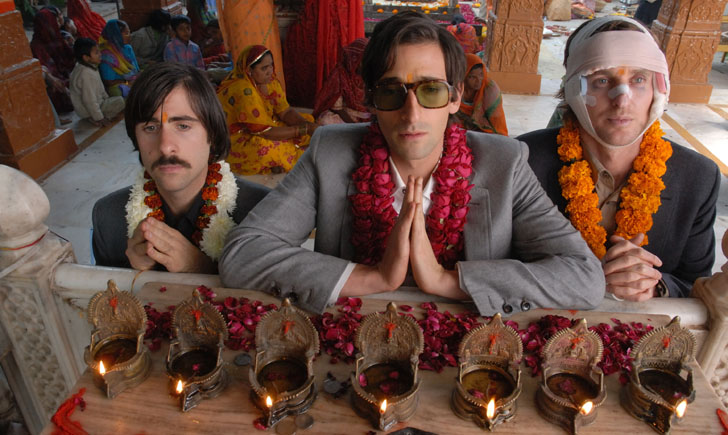
 Wes Anderson takes viewers on a wild ride through India aboard the Darjeeling Limited in this black comedy that opened the 2007 New York Film Festival. Francis (Owen Wilson), Peter (Adrien Brody), and Jack (cowriter Jason Schwartzman) are brothers who have not seen each other since their father’s funeral a year before, after which their mother disappeared. Having recently survived a terrible accident, Francis — looking ridiculous with his face and head wrapped in bandages — convinces them to go on a spiritual quest together to reestablish their relationship and help them better understand life. Peter and Jack very hesitantly decide to go along on what turns out to be a series of madcap adventures involving bathroom sex, bloody noses, jealousy, praying, cigarettes galore, running after trains, and savory snacks. Anderson (The Royal Tenenbaums,