Revealing documentary takes a hard, unflinching look at pink ribbon culture
PINK RIBBONS, INC. (Léa Pool, 2011)
IFC Center
323 Sixth Ave. at Third St.
Opens Friday, June 1
212-924-7771
www.ifccenter.com
firstrunfeatures.com/pinkribbonsinc
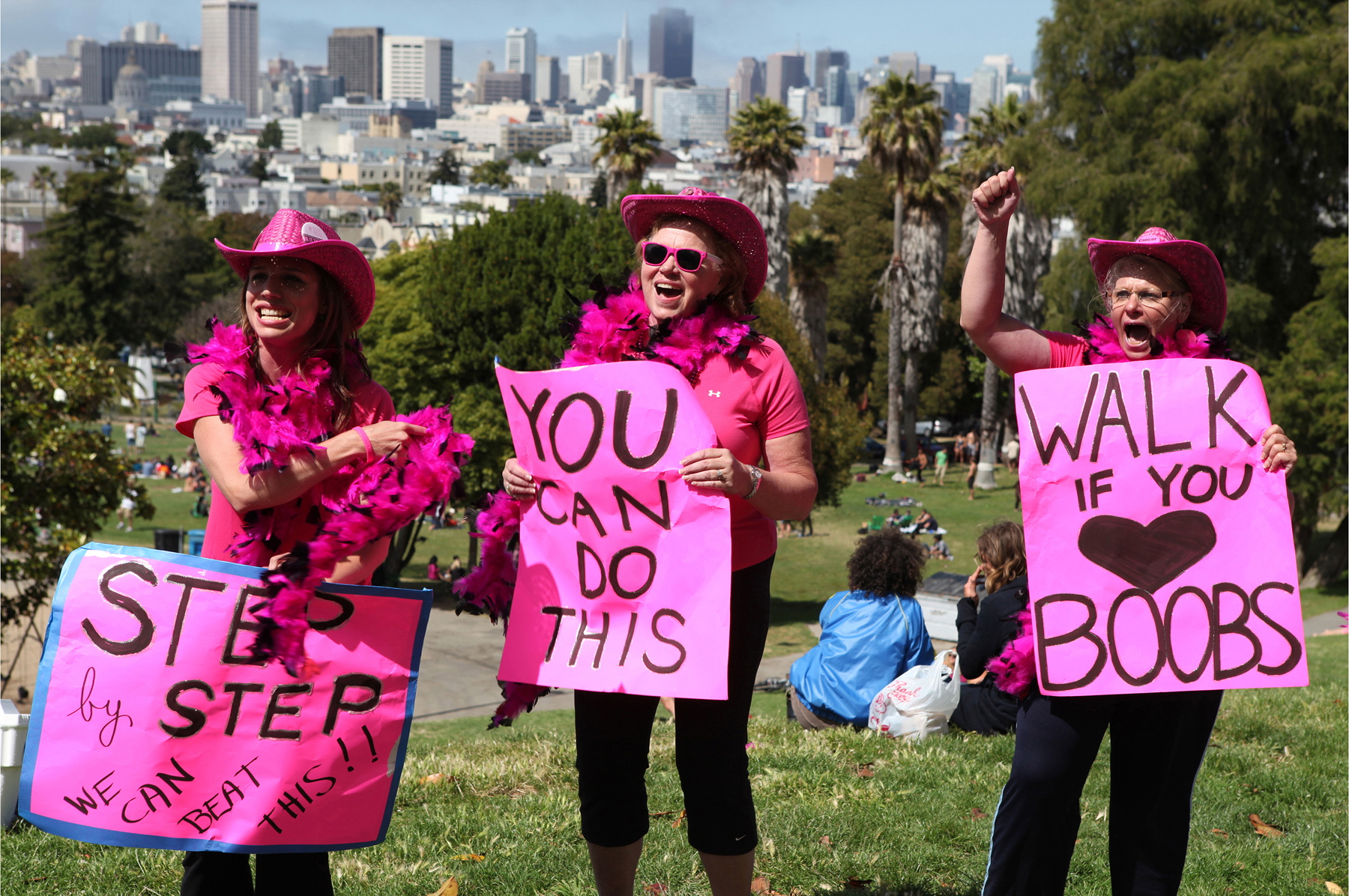
 “What’s going on here? What is it with all these pink ribbons everywhere?” activist and writer Barbara Ehrenreich says at the beginning of Canadian director Léa Pool’s revelatory documentary, Pink Ribbons, Inc. “I think the effect of the whole pink ribbon culture was to drain and deflect the kind of militancy we had as women who were appalled to have a disease that is epidemic and yet that we don’t know the cause of.” Inspired by Samantha King’s 2006 book Pink Ribbons, Inc.: Breast Cancer and the Politics of Philanthropy, Pool’s film explores the breast cancer culture that celebrates survivorship through feel-good cause-marketing events while tens of thousands of American women continue to die from the disease every year. Pool speaks with such experts as King, Judy Brady of Greenaction, Barbara A. Brenner of Breast Cancer Action, Dr. Marion Kavanaugh-Lynch of the California Breast Cancer Research Program, Dr. Susan Love of the National Breast Cancer Coalition and Y-ME National Breast Cancer Organization, and Dr. Olufunmilayo L. Olopade of the University of Chicago Medical Center, who discuss how despite all the money raised by running, walking, jumping, and racing for the cure, breast cancer is still a deadly disease that should be taken a lot more seriously and dealt with more honestly. Pool also talks to Susan G. Komen for the Cure founder Nancy G. Brinker (who recently found herself immersed in a battle over Planned Parenthood funding), “the mother of cause marketing” Carol Cone of Edelman Purpose, Dr. Marc Hurlbert of the Avon Foundation for Women and the Avon Breast Cancer Crusade, Breast Cancer Research Foundation founder Evelyn H. Lauder of the Estée Lauder Companies, Kim McInerney of Ford Motor Company, and others who sponsor products and events that raise money and awareness — even though some arguably participate in pink-washing, manufacturing and selling items that might be linked to causing cancer. Pool visits the Revlon Run/Walk for Women in New York, the Susan G. Komen Race for the Cure in Washington, DC, the Avon Walk for Breast Cancer in San Francisco, and the Pharmaprix Weekend to End Women’s Cancers in Montreal, where pink-clad women (and men) are vibrant and happy, but it’s the IV League of Austin, a group of women with stage four metastatic breast cancer, that might provide the most truthful assessment of the disease, explaining that succumbing to breast cancer “is not a failure. You can die in a perfectly healed state.” Pink Ribbons, Inc. is not afraid to look at the pervading, popular breast cancer culture and tackle it head-on in ways that are illuminating, educational, and, surprisingly, life-affirming.
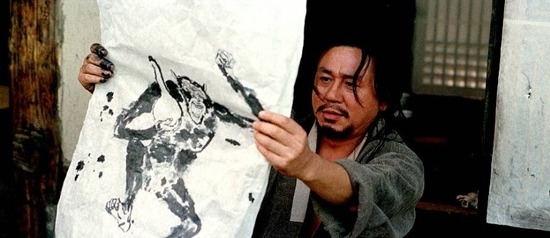
 Korean filmmaker Im Kwon-taek’s exploration of the life and work of nineteenth-century painter Jang seung-up (Choi Min-shik) is beautiful to look at but overly long and drawn out. We get it: The iconoclastic artist struggles with his identity, drinks too much, battles with his mentor (Ahn Sung-ki) over selling out, gets caught amid a political revolution, and has a complicated love life. However, it is always a thrill to watch Choi; Chihwaseon is screening on June 3 as part of the Museum of the Moving Image series “The Many Faces of Choi Min-shik,” which began May 20 with Song Hae-sung’s Failan and concludes July 1 with the Park Chan-wook classic Oldboy. This summer’s New York Asian Film Festival will also pay tribute to the great Korean actor in the sidebar “Choi Min-sik: Mr. Vengeance,” featuring Yun Jong-bin’s 2012 Nameless Gangster and Ryoo Seung-wan’s 2005 Crying Fist as well as Oldboy and Failan. (And yes, each series spells Choi’s name differently.)
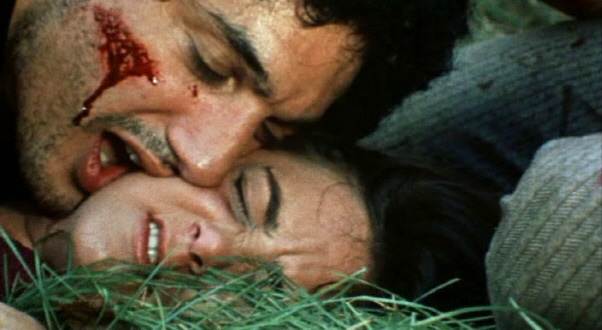
 Written and directed by Wes Craven, who went on to create the Nightmare on Elm Street films as well as The Hills Have Eyes and Swamp Thing, and produced by Sean S. Cunningham, who went on to create the Friday the 13th movie series, Last House on the Left is an insipid piece of vile trash, an embarrassingly exploitative hour and a half of sheer, repulsive filth. Mari Collingwood (Sandra Cassel) and Phyllis Stone (Lucy Grantham) are on their way to see the band Bloodlust for Mari’s seventeenth birthday when they stop to pick up some pot, but they really picked the wrong place to do that. They are abducted by Krug Stillo (David Hess), Krug’s son, Junior (Marc Sheffler), Fred “Weasel” Podowski (Fred J. Lincoln), and (Jeramie Rain), who do horrible things to them while Mari’s parents (Richard Towers and Cynthia Carr) worry about their daughter, getting no help from the ridiculous local cops (Marshall Anker and Martin Kove) who are supposed to serve as comic relief. Dennis Iliadis’s 2009 remake, starring Monica Potter, Sara Paxton, Tony Goldwyn, and Garret Dillahunt, produced by Craven and Cunningham along with Marianne Maddalena, is actually much better.