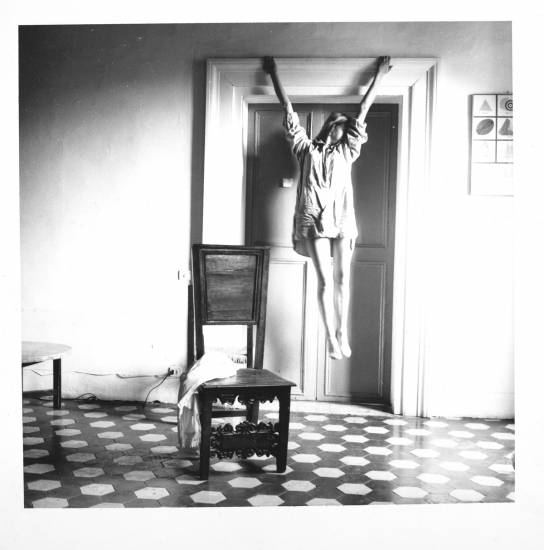
Francesca Woodman, “Space2, Providence, Rhode Island,” gelatin silver print, 1976 (© George and Betty Woodman)
Solomon R. Guggenheim Museum
1071 Fifth Ave. at 89th St.
Friday – Wednesday through June 13, $18 (pay-what-you-wish Saturday 5:45-7:45)
212-423-3587
www.guggenheim.org
Tragically, Francesca Woodman’s story usually begins at the end: The innovative, influential photographer killed herself in 1981 at the age of twenty-two. But by that time she had already amassed an impressive, deeply personal collection of intimate, haunting photographs, something she began when she was just thirteen. The daughter of artists George and Betty Woodman, Francesca attended the Rhode Island School of Design, traveled to Rome and Athens, and moved to New York City during her short lifetime, all the while taking primarily black-and-white photographs in which her often nude body merges with both physical and psychological space, becoming part of the architecture as well as the ether. She huddles in a corner, disappears in a window, and covers parts of herself with detritus. Only hair and a bit of forehead are visible in a cast-iron bathtub. The lower half of her body sits over an impression of herself on a dusty floor. In an outdoor shot, she wears tree bark on her arms, transforming into part of the forest. And in one of her later works, a large-scale purplish diazotype, or blueprint, she poses as a caryatid, her arms covering her face. The retrospective also includes a half dozen recently discovered experimental videos that bring her photographic sensibility to life. Artists from Bruce Nauman and Cindy Sherman to Marina Abramović and Lucas Samaras feature themselves in their work, but in Woodman’s oeuvre, the artist is visible in a completely different way, trapped in a moment of space and time, the past, present, and future mysterious and uncertain. (Woodman’s “Blueprint for a Temple” is also part of the Met’s current “Spies in the House of Art: Photography, Film, and Video” exhibition, and some of her later work was recently highlighted at a small but intriguing show at Marian Goodman.)
The tragic life of artist Francesca Woodman and her family is the focus of intriguing documentary (untitled photo by Francesca Woodman, 1977-78, Rome, courtesy Betty and George Woodman)
THE WOODMANS (C. Scott Willis, 2010)
Now available on DVD
www.kinolorber.com
 There’s something inherently creepy about The Woodmans, C. Scott Willis’s documentary about an intriguing family of artists. For the first half of his debut theatrical release, Willis, an eleven-time Emmy winner who has spent most of his career working for television news organizations, speaks with successful ceramic sculptor Betty Woodman, who had a terrific retrospective at the Met in 2006; her less-well-known husband, painter and photographer George Woodman; and their son, video artist and professor Charles Woodman, focusing on the missing member of the family, photographer Francesca Woodman, who is heard from through excerpts from her diary and seen in her videos and photographs. For those who don’t know Francesca’s fate, Willis builds the tension like a mystery, although it’s obvious something awful occurred. The Woodmans gets even creepier once Willis reveals what happened to Francesca, a RISD grad who quickly made a name for herself in the late 1970s taking innovative and influential nude black-and-white photographs of herself. As the parents talk about their daughter’s life and career, Betty explains how she got pregnant more to experience childbirth than to actually be a nurturing mother, and George expresses his jealousy at how Francesca was so admired in the art world, outshining both her parents. That they tend to do so with a calm matter-of-factness contributes to the uncomfortable nature of the film.
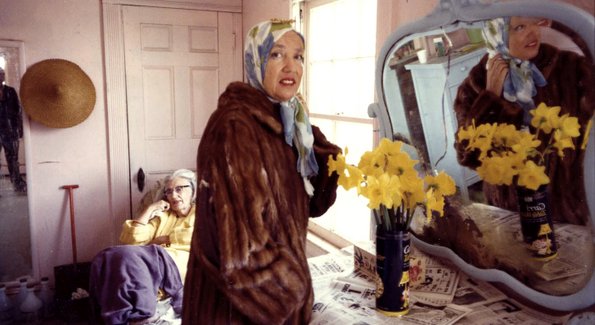
 One of the most influential documentaries ever made, Grey Gardens looks at the bizarre lives of Edith Bouvier Beale and her daughter, Edie, in their dilapidated home in East Hampton. The elder Edie was the sister of Jackie Onassis’s father, so it was hard for the American public to believe that in the mid-1970s, relatives of Jackie O’s were living in such squalor. Little Edie bandies about in odd clothing, singing and dancing, believing that she can still resurrect her once-promising career as an entertainer. Meanwhile, her elderly mother cracks wise at her daughter while also remembering her own long-gone days as a singer. The women seem to be caught up in a world all their own, far from reality, but filmmakers Albert Maysles, David Maysles, Muffie Meyer, and Ellen Hovde don’t judge them in any way; they just let them be as the women greet guests and grumble about whatever they can. Selected for the New York and Cannes Film Festivals, Grey Gardens, which has also been turned into a fiction film and a Broadway musical, will be screening June 9 at 7:30 at the Maysles Institute as part of STAUNCH! A Grey Gardens Celebration IV, which runs June 8-10 and focuses this year on Jerry Torre, the Marble Faun from the original film. The weekend festival includes the world-premiere screening of Steve Pelizza and Jason Hay’s new documentary, The Marble Faun of Grey Gardens, on Friday at 7:30, followed by Q&A and reception with Torre, Albert Maysles, Pelizza, and Hay. The Maysles brothers’ 2006 sequel, The Beales of Grey Gardens, will be shown on Sunday at 7:30.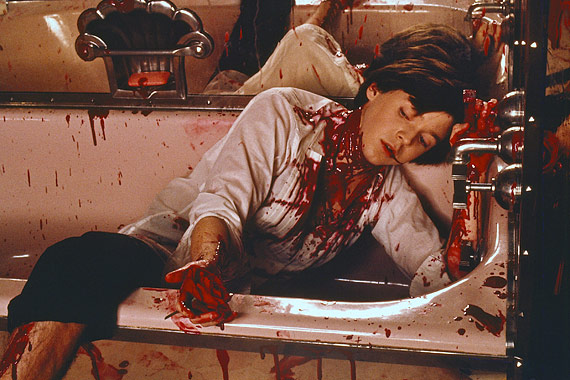
 Bud Cort (Harold) and Ruth Gordon (Maude) are magnificent in this glorious black comedy from director Hal Ashby (The Last Detail, Shampoo, Being There) and writer Colin Higgins. Harold is an eighteen-year-old rich kid obsessed with death, regularly flirting with suicide. Maude is a fun-loving, free-spirited senior citizen approaching her eightieth birthday. Ashby throws in just the right amount of post-1960s social commentary, including a very funny antiwar scene, without becoming overbearing, as this could have been a maudlin piece of sentimental claptrap, but instead it’s far from it. Even the Cat Stevens soundtrack (“If You Want to Sing Out, Sing Out,” “Tea for the Tillerman,” “Where Do the Children Play?”) works. Harold and Maude is a tender, uproarious, bittersweet tale that is one of the best of its kind, completely unforgettable, enlightening, and, ultimately, life-affirming in its own odd way. Harold and Maude is screening June 8 & 9 as part of the Museum of the Moving Image series “Paramount in the 1970s,” a month of films from the studio that changed the shape of American popular cinema during the decade that began with the Vietnam War and ended with the Reagan revolution. The series, which celebrates Paramount’s centennial, also includes such terrific films as Peter Bogdanovich’s Paper Moon, Roman Polanski’s Chinatown and The Tenant, John Schlesinger’s Marathon Man, and Francis Ford Coppola’s The Conversation.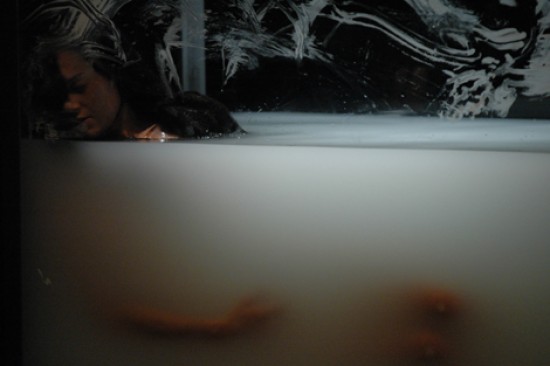
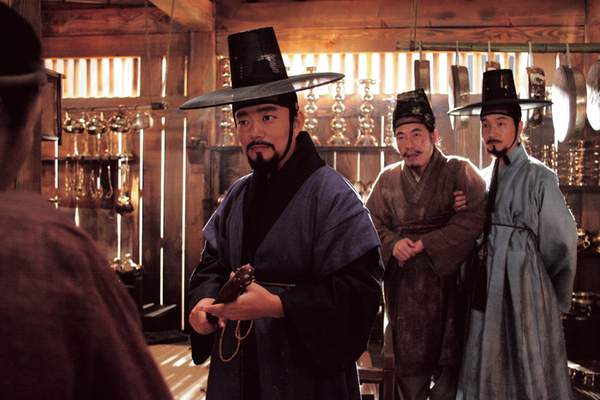
 Sex can be a very dangerous game, as clearly displayed in the epic Korean historical drama Forbidden Quest. After being labeled a coward for not filing an appeal after the brutal beating of his brother, investigations officer Kim (Han Suk-kyu) is summoned by the king to track down a forger who replaced an original painting by his favorite concubine, Jung-bin (Kim Min-jeong), with an exact copy. Kim seeks help from the Angel of Death, justice administrator Lee (Lee Beom-soo), the very man who was behind the near killing of Kim’s brother, to catch the forger, but in so doing he discovers the hidden world of erotic literature, where a mysterious figure named In Bong has become a hero to the women of the community as he churns out dirty book after dirty book that are sold in secret. A well-respected writer and scholar, Kim is at first taken aback by the existence of this illegal underground literary sensation, but soon he immerses himself in it, taking the pen name Chu Wol Sek and turning out hotly anticipated sordid tales involving a lady of the royal court, inspired by his continuing contact with Jung-bin. But when he takes things too far, a scandal breaks out that threatens violence and death. Written and directed by Kim Dae-woo (The Servant), Forbidden Quest is an engrossing, erotically charged drama of loyalty, fidelity, honor, betrayal, and responsibility, driven by a strong lead performance by Han (Green Fish, The President’s Last Bang), who is always cool, calm, and collected as things swirl around him, showing a Zen-like resolve even in the most extreme of circumstances. But even he can’t help but crack a few smiles when using his male copiers to act out potential sex scenes for his novels. Forbidden Quest is screening for free June 5 at Tribeca Cinemas as part of the Korean Cultural Service film series “Epic Romance,” which concludes June 19 with Kim Yong-gyun’s The Sword with No Name.