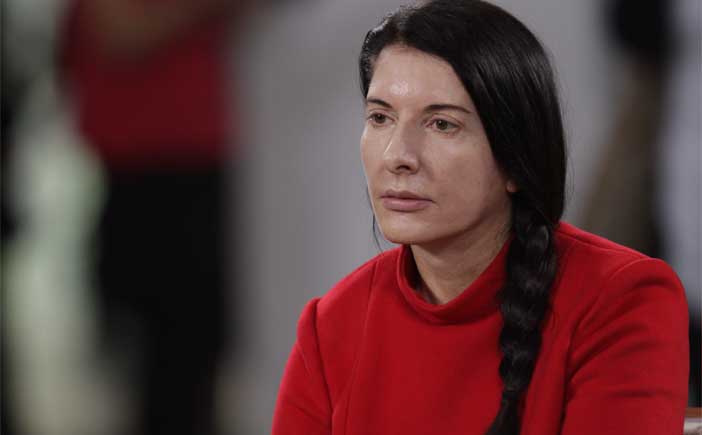
Performance artist Marina Abramović is present in more ways than one in intimate documentary
MARINA ABRAMOVIĆ: THE ARTIST IS PRESENT (Matthew Akers, 2012)
Film Forum
209 West Houston St.
June 13-26
212-727-8110
www.filmforum.org
 For forty years, Belgrade-born performance artist Marina Abramović has been presenting cutting-edge, often controversial live works that redefine what art is. For her highly anticipated major career retrospective at MoMA in 2010, “Marina Abramović: The Artist Is Present,” which was titled and curated by Klaus Biesenbach, the longtime New Yorker had something extraordinary planned: For the run of the show, from March 14 through May 31, she would spend the entire time the museum was open sitting across from strangers, gazing into each other’s eyes for as long as the visitor wanted. Documentary cinematographer Matthew Akers takes viewers behind the scenes of that remarkable show in his directorial feature debut, also called Marina Abramović: The Artist Is Present. Given unlimited access to both Abramović and MoMA, Akers follows the sixty-three-year-old artist as she prepares for the exhibition; heads to a country retreat where she trains several dozen men and women who will “re-perform” some of her older works; and reconnects with former partner and lover Ulay, with whom she first performed many of the pieces in the show. Abramović is seen relaxing in a tub, chopping vegetables, and taking a rare turn behind the wheel of a car, performing relatively menial tasks compared to her art, in which she flagellates herself, carves a star into her stomach, runs into walls, gets slapped by and slaps Ulay, and allows visitors to do whatever they want to her using various objects. The film is at its best when Abramović and Ulay open up about their relationship, get emotional over seeing the old van they used to live in, and discuss their final performance, “The Great Wall Walk,” when they started at opposite ends of the Great Wall of China and walked toward each other over the course of three months, then broke up. While various art critics and curators, including Biesenbach and the Whitney’s Chrissie Iles, sing Abramović’s praises, the film never delves into the more serious meaning behind her art and avoids examining its controversial nature, save for one brief news report decrying its use of nudity. But the long scenes in which Abramović and visitors look into each other’s eyes are absolutely mesmerizing; the elegant Abramović is always steady and stalwart, her concentration intoxicating, inspiring, and more than a little frightening, the opening of her eyes a work of art in and of itself, while the person opposite her tears up, smiles, or pats their heart softly, thanking her for the intense, emotional connection occurring between them, which is essentially what all art is about. Marina Abramović: The Artist Is Present opens June 13 at Film Forum for a two-week run prior to its debut on HBO on July 2, with director Akers on hand to talk about the project at the 7:50 screening opening night.
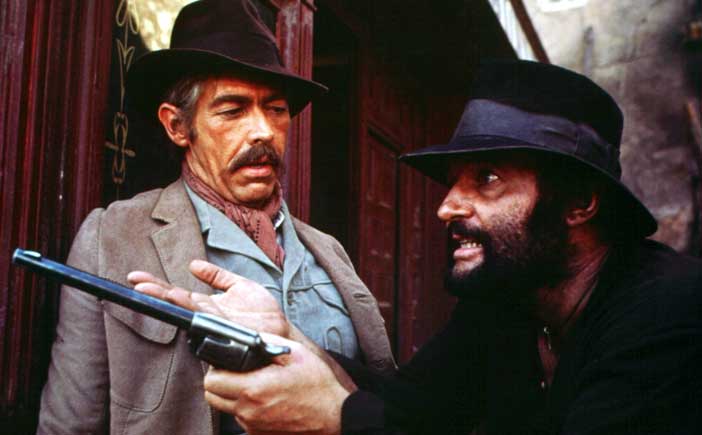
 Rod Steiger and James Coburn star in Sergio Leone’s final spaghetti Western, set during the Mexican Revolution in the 1910s. Steiger is Juan Miranda, the leader of a group of bandits who have stolen a stagecoach. Coburn is Sean Mallory, an IRA man on the run who likes blowing things up. The sweaty Juan wants to rob the Mesa Verde bank, while the cool Sean just wants to be left alone, but the two of them soon find themselves fighting together in the revolution. The film is way too long, and Ennio Morricone’s music is way too goofy, but Leone fans shouldn’t miss this rare chance to see the restored version of this film. Duck, You Sucker! is screening June 13, 19, and 21 as part of Film Forum’s Spaghetti Westerns series, which also features such well-known classics and under-the-radar gems as Damiano Damiani’s A Bullet for the General, Giulio Petroni’s Death Rides a Horse, Carlo Lizzani’s The Hills Run Red, and Giulio Questi’s Django Kill . . . If You Live, Shoot!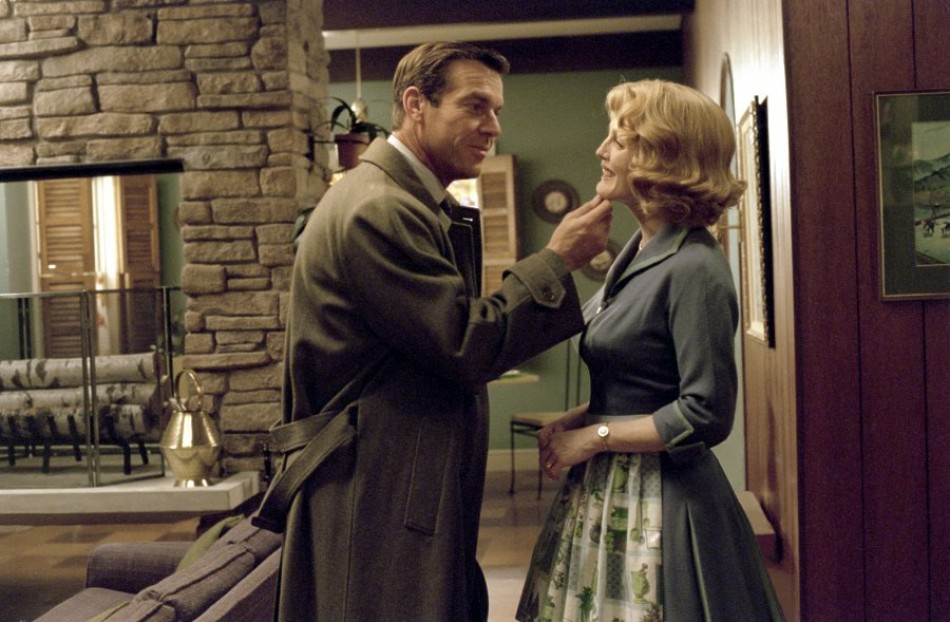
 Douglas Sirk and Thomas Mann would be proud. In Todd Haynes’s wonderfully retro Far from Heaven, Oscar-nominated Julianne Moore is amazing as 1950s housewife Cathy Whitaker, who thinks she has the perfect idyllic suburban life — until she discovers that her husband (Dennis Quaid) has a secret that dare not speak its name. Mr. & Mrs. Magnatech they are not after all. When she starts getting all chummy with the black gardener (Dennis Haysbert), people start talking, of course. Part Imitation of Life, part Death in Venice, and oh-so-original, Haynes’s awesome achievement will have you believing you’re watching a film made in the 1950s, propelled by Elmer Bernstein’s excellent music, Edward Lachman’s remarkable photography, and Mark Friedberg’s terrific production design. Far from Heaven is screening at the Museum of the Moving Image on June 14 at 7:00, with Haynes in person to talk about the film in conjunction with the opening of the exhibition “Persol Magnificent Obsessions: 30 stories of craftsmanship in film,” which focuses on artifacts from works by Ed Harris, Jean-Pierre Jeunet, Alfred Hitchcock, Douglas Trumbull, Ennio Morricone, Dean Tavoularis, Clint Eastwood, Haynes, and others.
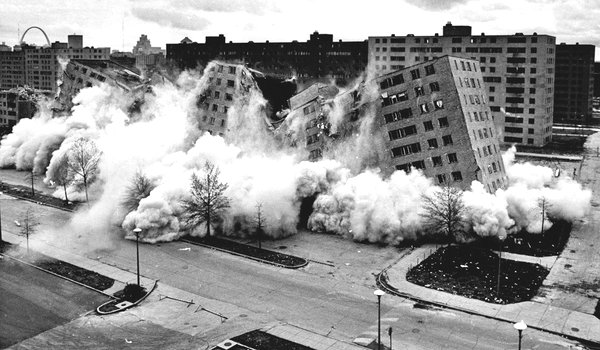
 In 1954, the St. Louis Housing Authority completed a massive urban renewal project, Pruitt-Igoe, a thirty-three-building complex for low-income families that was like a city unto itself. Eighteen years later, mired in crime, violence, poverty, and horrifically unsanitary and unsafe conditions, Pruitt-Igoe was torn down, the implosion famously being shown on news channels around the country as an example of the failure of public policy planning. The short, contentious history of Pruitt-Igoe is explored in the revealing documentary The Pruitt-Igoe Myth. Director Chad Freidrichs (Jandek on Corwood, First Impersonator) revisits Pruitt-Igoe through archival footage, new interviews, and a drive past the site where the iconic housing development, designed by architect Minoru Yamasaki, once stood, revealing the fascinating story of what was first a symbol of the post-WWII boom and then a prime example of the nation’s financial and racial problems of the 1970s. “It was like an oasis in the desert,” Ruby Russell remembers. “I never thought I would live in that kind of a surrounding.” But Brian King, who spent his childhood there, sees it a little differently. “It was hell on earth,” he says. Freidrichs speaks with urban historians Robert Fishman and Joseph Heathcott, sociologist Joyce Ladner, and former residents as they chronologically follow the rise and fall of “the poor man’s penthouse.” Narrated by actor Jason Henry, The Pruitt-Igoe Myth tells a shameful chapter in American history, one that should still be used today as a blueprint on what not to do. “It seemed to me that we were being penalized for being poor,” says former resident Jacqueline Williams. “That caused so much anger.” Named Best Documentary at several festivals and winner of the American Historical Association’s John E. O’Connor Film Award, The Pruitt-Igoe Myth is screening for free at BAMcinématek on June 11 at 6:50, followed by a panel discussion with Freidrichs and urban housing and development experts.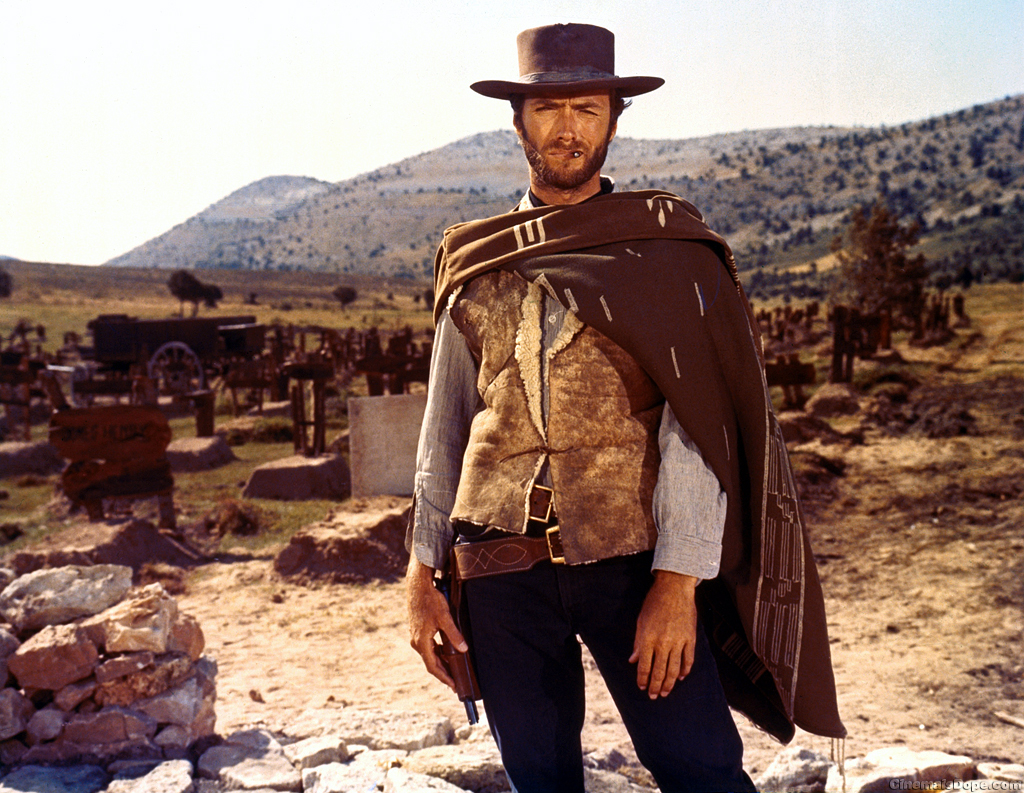
 One of the all-time-great spaghetti Westerns, Sergio Leone’s dusty three-hour operatic oater stars Clint Eastwood as the Good (Blondie), Lee Van Cleef as the Bad (Angel Eyes), and Eli Wallach as the Ugly (Tuco Benedicto Pacifico Juan Maria Ramirez, whose list of criminal offenses is a riot), three unique individuals after $200,000 in Confederate gold buried in a cemetery in the middle of nowhere. Nearly 20 minutes of never-before-seen footage added to the film several years ago, with Wallach and Eastwood overdubbing brand-new dialogue, so if you haven’t seen it in a while, it might just be time to catch it again, this time on the big screen as part of Film Forum’s impressive “Spaghetti Westerns” series. Ennio Morricone’s unforgettable score and Torino delli Colli’s gorgeous widescreen cinematography were also marvelously enhanced; their work in the scene when Tuco first comes upon the graveyard will make you dizzy with delight. And then comes one of the greatest finales in cinema history. The Good, the Bad and the Ugly is screening at Film Forum on June 9, 10, 12, and 21, with the series continuing with such well-known classics and under-the-radar gems as Damiano Damiani’s A Bullet for the General, Giulio Petroni’s Death Rides a Horse, Monte Hellman’s China 9, Liberty 37, and Giulio Questi’s Django Kill . . . If You Live, Shoot!