Kori Cioca shares her shocking story in THE INVISIBLE WAR
THE INVISIBLE WAR (Kirby Dick, 2011)
Film Society of Lincoln Center, Walter Reade Theater
165 West 65th St. at Amsterdam Ave.
Monday, June 18, 8:45; Wednesday, June 20, 6:30
Series runs through June 28
212-875-5601
www.filmlinc.com
invisiblewarmovie.com
 Kirby Dick’s The Invisible War is one of the bravest, most explosive investigative documentaries you’re ever likely to see. Dick (This Film Is Not Yet Rated) busts open the military’s dirty little secret, revealing that episodes of horrific sexual abuse such as the Tailhook scandal are not an aberration but a prime example of a rape epidemic that seems to an accepted part of military culture. Dick speaks with many women and one man who share their incredible stories, describing in often graphic detail the sexual abuse they suffered, then faced further abuse when they reported what had happened. Their superiors, some of whom were the rapists themselves, either looked the other way, laughed off their allegations as no big deal, or threatened the victims’ careers. Dick includes remarkable Defense Department statistics — the government admits that approximately one out of every five female soldiers suffers sexual abuse and that there were nineteen thousand violent sex crimes in 2010 alone — even as such military officials as Dr. Kaye Whitley, Rear Admiral Anthony Kurta, and Brigadier General Mary Kay Hertog make absurd claims that they are satisfied with the way they are handling the alarming trend. The central figure in the film is Kori Cioca, a former member of the Coast Guard whose face was broken when she was raped by a superior and now keeps getting denied necessary medical services from the VA. Such courageous women as USAF Airman 1st Class Jessica Hinves, former Marine Officer Ariana Klay, USN veteran Trina McDonald, USMC Lieutenant Elle Helmer, USN Lieutenant Paula Coughlin, and even Special Agent Myla Haider of the Army Criminal Investigation Command also open up about the physical and psychological damage the abuse has left on their lives and careers.
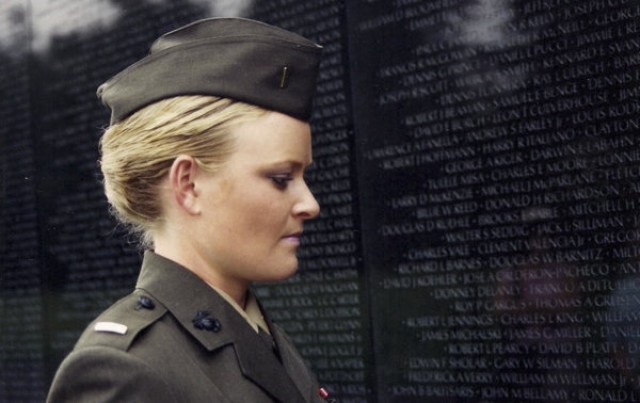
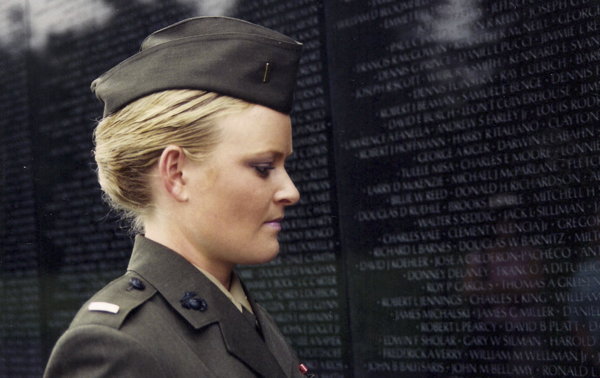
Lieutenant Elle Helmer visits the Vietnam War Memorial in shattering documentary
Inspired by Helen Benedict’s 2007 Salon.com article “The Private War of Women Soldiers,” Dick and producer Amy Ziering (The Memory Thief) have presented a searing indictment of an endemic military culture that has to come to an end, and fast. The Invisible War is screening June 18 and 20 at the Human Rights Watch Film Festival, both of which will be followed by a Q&A with Dick and Ziering, winners of the festival’s Nestor Almendros Award for courage in filmmaking. They will be joined on June 20 by Ariana Klay and her husband, Ben, along with moderator Meghan Rhoad. The festival runs through June 28 at the Film Society of Lincoln Center, highlighting seventeen works divided into five categories: “Health, Development, and the Environment,” “Lesbian, Gay, Bisexual, and Transgender (LGBT) and Migrants’ Rights,” “Personal Testimony and Witnessing,” “Reporting in Crises,” and “Women’s Rights,” with this year’s focus on how one individual or a small group of individuals can help make a difference.

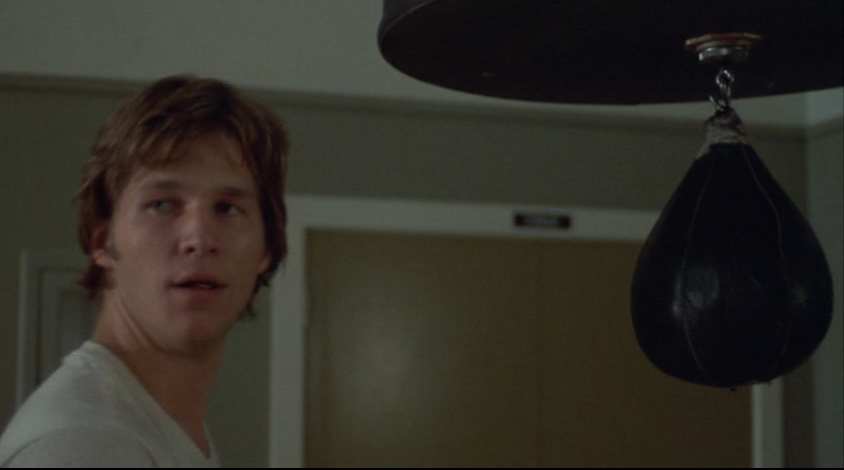
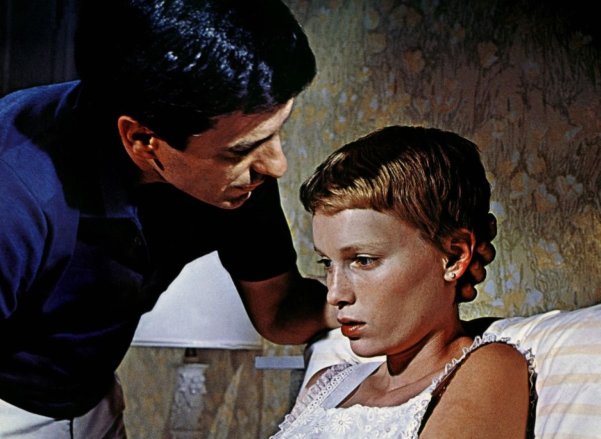
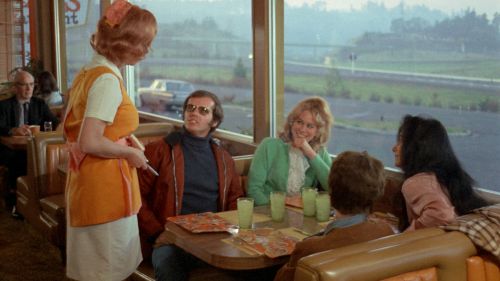
 Genre master and onetime boxer John Huston returned to the ring in Fat City, a gritty 1972 drama about a group of has-beens and never-will-be’s struggling to survive in Stockton, California. Stacey Keach stars as Billy Tully, a down-on-his-luck fighter looking to make a comeback at the ripe old age of twenty-nine. He spars at the local Y with eighteen-year-old Ernie Munger (Jeff Bridges) and likes what he sees in the kid, telling him to meet his old manager, Ruben (Cheers’ Nicholas Colosanto), who decides to take on the unseasoned youngster. While Ruben lands Ernie — who seems more interested in bragging about having scored with his girlfriend, Faye (Candy Clark), than training properly — his first few bouts, Tully gets day work picking vegetables and hangs out at a local gin joint with a seedy, whiskey-voiced barfly named Oma (an Oscar-nominated Susan Tyrrell, who sadly just passed away a few days ago). Legendary cinematographer Conrad Hall casts a gray pale over the proceedings as dashed hopes and dreams come falling down on these disillusioned perennial losers. In many ways Fat City, based on the novel by Leonard Gardner — who also wrote the screenplay — is an update of Elia Kazan’s On the Waterfront, but moved to the hard times of early ’70s America, when so many people had no way out. You do not have to be a fight fan to fall in love with this film. A clear influence on such auteurs as Martin Scorsese, Fat City will be screening June 20 at 92YTribeca as part of the series “Jeff Bridges, Before the Dude,” consisting of such pre-Big Lebowski works as Stay Hungry, The Fisher King, and Cutter’s Way.

 Operatic in its emotional scale and shameless melodrama, Kim Yong-gyun’s The Sword with No Name is a sweeping romantic epic set in late-nineteenth-century Korea during the Joseon Dynasty. King Gojong (Kim Yeong-min) is taking a new queen, Min Ja-young (Soo Ae), soon to be known as Empress Myeong-seong. Before arriving at the palace, Min meets Moo-myoung (Cho Seung-woo), a local villager who takes her to visit the sea and then saves her from a vicious attack. Although theirs is a love that can never be, Moo-myoung earns a position as a low-level guard at the palace, determined to protect Min no matter what. The queen is interested in leading the nation out of its isolationism, becoming intrigued with European culture. However, as she sidles up with Russia, Japan starts feeling threatened, and the king’s father, Daewongun (Jeon Ho-jin), who is against change and modernization, challenges his son’s authority. As battles rage, loyalty is betrayed, jealousy reigns, and secret plots abound, the queen’s life is threatened, and it’s up to Moo-myoung to save her. Despite an increasingly sappy score, several ridiculous video-game-like fight scenes, a nationalistic fervor, and a choppy narrative, The Sword with No Name still manages to be an intriguing bit of historical fiction, based on actual events surrounding the Insurrection of 1882. The fiery passion between Min, who was Korea’s queen, and Moo-myoung, who is a made-up character, drives the film, even when the story gets way out of hand. The Sword with No Name is screening for free June 19 at Tribeca Cinemas, concluding the Korean Cultural Service film series “Epic Romance.”