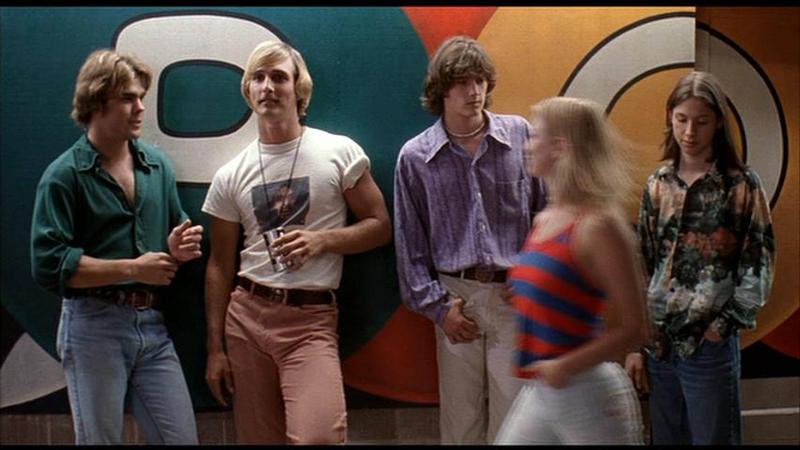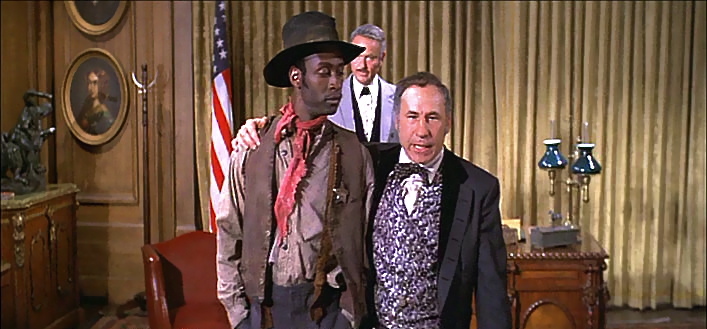
BLAZING SADDLES kicks off free Mel Brooks film series at the Museum of Jewish Heritage
Museum of Jewish Heritage
36 Battery Pl.
Wednesdays from June 27 through August 8 (except July 4), free, 6:30
646-437-4202
www.mjhnyc.org
Born Melvin Kaminsky in Brooklyn in 1926, Jewish funnyman Mel Brooks has been spoofing television and movies for more than sixty years, beginning with the seminal Your Show of Shows in the 1950s and continuing through a series of films that have torn up various genres in hysterical ways. The Museum of Jewish Heritage pays tribute to the comedy legend with a free series of screenings on Wednesday nights at 6:30 from June 27 through August 8 (except for July 4), wisely including his better works while avoiding his duds. The festival begins with the outrageous laugh fest Blazing Saddles (1974), in which a black sheriff (Cleavon Little) comes to the racist western town of Rock Ridge and teams up with alcoholic sharpshooter the Waco Kid (Gene Wilder) to teach everybody a valuable lesson. (The screening will be introduced by critic Leonard Quart.) On July 11, Brooks takes on the horror genre with the riotous Young Frankenstein, (1974), with Wilder starring as Frederick Frankenstein, a young doctor who has tried to avoid the family legacy but soon finds himself holed up in his Transylvanian castle bringing life to a monster (Peter Boyle) with the help of a dimwitted assistant (Marty Feldman) and a Scandinavian beauty (Teri Garr). On July 18, Mel Funn (Brooks), Dom Bell (Dom DeLuise), and Marty Eggs (Feldman) try to recruit such stars as Burt Reynolds, James Caan, and Paul Newman to appear in their modern-day Silent Movie (1976). On July 25, Brooks incorporates such Hitchcock classics as The Birds, Psycho, Vertigo, North by Northwest, The Wrong Man, and Spellbound into the 1977 comic thriller High Anxiety, which also includes such Brooks regulars as Madeline Kahn, Harvey Korman, Cloris Leachman, Ron Carey, and Howard Morris. Brooks goes historical in the five-part History of the World: Part I (1981), parodying biblical epics, Roman sandal dramas, French Revolution tales, and more, with the help of narrator Orson Welles, John Hurt as Jesus Christ, and Brooks himself as Moses, Torquemada, and Louis XVI, giving himself the opportunity to say what would become one of his trademark lines, “It’s good to be the king.” The series concludes on August 8 with Brooks’s 1983 remake of Ernst Lubitsch’s 1942 classic To Be or Not to Be, about a Warsaw theater company trying to trick the Nazis, with Brooks and his wife, Anne Bancroft, re-creating the roles originally played by Jack Benny and Carole Lombard. These six films, made in a particularly fruitful nine-year period, cemented Brooks’s reputation as a comic genius, which was already well on its way with his earlier films, The Producers and The Twelve Chairs, and thankfully has not lost its luster with such later losers as Spaceballs, Robin Hood: Men in Tights, and Dracula: Dead and Loving It, his last film, made in 1995, after which he headed to Broadway. Free tickets for the Museum of Jewish Heritage series can be picked up at the box office at 3:00 on the day of the show or can be reserved in advance with a minimum donation of $5.

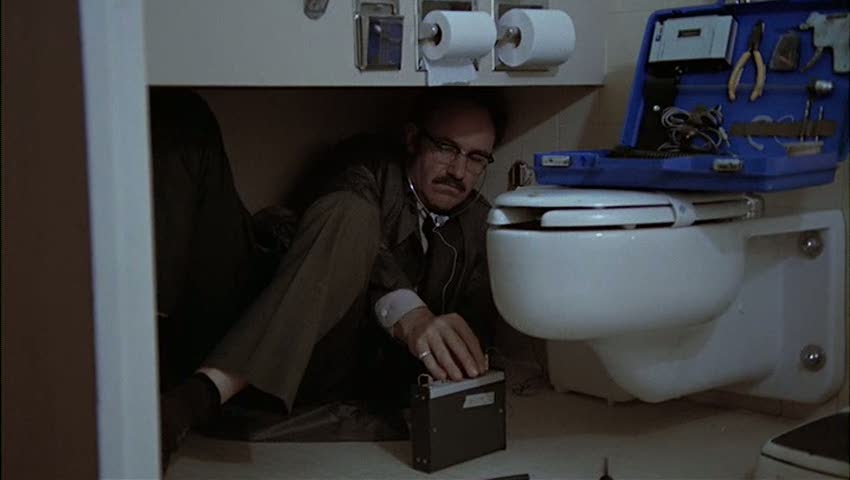
 While changing the face of Hollywood cinema with The Godfather and The Godfather Part II, American auteur Francis Ford Coppola snuck in yet another 1970s masterpiece, the dark psychological thriller The Conversation. Gene Hackman gives a riveting performance as Harry Caul, an audio surveillance expert who has been hired to record a meeting between two people (Cindy Williams and Frederic Forrest) in Union Square in San Francisco. Thinking that he might have stumbled onto a murder plot, Caul soon finds himself in the middle of a dangerous conspiracy that threatens the lives of all those involved. The Conversation is a gripping, taut examination of obsession, paranoia, and loneliness as well as an exploration of language and communication. Caul might spend most of his time listening in on the intimate conversations of others, but he is an intensely private individual who is extremely uncomfortable in his own skin. A deeply religious man who also plays the saxophone, Caul has trouble relating to other people; Hackman is particularly outstanding in a party scene where Caul is forced to talk shop with fellow surveillance expert Bernie Moran (Allen Garfield), who wants to know Caul’s secrets, but the always nervous Caul isn’t about to share everything. The supporting cast, which also features Harrison Ford, Robert Duvall, Teri Garr, and John Cazale, is exceptional, but this is Hackman’s show all the way, leading to one of the great endings in the history of cinema. Winner of the Palme d’Or at Cannes, The Conversation is screening June 23 & 24 as part of the Museum of the Moving Image series “Paramount in the 1970s,” a month of films from the studio that changed the shape of American popular cinema during the decade that began with the Vietnam War and ended with the Reagan revolution. The series, which celebrates Paramount’s centennial, also includes such films as Peter Yates’s The Friends of Eddie Coyle, John Badham’s Saturday Night Fever, Robert Altman’s Nashville, and Terrence Malick’s Days of Heaven.
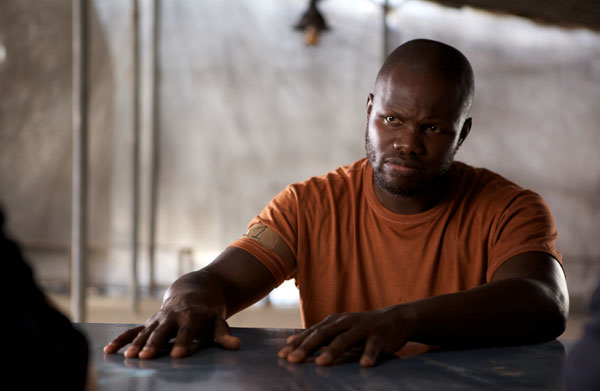
 Inspired by the real-life dilemma of Senegalese refugees illegally arriving on the shores of the Canary Islands seeking a new life, only to be put into internment camps and sent back — if they even survive the harrowing journey at all — Maggie Peren’s Color of the Ocean is a searing examination of poverty and the lengths people will go to achieve freedom. As a boat filled with more dead than living refugees pulls onto a beach, German tourist Nathalie (Sabine Timoteo) tries to help Zola (Hubert Koundé) and his son, Mamadou (Dami Adeeri), but is ordered to leave by cynical border policeman José (Alex González). The jaded José, who is facing his own personal problems involving his twin sister’s (Alba Alonso) drug addiction, is brutally straightforward about his lack of compassion for the Senegalese men, women, and children seeking asylum in Spain, much to the consternation of his more sympathetic partner, Carla (Nathalie Poza). After escaping from the camp, Zola and Mamadou turn to Nathalie for help, but her husband, Paul (Friedrich Mücke), insists she stay out of the potentially dangerous situation. The various stories soon come together in powerful ways as the characters reach deep inside themselves and discover that there are severe consequences to their actions — or inaction. Although it pulls at the heartstrings too much and too often takes the easy way out, Color of the Ocean is a compelling film that tells an important story that’s even more relevant given the current battle over immigration rights and deportation here in America. Writer-director Peren’s (Special Escort) focus on Nathalie lies at the heart of the film, with the character serving as a kind of representative for the audience, making viewers wonder what they would do if suddenly faced with similar life-altering — and life-threatening — decisions. Color of the Ocean is screening June 23 and 24 at the Human Rights Watch Film Festival, which runs through June 28 at the Film Society of Lincoln Center, highlighting seventeen works divided into five categories: “Health, Development, and the Environment,” “Lesbian, Gay, Bisexual, and Transgender (LGBT) and Migrants’ Rights,” “Personal Testimony and Witnessing,” “Reporting in Crises,” and “Women’s Rights,” with this year’s theme centering on how one individual or a small group of individuals can help make a difference.