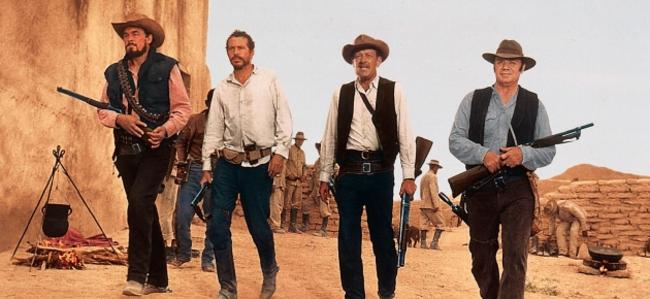
Ben Johnson, Warren Oates, William Holden, and Ernest Borgnine play friends to the bloody end in THE WILD BUNCH
THE WILD BUNCH (Sam Peckinpah, 1969)
Museum of the Moving Image
35th Ave. at 36th St., Astoria
Saturday, August 4, and Sunday, August 5, free with museum admission, 6:00
718-777-6800
www.movingimage.us
 Sam Peckinpah cemented his reputation for graphic violence and eclectic storytelling with the genre-redefining 1969 Western The Wild Bunch. When a robbery goes seriously wrong, Pike Bishop (William Holden), Dutch Engstrom (Ernest Borgnine), Freddie Sykes (Edmond O’Brien), Angel (Jaime Sánchez), and brothers Lyle (Warren Oates) and Tector Gorth (Ben Johnson) set out to get even, planning an even bigger score by going after a U.S. Army weapons shipment on a railroad protected by detective Pat Harrigan (Albert Dekker) and his hired gun, Deke Thornton (Robert Ryan), who is given nothing but “egg-suckin’, chicken-stealing gutter trash” to work with, including the hapless Coffer (Strother Martin) and T.C. (L. Q. Jones). The aging Pike, who sees this as his last score, is worried about being in cahoots with the unpredictable General Mapache (Emilio Fernández), a local warlord battling Pancho Villa’s freedom forces. But at the center of the film is the cat-and-mouse game between Pike and Thornton, the latter determined to capture his former partner, who left him to rot in jail years earlier. It all comes to a head in Agua Verde, which might translate to “Green Water” but will soon be bathed in red blood in one of the most violent shoot-outs ever depicted on celluloid. Peckinpah fills the film with plenty of drinking and whoring, and even torture, while exploring friendship and loyalty, embodied by Dutch’s selfless dedication to Pike. The Wild Bunch might be famous for its intense violence, much of it shot in slow motion, but it also has a lot more going for it, from its Oscar-nominated score by Jerry Fielding to its terrific cast and suspenseful twists and turns. (Western fans might get a kick out of knowing that Mapache’s right-hand man, Lt. Herrera, is portrayed by Mexican actor and director Alfonso Arau, who later played El Guapo in John Landis’s comic Western The Three Amigos.) The Wild Bunch is screening August 3 and 4 in a new DCP restoration at the Museum of the Moving Image as part of the institution’s continuing See It Big! series.
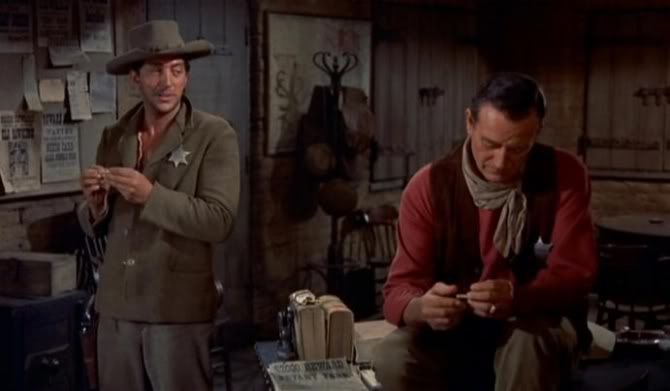
 Howard Hawks’s anti-High Noon is a surprisingly sensitive, extremely clever exploration of interpersonal relationships disguised as a Western genre picture. John Wayne stars as Sheriff John T. Chance, a big, bold small-town Texas lawman who arrests local bully Joe Burdette (Claude Akins) for committing cold-blooded murder. The cocky Burdette doesn’t expect to be in jail long, not with his brother, Nathan (John Russell), being the most powerful — and potentially dangerous — man in Rio Bravo, and what with Chance’s deputies being useless drunk Dude (Dean Martin) and an old cripple known as Stumpy (Walter Brennan). Despite offers of help from such friends as businessman Pat Wheeler (Ward Bond), Chance is determined to go it with just Dude and Stumpy as they attempt to hold Joe until the federal marshal arrives. But Nathan and his hired band of bounty hunters are just as determined to free Joe, whatever the cost. Chance is not so foolish as to think that he can take Burdette’s crew on just by himself; he actually doesn’t want anyone else to die for something he considers his responsibility. Meanwhile, he is keeping his eyes on Feathers (Angie Dickinson), a tough-talking young woman with a sordid past, and Colorado (Ricky Nelson), a sharpshooting young stud only out for himself. The set-up is merely an excuse for Hawks to delve into some serious male bonding and potential romance as Dude, called Borrachón (“Drunk”), tries to put down the bottle, Feathers attempts to prove that she’s not all bad, and Colorado eventually replaces his guns for a few minutes with a guitar to sing with Dude and Stumpy. Wayne plays it all marvelously, portraying Chance as a complex individual who understands the fears and desires, limitations and possibilities inherent in everyone he meets, yet always remaining cool. Appropriately enough, the local hotel, run by the always helpful Carlos (Pedro Gonzalez-Gonzalez) and his wife, Consuela (Estelita Rodriguez), is named the Alamo, not boding well for Chance and his meager team. Even at its 141-minute running time, Rio Bravo feels far more intimate than epic. Rio Bravo is screening August 3-4 in a new DCP restoration at the Museum of the Moving Image as part of the institution’s continuing See It Big! series.
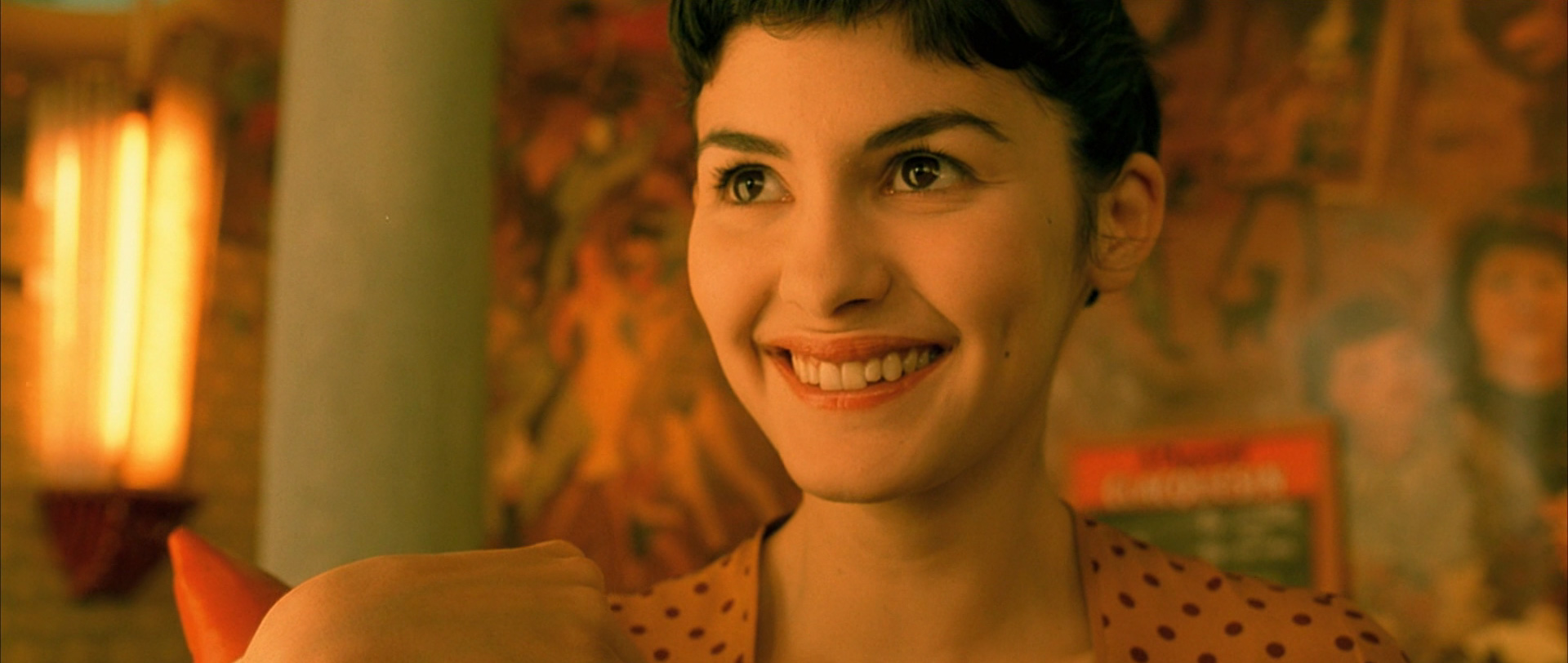
 In Jean-Pierre Jeunet’s wildly inventive romantic comedy, Audrey Tautou plays one of the most delightful, charming characters since, well, dare we say it? Audrey Hepburn, especially from Roman Holiday. Everybody in this film is nuts; Amélíe wanders — always with some strange, curious purpose — through offbeat and humorous situations filled with obsessive-compulsive oddballs doing bizarre things while sharing their crazy likes and dislikes with the audience. A difficult childhood left the grown-up Amélíe unable to interact “normally” with people, so when she discovers a boy’s treasure box hidden in her apartment, she decides to track down the owner, leading to a series of very complex and emotional good deeds she does for others while she cannot figure out her own life, which undergoes a major change when she meets Nino (Mathieu Kassovitz) — who collects ripped-up pictures people throw out after using public photo booths — and becomes friendly with the Glass Man (Serge Merlin), who cannot go outside because his bones are too brittle, so he remains in his apartment, copying the same Renoir painting year after year, unable to capture one girl’s face properly. Jeunet’s aural and visual style is reminiscent of such Coen brothers films as Raising Arizona, with fast-moving shots, sudden close-ups, and blasts of sound that enliven this masterful film. Amélíe is screening on August 1 at Pier 1 in Riverside Park as part of the Movies under the Stars series, which continues August 8 with Pee Wee’s Big Adventure and concludes August 15 with Triplets of Belleville.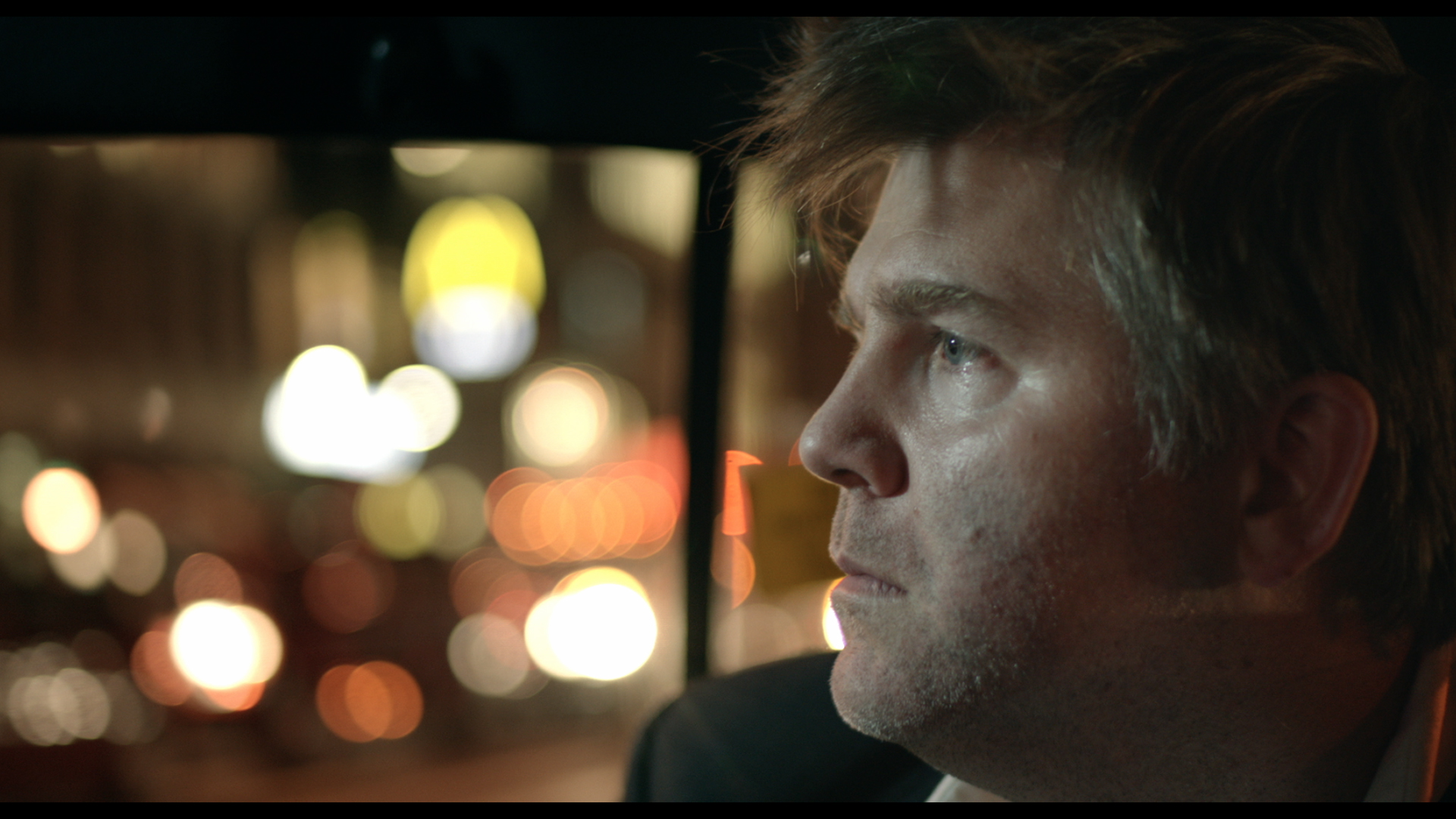
 On April 2, 2011, after ten years of building a devoted following that was still growing, electronic dance-punk faves LCD Soundsystem played its