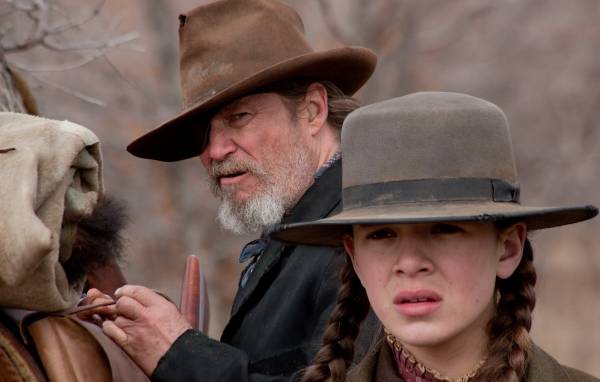
Jeff Bridges and Hailee Steinfeld star in Coen brothers remake of John Wayne classic
RECENT ACQUISITIONS: TRUE GRIT (Joel & Ethan Coen, 2010)
MoMA Film, Museum of Modern Art
11 West 53rd St. between Fifth & Sixth Aves.
Friday, August 17, 7:00, and Sunday, August 19, 5:00
Series runs through August 19
Tickets: $12, in person only, may be applied to museum admission within thirty days, same-day screenings free with museum admission, available at Film and Media Desk
212-708-9400
www.moma.org
www.truegritmovie.com
 Since their 1984 debut feature, Blood Simple, Coen brothers Joel and Ethan have tackled numerous genres with dazzling originality, resulting in such fresh, unusual, and intelligent fare as Barton Fink (1991), Fargo (1996), The Big Lebowski (1998), No Country for Old Men (2007), and A Serious Man (2009). They’ve had some hiccups along the way, but their only true dud was also their only remake, 2004’s The Ladykillers, an unwatchable version of the 1955 Alec Guinness original. Now they’re revisiting the 1969 classic Western True Grit, which earned Johny Wayne his only Oscar and has held up poorly over the years. For the 2010 reboot, the Coens turned to Jeff Bridges to step into the Duke’s shoes as U.S. marshal Reuben J. “Rooster” Cogburn, an aging lawman with a thing for the bottle, as well as for killing. He’s hired by determined fourteen-year-old Mattie Ross (Hailee Steinfeld) to hunt down her father’s murderer, a man named Tom Chaney (Josh Brolin), who’s also being tracked by ever-faithful Texas Ranger La Boeuf (Matt Damon) for other crimes against humanity. Instead of merely remaking the previous film, which was directed by Henry Hathaway (Kiss of Death, Airport) and also starred musician Glen Campbell as La Boeuf and Kim Darby as Mattie, the Coens went back to Charles Portis’s 1968 novel, with the most important difference being the change in point of view; the new True Grit is told from Mattie’s perspective, including voice-over narration from the adult Mattie (Elizabeth Marvel), which breathes new life into the tired old horse. While Wayne played Cogburn with his tongue firmly in cheek, adding bits of silly comic relief, Bridges imbues the marshal with more seriousness and less hulking bravado as he continually — and more and more drunkenly — tells stories from his past. By going back to the book, the Coens also get to add more violence, especially near the end, as well as a coda about Mattie’s future. While the original featured a bombastic, overreaching score by Don Black, longtime Coen brothers composer Carter Burwell ratchets things down significantly, using the old hymn “Leaning on the Everlasting Arms” as his central musical theme. As much as the Coens want the new film to be viewed in its own right, there are still too many similarities to avoid comparisons with the original, but their True Grit does turn out to be a better executed, less predictable, and more entertaining genre piece. True Grit is screening August 17 and 19 at MoMA as part of the series “A View from the Vaults, 2012: Recent Acquisitions,” which continues through August 19 with such new films in MoMA’s collection as Christopher Guest’s Best in Show, Gregg Araki’s Mysterious Skin, and William A. Wellman’s Frisco Jenny.
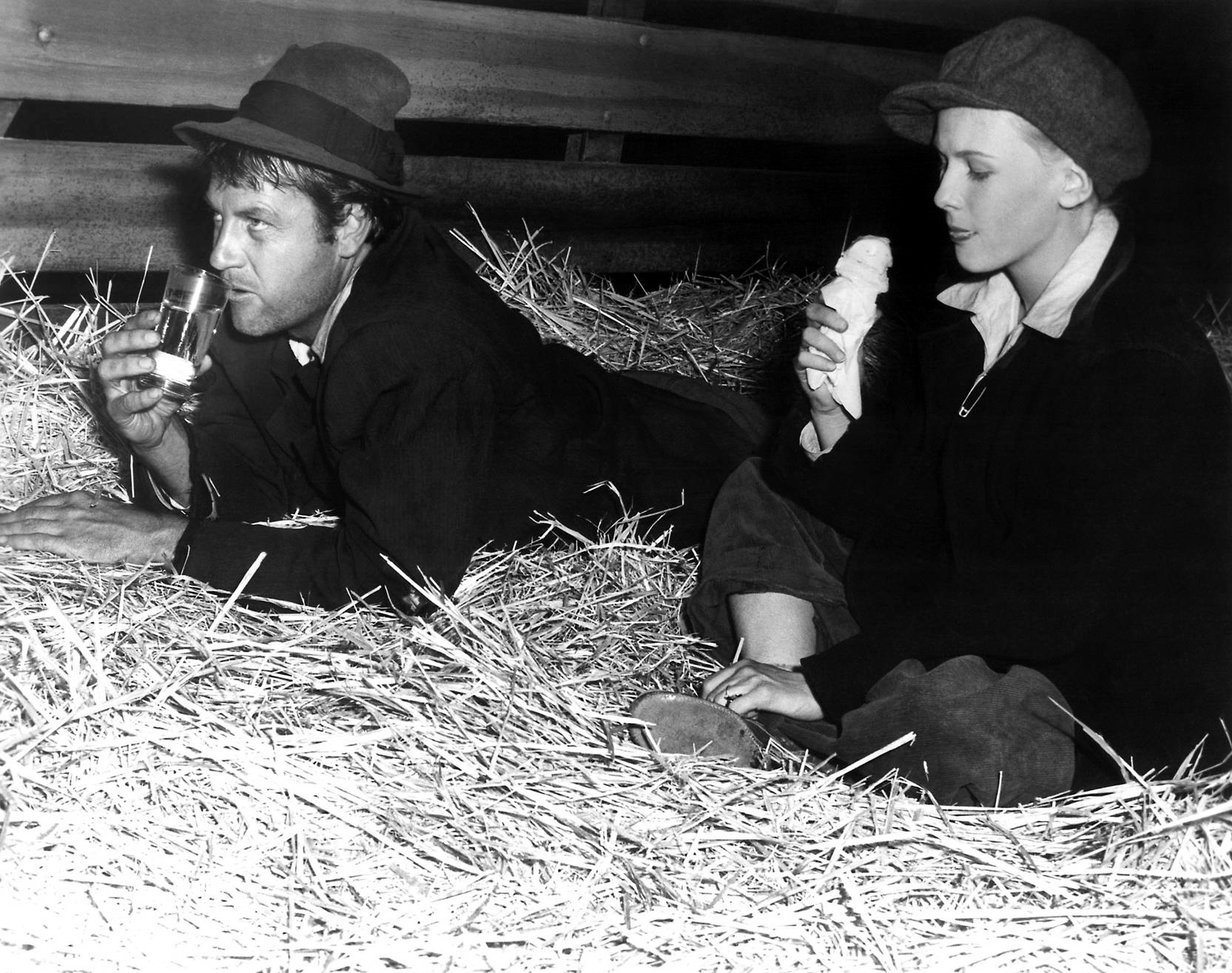
 When a successful Hollywood director decides to make a socially conscious film instead of his usual fluff comedies, he gets more than he bargained for in this classic Preston Sturges film starring Joel McCrea and Veronica Lake. McCrea gives one of his finest performances as John L. Sullivan, a filmmaker who has made a string of shallow comedies but is ready to take on far more serious subjects, despite what the studio wants. So he heads out on the road, pretending to be a tramp to learn about the real world as he is followed by a crew ready to bail him out of any trouble, but he is soon thrust into actual distress when he winds up on his own, with no money and no memory, a railroad hobo desperately trying to survive against seemingly impenetrable odds. In the wake of the financial mortgage crisis and the country’s continuing economic woes, Sullivan’s Travels feels as fresh and relevant as ever; just as McCrea’s Sullivan does in the film, writer-director Sturges is letting everyone know that it’s okay to enjoy life even in troubled times. To that end, the film opens with a special dedication that reads, “To the memory of those who made us laugh: the motley mountebanks, the clowns, the buffoons, in all times and in all nations, whose efforts have lightened our burden a little.” Sullivan’s Travels is screening August 17 in the BAMcinématek series “American Gagsters: Great Comedy Teams,” which runs through September 17 and consists of fifty films (all but one in 35mm) featuring fabulous comedic pairings; Sturges’s The Palm Beach Story, a madcap romp with McCrea and Claudette Colbert, is also being shown on Friday.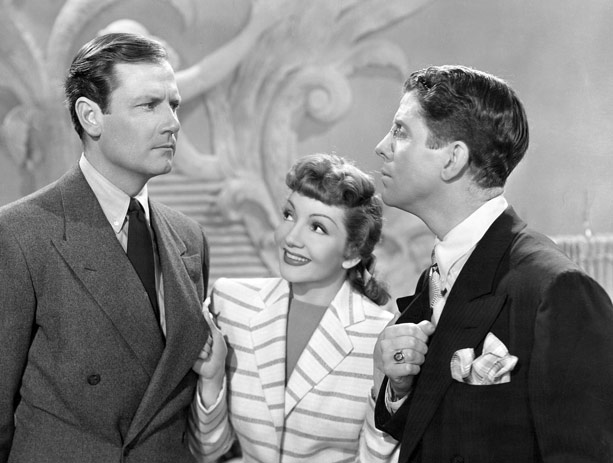
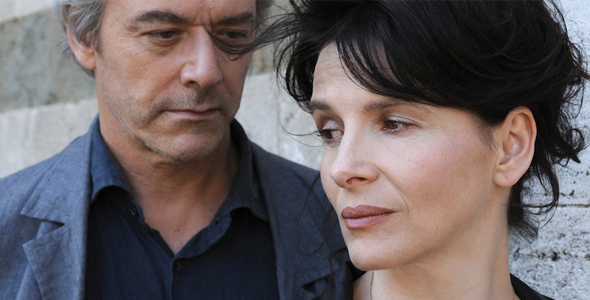
 Writer, director, poet, photographer, editor, graphic designer, and painter Abbas Kiarostami has been one of Iran’s leading filmmakers for nearly forty years, compiling a resume that includes such important international films as Under the Olive Trees (1994), Taste of Cherry (1997), and The Wind Will Carry Us (1999). Certified Copy is his first feature made outside of his home country, a dreadfully boring and annoying art-infused romantic comedy set in Italy. Juliette Binoche was named Best Actress at Cannes this year for her starring role as an unnamed single mother and antiques dealer who is obsessed with English author James Miller’s (British opera star William Shimell) book on the history and meaning of art replicas, Certified Copy. Inexplicably, the two strangers are soon on a bizarre sort-of date, driving through Tuscany and becoming involved in a series of vignettes about love and marriage, literature and art, and other topics. Both characters are seriously flawed and emotionally unstable in ways that make them unattractive to watch, especially in obvious set-ups that either go nowhere or exactly where you think they’re going. While Julie Delpy and Ethan Hawke made the somewhat similar Before Sunrise (1995) and Before Sunset (2004), in which two strangers from different countries spend a day together (but mostly by themselves), the sexual tension and excitement always building, Certified Copy is more reminiscent of Hans Canova’s ridiculous Conversations with Other Women (2005), in which Aaron Eckhart and Helena Bonham Carter star as wedding guests with a past whom viewers can’t wait to just shut up and get off the screen. Don’t let the supposed adult dialogue of Certified Copy fool you into thinking it’s an intelligent, mature look at believable relationships; instead, it feels like a staid copy of other, better films you think you’ve seen but can’t remember — and won’t care. Certified Copy is screening on August 15 as part of Socrates Sculpture Park’s fourteenth annual free Outdoor Cinema summer series, with that night’s focus on France and Italy; in addition to the film, there will be live music and/or dance and local regional cuisine.
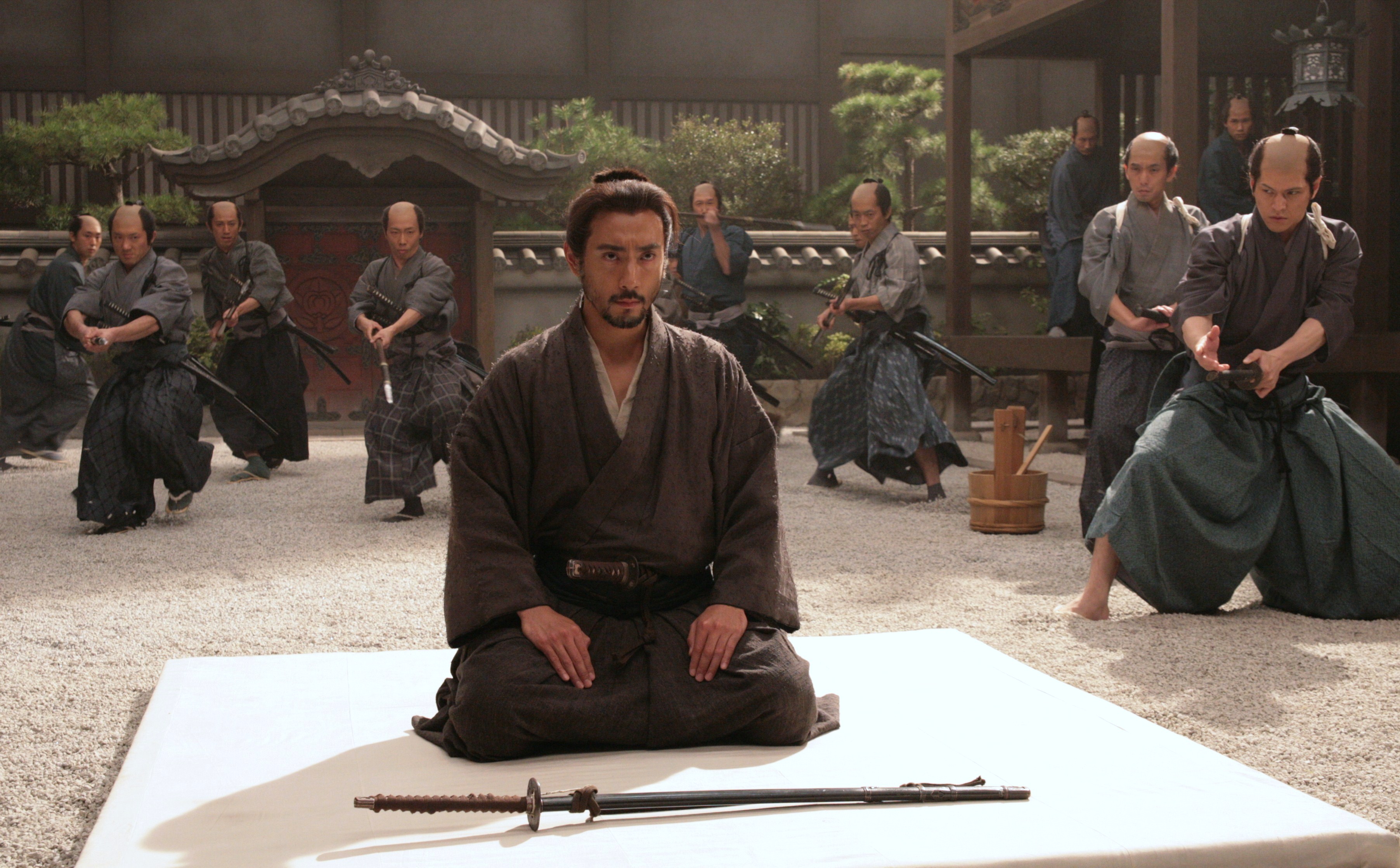
 Nearly fifty years after Masaki Kobayashi’s Harakiri won the Special Jury Award at the 1963 Cannes Film Festival, Takashi Miike’s magnificent 2011 remake was also entered into competition at the prestigious French event. During peaceful times in 1634 Edo, a masterless samurai named Hanshiro Tsukumo (Kabuki star Ebizo Ichikawa) comes to the Lyi clan, requesting permission to commit seppuku in the estate’s courtyard, seeking an honorable death. But clan retainer Kageyu Saito (Kōji Yakusho) and his right-hand man, Hikokuro Omodaka (Munetaka Aoki), believe he might be yet another penniless samurai using a suicide bluff in order to get either a job or money. Trying to discover if the man is serious about wanting to commit hara-kiri, the retainer tells him the horrific story of a young samurai named Motome Chijiiwa (Eita) who requested the same thing two months before. But soon Hanshiro has his own story to tell, one that turns everything around in surprising ways. Miike, who has directed more than eighty movies across a multitude of genres during his twenty-two-year career, including such masterworks as Audition, Ichi the Killer, and Thirteen Assassins, has made his most emotional, compassionate film yet with Hara-Kiri: Death of a Samurai. Ichikawa, taking on the role played in the original by Tatsuya Nakadai, is brilliant as Hanshiro, a deeply thoughtful samurai with a fierce dedication to honor and loyalty. As he stares into Yakusho’s eyes, the tension can be cut with a steel sword. Miike and cinematographer Nobuyasu Kita shot the film in 3D, but they chose not to get gimmicky with the effects, just making the film they wanted to as if it were in regular 2D. “There was no change to my approach other than I was able to go brag to the director shooting at the studio next door and say, ‘Huh? Yours is flat and level? Ours is bumpy and convexo-concave,’” Miike explains in the press notes. Although he adds, “I definitely anticipate making more 3D movies. Next, if I have the chance, I want to have things that shouldn’t come out of our bodies be hurled at the audience.” The 3D adds a beautiful depth to Akira Sakamoto and Kazuto Kagoo’s gorgeous sets, which are enhanced by Yuji Hayashida’s rich art direction, bathed in deep black, white, gray, and red. The 3D also makes it easier to read the subtitles, which pop off the screen, along with the snow. Hara-Kiri might be a thinking person’s samurai movie, but it is still a Miike film, so it also features one of the most brutal suicides ever depicted on celluloid, and it ends with one helluva fight scene.