
Documentary celebrates the long history of Jacob’s Pillow as a mecca for dance (photo by Christopher Duggan)
NEVER STAND STILL: DANCING AT JACOB’S PILLOW (Ron Honsa, 2011)
Symphony Space, Leonard Nimoy Thalia
2537 Broadway at 95th St.
Sunday, August 19 & 26 and September 2, $14, 8:00
212-864-5400
www.symphonyspace.org
firstrunfeatures.com
 In conjunction with the eightieth anniversary of the Jacob’s Pillow Dance Festival, Ron Honsa has made Never Stand Still, a documentary that celebrates the long history of the national historic landmark dedicated to the art of movement. Narrated by Bill T. Jones, the seventy-five-minute documentary looks back at the founding of the Pillow, located in Becket, Massachusetts, through exciting archival footage of Ted Shawn and his wife, Ruth St. Denis, Shawn’s all-male troupe, and the construction of the first American theater dedicated specifically to dance. Honsa speaks with such legendary dancers and choreographers as Merce Cunningham, Suzanne Farrell, Mark Morris, Judith Jamison, Paul Taylor, and Marge Champion, who all discuss the importance of the Pillow as a nurturing creative mecca that continues to bring performers and audiences together from all over the world. “It was a place where people could, quietly or not, think differently and act differently,” Cunningham says in one of his last interviews. Gideon Obarzanek calls the Pillow “one of the few places you can come and really feel and understand the past in order to move into the future.” Honsa focuses on a series of companies and creators as they rehearse and perform at Jacob’s Pillow, including Obarzanek’s Chunky Move, Rasta Thomas and Bad Boy Dance, solo artist Shivantala Shivalingappa, the Mark Morris Dance Group, Jens Rosén and Stockholm 59° North, Nikolaj Hübbe and the Royal Danish Ballet, and Bill Irwin, who pays tribute to the movement skills of Charlie Chaplin and Buster Keaton. Honsa (The Men Who Danced) gives equal time to the past, present, and future of dance, incorporating classical, modern, contemporary, hip-hop, experimental, ballet, and other styles and genres, playing no favorites. The film is screening for three consecutive Sundays as part of the ongoing Thalia Docs program at Symphony Space, with Honsa participating in a Q&A following the August 19 show.

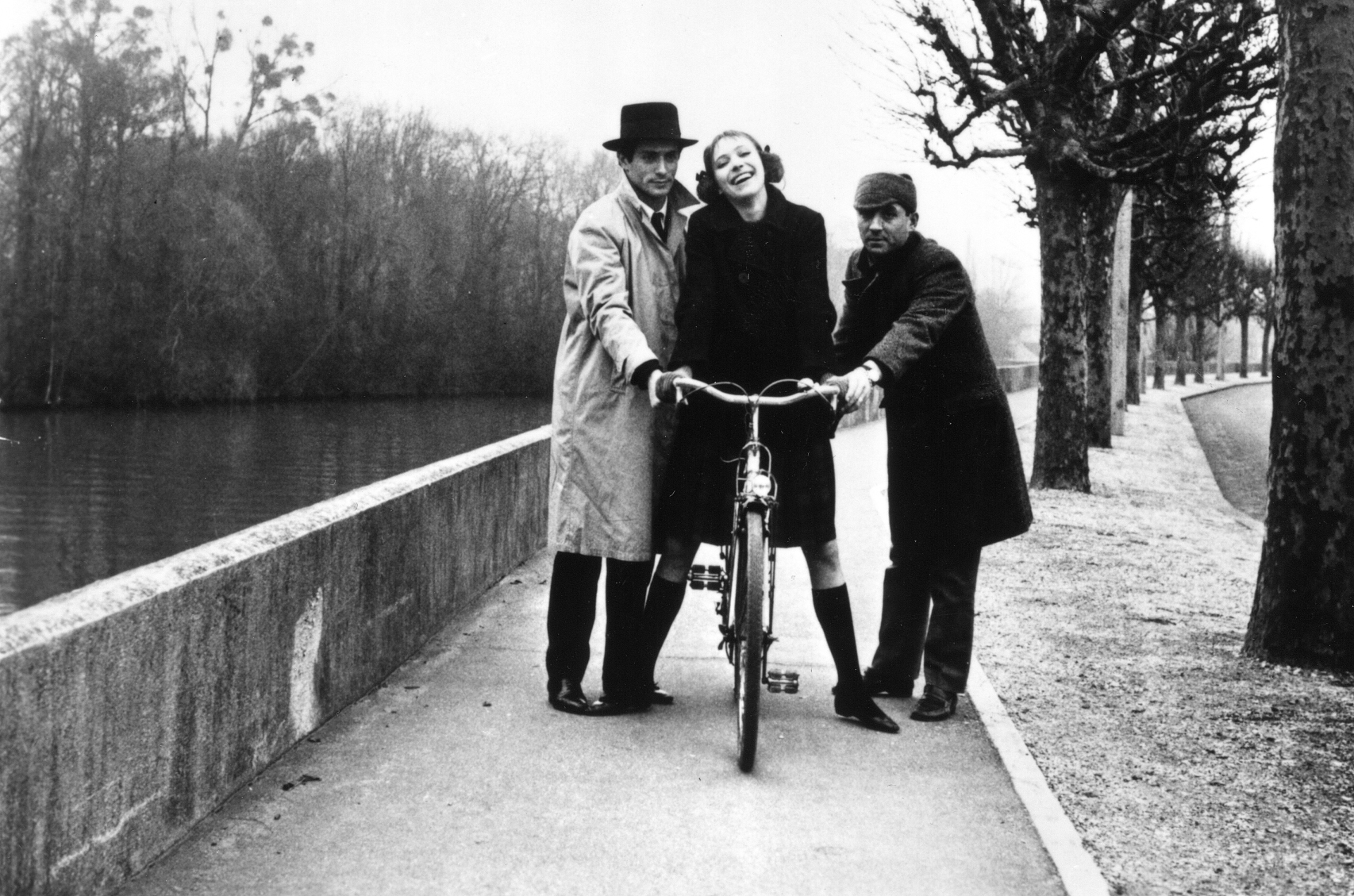
 When a pair of disaffected Parisians, Arthur (Claude Brasseur) and Franz (Sami Frey), meet an adorable young woman, Odile (Anna Karina), in English class, they decide to team up and steal a ton of money from a man living in Odile’s aunt’s house. As they meander through the streets of cinematographer Raoul Coutard’s black-and-white Paris, they talk about English and wealth, dance in a cafe while director Jean-Luc Godard breaks in with voice-over narration about their character, run through the Louvre in record time, and pause for a near-moment of pure silence. Godard throws in plenty of commentary on politics, the cinema, and the bourgeoisie in the midst of some genuinely funny scenes. Band of Outsiders is no ordinary heist movie; based on Dolores Hitchens’s novel Fool’s Gold, it is the story of three offbeat individuals who just happen to decide to attempt a robbery while living their strange existence, as if they were outside from the rest of the world. The trio of ne’er-do-wells might remind Jim Jarmusch fans of the main threesome from Stranger Than Paradise (1984), except Godard’s characters are more aggressively persistent. One of Godard’s most accessible films, Band of Outsiders is screening August 18 and 22 as part of the MoMA series “Gaumont Thrillers: From Fantômas to A Gang Story,” which continues with such Gaumont-produced films as Henri-Georges Clouzot’s The Murderer Lives at 21, Jules Dassin’s Riffifi, and Luc Besson’s La Femme Nikita and The Professional.
 All work and no play makes Jack a not-so-quite dull boy in Stanley Kubrick’s classic horror story, based on the Stephen King novel. One of the all-time-great frightfests, The Shining is a truly scary movie about a writer named Jack Torrance (Jack Nicholson at his overacting best) who has agreed to become the caretaker of the old Overlook Hotel in Colorado during the snowy winter when the enormous mountain resort closes down for the season. He is joined by his perpetually nervous wife, Wendy (Shelley Duvall), and their young son, Danny (Danny Lloyd), who seems to have brought along his invisible friend, Tony, who speaks through Danny’s finger. Between taking care of the Overlook and working on his novel, Jack finds a whole bunch of other folks to hang out with, people who have populated the place during the ritzy establishment’s golden age, including a strange woman in room 237. Kubrick plays with horror conventions as he seeks to scare the crap out of the audience, something he accomplishes time and time again as Jack grows more disturbed, Wendy’s shrieks become more and more ear piercing and annoying, and Danny’s visions get more and more bloody. No matter how many times you’ve seen it, it still gets you, even when you know exactly what’s lurking around that corner. Only those who went to the film during its opening weekend, as we did, got to see the two-minute finale that Kubrick cut out immediately thereafter, which involved the iconoclastic director riding his bicycle to various theaters, armed with a pair of scissors. The Shining is screening in digital high-definition on Friday and Saturday at midnight as part of the IFC Center’s Waverly Midnights: Late-Night Favorites series, which continues next with such other greats as Alejandro Jodorowsky’s El Topo and The Holy Mountain, the Coen brothers’ Fargo, and John Carpenter’s remake of The Thing.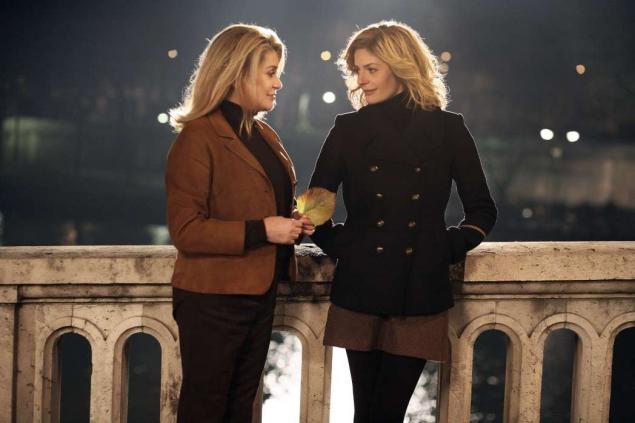
 The closing-night selection of the 2011 Cannes Film Festival, Christophe Honoré’s Beloved attempts to be a sweeping romantic epic, but it works best when it when it keeps it simple. In 1964 Paris, Madeleine (Ludivine Sagnier) decides that making a little extra money by selling her body is a better way to afford fancier things than by stealing them, until she falls for Czech doctor Jaromil (Rasha Bukvic). But after they have a child, Soviet tanks invade Prague, and Jaromil takes a lover, they separate. Over the years, as Madeleine (later played by Catherine Deneuve) tries to make a new life for her and Vera (Deneuve’s real-life daughter, Chiara Mastroianni), Jaromil (Czech director Milos Forman) keeps reappearing in their lives, but while Madeleine seems comfortable being with her former husband again, displaying a free and open sexuality, Vera seems unable to sustain a real relationship, adored by a younger teacher (Louis Garrel) while chasing after a gay American musician (Paul Schneider). A sort of mash-up of Luis Buñuel’s Belle de Jour and Jacques Demy’s The Umbrellas of Cherbourg, Beloved features characters calmly turning to song to contemplate their inner dilemmas as they walk through the streets, singing such numbers as “Heaven Knows I’m Miserable Now” (adapted from the Smiths’ original), then proceeding on. When Honoré (Love Songs, Dans Paris) keeps to the central plotlines, Beloved is an engaging, intimate look at sex, love, and family over a forty-five-year period. Unfortunately, he injects unnecessary sociopolitical elements that sidetrack the story and feel forced. At 135 minutes, the film is also at least a half hour too long. Had Honoré stopped earlier, he would have had quite a film, but instead it seems to go on interminably, passing up what could have been fine endings for additional scenes that quickly become tiresome and repetitive. Beloved does have its moments, but it sadly falls short of what it could have been. The director will be on hand at the IFC Center to discuss the film at the 6:55 screenings on Friday and Saturday night of opening weekend.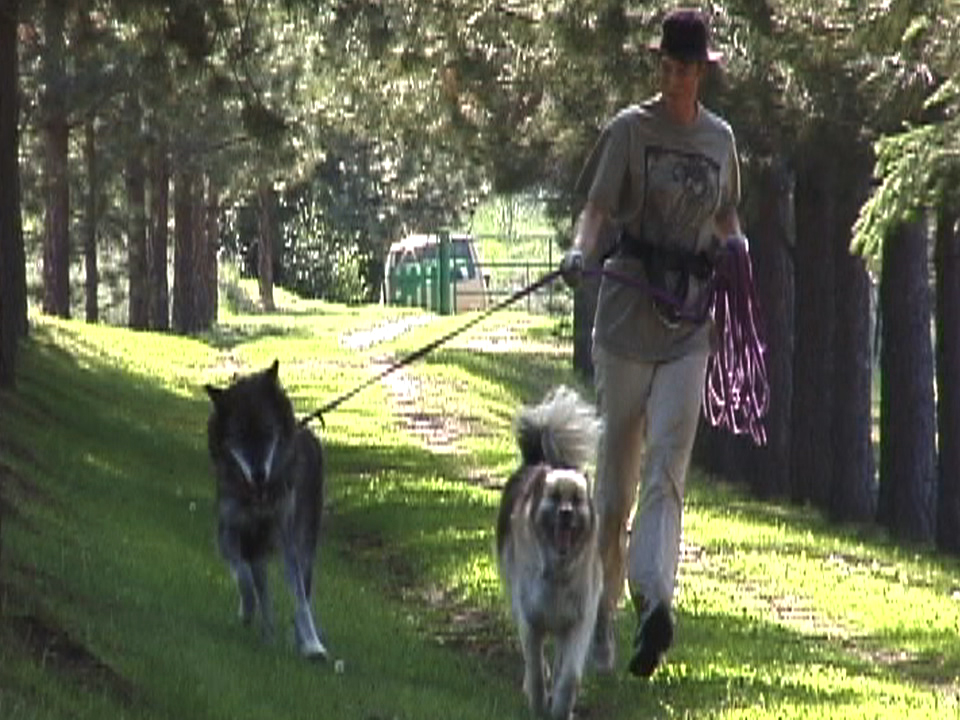
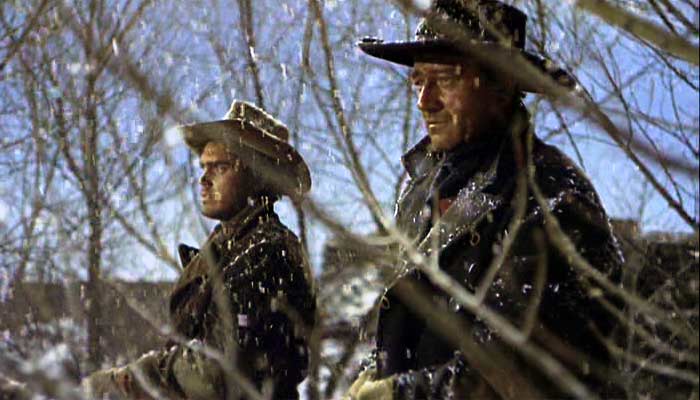
 That’ll be the day when someone tries to claim there’s a better Western than John Ford’s ethnocentric look at the dying of the Old West and the birth of the modern era. Essentially about a gunfighter’s attempt to find and kill his young niece, who has been kidnapped and, ostensibly, ruined by Indians, The Searchers is laden with iconic imagery, inside messages, and not-so-subtle metaphors. Hence, it is no accident that John Wayne’s son, Patrick, plays an ambitious yet inept officer named Greenhill. The elder Wayne stars as Ethan Edwards, a tough-as-nails Confederate veteran seeking revenge for the murder of his brother’s family; he’s also out to save Debbie (Natalie Wood) from the Comanches, led by a chief known as Scar (Henry Brandon), by ending her life, because in his world view, it’s better to be dead than red. Joining him on his trek is Debbie’s adopted brother, Martin Pawley (Jeffrey Hunter), who wants to save her from Edwards. The magnificent film balances its serious center with a large dose of humor, particularly in the relationships between Ethan and Martin and Ethan with his Indian companion, Look (Beulah Archuletta). And keep your eye on that blanket in front of the house. The Searchers is screening August 18 & 19 as part of the Museum of the Moving Image See It Big! series, which continues this month with such other splendid films as Martin Scorsese’s Taxi Driver, Terry Gilliam’s Brazil, David Lynch’s Blue Velvet, and David Lean’s Doctor Zhivago.