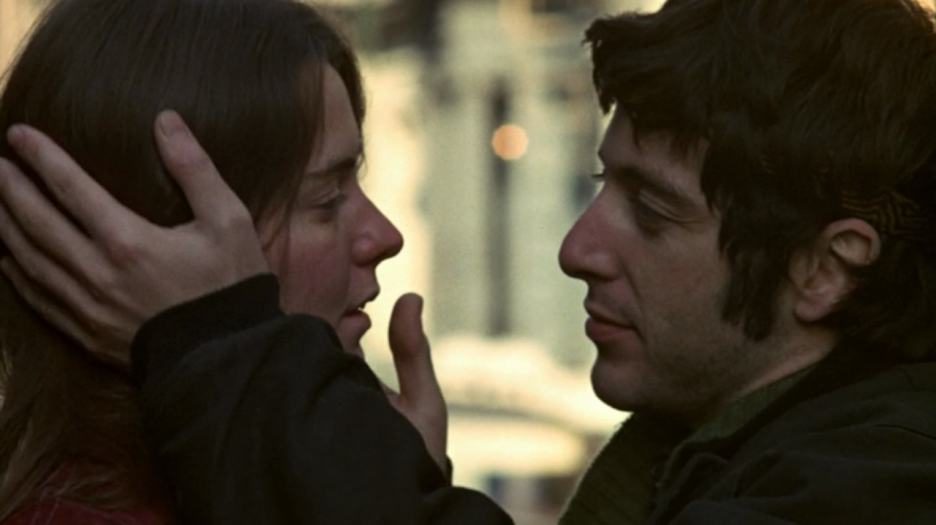
Kitty Winn and Al Pacino struggle with love and addiction in THE PANIC IN NEEDLE PARK
THE PANIC IN NEEDLE PARK (Jerry Schatzberg, 1971)
Anthology Film Archives
32 Second Ave. at Second St.
Sunday, September 9, 6:45, Thursday, September 13, 9:15, and Monday, September 17, 6:45
Series continues through September 19
212-505-5181
anthologyfilmarchives.org
 Al Pacino burst onto the cinematic landscape in The Panic in Needle Park, his first starring role. Pacino is fabulously unsettling as Bobby, a junkie always looking to score around Sherman Square at 72nd St. and Broadway, known then as Needle Park. Bobby hooks up with Helen (Kitty Winn, who was named Best Actress at the 1971 Cannes Film Festival for her performance), and the two of them do whatever is necessary to stay high as they wander the streets of the city. Director Jerry Schatzberg (Scarecrow, The Seduction of Joe Tynan, Street Smart) uses natural sound and light to give the film a more realistic feel, as if you are walking through the streets with Bobby and Helen. Several scenes will break your heart, including the one on the Staten Island Ferry; the powerful screenplay was the first written by novelist Joan Didion. The film launched Pacino’s stellar film career; his next five movies were The Godfather, Scarecrow, Serpico, The Godfather Part II, and Dog Day Afternoon, arguably the best start to an acting career ever. Gritty, realistic, and surprisingly tender, The Panic in Needle Park will be screening September 9, 13, and 17 as part of Anthology Film Archives’ ongoing series From the Pen of . . ., paying tribute to the often underrecognized writers behind some great films, this time around focusing on screenplays written by novelists, including Donald Westlake (Cops and Robbers, The Stepfather), Elmore Leonard (Joe Kidd, Mr. Majestyk), James Salter (Downhill Racer), Richard Matheson (House of Usher), Truman Capote (The Innocents), and others.
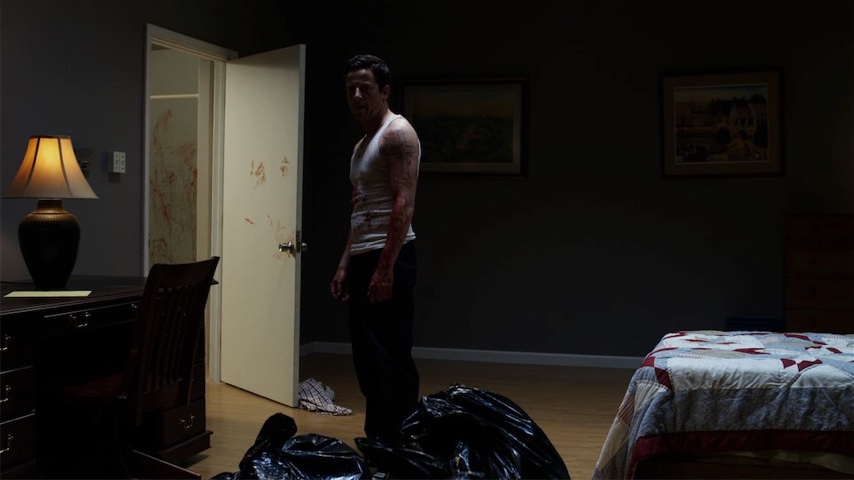
 In the mid-1980s, George Romero produced a syndicated horror anthology series called Tales from the Darkside, a creepy, often gory combination of Rod Serling’s Twilight Zone, Steven Spielberg’s Amazing Stories, and, primarily, HBO’s Tales from the Crypt. Actor and screenwriter Henry Oleck’s directorial debut, Serving Up Richard, is like a too long, more graphic Darkside episode, with actors you think you’ve seen before but are not quite sure where, caught up in bizarre situations that might just work until the usually pretty stupid ending ultimately leaves you disappointed. Ross McCall (White Collar) stars as Richard Reubens, a minor Wall Street player who is transferred to Los Angeles, moving to a sunny community with his lovely wife, Karen (Jericho’s Darby Stanchfield). Seeing an ad for an ultracool Mustang, Richard doesn’t listen to his wife and instead goes to check it out — and winds up locked in a cage by a crazy cannibal couple, anthropologist Everett Hutchins (24’s Jude Ciccolella) and his very strange, perpetually ailing wife, Glory (executive producer and former ballerina Susan Priver). While off on one of his many trips, Everett learned that eating healthy humans is good for sick people, so he regularly finds meals for his darling love, the pale-skinned, agoraphobic Glory. But when Glory takes a liking to Richard as a person, the Wall Street hunk thinks he might be able to negotiate his way out of this mess and avoid winding up on the menu. Originally titled The Guest Room, Serving Up Richard starts out as a surprisingly appealing appetizer, setting the table with some tasty tidbits. The main course keeps things looking up for a while, but as it goes on and on, it grows cold and silly, throwing in some very bad jokes and ridiculously over-the-top scenes. And the dessert — well, like the most mediocre Tales from the Darkside episode (was there any other kind?), the finale is a major letdown. However, McCall hangs tough through it all, doing a good job of holding the audience’s interest as the plot goes off the deep end. (Add half a star if you thought Tales from the Darkside was anything but mediocre.)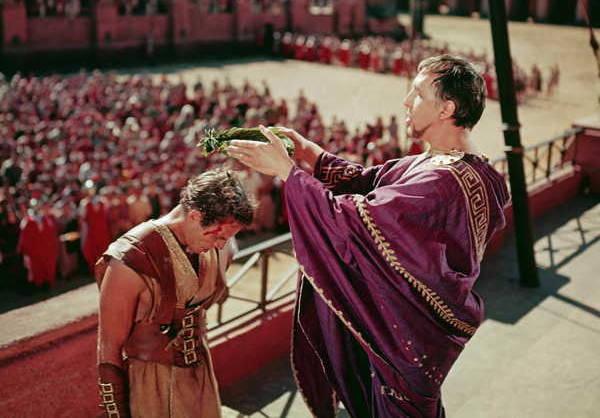
 One of the grandest epics ever made, William Wyler’s Ben-Hur was shown in a new digital restoration last fall as part of the New York Film Festival’s Masterworks sidebar, and now it’s coming to the Museum of the Moving Image, where it will screen September 8-9 in the “See It Big!” series. The DCP restoration of Wyler’s remake of Fred Niblo’s 1925 silent version, which starred Ramón Novarro and Francis X. Bushman (there was also a fifteen-minute Ben Hur made in 1907, all adapted from Lew Wallace’s 1880 novel), celebrates the fiftieth anniversary of the eleven-time Oscar winner, which garnered Academy Awards for Best Picture, Best Director, Best Actor (Charlton Heston as Judah Ben-Hur), Best Supporting Actor (Hugh Griffith as Sheik Ilderim), Best Score (Miklós Rózsa), Best Cinematography, Best Set Decoration, Best Costume Design, and Best Special Effects, among other trophies. The $15 million blockbuster tells the story of two childhood friends, Judah Ben-Hur and Messala (Stephen Boyd), who get caught up in religion, politics, and slavery in first-century Rome and eventually have a magnificent showdown on the chariot course. As cinema spectacles go, they don’t get much bigger or better than this.