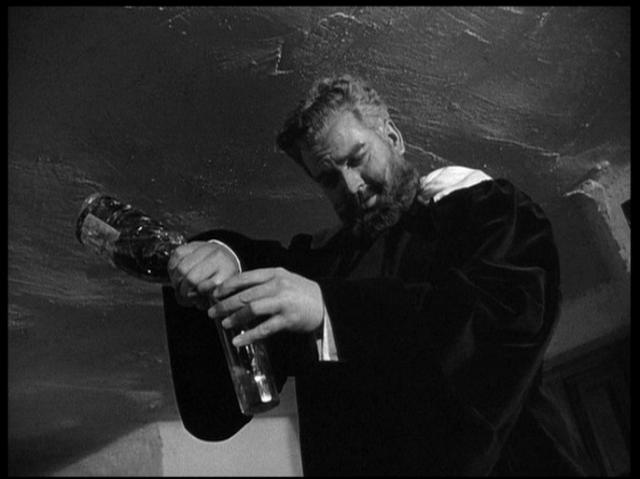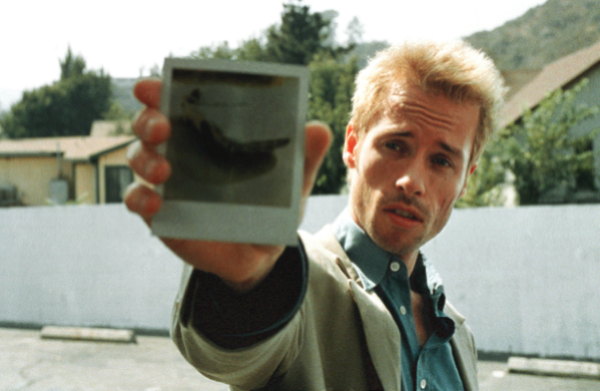
Christopher Nolan’s backward-moving MEMENTO is part of retrospective at Lincoln Center
Film Society of Lincoln Center, Elinor Bunin Munroe Film Center
70 Lincoln Center Plaza
September 14-18
212-875-5601
www.filmlinc.com
Celebrating the conclusion of the Dark Night Trilogy, the Film Society of Lincoln Center is hosting a retrospective of the feature films of London-born auteur Christopher Nolan. The forty-two-year-old Nolan has made eight films in his fourteen-year career, each one unique in its own way, often offering complex, mind-bending narratives and visuals that are fascinating to watch even when they get convoluted and confusing. The series begins with a newly restored 35mm print of Nolan’s ultra-low-budget black-and-white debut, 1998’s Following, screening September 14-18, a sort of forerunner of the rather larger, Oscar-nominated Inception, which will get the opportunity to once again both confound and delight audiences September 17-18. Here’s a brief look at the other films in the festival.
MEMENTO (Christopher Nolan, 2000)
Friday, September 14, 8:15
Monday, September 17, 6:00
 Christopher Nolan’s challenging, insightful murder mystery stars Guy Pearce (L.A. Coinfidential) as Leonard Shelby, a man with no short-term memory; to remember things, he takes Polaroids and has important information tattooed on his body. Joe Pantoliano (The Sopranos) and Carrie-Anne Moss (The Matrix) costar in this thriller with a twist — the story is essentially told in backward time. You’ll want to see it in the theater because there is a quick shot at the end that will have you debating with the other viewers around you what you just saw; the shot loses its charm when you’re watching it at home and can freeze-frame the action so you can see what really happened.
INSOMNIA (Christopher Nolan, 2002)
Saturday, September 15, 3:15
 The first half of Christopher Nolan’s nearly successful remake of Erik Skjoldbjærg’s creepy psychological thriller does a good job of building the tension so prevalent in the original, following it nearly scene by scene, but with one major flaw — creating definitive motive where in the 1997 Norwegian film there was doubt and soul searching. Ultimately, indie god Nolan gets trapped in showcasing Hollywood acting — his cast includes Al Pacino, Robin Williams, and Hilary Swank — obvious plot twists, and easy resolutions that pale in comparison to the original, which starred Stellan Skarsgård, bringing the whole film down. But Warner Bros. knows that most people will never see the 1997 original; that’s why the only mention of Skjoldbjærg’s film comes after the final acting credits, when most filmgoers are already on their way out of the theater.
THE PRESTIGE (Christopher Nolan, 2006)
Sunday, September 16, 6:45
Tuesday, September 18, 9:00
 Christopher Nolan turns to the world of magic in The Prestige, but you’ll feel like you’ve seen this rabbit pulled out of a hat before — especially if you checked out two other 2006 films, The Illusionist, Neil Burger’s murder mystery about a magician, and Scoop, in which Woody Allen plays a magician who gets caught up in a murder mystery with his “daughter” (Scarlett Johansson) and the son of a powerful lord (Hugh Jackman). In The Prestige, dueling magicians Robert Angier (Jackman) and Alfred Borden (Christian Bale) have a bitter relationship right out of Amadeus, with Angier being more the Salieri type and Borden the Mozart wunderkind. They each keep trying to up the ante with the constantly morphing trick called the Transported Man, eventually involving electricity expert and oddball Nikola Tesla (David Bowie) in the mix, as well as sexy magician’s assistant Olivia (Johansson). Parts of the film are indeed thrilling, and the ending packs a wallop, but much of the meat of the movie is far too repetitive and, ultimately, not quite believable.
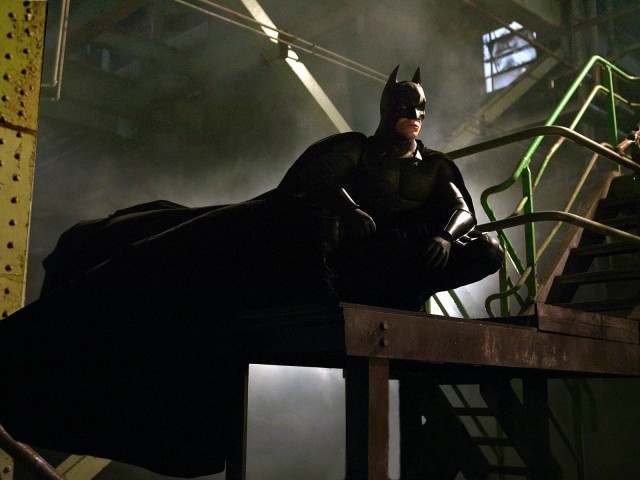
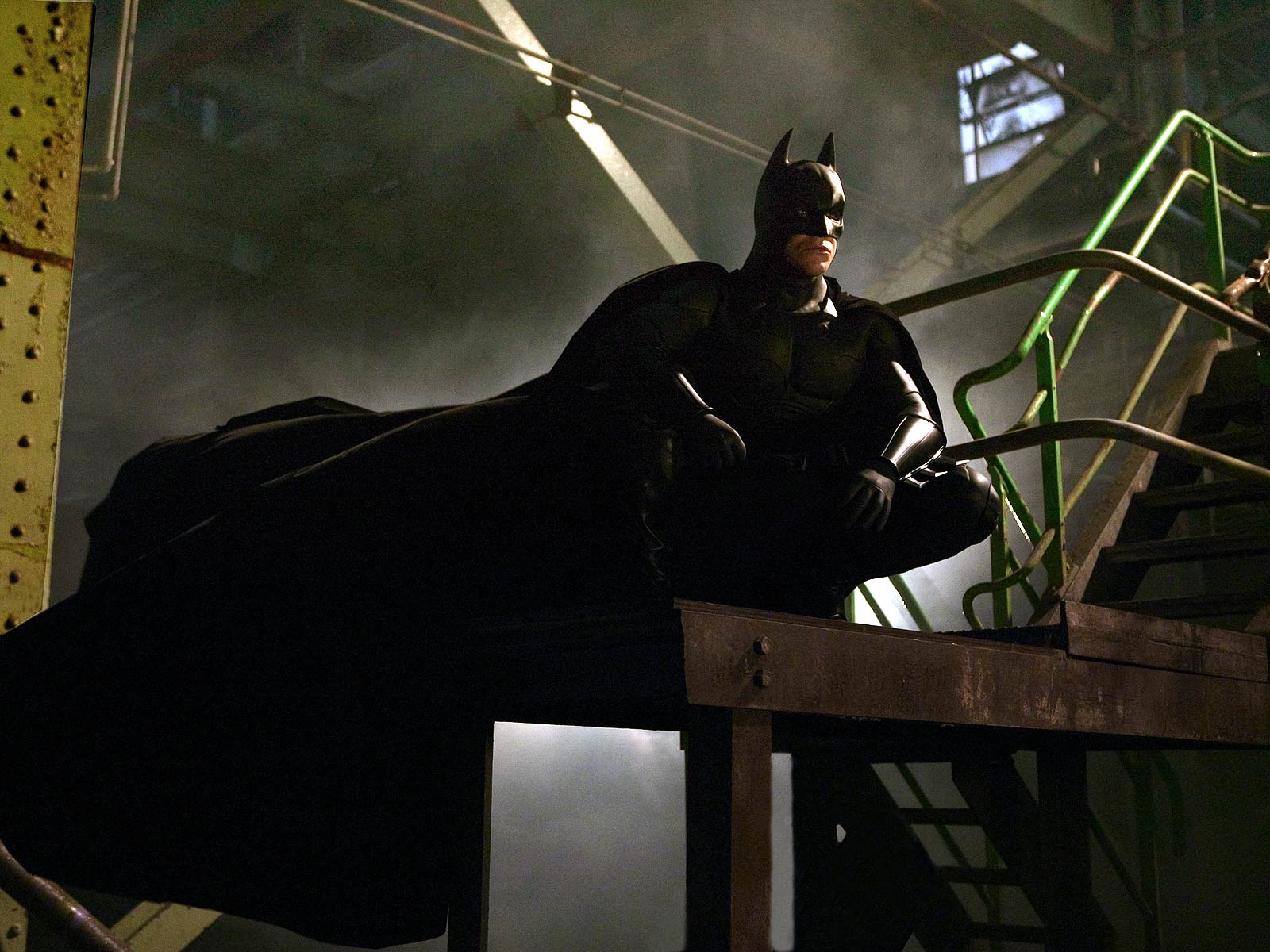
Christopher Nolan puts a new twist on the Caped Crusader’s origin story in BATMAN BEGINS
BATMAN BEGINS (Christopher Nolan, 2005)
Saturday, September 15, 5:45
Sunday, September 16, 1:00
Christopher Nolan takes over the Bat controls with spectacular results in this thrilling examination of the origins of the Bat Man, written by David S. Goyer and Nolan. Like his previous efforts, Memento and Insomnia, Nolan takes a psychological approach in telling the story of Bruce Wayne (Christian Bale), a wealthy young man fighting deep-seated fears from his past, including the violent murder of his parents. Determined to get justice and revenge — he is selected for special training by Ducard (Liam Neeson), a Qui-Gon Jinn-like character whose master is the mysterious Ra’s Al Ghul (Ken Watanabe). When Wayne finally returns home, he goes on a one-man mission to save Gotham, with the help of Sgt. Jim Gordon (Gary Oldman), assistant DA Rachel Dawes (Katie Holmes), old-timer Lucius Fox (Morgan Freeman), and the dependable and loyal Alfred (Michael Caine), as they do battle against the likes of mobster Carmine Falcone (Tom Wilkinson) and Dr. Jonathan Crane (Cillian Murphy). Bale plays Wayne/Batman as a tormented, troubled soul, lost in a dark, dangerous world, a more realistic hero than those previously portrayed by Michael Keaton, Val Kilmer, George Clooney, and Adam West. And for the first time in a live-action Batman flick we get to really see Arkham Asylum as Nolan lays the groundwork for a pair of sequels. Sci-fi fans will get an extra kick out of all the Blade Runner influences, including the casting of Rutger Hauer as the head of Wayne Industries.
THE DARK KNIGHT (Christopher Nolan, 2008)
Saturday, September 15, 8:30
Sunday, September 16, 3:45
 Christopher Nolan’s follow-up to his 2005 hit Batman Begins is one of the most brilliant superhero films ever made. Christian Bale is back as billionaire bachelor Bruce Wayne, who spends his evenings fighting crime in Gotham City, which is under siege, victim to a brutal crime spree led by the vicious Joker (Heath Ledger in a massive, Oscar-winning performance). As the madman with the wild hair and evil clown face starts knocking off public officials, mob bosses, ordinary citizens, and even his own minions, Wayne is also beset by the blossoming relationship between Rachel Dawes (Maggie Gyllenhall), the woman he loves and who knows his secret, and the new DA, Harvey Dent (Aaron Eckhart), who has come into his high-profile job with both arms swinging, determined to make Gotham City safe. The Bat Man is joined once again by his faithful butler, Alfred (Michael Caine), Wayne Industries exec Lucius Fox (Morgan Freeman), and police lieutenant Jim Gordon (Gary Oldman); the film also features Anthony Michael Hall as a television talk-show host who finds himself in danger, Eric Roberts as a smooth-talking gangster, and Cillian Murphy as Scarecrow in a brief cameo. The Dark Knight is a carefully constructed tale of good and evil, love and death, and everything in between, working as both a thrilling action movie as well as a psychoanalytic examination of what lurks deep in the soul. Although there are special effects aplenty, it is primarily a very intimate, personal film about one man’s tortured existence. In a summer of the high-octane superhero flick (Iron Man, The Incredible Hulk, Hellboy II, Hancock), The Dark Knight towers above them all.

 Korean auteur Hong Sang-soo continues his fascinating exploration of cinematic narrative in In Another Country, although this one turns somewhat nasty and tiresome by the end. After being duped in a bad business deal by a family member, an older woman (Youn Yuh-jung) and her daughter, Wonju (Jung Yumi), move to the small seaside town of Mohjang, where the disenchanted Wonju decides to write a screenplay to deal with her frustration. Based on an actual experience she had, she writes three tales in which a French woman named Anne (each played by an English-speaking Isabelle Huppert) comes to the town for different reasons. In the first section, Anne is a prominent filmmaker invited by Korean director Jungsoo (Kwon Hye-hyo), who has a thing for her even though he is about to become a father with his very suspicious wife, Kumhee (Moon So-ri). In the second story, Anne, a woman married to a wealthy CEO, has come to Mohjang to continue her affair with a well-known director, Munsoo (Moon Sung-keun), who is careful that the two are not seen together in public. And in the final part, Anne, whose husband recently left her for a young Korean woman, has arrived in Mohjang with an older friend (Youn), seeking to rediscover herself. In all three stories, Anne searches for a lighthouse, as if that could shine a light on her future, and meets up with a goofy lifeguard (Yu Jun-sang) who offers the possibility of sex, but each Anne reacts in different ways to his advances. Dialogue and scenes repeat, with slight adjustments made based on the different versions of Anne, investigating character, identity, and desire both in film and in real life. Hong wrote the film specifically for Huppert, who is charming and delightful in the first two sections before turning ugly in the third as Anne suddenly becomes annoying, selfish, and irritating, the plot taking hard-to-believe twists that nearly undermine what has gone on before. As he has done in such previous films as