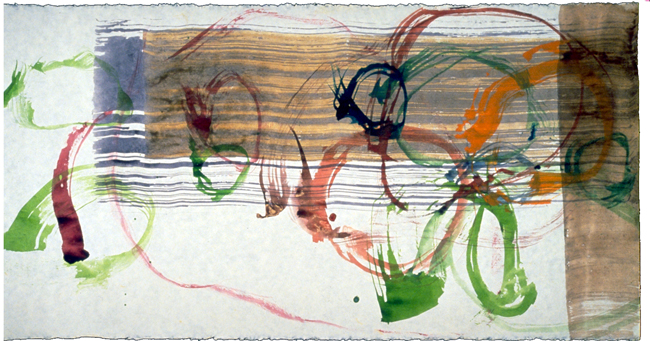
John Cage, “New River Watercolor, Series I (#3), watercolor on parchment paper, 1988 (courtesy National Academy Museum)
National Academy Museum
1083 Fifth Ave. at 89th St.
Wednesday – Sunday through January 13, $15, 11:00 am – 6:00 pm
212-369-4880
www.nationalacademy.org
The National Academy continues its transformation with the cleverly curated multimedia exhibition “John Cage: The Sight of Silence,” held in conjunction with the hundredth anniversary of the birth of the seminal avant-garde artist. A controversial minimalist composer, music theoretician, Zen practitioner, I Ching follower, and longtime partner of Merce Cunningham, Cage was also a watercolorist, and the National Academy show features more than four dozen of his paintings, drawings, and etchings made primarily during his residency at the Mountain Lake Workshop in Virginia in the 1980s and early ’90s. A short documentary reveals Cage’s fascinating process using local stones, feathers, and the same ideas of chance and complex numbering systems he employed in creating his musical compositions, resulting in gentle, spiritual works with colorful circles on paper sometimes prepared with smoke. A vitrine contains some of the elements Cage used for the pieces, which were hung by the National Academy on the walls of two galleries by chance as well, through a series of four rolls of the dice. The show also includes Cage’s 1969 Plexiglas homage to Duchamp, “Not Wanting to Say Anything About Marcel”; one of his unique scores; and a 1976 self-portrait. “The Sight of Silence” is supplemented by several video presentations, highlighted by a 1960 appearance Cage made on the TV game show I’ve Got a Secret, performing “Water Walk,” a composition for water pitcher, iron pipe, bathtub, goose call, bottle of wine, electric mixer, whistle, sprinkling can, ice cubes, two cymbals, mechanical fish, quail call, rubber duck, tape recorder, vase of roses, seltzer siphon, five radios, bathtub, and grand piano. In addition, another monitor plays the John Cage section of Peter Greenaway’s 1983 documentary Four American Composers, which captures unusual live performances, interviews, and Cage’s interstitial “Indeterminacy Stories.” It all makes for a charming show that is likely to surprise Cage devotees as well as those unfamiliar with his oeuvre.
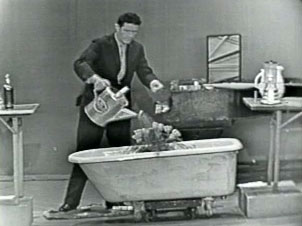
John Cage performs “Water Walk” on I’VE GOT A SECRET
“There is no such thing as an empty space or an empty time,” Cage once explained. “There is always something to see, something to hear. In fact, try as we may to make a silence, we cannot.” The National Academy is making sure there is always something to see and hear with “Chance Encounters,” a series of public programs ranging from book readings and panel discussions to live dance and concerts. Among the special events: On October 28 at 3:00, William Anastasi, who played chess with Cage every day for nearly fifteen years, will read from The Cage Dialogues: A Memoir; on November 10, Joan Retallack, who wrote Musicage: Cage Muses on Words Art Music with Cage, will present “Conversation with Cage”; on December 1, exhibition cocurator Ray Kass will direct a performance of Cage’s “STEPS” by Stephen Addis; and on January 5, Du Yun will perform “Water Walk.”
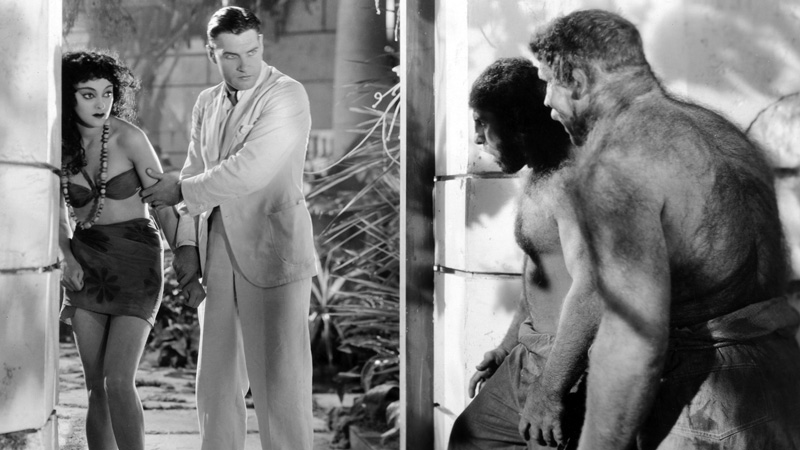
 “Are we not men?” declares the Sayer of the Law (Bela Lugosi) in Erle C. Kenton’s 1932 horror classic, Island of Lost Souls. (Yes, the phrase was eventually coopted by Devo.) After surviving a shipwreck, Edward Parker (Richard Arlen) soon finds himself on a very strange island where it appears that a madman named Dr. Moreau (Charles Laughton) is experimenting on living beings in rather inhumane ways. While his fiancée, Ruth Thomas (Leila Hyams), is trying to find him, Parker starts hanging around with Lota (Kathleen Burke), but there’s more to her than meets the eye. As Parker continues to poke around, he learns a little too much about what’s going on, meaning it just might be the House of Pain for him if he doesn’t watch out. Island of Lost Souls is a creepy pre-Code horror flick that holds up surprisingly well, with odd twists and turns that include more than just hints of torture, S&M, and bestiality. Laughton seems to be having a blast, pulling out his whip to tame his creations, enjoying it all way too much. It was quite a year for the British-born American actor, who also played Nero in Cecil B. DeMille’s The Sign of the Cross and the title character (winning an Oscar) in Alexander Korda’s The Private Life of Henry VIII in 1932. Island of Lost Souls is based on the H. G. Wells novel The Island of Dr. Moreau, which was also filmed in 1977 by Don Taylor, with Burt Lancaster as the doctor, Michael York as the curious wayward traveler, and Richard Basehart as the Sayer of the Law, and more famously by John Frankenheimer in 1997, with Marlon Brando as Moreau, David Thewliss as the shipwreck survivor, and Ron Perlman as the Sayer of the Law, often considered one of the worst films ever made.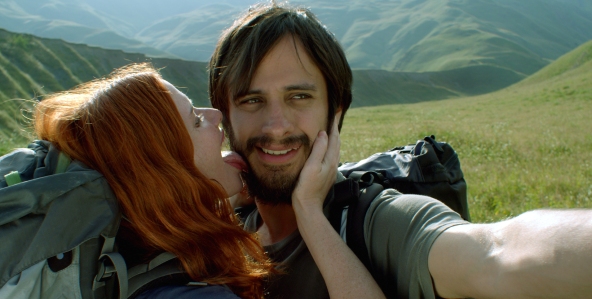
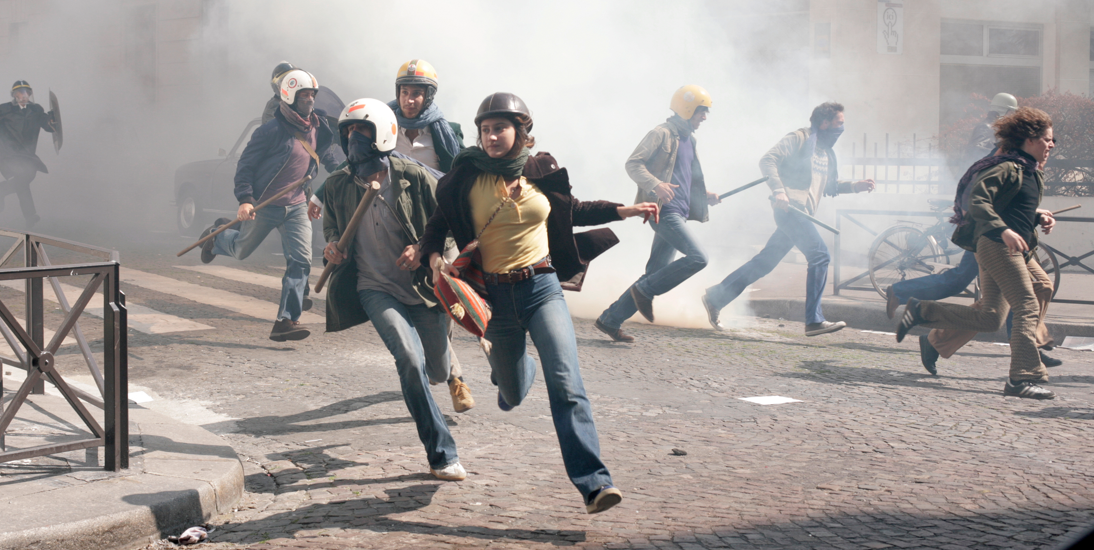
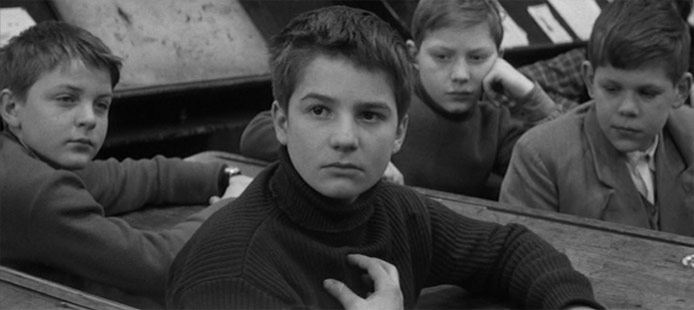
 “They won’t be happy you’re missing school like this,” a man tells fourteen-year-old Jean-Pierre Léaud as he’s auditioning for the part of Antoine Doinel in François Truffaut’s The 400 Blows. “It doesn’t matter, as long as I’m happy,” Léaud responds. Screening on October 26 as part of the Rubin Museum Cabaret Cinema series “Happiness Is . . . ,” where it will be introduced by Columbia professor and Truffaut expert Annette Insdorf, The 400 Blows marked the first of five films, including one short, in which Léaud played the iconic character, as audiences around the world followed his search for happiness. In The 400 Blows, Doinel is a twelve-year-old kid who loves Balzac, has never seen the ocean, and is always getting into trouble with his parents, who treat him more like a problem than a son. He is clearly very smart, but he does poorly in school, where he is harassed by his teacher (Guy Decomble). One day when he decides to play hooky, he catches his mother (Claire Maurier) kissing another man, and instead of telling his father (Albert Rémy), he runs away from home, moving in with his friend René (Patrick Auffay), setting off a series of events that lead to a whole lot more trouble and an unforgettable final shot. The 400 Blows is one of the most intelligent films ever made about adolescence, a tender, honest portrayal of a mischievous kid who just wants to be understood. Léaud gives a wonderfully nuanced performance that makes Antoine a uniquely believable and sympathetic character even when he is making some very bad choices. The film is also about escape of all kinds, beginning and ending with the camera racing away alongside Jean Constantin’s glorious score. The Adventures of Antoine Doinel series continues with 1962’s Antoine and Colette, 1968’s Stolen Kisses, 1970’s Bed and Board, and 1979’s Love on the Run, while “Happiness is . . .” continues through December 28 with such films as Ingmar Bergman’s Cries and Whispers, Michael Curtiz’s Casablanca, and George Cukor’s Camille, held in conjunction with the larger Rubin Museum program “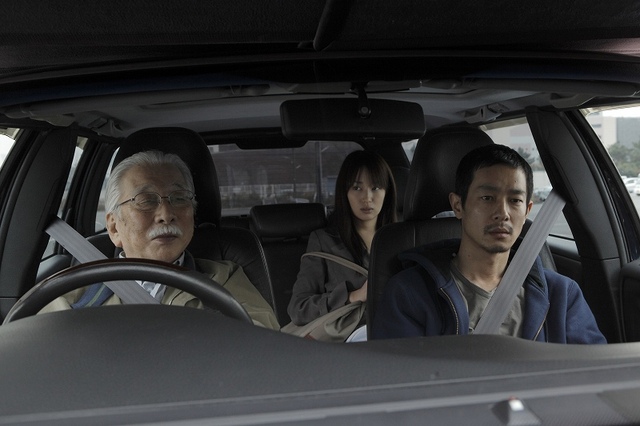
 Following the Tuscany-set