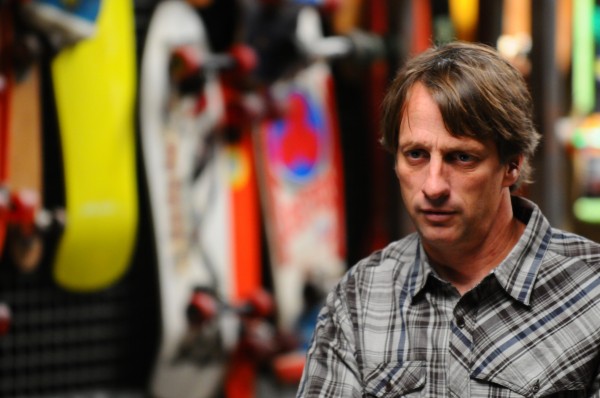
Tony Hawk discusses his early days as a pro skater in high-flying new documentary
BONES BRIGADE: AN AUTOBIOGRAPHY (Stacy Peralta, 2011)
IFC Center
323 Sixth Ave. at West Third St.
Through Thursday, November 8
212-924-7771
www.bonesbrigade.com
www.ifccenter.com
Tony Hawk was nine years old when he first got on a skateboard; by the time he was twelve, he was skating competitively, taking off on a remarkable career in which he would win seventy-three events by the time he was twenty-five, then go on to capture fourteen X Games medals, including nine gold. Born and raised in California, Hawk was a key member of the Bones Brigade, a group of young skaters, including Mike McGill, Lance Mountain, Rodney Mullen, Steve Caballero, and Tommy Guerrero, who revolutionized the sport, coached by former skater and videographer Stacy Peralta (Dogtown and Z-Boys, Riding Giants), who documents the history of the team in Bones Brigade: An Autobiography. (The film is playing at the IFC Center through November 8 and is also being released today, November 6, on DVD and as a digital download.)
Now forty-three, Hawk is still one of the leading proponents of skating, through popular video games, tireless personal appearances, and the Tony Hawk Foundation, which builds public skateboard parks in low-income communities. The thrice-divorced Hawk has four children, including nineteen-year-old Riley, who is a sponsored skater himself; his other boys, Spencer, thirteen, and Keegan, eleven, skate leisurely. He also has a four-year-old daughter, Kadence Clover. Hawk continues to thrive in the spotlight; he recently even ate bugs with fellow skater Jason Ellis for a Ride Channel video. Hawk called in from his home in San Diego late last week to talk about the new documentary, making the cult classic The Search for Animal Chin, and eating crickets.
twi-ny: Several guys in Bones Brigade get teary-eyed near the end. What kind of emotions did you experience while looking back at this seminal period of your life?
Tony Hawk: My experience was a little bit different in terms of what affected me so deeply. I love that I was part of that group, but I knew that there was more that I wanted to do, not necessarily being a pro skater but promoting skating and possibly doing my own company as well. I don’t look at my days there as a springboard by any means, but I’ve been through so much since then, you know, in terms of the industry and success, so for me it was more my heartfelt emotions about what Stacy taught me in terms of handling myself and achieving and helping riders. What I took away from that time was that there’s such a good way to approach this as a career and to be a mentor to others by doing so. Stacy left before I left, and that’s when it became clear to me that I’ve got to go do something else.
twi-ny: Like the Tony Hawk Foundation.
Tony Hawk: That’s not something I had in mind back then. It’s just something that evolved with the success and with skating’s popularity.
twi-ny: Something the movie makes clear is how much you all wanted to make Stacy happy. Is there a difference between Stacy the coach and Stacy the director?
Tony Hawk: Well, I think the respect that he has for the subject and for the riders is absolutely the same. I mean, he’s not out to make some propaganda or some insulting piece about the people that he’s highlighting. You can see him as the director working differently just because in the back of his mind he knows the thread of the story. In coaching, he was trying to empower us. In his coaching, he’s just very encouraging in all aspects just so that you become the skater you want to be, not that he’s trying to direct that at all.
twi-ny: You guys made a lot of videos back then, but what was it like revisiting The Search for Animal Chin? Had you seen it recently?
Tony Hawk: I’ve seen parts of it. I haven’t watched the whole thing in a long time.
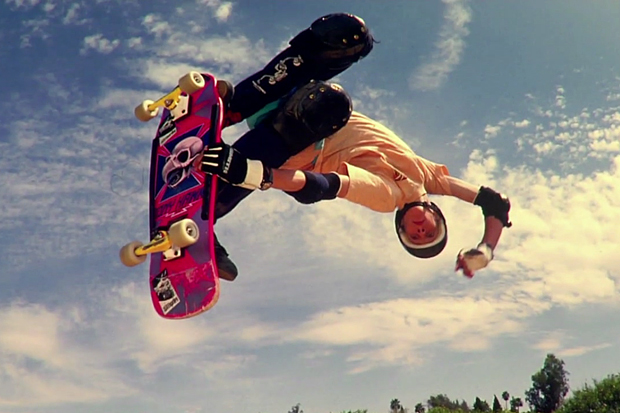
A teenage Tony Hawk goes for quite a ride as a member of the Bones Brigade
twi-ny: It’s kind of wild to watch today.
Tony Hawk: It was very fun in the beginning, but then the weeks went by and we had to do the sort of acting thing. We just wanted to do the skating, so there definitely was some tension among the team and between Stacy because it was, like, “Why are we doing this lame thing?”, like, this scene, and trying to act, and all we want to do is go skate. I mean, we thought it was a funny idea, but for us, the skating was more the priority.
twi-ny: There are a lot of personal revelations made in the film. Was there anything you learned that particularly surprised you?
Tony Hawk: I think, probably, about Rodney, that his home life was not ideal. I knew of his intense focus and dedication to skating, but I didn’t know how truly volatile it was, that he was at risk of being forced to quit so many times.
twi-ny: His story is probably the most powerful one in the film. Did he always gesture and talk in those roundabout, philosophical ways?
Tony Hawk: It used to be worse. I don’t know how to explain it. Communicating with Rodney used to be much different. If he didn’t know you, it was very hard to break through and understand him.
twi-ny: A few years ago, Spike Jonze’s skate videos were shown at MoMA, taking them to a whole new level, and now we have channels like Ride. How do you think things might have been different if there was a YouTube back in the ’80s?
Tony Hawk: It would have progressed faster, the information would have spread more immediately, and possibly it would have meant more global recognition.
twi-ny: Well, through the internet and the X Games, for example, you’re now heroes to new generations.
Tony Hawk: In the past, the only people who really appreciated skating were the ones who did it, and the X Games created a fan base of people who enjoyed it and came to understand it and appreciate it but didn’t necessarily want to do it themselves. I think that’s when we broke through a ceiling of popularity and established skating as something that was here to stay.
twi-ny: What do crickets taste like?
Tony Hawk: [laughs] They’re not bad. There’s a part two to that video where we eat scorpions and silkworms. Silkworms taste like dirt.
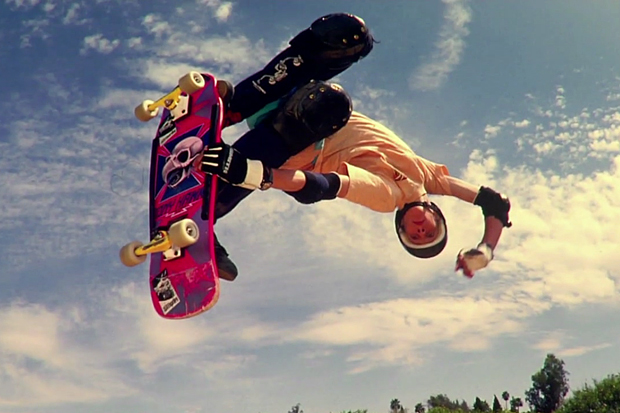
 Back in the late 1970s and early 1980s, as skateboarding began to take off on the West Coast, one group of kids became the face of the growing movement. Sponsored by the Powell Peralta company founded by skateboard engineer George Powell and skater Stacy Peralta, the Bones Brigade was led by the core team of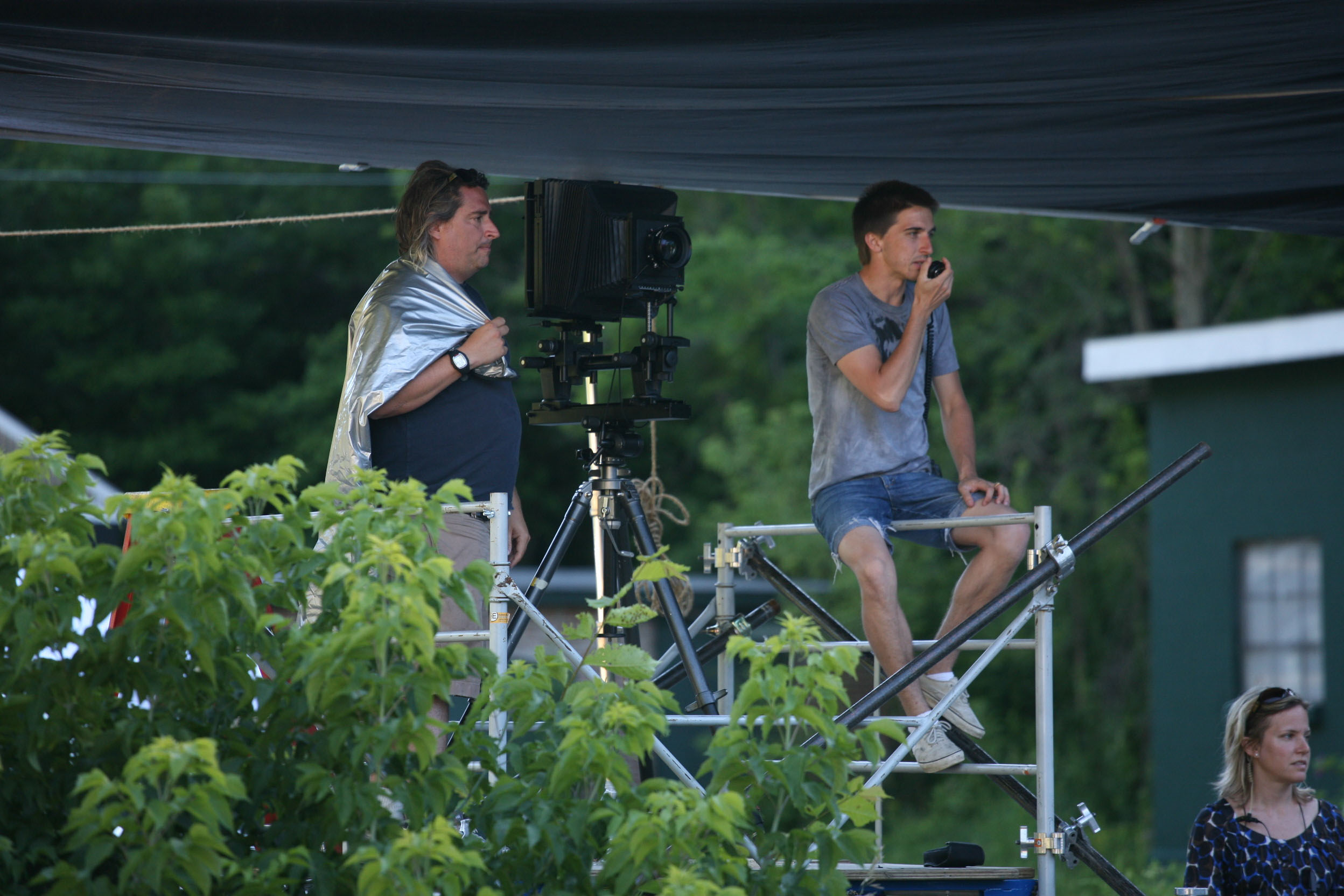
 From 2002 to 2008, Gregory Crewdson created a sensational body of work he called “Beneath the Roses,” consisting of intricately arranged large-scale photographs that capture the mysterious underside of small-town, middle-class America. Filmed primarily in the Western Massachusetts community where his family spent their summers while he was growing up, the photographs, all taken at twilight, are powerful, emotional still shots that look like they’re from a movie, usually involving solitary figures on the street or in a tense room, staring out, often with a car nearby, its door or trunk flung open, compelling viewers to come up with their own narrative of what they’re seeing. For ten years, Ben Shapiro followed Crewdson around as he worked on that series and others, and he details the Park Slope-born photographer’s unique creative process in the vastly entertaining and informative documentary Gregory Crewdson: Brief Encounters. Crewdson, who shoots only at twilight, is obsessive about the shot he gets, agonizing first over the setting itself, then going over every little detail, from the turn of a character’s head to the proper amount of leg to reveal, with a crew that includes a director of photography, a production designer, a casting director, and other jobs usually more associated with film. “My pictures are about a search for a moment — a perfect moment,” he explains. “To me the most powerful moment in the whole process is when everything comes together and there is that perfect, beautiful, still moment. And for that instant, my life makes sense.”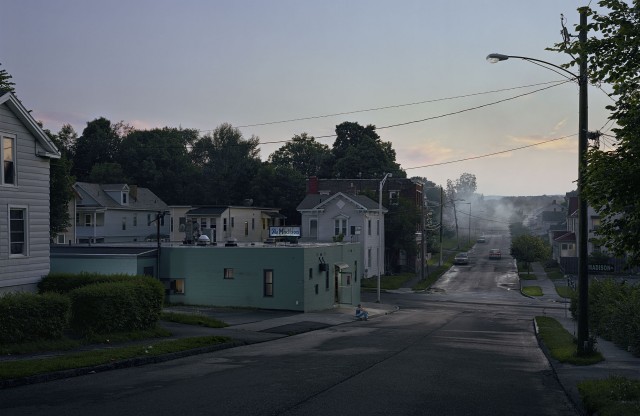
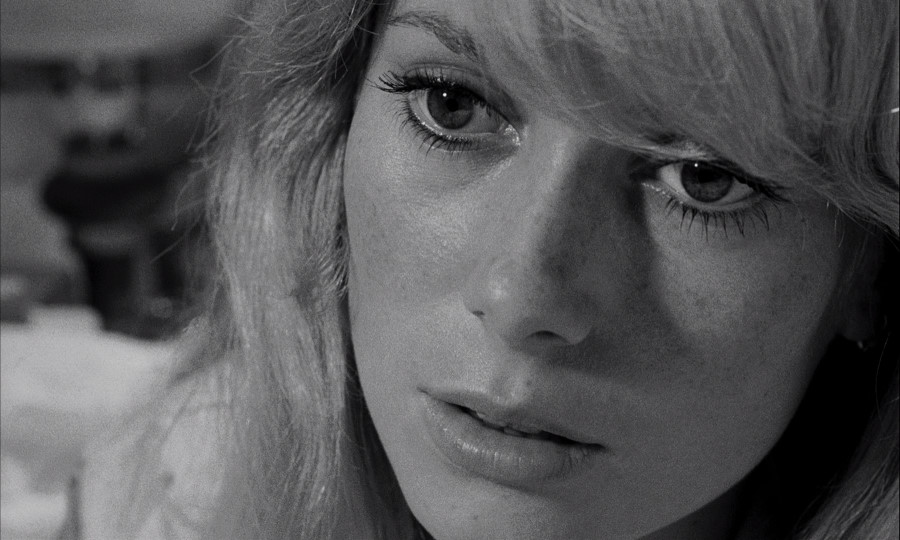
 If you think Lower Manhattan was scary this last week while the power was out, just wait till you see Roman Polanski’s first English-language film, the 1965 psychological masterpiece Repulsion. Catherine Deneuve gives a mesmerizing performance as Carol Ledoux, a deeply troubled, beautiful young woman who shies away from the world, hiding something that has turned her into a frightened childlike creature who barely speaks. A manicurist who lives in London with her sister, Hélène (Yvonne Furneaux), Carol becomes entranced by cracks in the sidewalk, suddenly going nearly catatonic at their sight; in bed at night, she is terrified of the walls, which seem to break apart as she grips tight to the covers. A proper gentleman (John Fraser) is trying to start a relationship with her, but she ignores him or forgets about their meetings, unable to make any genuine connections. Deneuve’s every movement, from the blink of an eye to a wave of her hand, reveals Carol’s submerged inner turmoil and desperation, leading to an ending that is both shocking and not surprising. Shot in a creepy black-and-white by Gilbert Taylor (A Hard Day’s Night, Dr. Strangelove or: How I Learned to Stop Worrying and Love the Bomb) and featuring a pulsating score by jazz legend Chico Hamilton, Repulsion is a brilliant journey into the limitations and possibilities of the human mind, with Polanski expertly navigating through a complex terrain. Winner of a pair of awards at the fifteenth Berlin International Film Festival, Repulsion, the first of Polanski’s Apartment Trilogy (followed by 1968’s Rosemary’s Baby and 1976’s The Tenant), will be screening in a new 35mm print November 3-8 at Film Forum, which is reopening this afternoon after having lost power because of Hurricane Sandy.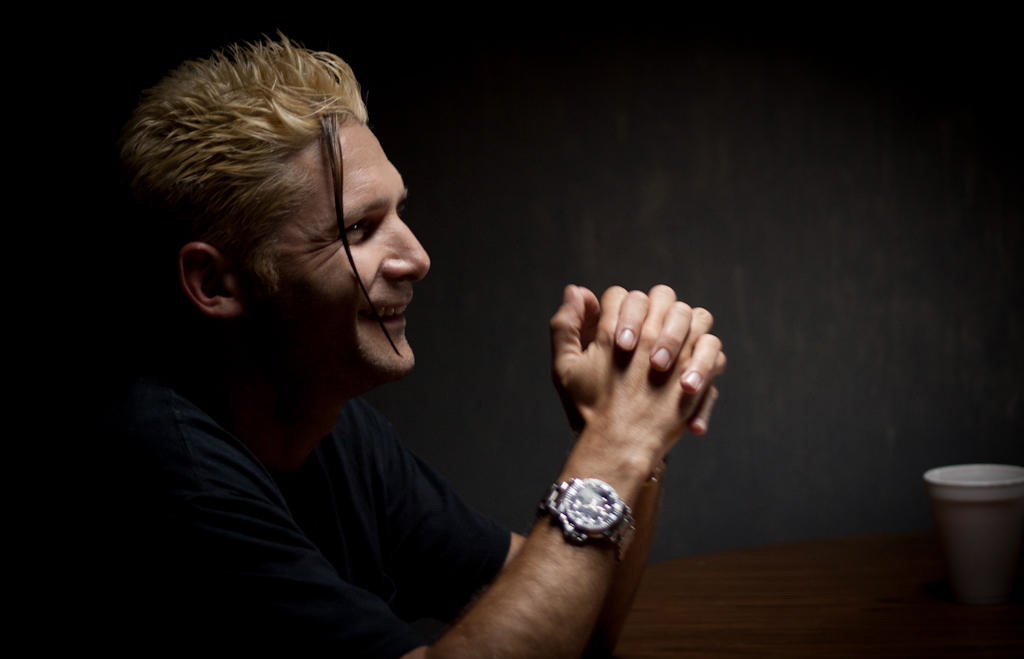
 Set in a former hotel that itself was a subject on Ghost Detectives, Joe Raffa’s 6 Degrees of Hell is a Halloween horror flick that starts off promisingly before falling flat and careening into a meandering maelstrom. Paranormal investigator Kyle Brenner (Corey Feldman, who gets top billing but has very few scenes) has come to the small town of Metcalf to find out what happened one horrible night. Deputy Len Hendricks (Brian Anthony Wilson) fills him in as the story is told in a series of flashbacks in which Uncle Jack (Brian Gallagher) prepares his “Hotel of Horror” attraction with the help of Chris (David J. Bonner), Kelly (Ashley Sumner), Kellen (Raffa), and Rachel (Tereza Hakobyan), the classic quartet of partying youngsters who are either doomed from the start or destined to be heroes. They are joined by local ghost hunter Erik Sanborn (Kyle Patrick Brennan), who is harboring a secret of his own. Raffa (You’ll Know My Name) and screenwriter Harrison Smith fill 6 Degrees of Hell with references to a myriad of other horror movies, including, Night of the Living Dead, Friday the Thirteenth, The Exorcist, Fright Night, Creepshow, and the Hammer films, but it never manages to establish a uniqueness of its own. There are a handful of gruesome moments that are just excuses for blood and gore, leading to an infuriating ending that will disappoint the hell out of you. It’s better to keep several degrees of separation from this hackneyed haunted house movie.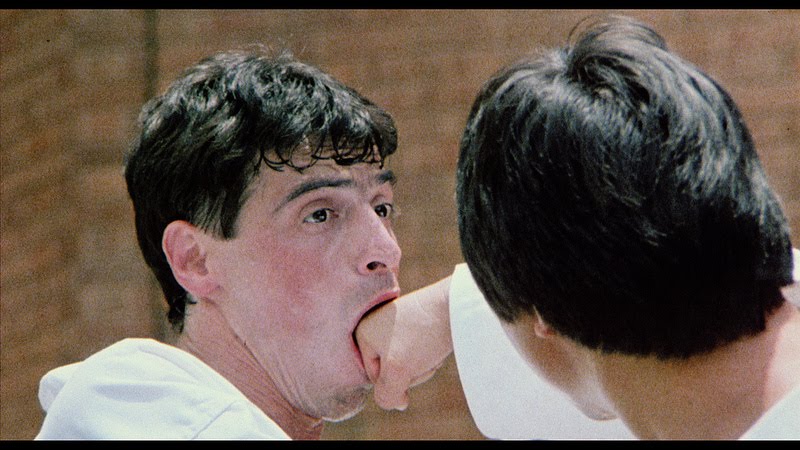
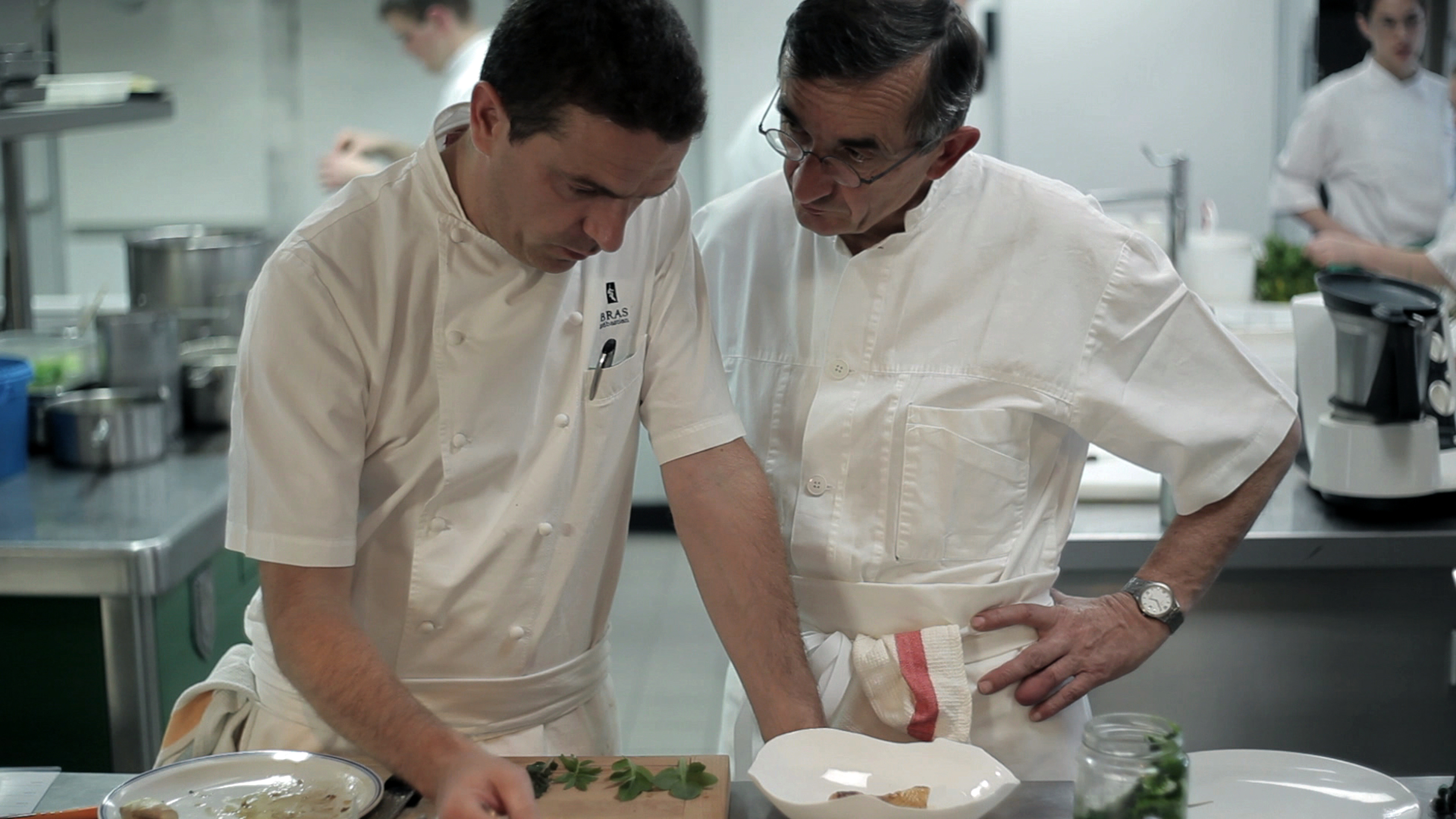
 Culinary documentarian Paul Lacoste details the handing over of a world-renowned restaurant business from father to son in the appetizing if not wholly satiating Step Up to the Plate. In 1999, Lacoste kicked off his “Inventing Cuisine” series with an inside look at gourmet chef Michel Bras, followed by episodes focusing on Pierre Gagnaire, Gérald Passédat, Michel Troisgros, Olivier Roellinger, Michel Guérard, Pascal Barbot, Alain Passard, and Nadia Santini. Ten years later, when he learned that Michel was retiring and his son, Sébastien, would be taking over, Lacoste asked if he could document the transition, resulting in the Bras family welcoming the director into their restaurants and homes, although the results are sometimes surprisingly distant and empty rather than intimate and revealing. Over the course of four seasons, Lacoste follows Michel and his wife, Ginette, and Sébastien and his wife, Véronique, and their two kids from their franchise three-Michelin-star restaurant in the Aubrac region in the south of France to the glorious, stunning Michel Bras Toya Japon situated atop a mountain in Japan. Much of the film focuses on Sébastien creating a new dish, a special request from the director; the deeply intent chef stares at the plate, knowing something is missing but not sure what it is, the camera lingering, a bit too long, on his consternation. When he ultimately brings the dish to his demanding father, Sébastien declares, “Stop looking, taste it! Food is for eating,” to which Michel responds, “But you look at it first, you know.” It is fascinating to watch just how central a role food as both reality and concept plays in this close family’s life, especially as they entertain thoughts of a fourth generation someday grabbing the reins. But while Step Up to the Plate will leave you hungry to eat at their restaurants, it will also leave you hungry for more from the film itself. Step Up to the Plate is screening on October 30 at 12:30, 4:00, and 7:00, concluding FIAF’s “Films for Foodies!” series; the 7:00 show will be presented by chef Jean-Louis Gerin, curator John Mariani, and film producer Jaime Mateus-Tique. [Ed. note: Because of Hurricane Sandy, this presentation has been canceled.]