
The illegal interracial marriage of Mildred and Richard Jeter and their fight for justice is at center of powerful documentary
NEW FILMS PRESENTED BY LIVIA BLOOM: THE LOVING STORY (Nancy Buirski, 2011)
Maysles Cinema
343 Malcolm X Blvd. between 127th & 128th Sts.
December 10-16, $10, 7:30
212-582-6050
www.mayslesinstitute.org
www.lovingfilm.com
 On June 2, 1958, Richard Loving and Mildred Jeter got married in Washington, DC. Shortly after returning to their Virginia home, Loving, a white man, and Jeter, a black and Native American woman, were arrested and imprisoned by the local sheriff, facing prison sentences because interracial marriage was illegal in their home state. Banished from Virginia, they spent nine years fighting in the courts, and their remarkable tale is now being told in the Oscar shortlisted documentary The Loving Story. First-time director Nancy Buirski, who founded the Full Frame Documentary Film Festival, and editor Elisabeth Haviland James weave together never-before-seen archival footage shot by photojournalist Grey Villet, old news reports and interviews, and family home movies with new interviews with the Loving children and lawyers Bernard S. Cohen and Philip J. Hirschkop, who were ready to take the case to the U.S. Supreme Court if necessary. One of the many fascinating aspects of the film is that Richard and Mildred had no desire to be trailblazers fighting miscegenation laws; they were just a man and a woman who had fallen in love at first sight and wanted to live happily ever after, in a community that fully accepted their situation. They of course have the perfect last name, because The Loving Story is a story of love and romance as much as it is about an outdated legal system, bigotry, and white supremacy. And it is more relevant than ever, with the issue of same-sex marriage dividing much of the nation. Told in a procedural, chronological format, The Loving Story is also absolutely infuriating, since this all happened not very long ago at all, with many of the protagonists and antagonists still alive — and race still being such a central issue in America. An HBO production, The Loving Story is having its theatrical premiere December 10-16 as part of the Maysles Cinema series “Documentary in Bloom: New Films Presented by Livia Bloom”; Buirski will join Bloom for a Q&A following the December 14 screening.
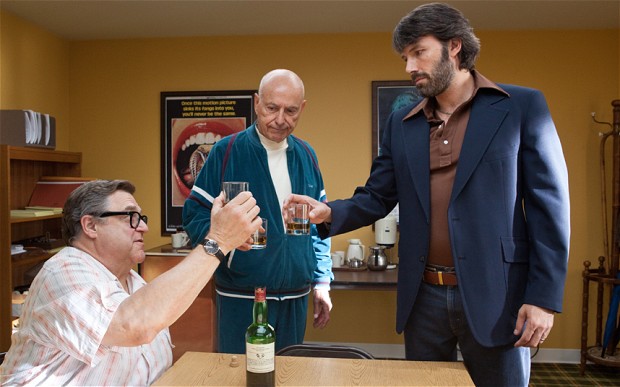
 The little-known story of an unusual rescue attempt of six American diplomats during the Iran hostage crisis is told in Ben Affleck’s gripping, nearly flawless thriller, Argo. On November 4, 1979, the American embassy was overtaken by Iranian militants, but a half dozen men and women — Bob Anders (Tate Donovan), Cora Lijek (Clea DuVall), Mark Lijek (Christopher Denham), Joe Stafford (Scoot McNairy), Kathy Stafford (Kerry Bishé), and Lee Schatz (Rory Cochrane) — escaped and were given shelter by Canadian ambassador Ken Taylor (Victor Garber). A stymied U.S. State Department turns to CIA operative Tony Mendez (Ben Affleck) and his boss, Jack O’Donnell (Bryan Cranston), who come up with a bizarre plan to pretend they are making a Canadian movie in Iran, using that as a guise to get the six embassy employees out of the country. Affleck gets real-life producer Les Siegel (a rioutous Alan Arkin) and makeup maestro John Chambers (John Goodman) to maintain a Hollywood office as the plan kicks into gear, with Affleck serving as the producer in Iran and assigning fake behind-the-scenes roles to the six men and women as the terrorists searching for them grow ever closer. Written by Chris Terrio (Heights) and produced by Affleck with George Clooney and Grant Heslov, Argo is a superbly made thriller with expert pacing, a strong cast, and a knuckle-biting story that will captivate Democrats, Republicans, and Independents. Tension is high throughout, with just the right amount of humor and sentimentality, leading to a breathtaking finale. With Argo, one of the best films of the year, Affleck once again proves himself as a big-time director, following the success of 2007’s Gone Baby Gone and 2010’s The Town.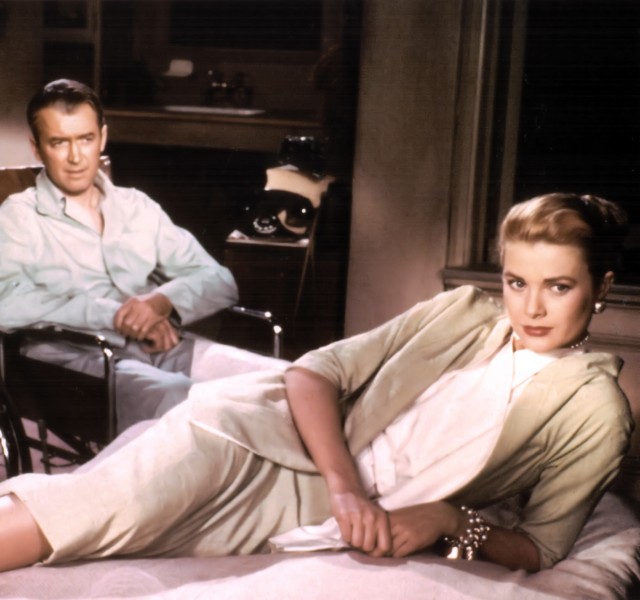
 There’s a reason why Alfred Hitchcock’s Rear Window keeps popping up all over town, at such venues as BAM, the IFC Center, and the Guggenheim Museum: Watching it makes people happy. One of the Master of Suspense’s best films, it’s an unforgettable voyeuristic thriller starring James Stewart as temporarily wheelchair-bound photojournalist L. B. Jeffries and Grace Kelly as his society-girl friend (and extremely well dressed) Lisa Carol Fremont. Bored out of his mind, Jeffries grabs a pair of binoculars and starts spying on the apartments across the courtyard from him, each one its own television show, including a musical comedy, a lonely romance, an exercise program, and, most ominously, perhaps a murder mystery. Ever the reporter, Jeffries decides to go after the possible killer, Lars Thorwald (Raymond Burr), and he’ll risk his life — and Lisa’s — to find out the truth. Sensational from start to finish, Rear Window works on so many levels, you’ll discover something new every time you watch it. Rear Window is screening on December 7, introduced by Russian-American documentary and fine art photographer Lena Herzog, as part of the Rubin Museum Cabaret Cinema series “Happiness is . . .,” held in conjunction with the larger Rubin Museum program “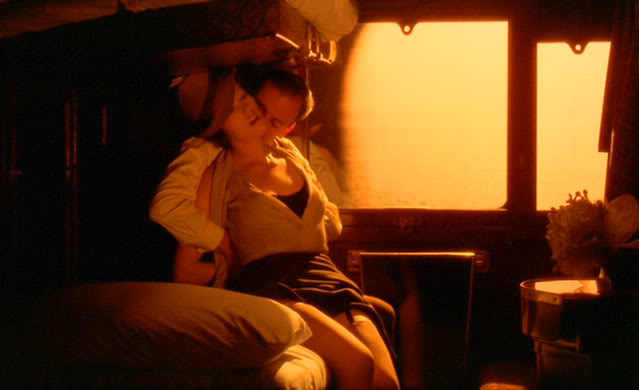


 Back in 1993, writer-director Wong Kar Wai’s Ashes of Time was released, a thinking man’s martial arts epic inspired by Jin Yong’s The Eagle-Shooting Heroes novels. With numerous versions in circulation and the original negatives in disrepair, Wong (Chungking Express, In the Mood for Love) decided to painstakingly reedit and restore the film fifteen years later, renaming it Ashes of Time Redux. The plot – which is still as confusing as ever — revolves around Ouyang Feng (Leslie Cheung), a loner who lives in the desert, where people come to him when they need someone taken care of. Every year he is visited by Huang Yaoshi (Tony Leung Ka Fai), who keeps him informed of the world outside jianghu — especially about his lost love (Maggie Cheung). Meanwhile, Murong Yang (Brigitte Lin) has demanded that Ouyang kill Huang for having jilted his sister, Murong Yin (also played by Lin), who in turn hires Ouyang to kill Yang. There’s also a blind swordsman (Tony Leung Chiu Wai), a peasant girl with a basket of eggs (Charlie Young), a poor, rogue swordsman (Jacky Cheung), and a bottle of magic wine that can erase memories. Or something like that. But what’s most impressive about Ashes of Time Redux is Christopher Doyle’s thrilling, swirling cinematography, which sweeps the audience into the film, and Wu Tong’s rearranged score, based on the original music by Frankie Chan and Roel A. Garcia and featuring soaring cello solos by Yo-Yo Ma. The film is screening December 7 as part of the Asia Society series “Goddess: Chinese Women on Screen,” which concludes December 8 with Stanley Kwan’s Center Stage, also starring Cheung.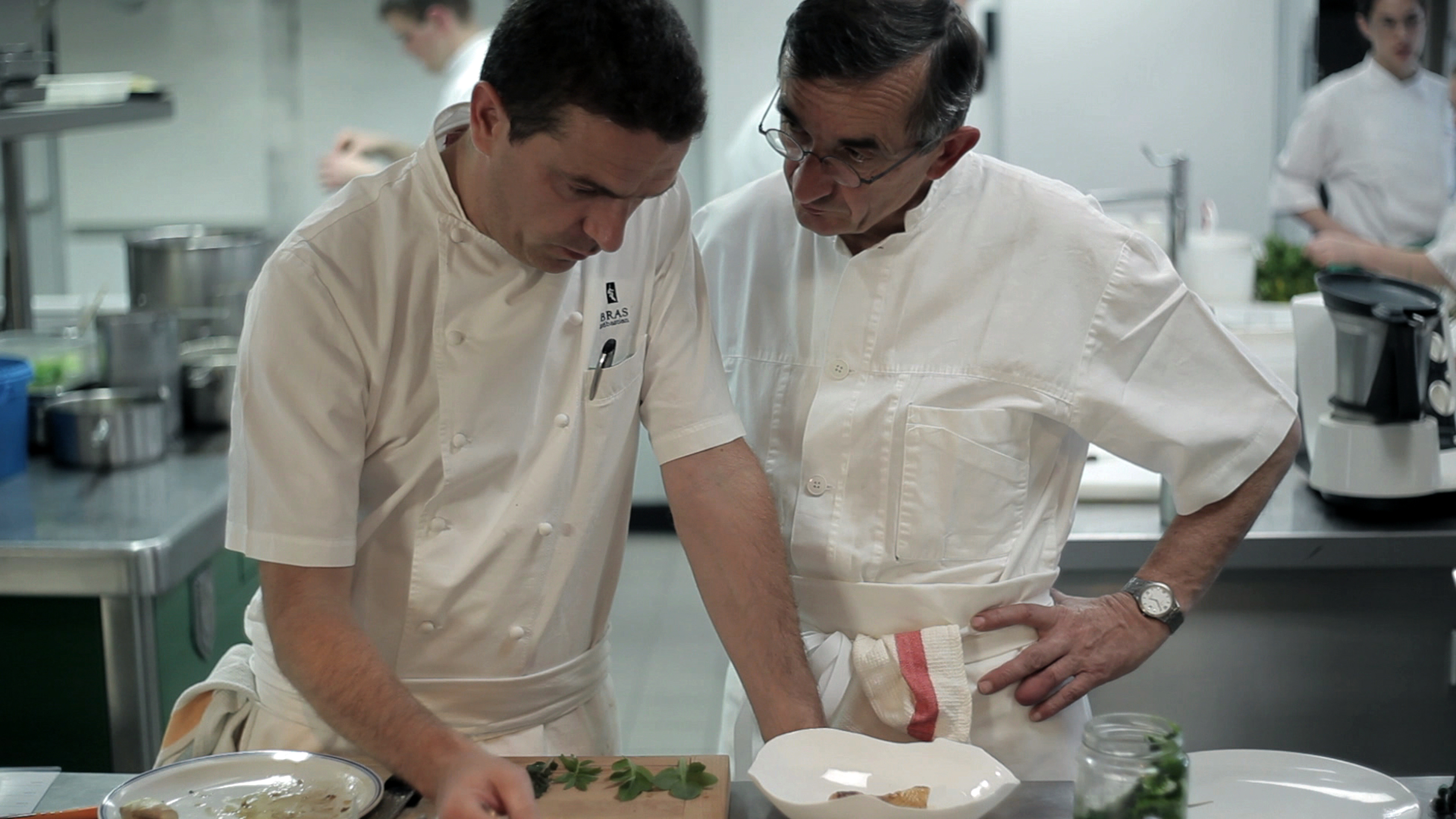
 Culinary documentarian Paul Lacoste details the handing over of a world-renowned restaurant business from father to son in the appetizing if not wholly satiating Step Up to the Plate. In 1999, Lacoste kicked off his “Inventing Cuisine” series with an inside look at gourmet chef Michel Bras, followed by episodes focusing on Pierre Gagnaire, Gérald Passédat, Michel Troisgros, Olivier Roellinger, Michel Guérard, Pascal Barbot, Alain Passard, and Nadia Santini. Ten years later, when he learned that Michel was retiring and his son, Sébastien, would be taking over, Lacoste asked if he could document the transition, resulting in the Bras family welcoming the director into their restaurants and homes, although the results are sometimes surprisingly distant and empty rather than intimate and revealing. Over the course of four seasons, Lacoste follows Michel and his wife, Ginette, and Sébastien and his wife, Véronique, and their two kids from their franchise three-Michelin-star restaurant in the Aubrac region in the south of France to the glorious, stunning Michel Bras Toya Japon situated atop a mountain in Japan. Much of the film focuses on Sébastien creating a new dish, a special request from the director; the deeply intent chef stares at the plate, knowing something is missing but not sure what it is, the camera lingering, a bit too long, on his consternation. When he ultimately brings the dish to his demanding father, Sébastien declares, “Stop looking, taste it! Food is for eating,” to which Michel responds, “But you look at it first, you know.” It is fascinating to watch just how central a role food as both reality and concept plays in this close family’s life, especially as they entertain thoughts of a fourth generation someday grabbing the reins. But while Step Up to the Plate will leave you hungry to eat at their restaurants, it will also leave you hungry for more from the film itself. Step Up to the Plate was originally scheduled to close out FIAF’s “Films for Foodies!” series on October 30 but was canceled because of Hurricane Sandy; it will now be shown December 6 at 7:00, with producer Jaime Mateus-Tique on hand to discuss the film.