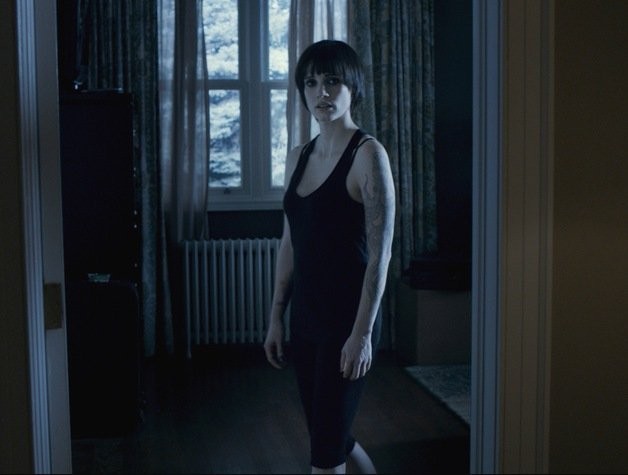
Annabel (Jessica Chastain) learns more than she ever needs to know about motherhood in creepy MAMA
MAMA (Andres Muschietti, 2013)
Opens Friday, January 18
www.mamamovie.com
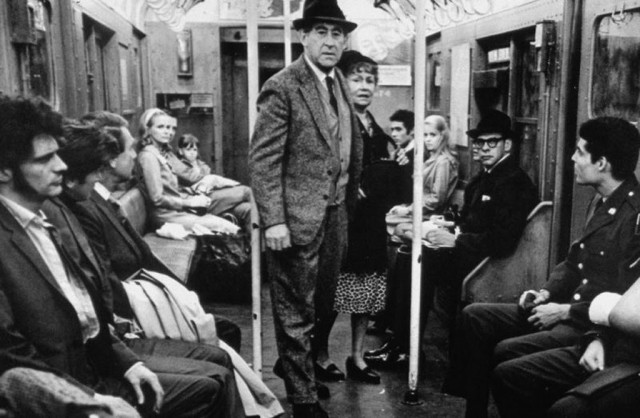
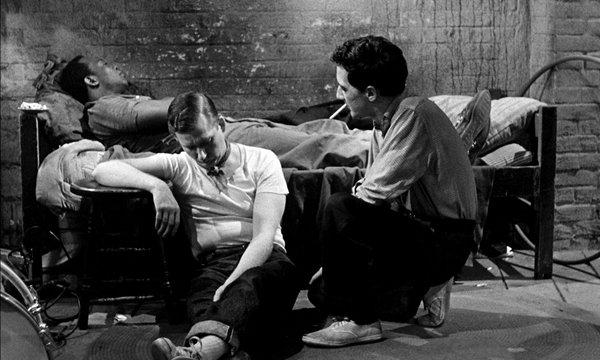
 Jessica Chastain has rocketed into stardom in just two years, starring in seven major motion pictures in 2011 (including The Help and The Tree of Life) and four more in 2012 (from Madagascar 3 to Zero Dark Thirty) while also playing the lead role in the Broadway revival of The Heiress. Chastain kicks off 2013 with the intensely creepy scarefest Mama. Expanded from his Spanish-language short film of the same name, director and cowriter Andrés Muschietti turns motherhood inside out and upside down in the thriller, with the help of executive producer Guillermo del Toro (Pan’s Labyrinth). Chastain stars as Annabel, a tattooed punk rocker with jet-black hair who is living with Lucas (Nikolaj Coster-Waldau). Lucas’s brother goes off the deep end, killing his wife and abandoning his two young daughters, Victoria (Morgan McGarry) and Lilly (Maya and Sierra Dawe), in a cabin in the woods, where it turns out the girls are not quite so alone. Five years later, the girls are finally found, with Lucas fighting for custody with his dead sister-in-law’s sister, Jean (Jane Moffat), but Victoria (now played by Megan Charpentier) and Lilly (Isabelle Nélisse) are more like animals than children, grunting, sniffing around, jumping around on all fours, and attacking at will. While Dr. Dreyfuss (Daniel Kash) views this as a fascinating research project, Annabel is soon acting as mother to the girls — something completely unexpected, as the film begins with her rejoicing at a negative pregnancy test — but there’s something else lurking about that has a different kind of connection with Victoria and Lilly. Evoking such diverse works as Takashi Shimizu’s Ju-on: The Grudge, Alejandro Amenábar’s The Others, Richard Donner’s The Omen, François Truffaut’s The Wild Child, and even Jan Švankmajer’s Little Otik, Mama is filled with plenty of takes on horror film conventions, with Antonio Riestra’s camera lurking around doorways and closets and slipping under beds and Fernando Velázquez’s score exploding at carefully manipulated moments, trying to make the audience jump out of their seats. There are also glaring plot holes, stupid developments, and other problems, but Mama overcomes them with just enough surprising twists, a daring ending, and a strong lead performance by Chastain, who continues to show her impressive range. But the film is nearly stolen away by Nélisse, who is absolutely frightening as Lilly, a compelling, complex character that is liable to scare the hell out of you.

 Inspired by actual events that took place in his hometown of Recife, Brazil, Kleber Mendonça Filho’s Neighboring Sounds is an engaging slice-of-life examination of class differences and a community in the midst of social and economic change. When Clodoaldo (Irandhir Santos) and Fernando (Nivaldo Nascimento) go door-to-door offering their services as overnight security guards protecting the street, only Francisco (W. J. Solha), an aging, wealthy sugar baron who owns much of the surrounding property, and his grandson João (Gustavo Jahn) refuse to participate in the shady proposal, but Francisco insists that they keep their hands off another of his grandsons, Dinho (Yuri Holanda), who is responsible for a spate of car-stereo robberies. This suburban neighborhood, ever more in the architectural shadow of bigger high rises going up all around them, is filled with little secrets and minor resentments. A mechanic keys an expensive car when the owner is rude to him. Clodoaldo and a maid (Clébia Souza) make use of a fancy gated house he is taking care of while the owners are away. Sisters fight over the size of a flat-screen television. And a co-op board wants to fire their longtime night watchman without a severance package because he has taken to napping on the job. Meanwhile, João, who has two children by the daughter of the family’s maid, has started a relationship with the more acceptable Sofia (Irma Brown), but the privileged João still lives in the past; when he shows an apartment in one of Francisco’s condos, he points out what would be the maid’s room, assuming everyone can afford domestic help. And Bia (Meve Jinkings) finds a different kind of domestic help, buying large quantities of pot from the water guy, finding unique ways to deal with her neighbor’s howling dog, and using household appliances to pleasure herself. A film critic who has previously made documentaries, Filho, who wrote, directed, and coedited (with João Maria) Neighboring Sounds, has populated his debut full-length feature with believable characters caught up in realistic situations, along with just the right dose of black comedy. The film was shot with natural sound at a relaxed pace, inviting viewers into this intriguing fictional tale filled with real-world implications, involving a decaying past and modern issues of safety and surveillance. While João might be the moral conscious of the story, it is Jinkings’s Bia who steals this small gem of a film, her unique methods of daily survival a joy to behold. Neighboring Sounds is screening January 19 at the Museum of the Moving Image as part of the “Curators’ Choice: The Best of 2012” series, consisting of works selected by chief curator David Schwartz and assistant film curator Rachael Rakes; upcoming screenings include Jafar Panahi’s This Is Not a Film, Wes Anderson’s Moonrise Kingdom, David Cronenberg’s Cosmopolis, and Hong Sang-soo’s In Another Country.