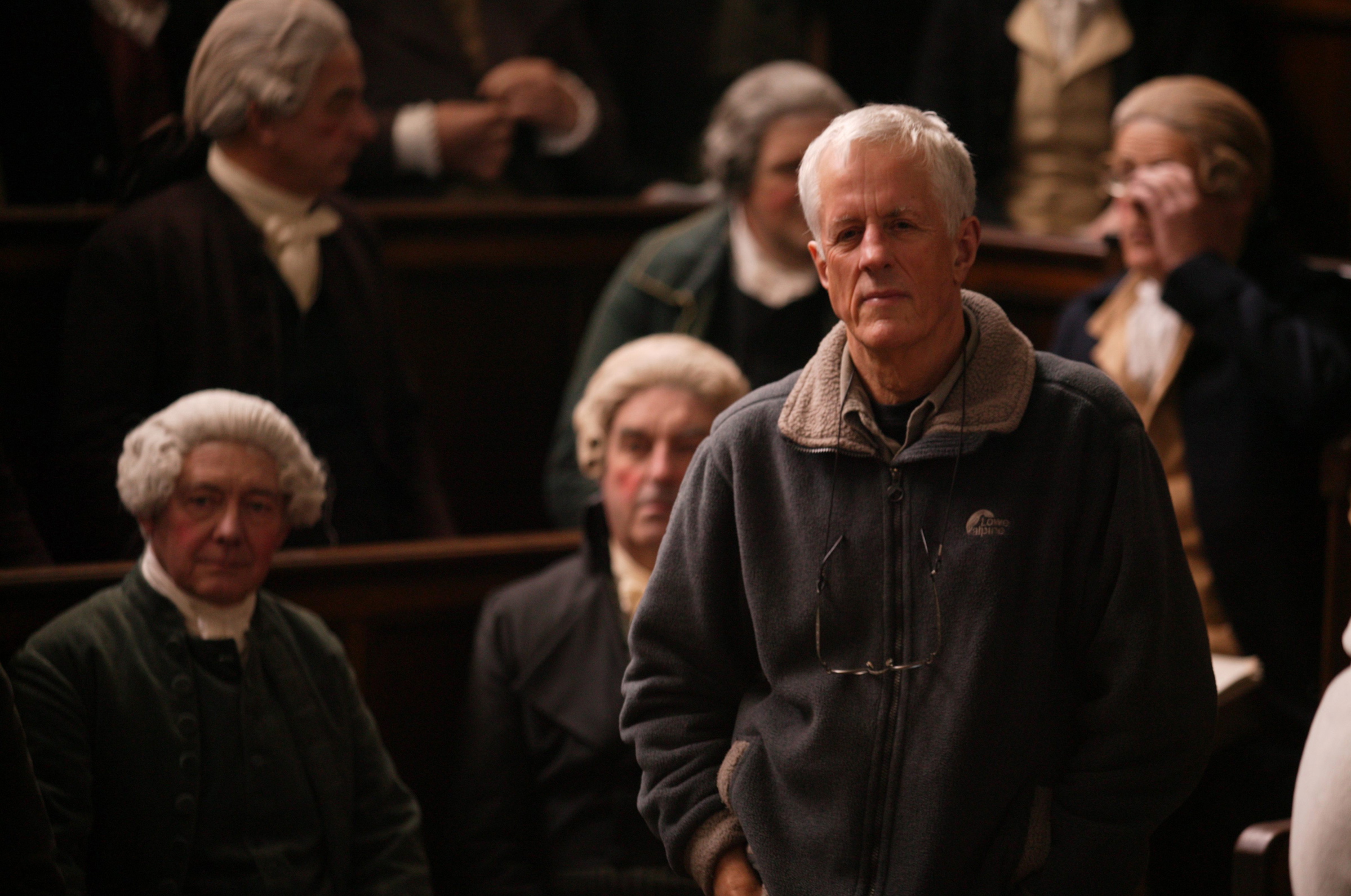
Jon (writer-director Tom O’Brien) and Dave (Chris Messina) take stock of their lives in FAIRHAVEN
FAIRHAVEN (Tom O’Brien, 2012)
Cinema Village
22 East 12th St. between University Pl. & Fifth Ave.
Opens Friday, January 11
212-924-3363
www.cinemavillage.com
www.fairhaventhemovie.com
 When Dave (Chris Messina) reluctantly returns to his hometown for his father’s funeral after being away for ten years, he meets up with his two childhood buddies, Jon (writer-director Tom O’Brien) and Sam (Rich Sommer), and the three rehash old times and create some crazy new ones in the appealing slice-of-life drama Fairhaven. Set in the real-life fishing village of Fairhaven (which just celebrated its 200th anniversary), the story focuses on how the three men have grown up — or haven’t yet — while examining what home means. Jon is a ne’er-do-well former high school football star obsessed with something three-time Super Bowl–winning quarterback Tom Brady said on 60 Minutes: “There’s got to be something more than this.” Looking for something more, Jon quits his job on a fishing boat to concentrate on his writing while also exploring a possible relationship with the New Age-y free spirit Angela (Alexie Gilmore). Responsible single father Sam has not dated since his divorce from Kate (American Horror Story’s Sarah Paulson), instead devoting himself to raising his daughter, Cara (Grace Collins), and his career as a real estate agent. And Dave has wandered around Vegas and Arizona for a decade after getting involved in a situation that shocks and angers Jon when Dave at long last reveals his big secret. Evoking such previous ensemble films about reuniting friends as Diner and Beautiful Girls, Fairhaven is a well-made, touching drama about searching for one’s place in the world while also coming to terms with the choices one has made. Stage veteran O’Brien, Messina (Damages, Newsroom), and Sommer (Mad Men) have worked together before in various ways, bringing a charming camaraderie to their characters’ friendship. In his directorial debut, O’Brien imbues the tale with a believable honesty that lets the viewer forgive his occasional wrong turns. The setting and soundtrack, featuring songs by Blow Up Hollywood and These United States, further enhance this moving drama about a group of thirtysomethings taking stock of their lives — and not necessarily liking what they see. Fairhaven opens at Cinema Village on January 11, with O’Brien on hand for Q&As following the 7:15 and 9:30 screenings on opening night and the 7:15 show on January 13.
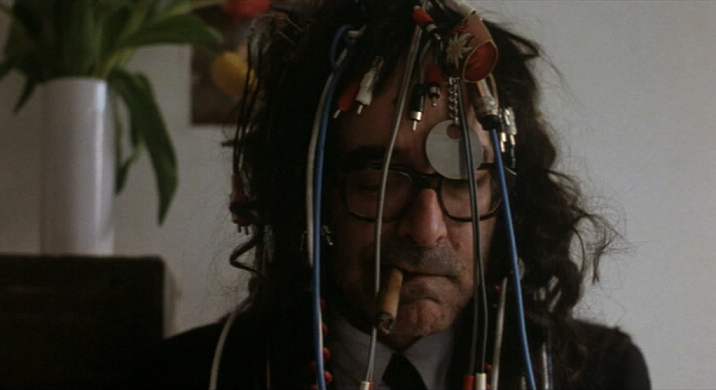
 At the 1985 Cannes Film Festival, producer Menahem Golan, who would go on to make several movies nominated for the Golden Raspberry (Cannonball Run, Cobra), somehow got French auteur Jean-Luc Godard to agree to direct a new version of King Lear, signing the contract on a napkin. Unfortunately, things didn’t go quite as planned, resulting in Godard’s incomprehensible, unintelligible, extremely hard-to-follow Shakespeare flick. Theater director Peter Sellars — he of the Eraserhead-like hairdo — stars as William Shakespeare Jr. the Fifth, a descendant of the Bard’s who is trying to put his famous ancestor’s plays back together in a post-Chernobyl world. After Norman and Kate Mailer get in an argument about turning the script into a gangster picture, Sellars meets Learo (a muttering Burgess Meredith) and his daughter, Cordelia (a monotone Molly Ringwald). Also on hand for this twisted fairy tale are French director Leos Carax (Pola X, Holy Motors) as Edgar, Julie Delpy as Virginia, Woody Allen as Mr. Alien, and Godard himself as the wacky Professor Pluggy. Elements of the play occasionally show up, but it is nearly impossible to figure out just what the hell is going on. By the time it all starts making the least bit of sense and even becomes intriguingly poetic, it’s over. In his inimitable style, Godard subversively defies all expectations, making a film that is about everything, nothing, and no thing. He takes on virtue and power, art and nature, text and image, and storytelling itself, but in this case he ends up with an unwatchable mess. Still not available on DVD, King Lear is having a rare screening January 11 at 7:00 and 9:30 at 92YTribeca, with the early show followed by a Q&A with critics Simon Abrams, Bilge Ebiri, and Richard Brody. When he selected the film for the 2009 New Yorker Festival, Brody wrote, “I consider Godard’s King Lear to be his greatest artistic achievement; in a Y2K poll, I ranked it among the ten best movies ever made.” It should be quite interesting hearing him defend that choice on Friday night.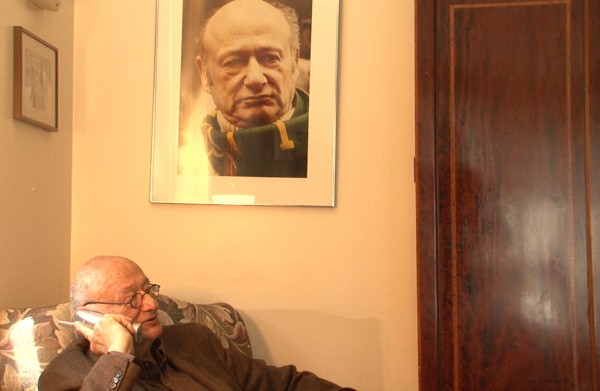
 A bunch of people have a whole lot to say about Ed Koch in a new documentary about the charming yet irascible former three-term mayor of New York City, but none of them goes on quite so eloquently as Hizzoner himself. Longtime journalist and first-time filmmaker Neil Barsky delves into the man behind the legend, the upstart politician who helped save New York from the debt- and crime-ridden 1970s through, among other things, the sheer force of his immense will. Barsky combines new interviews with such political journalists as Michael Goodwin, Sam Roberts, and Wayne Barrett, along with former comptroller Carl McCall and the Rev. Calvin O. Butts, to paint a portrait of Koch as both mensch and meanie, a bully who always speaks his mind and never backs down from a challenge. Barsky and editor Juliet Weber include archival photographs and old film footage of Koch in the 1960s and early 1970s as he first takes on Democratic Party boss Carmine DeSapio, then runs for city council and Congress before getting into a heated seven-person race for mayor in 1977. The present-day Koch is filmed tinkering around in his small kitchen, breaking the Yom Kippur fast with his family, and relaxing in his office, sharing his views on his legacy, his battles with the black community over Sydenham Hospital, and even questions of his sexuality — but only up to a point — that have followed him throughout his career. Although Barsky claims in his director’s statement that “with the exception of one former governor and one former mayor, virtually everyone we reached out to agreed to be interviewed,” the film suffers in that it does not exactly boast an all-star lineup of pundits talking about Koch– but it of course has Koch himself, and that is more than enough. Koch, which opens theatrically February 1, is screening January 10 and 13 at the twenty-second annual New York Jewish Film Festival, presented by the Jewish Museum and the Film Society of Lincoln Center, with Barsky on hand for the January 10 show and the now-eighty-nine-year-old Koch in attendance January 13.
 The magnificent Quay Brothers survey exhibition at MoMA,
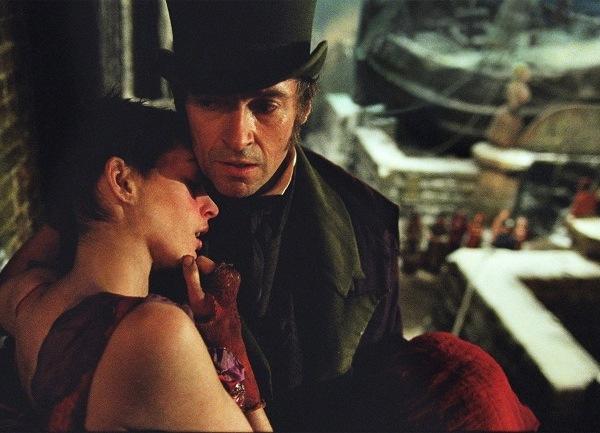
 For more than thirty years, Cameron Mackintosh’s musical theater production of Victor Hugo’s 1862 novel, Les Misérables, has been entertaining audiences in Paris, on London’s West End, on Broadway, and on tours around the world. Fans have been eagerly anticipating the film version for decades, and now that it’s here, they can let out a big sigh of . . . what, relief? Regret? Revolution? Revulsion? Oscar-winning director Tom Hooper (The King’s Speech) has put together a lavish, star-studded spectacle that ends up biting off a whole lot more than it can chew, which doesn’t go over well in the slums of early-nineteenth-century Paris. Hugh Jackman is wonderfully cast as Jean Valjean, a valiant man who has spent nineteen brutal years in prison for stealing a loaf of bread. Russell Crowe tries hard as Inspector Javert, who is determined to bring Valjean to justice after he breaks his suffocating parole. Changing his life — and his name — Valjean becomes a model citizen, even mayor, and seeks to help the disadvantaged, including Fantine (Anne Hathaway), a former employee of his who will do whatever it takes to provide for her young daughter, Cosette (Isabelle Allen). The first half of the film, which goes from 1815 to 1823, develops well enough, with strong, emotional performances by Jackman and Hathaway and a haughty “Master of the House” number led by Helena Bonham Carter and Sacha Baron Cohen as innkeepers taking care of — and taking advantage of — Cosette. But things start falling apart quickly once the story jumps to 1832 and an older Cosette (Amanda Seyfried) has fallen in love with young revolutionary Marius Pontmercy (Eddie Redmayne), while Javert is still hunting down Valjean. The budding romance and coming battle are simply dreadful, as are the songs. (“Do You Hear the People Sing?” We wish we didn’t. “Empty Chairs at Empty Tables”? Alas, just about every seat in the large theater was taken.) The overly melodramatic final scenes, which seem to never end, suck any life that was left over from the first hour or so, which had at least created a compelling mood and intriguing characters. Unable to decide whether it’s a historical epic or a timeless romance, Les Misérables ends up being neither.