Eric Beckman founded the New York International Children’s Film Festival with his wife in 1997
NEW YORK INTERNATIONAL CHILDREN’S FILM FESTIVAL
Multiple venues throughout Manhattan
[Not for] Children Film Festival Benefit: February 28, $300 – $1,000
March 1-24, $13 (opening-night $20-$40)
All-Access VIP Pass: $400
www.gkids.com
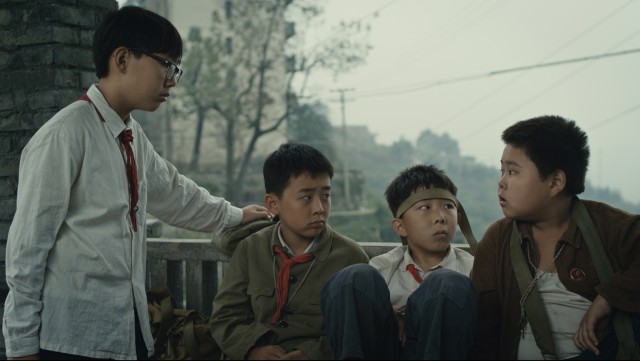
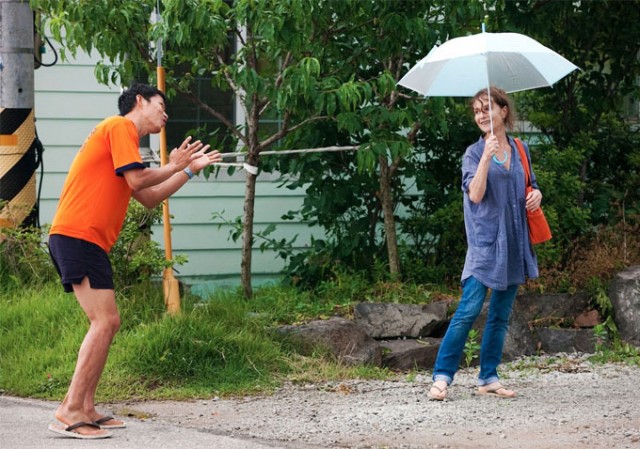
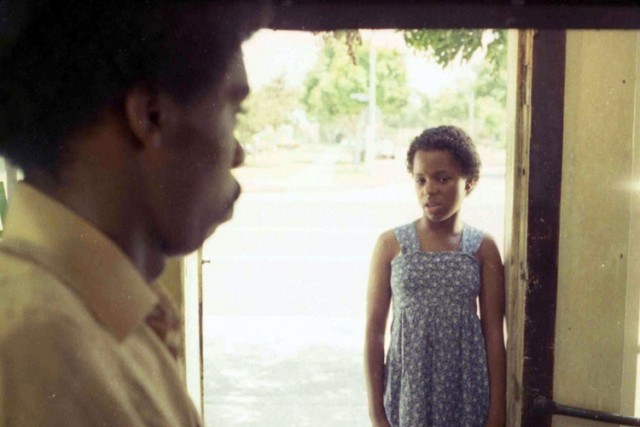
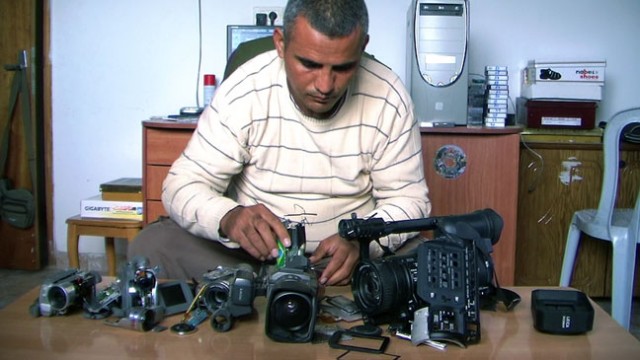
Since its beginnings in 1997, the New York International Children’s Film Festival has been dedicated to bringing more intelligent movies to kids ages three to eighteen. Part of GKIDS (Guerrilla Kids International Distribution Syndicate), NYICFF hosts programs year-round, but its bigger-than-ever sixteenth annual festival is scheduled to take place March 1-24, spread out across such venues as Asia Society, the IFC Center, Tribeca Cinemas, FIAF, the Film Society of Lincoln Center, Scholastic, the DGA Theater, and the SVA Theatre. More than one hundred features, shorts, documentaries, and animated films will be presented from France, Belgium, Canada, India, Japan, the Netherlands, Italy, Taiwan, America, and other nations, in addition to workshops, a filmmaking camp, a prefestival not-for-children benefit (showing films that were submitted to NYICFF but are clearly not for kids), and the opening-night gala, the U.S. premiere of Benjamin Renner’s animated Ernest & Celestine, followed by a catered reception. This year’s jury, which includes such actors, writers, directors, and producers as Geena Davis, Gus Van Sant, Susan Sarandon, Jeffrey Wright, Christine Vachon, and Michael Modine, has also selected such films as Laurent Boileau and Jung Henin’s Approved for Adoption, Enzo D’Alò’s Pinocchio, the English-language premiere of Koji Masunari’s Welcome to the Space Show, and the Spanish-language version of Wreck-It Ralph called ¡Rompe Ralph! Eric Beckman, who cofounded NYICFF in 1997 with his wife, Emily Shapiro, was only too happy to discuss this year’s festival and the state of children’s films in general.
twi-ny: What prompted you to form GKIDS and NYCIFF in the first place?
Eric Beckman: NYICFF was formed to fill a void in the marketplace for exciting, meaningful, diverse, nuanced, eye-opening, thought-provoking film for young people. At the time we launched back in the late 1990s, the indie film movement was in full swing, and on any given weekend in New York City you could see maybe one hundred different films for adults — edgy indie films, French art films, romantic comedies, teen sex comedies, high-brow Oscar bait, action pictures, silent film retrospectives, and so on — literally any kind of film you could imagine was on tap for adults. But for kids there would be just one movie playing, which seemed just wrong for a city like New York. So the germinating idea for the festival was that we would bring a hugely exciting world of film to NYC every winter so that for four weeks during the festival, there would be the same kind of cinematic diversity and creativity and range of experience for kids that there is for adults.
twi-ny: How has the festival changed over the years, since its debut in 1997?
Eric Beckman: We’re much bigger (the largest in North America). NYICFF is now an Oscar qualifying festival, we have more films — and perhaps equally important we have a paid staff. We have also secured a reputation as a significant industry event on par with the prestige “adult” festivals in terms of important feature premieres and our record of introducing significant new directors to U.S. audiences and debuting future Oscar nominees. But the core concept is still exactly the same — uncompromising, excellent film for ages three to eighteen, including shorts, features, animation, live action, docs, and experimental films from six continents.
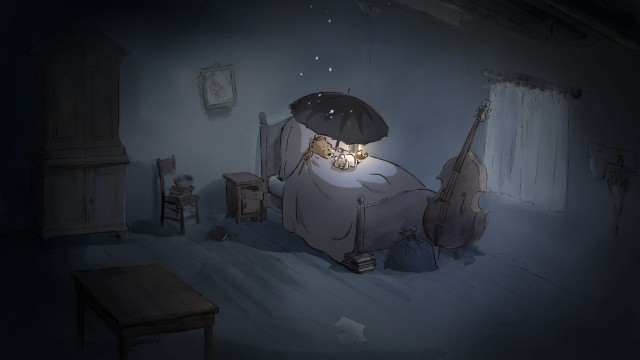
Benjamin Renner’s ERNEST & CELESTINE will open the 2013 New York International Children’s Film Festival
twi-ny: Do you think children’s films themselves have changed over the last sixteen years?
Eric Beckman: Yes and no. The Pixar animated CGI picture has supplanted Pocahontas/Lion King as the model to emulate. And more recently, with companies like Laika and others producing pictures every few years, there has been a wider variety of films out there — which has been great. But the underlying market forces that limit what is available for children have remained, and if anything have gotten stronger. Unlike films for adults, there is no independent circuit for children’s movies, so pretty much everything that is released is engineered to reach a mass audience. Amour at $4 million box office gross is a critical and financial success — but The Pirates! at $31 million is a potential write-down, even though it is a wonderful movie. So this pressure to reach mass audience to achieve $150 million domestic box office continues to affect the types of children’s films that get made in the U.S. — and severely limits the number of independent or foreign titles that can get a release. NYICFF and GKIDS are working to build that indie-for-kids circuit — and we have had some notable success at the Oscars and getting films attention and distribution, a trend we expect to continue.
twi-ny: With everyone, including children, having more access to films of all kinds over the internet, on cable, and on handheld devices, should parents worry more than ever about what their kids are watching?
Eric Beckman: This is a parenting question, so I will take off my film festival director hat for a moment. I have three children, and to be honest I am not overly worried about content. I am more concerned with limiting screen time, making room for reading, exploring art, theater, music, and other activities — and encouraging creative use of technology rather than passive consuming. Yes, there is some terrible stuff out there, but hopefully you raise your kids to make good choices rather than making the choices for them.
twi-ny: You have another prestigious jury this year. What do you look for in a jurist?
Eric Beckman: That is an often-asked question — as clearly Gus Van Sant and James Schamus do not jump to mind when you think of children’s films. But it is exactly that take we are looking for. We reach out to jurors who love and understand and are involved in creating great films. Not great children’s films, but great films period. Our jurors generally fall into one or more of three categories: actors or filmmakers (many of them parents) who we saw were coming to the festival so were already fans and supporters; innovative and provocative filmmakers who support a wider and more interesting range of film being made for young people; and renowned foreign filmmakers whose works first found U.S. audiences through the festival.
twi-ny: On February 28, there’s a specifically “not for children” benefit. What can adults expect from that?
Eric Beckman: The NY Int’l [Not for] Children’s Film Festival is a really, really fun and slightly naughty event. Every year NYICFF receives submissions that are so “not for kids” that you have to wonder what the person submitting the film was thinking. This began at the very first festival, with a film made with Barbie dolls that would definitely garner an NC-17 rating. So a few years ago, we decided to show a few of these films at a private cocktail party we were doing for board members, staff, and other friends of the festival. Everyone had so much fun we made it the theme of our fundraiser that year, and thus began the tradition.
The event takes place Feb 28, the night before Opening Night. You will want to reserve your babysitter now! It is at Tribeca Film Center and involves a screening of very inappropriate films that were submitted to the festival, plus food, cocktails, drinking games, prizes (courtside Knicks tickets, racecar driving school, all-access family passes to the festival . . .) and more things that I am not even aware of, since I am not on the benefit committee. The proceeds benefit the festival’s FilmEd program, which assures that economically disadvantaged New York City families have access to the festival’s programs and filmmaking classes. So it is a great event for a great cause.
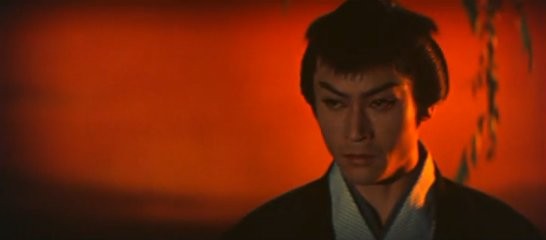
 Last year, Japan Society’s Globus Film Series, “Love Will Tear Us Apart,” featured contemporary films from Japan and Korea that explored love, sex, fetishism, and violence in unusual ways. This year Globus focuses its attention on the Japanese film studio Shintoho, which broke off from the famous Toho Company during a strike and went on to make more than five hundred movies during the 1950s and 1960s, many becoming low-budget cult classics. Curated by Mark Schilling, “Into the Shintoho Mind War: Girls, Guns & Ghosts from the Second Golden Age of Japanese Film” kicks off February 27 with Nobuo Nakagawa’s Ghost Story of Yotsuya (Tokaido Yotsuya Kaidan), an oft-told Macbeth-like tale based on an 1825 kabuki play written by Tsuruya Nanboku IV. Filled with ambition and no moral code, penniless samurai Iemon Tamiya (Shigeru Amachi) and his servant, Naosuke (Shuntarô Emi), decide to murder their way up the ladder to success. First they meet the innocent sisters Iwa (Katsuko Wakasugi) and Sode (Noriko Kitazawa), but they have to get rid of Iwa’s fiancée, Yomoshichi (Ryûzaburô Nakamura), if Iemon is to marry her and then Naosuke is to take Sode. Once Iemon and Iwa wed and have a child, he starts eyeing Ume Itô (Junko Ikeuchi), whose wealthy father could lift his still-low standing, but that means Iemon would have to dispose of Iwa and her loyal friend, Takuetsu (Jun Ôtomo). However, as Iemon soon finds out, death does not necessarily deny vengeance. Shot in lurid reds and greens by Tadashi Nishimoto, Ghost Story of Yotsuya takes quite a while to get going, spending far too much time establishing Iemon and Naosuke as evil characters with no conscience, but once it delves into the horror realm, it becomes wickedly good fun, including fantastic makeup and genuine chills, along with plenty of strangeness. Much of the film doesn’t make sense, and some of it is downright monotonous, but the ending is quite a memorable one. The screening at Japan Society will be followed by the Enka Ecstasy party, with attendees encouraged to wear black-and-white clothing with two color accessories (we suggest red and green, of course); Neo Blues Maki will perform. The series, with all films being New York premieres, continues through March 10 with Teruo Ishii’s Flesh Pier and Yellow Line, Yoshiro Ishikawa’s Ghost Cat of Otama Pond, Michiyoshi Doi’s The Horizon Glitters, Toshio Shimura’s Revenge of the Pearl Queen, Kyotaro Namiki’s Vampire Bride, and Nakagawa’s Death Row Woman.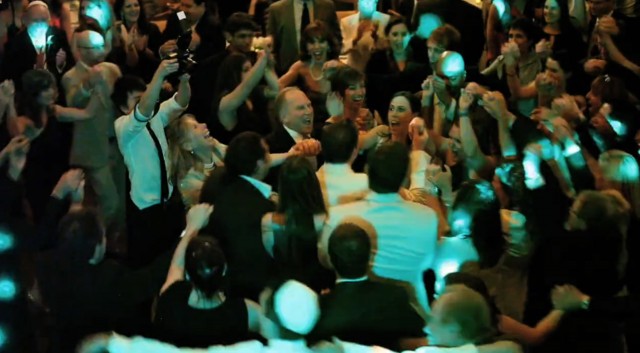
 “What’s up with this song? So kitschy, yet so profound,” director and narrator Roberta Grossman says at the beginning of her rollicking documentary, Hava Nagila (The Movie). “And what’s the deal with the chair?” A staple at Jewish celebrations, primarily weddings and bar/bat mitzvahs, “Hava Nagila” instantly gets friends and family members out on the dance floor, forming a circle and doing the Hora. Grossman delves into the history and mystery of the catchy song, which over the years has been performed by an unlikely crew that has included Harry Belafonte, Connie Francis, Glen Campbell, Johnny Yune, and Regina Spektor, all of whom appear in the film and discuss the tune’s popularity. (There are also archival performances from all around the world as well as an anti-“Hava” song from Bob Dylan.) Also putting “Hava Nagila” into perspective are Yiddish theater veteran Leonard Nimoy, communications professor Josh Kun, and KlezKamp founder Henry Sapoznik, a “Hava” hater who says with a more than a touch of cynicism, “It’s relentless. It’s resilient. But then again, so are cockroaches,” a statement that exemplifies Grossman’s playful attitude, exemplified by her corny captioning and clever clips from such TV shows and movies as Laugh-In, Curb Your Enthusiasm, Thoroughly Modern Millie, The Danny Kaye Show, A Serious Man, Wedding Crashers, History of the World Part I, and Fiddler on the Roof. But she also reveals another side to the song, as described by professor James Loeffler, who explains, “‘Hava’ is a portal into a century and a half of Jewish history.” Grossman ( Blessed Is the Match: The Life and Death of Hannah Senesh) sets off on what she calls a “Hava Quest,” venturing to the village of Sadagora in Ukraine, the birthplace of the song, and later meeting with two warring families battling over authorship of the words and music. She traces its impact on the development of the State of Israel and the Jewish migration to suburban America, and, yes, she lays out precisely what the words of the song mean. Like the song itself, Hava Nagila (The Movie) is a fun and fanciful frolic into the fascinating story behind one of the most famous songs that so many know so little about. The film opens March 1 in New York, but you can catch a special sneak preview on February 28 at 7:00 at the JCC in Manhattan, followed by a conversation with Grossman.