Léos Carax’s HOLY MOTORS is a dazzling tribute to Paris, cinema, and the art of storytelling
HOLY MOTORS (Léos Carax, 2012)
IFC Center
323 Sixth Ave. at West Third St.
Through Thursday, March 7
212-924-7771
www.ifccenter.com
www.holymotorsfilm.com
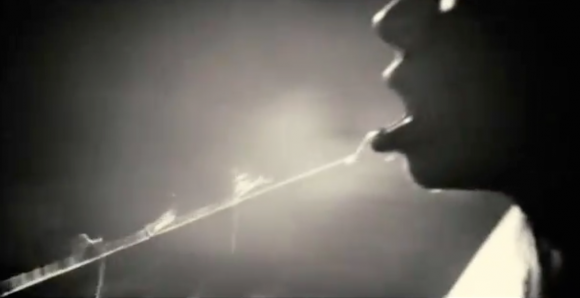
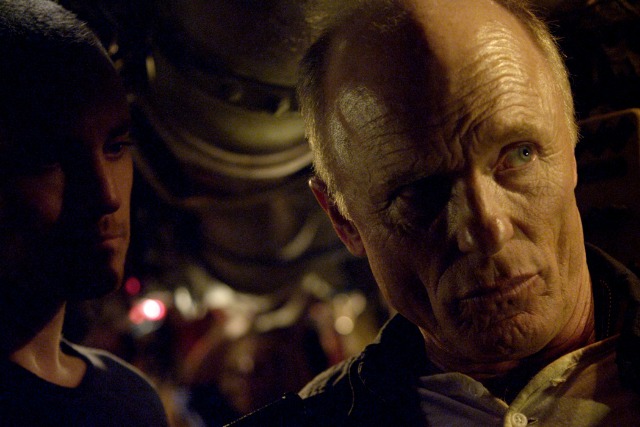
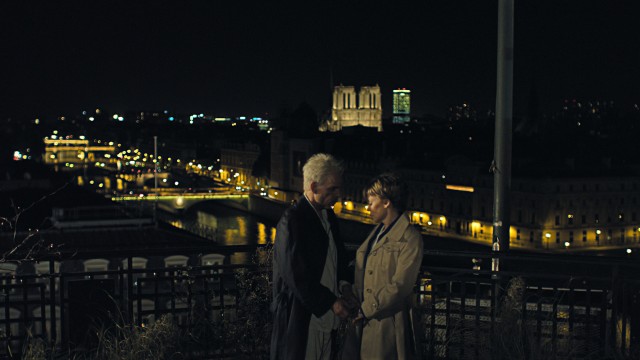
 French writer-director Léos Carax (Boy Meets Girl, Mauvais Sang) has made only five feature films in his thirty-plus-year career, a sadly low output for such an innovative, talented director, but he has now given birth to his masterpiece, the endlessly intriguing, confusing, and exhilarating Holy Motors. His first film since 1999’s POLA X, the new work is a surreal tale of character and identity, spreading across multiple genres in a series of bizarre, entertaining, and often indecipherable set pieces. Holy Motors opens with Carax himself playing le Dormeur, a man who wakes up and walks through a hidden door in his room and into a movie theater where a packed house, watching King Vidor’s The Crowd, is fast asleep. The focus soon shifts to Carax alter ego Denis Lavant as Monsieur Oscar, a curious character who is being chauffeured around Paris in a white stretch limo driven by the elegant Céline (Édith Scob). Oscar has a list of assignments for the day that involve his putting on elaborate costumes — including revisiting his sewer character from Merde, Carax’s contribution to the 2009 omnibus Tokyo! that also included shorts by Michel Gondry and Bon Joon-ho — and becoming immersed in scenes that might or might not be staged, blurring the lines between fiction and reality within, of course, a completely fictional world to begin with. It is as if each scene is a separate little movie, and indeed, Carax, whose middle name is Oscar, has said that he made Holy Motors after several other projects fell through, so perhaps he has melded many of those ideas into this fabulously abstruse tale that constantly reinvents itself. The film is also a loving tribute to Paris, the cinema, and the art of storytelling, with direct and indirect references to Franz Kafka, E. T. A. Hoffman, Charlie Chaplin, Lon Chaney, Eadweard Muybridge, Georges Franju, and others. (Scob, who starred in Franju’s Eyes Without a Face, at one point even pulls out a mask similar to the one she wore in that classic thriller.) The outstanding cast also features Kylie Minogue, who does indeed get to sing; Eva Mendes as a robotic model; and Michel Piccoli as the mysterious Man with the Birthmark. Holy Motors is finishing up its nearly four-month-long run at the IFC Center on March 7; catch it while you can on the big screen and prepare to be dazzled.
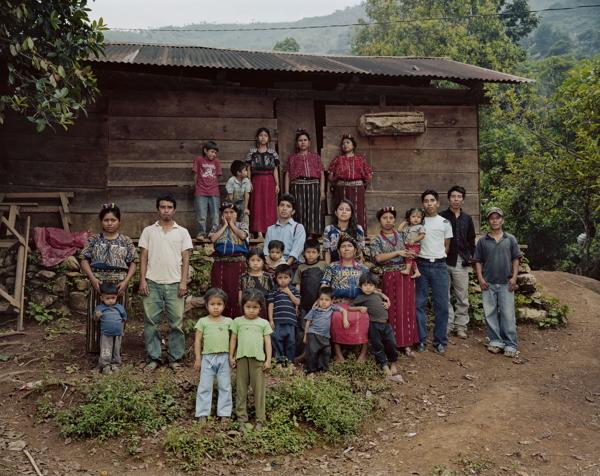
 The opening-night selection of the 2011 Human Rights Watch Film Festival, Granito: How to Nail a Dictator is an illuminating, if at times overly self-referential, examination of the power of documentary filmmaking. In 1982, Pamela Yates and Newton Thomas Sigel made When the Mountains Tremble, which told the inside story of civilian massacres of the indigenous Maya people as government forces and guerrilla revolutionaries fought in the jungles of Guatemala; one of the film’s subjects, Rigoberta Menchú, became an international figure and went on to win the Nobel Peace Prize. “When I made that film, I had no idea I was filming in the middle of a genocide,” Yates says at the beginning of Granito. A quarter-century after When the Mountains Tremble, Yates was contacted by lawyer Almudena Bernabeu, who asked Yates to comb through her reels and reels of footage to find evidence of the Guatemalan genocide and help bring charges again dictator Ríos Montt, whom Yates had met with back in 1982. In researching the case, Yates speaks with Menchú, forensic archivist Kate Doyle, journalist liaison Naomi Roht-Arriaza, forensic anthropologist Fredy Peccerelli, Spanish national court judge Santiago Pedraz, victims’ rights leader and genocide survivor Antonio Caba Caba, and Gustavo Meoño, a founding member of the Guerrilla Army of the Poor, each of whom sheds light on the proceedings from various different angles, from digging up bones in mass graves to discussing redacted documents that reveal U.S. involvement in Guatemala. Several of them are risking their lives by both continuing to fight the government and appearing on camera. Granito, which Yates directed with Peter Kinoy and Paco de Onís and was her sixth film to be shown at the Human Rights Watch festival, is a compelling look at how individuals can make a difference. The music is often overly melodramatic, and Yates does seem to like to show herself both in outtakes from her first film and in serious poses in the new film, but its ultimate point overrides those tendencies. Granito is screening at MoMA on March 3 at 5:30 as part of the “MoMA Selects: POV” section of “Documentary Fortnight 2013: MoMA’s International Festival of Nonfiction Film and Media” and will be followed by a Q&A with Yates, de Onís, and Kinoy; the POV portion, which runs February 27 to March 4, celebrates a quarter-century of the award-winning PBS program POV and also includes such films as Marion Lipschutz and Rose Rosenblatt’s The Education of Shelby Knox, Jane Wagner and Tina Di Feliciantonio’s Girls Like Us, Laura Poitras’s The Oath, David Redmon and A. Sabin’s Girl Model. “POV films and filmmakers have been at the center of a golden age of documentary filmmaking,” POV executive producer Simon Kilmurry explained in a statement. “The films in MoMA’s special program not only look back at the first twenty-five years of POV but also look forward. Collectively, they illustrate how vibrant and essential documentaries have become in exploring the human experience.”
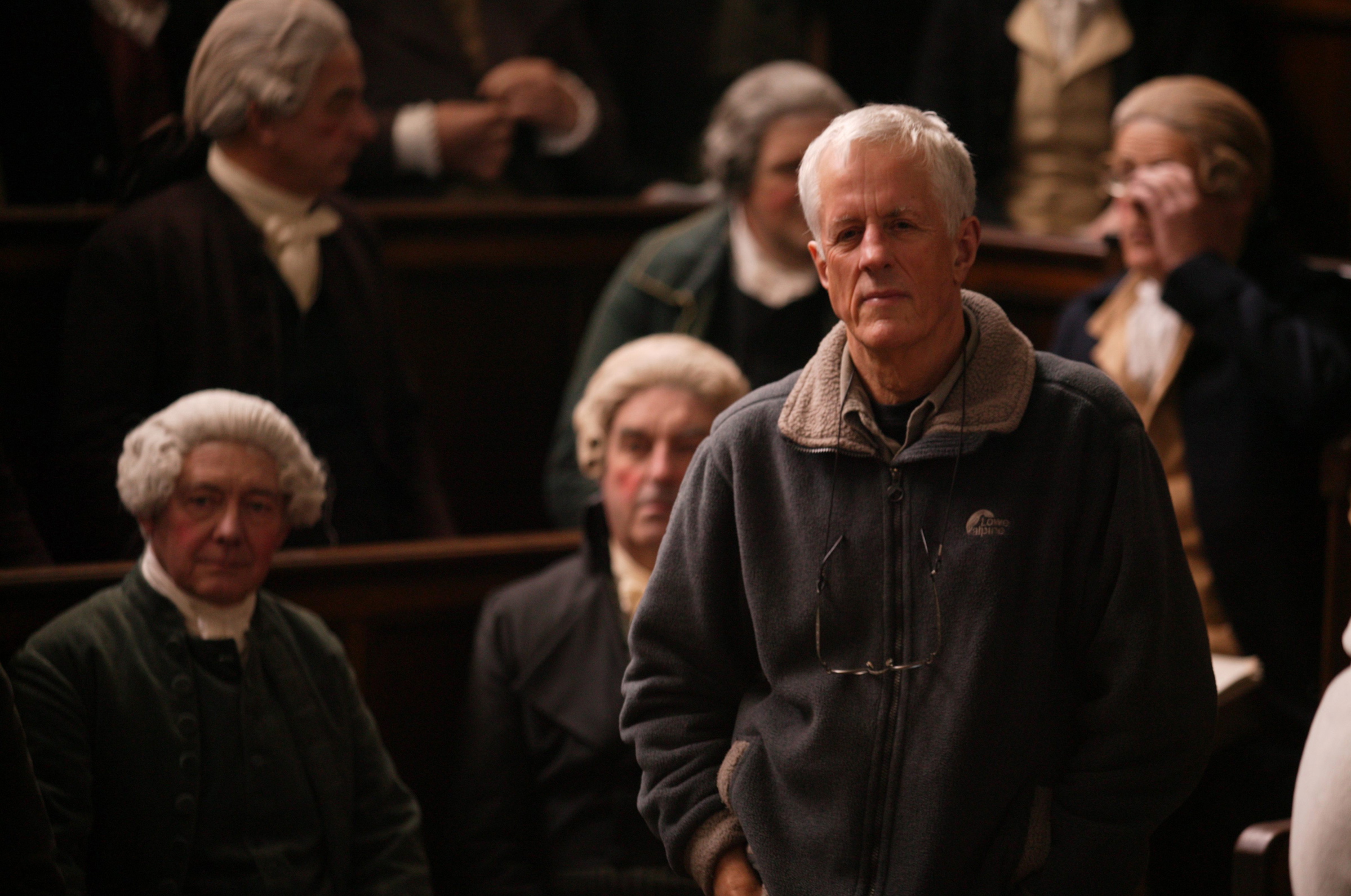
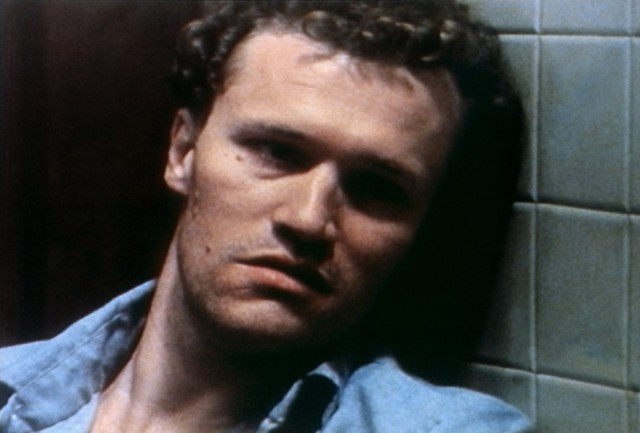
 More than twenty-five years ago, when director John McNaughton (Mad Dog and Glory, Wild Things) was asked by executive producers Malik B. and Waleed B. Ali to make a low-budget horror film, he and cowriter Richard Fire decided to base their tale on the exploits of serial killer Henry Lee Lucas, whose story McNaughton had just seen on 20/20. The result was this creepy, dark, well-paced effort starring Michael Rooker as Henry, a brooding, casual serial killer who can’t quite remember how he murdered his mother. Henry lives in suburban Chicago with ex-con Otis (Tom Towles), whose sexy young sister, Becky (Tracy Arnold), comes to stay with them to get away from her abusive husband. As the relationship among the three of them grows more and more complicated, Henry continues to kill people — and get away with it. The opening tableau of some of Henry’s murder victims — the actual killings aren’t shown in the beginning — is beautifully done, although it also fetishizes violence against women, which is extremely disturbing. (Several of the victims are played by the same woman, Mary Demas, in different wigs.) Henry, which was not released until 1989 because of its graphic content, was nominated for six Independent Spirit Awards in 1990, and Rooker was named Best Actor at the Seattle International Film Festival. The film is screening March 1-2 as part of Nitehawk Cinema’s “March Midnites — Chicago: The Second City on Film” series, which continues March 8-9 with Bernard Rose’s Candyman and March 15-16 with Gary Sherman’s Poltergeist III.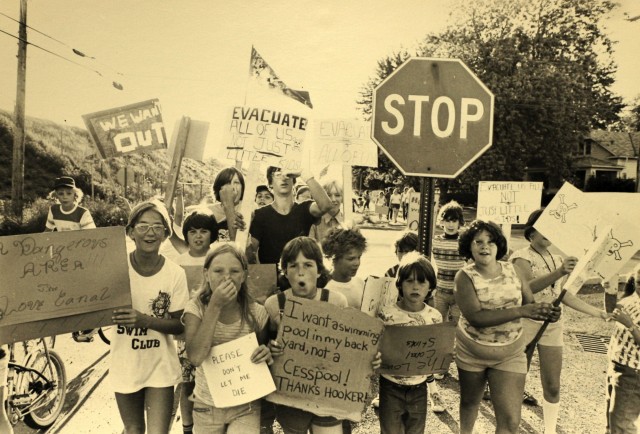
 A lot of documentaries wear their hearts on their sleeves, pushing a specific agenda, but as far as agenda go, A Fierce Green Fire: The Battle for a Living Planet has a pretty good one. Directed by Mark Kitchell (Berkeley in the Sixties), the film serves not only as a history of the environmental movement around the world but also demonstrates how one person can indeed make a difference. But the hundred-minute documentary does itself no favors by using several narrators who are certain to infuriate conservative Republicans and naysayers, ensuring that the film is most likely going to preach only to the converted and not spread its vital message to a more mainstream audience. A Fierce Green Fire is divided into five thematic sections, narrated by Robert Redford, Ashley Judd, Van Jones, Isabel Allende, and Meryl Streep, respectively. Using archival footage and new interviews, Kitchell examines David Brower and the Sierra Club’s fight to prevent a dam project in the Grand Canyon; Lois Gibbs’s struggle to prove the alarming health problems at Love Canal; Paul Watson, Sea Shepherd, and Greenpeace’s mission to save the whales; Chico Mendes’s bravery trying to protect the Amazon rainforest; and the continuing controversy over climate change as seen through the work of such activist organizations as Paul Hawken’s Blessed Unrest. Inspired by Philip Shabecoff’s 1993 book, the film features such talking heads as Whole Earth Catalog publisher Stewart Brand, Earth Day organizer Doug Scott, NRDC founder John Adams, former Sierra Club leader Carl Pope, environmental justice advocate Robert Bullard, Greenpeace cofounder Rex Weyler, WWF conservation biologist Thomas Lovejoy, and legendary naturalist Bill McKibben in addition to Gibbs, Hawken, and Watson. While it’s fascinating to learn that the environmental movement really took off once NASA broadcast images of the earth taken from space, revealing the beautiful fragility of the planet, much of the documentary is told in a fairly stagnant manner, more like an expanded news report than a theatrical film. Still, it shares some intriguing insights and, in celebrating a group of individuals from around the world who fought the power (and sometimes even won), goes a long way in showing that every little step matters.