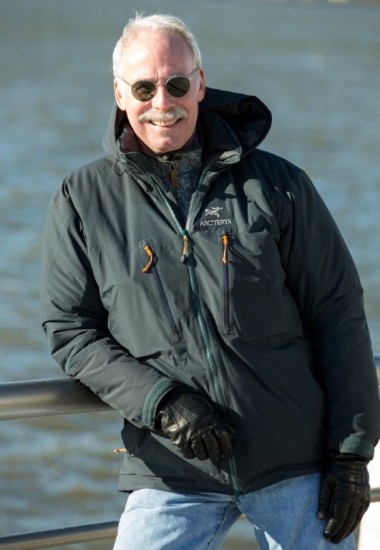
Sprague Theobald details his family’s treacherous journey to the Northwest Passage in new book and film (photo by Rod Millington)
THE OTHER SIDE OF THE ICE (Sprague Theobald, 2013)
Quad Cinema
34 West 13th St. between Fifth & Sixth Aves.
March 8-14
212-255-2243
www.quadcinema.com
www.spraguetheobald.com
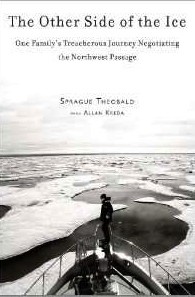
On June 16, 2009, author, sailor, and filmmaker Sprague Theobald boarded the 325-horsepower, 57-foot-long Bagan and took off for the Northwest Passage with a small crew that included his son, Sefton, his stepson, Chauncey Tanton, his stepdaughter, Dominique Tanton, and her boyfriend, Clinton Bolton, setting sail on a journey that few have attempted and fewer have survived. “The Northwest Passage is a ship killer, and always has been,” Theobald writes in The Other Side of the Ice: One Family’s Treacherous Journey Negotiating the Northwest Passage (Skyhorse Publishing, August 2012, $24.95; ebook available from Antenna Books, $9.99), which details the trials and tribulations he and his family experienced on the open seas. “At various stages of the journey, I found myself numb. Exhausted. Terrified. How had it all started? What were we doing?” A transatlantic racer, Theobald, who has previously written the novel The Reach and won an Emmy for his America’s Cup documentary The 25th Defense: End of an Era, explains exactly what they were doing, warts and all, in the book and its companion film, also called The Other Side of the Ice, a production of his Hole in the Wall team, which is a self-described “consortium of renegades, misfits, and malcontents intent on bettering the world through the art of film and storytelling.” The Other Side of the Ice will be playing at the Quad from March 8 to 14, and Theobald will be at the theater to discuss the film and sign copies of the book following the 7:30 screenings on March 8 and 9 and after the 5:30 show on March 10. But first Theobald discussed the book, the film, and the state of his family in our latest twi-ny talk.
twi-ny: You begin both the book and the film by wondering whether you were in essence risking the lives of your family in order to accomplish this personal mission of sailing through the Northwest Passage. If you knew then what you know now, would you still go ahead with the trip?
Sprague Theobald: Knowing what I know now, I would certainly still go ahead with the trip but with a better sense of how deep and deliberating the extreme Arctic isolation can be, the hell it can raise on your thinking if not your soul. This I wasn’t prepared for.
twi-ny: What would you change if you had it to do all over again?
Sprague Theobald: If I had it to do all over again I would have spent a bit more time vetting the captain, who I was assured “could handle anything.” As it was he fell mentally and fell hard. I hired him so that I could concentrate on the documentary, but in the end I had to toss him off the boat and bring the boat, with the great help of my three children, to Seattle through three thousand miles of some of the world’s most torturous weather.
twi-ny: When the Bagan was stuck in the ice with nowhere to go, did you always think you’d eventually make it, or were there moments when you truly felt that you would join other Northwest Passage crews who were never seen or heard from again?
Sprague Theobald: While stuck in the ice and at one point alone in my cabin I thought, Jesus . . . I’ve missed the headline on this trip. All the while I thought it was going to be “Family Successfully Transits the Northwest Passage,” but instead the real headline is now, “Father Leads Children to Death Trying to Transit the Northwest Passage.” This was as real as real could be. I had to battle this thought and image, plus many more, minute after minute, hour after hour, day after day. I thought, Yes, the odds looked incredibly against us, but the only way to find out was to, if physically possible, continue to put one foot in front of the other and see where this takes us. I did my very best to keep these thoughts to myself and not share them with the kids. It was a pressure that, as I explain in the book and show in the documentary, I’d never before known and didn’t know if I could survive.
twi-ny: There were 280 hours of footage that were edited into a 77-minute film, and there was a four-month trip edited into a 220-page book. Which task did you ultimately find most challenging, making the film or writing the book? Did you make a conscious decision to save certain moments for the film and specific other ones for the book?
Sprague Theobald: No, I didn’t make a conscious decision to save “this” for the book or “that” for the film. What I did have to do, though, was go back through my personal journal, which, once the trip was over, I prayed I’d never have to look at again. After Herzog made Fitzcarraldo, he was too terrified to look at his personal journal for twenty-eight years. By no means do I compare myself to him, but I do understand the power and terror these raw words, written when all seemed lost, can carry.
twi-ny: In the book you write, “On very rare occasions, if you’re very lucky, you get a chance to look into someone’s heart and character.” What did you learn about your own heart and character on the journey?
Sprague Theobald: I found out that I am simply human, no more, no less. That if one gets too close to hubris, in any sense of the word, the stakes become extreme, the flame more powerful and hotter than anything imaginable in this world.
twi-ny: What did you find out about your family’s heart and character that most surprised you?
Sprague Theobald: I found out that my family’s heart is as strong as I had ever dreamt for it, wished for it to be, if not stronger. Their sense of commitment and total lack of selflessness, when one of them around them was demonstrating just the opposite, was a gift greater than I ever expected to be given.
twi-ny: Have the bonds that developed with your kids on the boat continued?
Sprague Theobald: Big time. It’s not to say that we’re in touch more often or that we call and have long talks over the phone any more than we did but that when we do get together the laughter and joy come from a base and foundation of the deepest respect and love. We now know what’s petty and what isn’t.
twi-ny: Now that the book has been published and the film is being released, are you getting the itch to travel again?
Sprague Theobald: This has kept me busy every single hour of every single day since we landed in Seattle on November 6, 2009. I truly haven’t had a day off in over five years. From time to time, though, I do daydream about talking a kayak from the headwaters of the Connecticut River up in Canada to where it terminates in the Atlantic, the Long Island Sound. But it’s going to be a while before I play out of the backyard again.
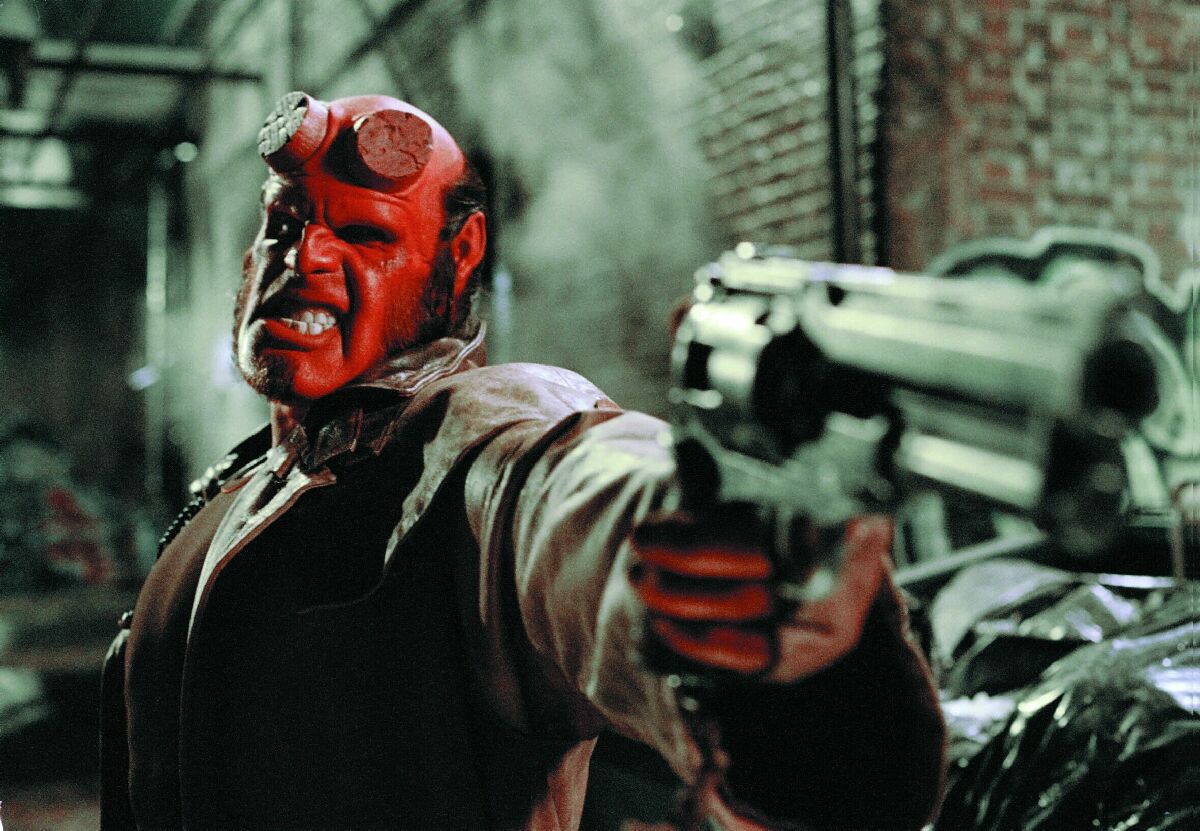
 Even with the participation of Hellboy creator Mike Mignola, Guillermo del Toro’s (Pan’s Labyrinth) special-effects-laden big-screen adaptation of the popular comic book is a disappointment. Ron Perlman is fine as the cynical, wisecracking title character, used by the FBI to kill monsters, but the plot is a little too Buffy the Vampire Slayer crossed with the X-Files and Batman: The Animated Series, all three of which were superior to this mediocre movie. The all-star cast also features John Hurt, Selma Blair, Jeffrey Tambor, and the voice of David Hyde Pierce. Del Toro’s 2008 sequel, Hellboy II: The Golden Army, with most of the same actors reprising their roles, is significantly better.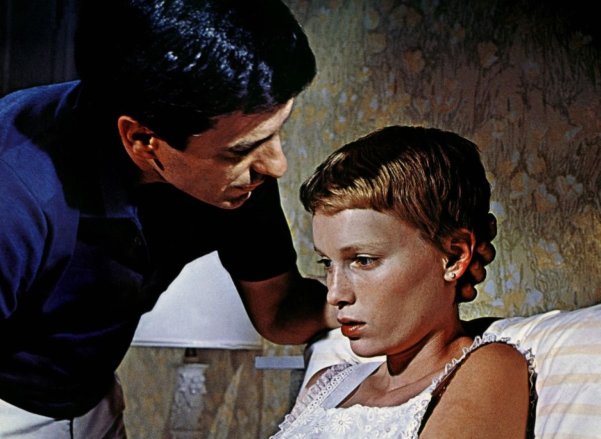
 Based on the frightening novel by Ira Levin, Rosemary’s Baby is one of the greatest psychological horror films ever made — and one of the best ever about the hell that apartment life in New York City can be. When Rosemary (Mia Farrow) and Guy Woodhouse (John Cassavetes) move into the fancy Upper West Side apartment complex the Bramford (the Dakota), ready to start a family, Rosemary slowly grows suspicious of Guy’s new friends, particularly the sweet old couple next door (Oscar winner Ruth Gordon and Sidney Blackmer), with good reason. Written and directed by Roman Polanski, Rosemary’s Baby works primarily because it is so believable, with recognizable characters and situations that never go over the top. It’s not just about a satanic underworld gathering in New York City; it delves headfirst into urban paranoia and the fear of adulthood and responsibility, focusing on career success and parenting, with the baby-faced Farrow expertly cast as the mom-to-be. The frightening thriller, which is filled with truly scary scenes, has held up well over the years, so beware if you’re afraid of the dark. In any case, be prepared to have the bejesus scared out of you. Rosemary’s Baby is screening March 8 at 9:30 as part of the Rubin Museum Cabaret Cinema series “Illusions Revealed,” consisting of films that address misperception, and will be introduced by neuroscientist Ioana Carcea. The series continues with such films as Giuseppe Tornatore’s Cinema Paradiso, Louis Malle’s Black Moon, and Sam Peckinpah’s Cross of Iron through April 26.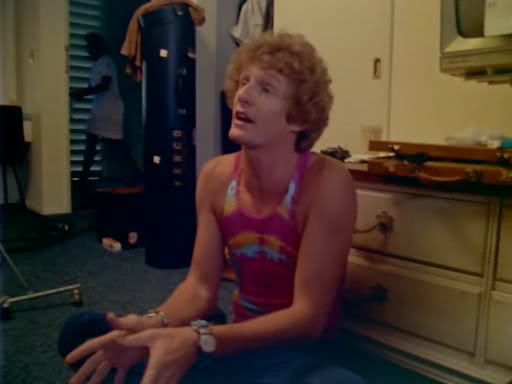
 Marjoe Gortner was born to preach. The fourth-generation evangelist, whose first name is a combination of Mary and Joseph, began singing the praises of the Lord at the age of four, but ten years later he had a change of heart. Howard Smith and Sarah Kernochan record his return to the revival circuit in the early 1970s in the Oscar-winning documentary Marjoe. No longer believing what he preaches, Gortner, looking like he just stepped out of the cast of Godspell, leads the filmmaking team on a tour of revival meetings where he riles up crowds, blesses them individually, and collects lots of cash. Before going onstage, Gortner shares many trade secrets with the documentary crew, explaining precisely how the meetings will go and just what the various preachers will do to manipulate the audience, and that’s exactly what happens. With his 1970s golden mane and free attitude, Gortner is a compelling figure, whether preening like Mick Jagger while praising the Lord or sitting on a bed counting the green. Gortner went on to appear in such films as Earthquake, Bobbie Jo and the Outlaw, and The Food of the Gods as well as such television series as Falcon Crest, Kojak, Break the Bank, Circus of the Stars, and The Great Ride and was married to Oscar nominee Candy Clark in 1978-79, but he never gained the fame he did with this documentary.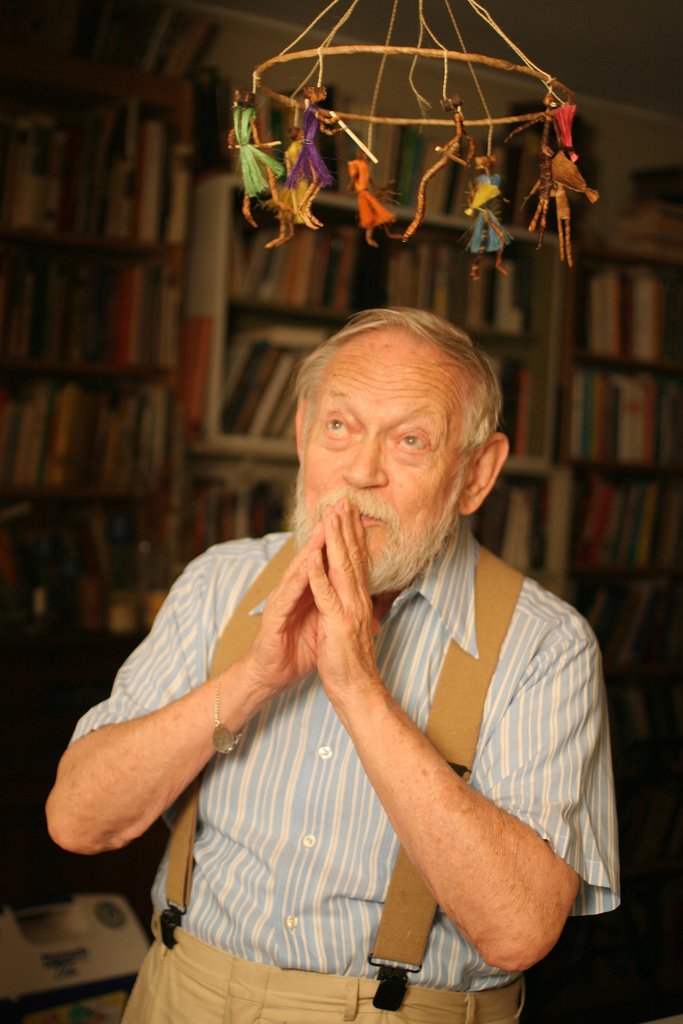
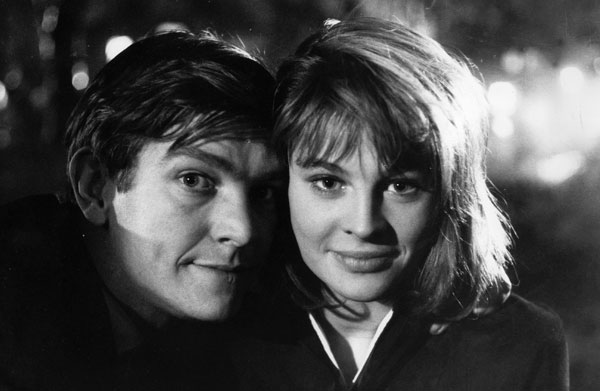
 Based on the novel by Keith Waterhouse (which he also adapted into a play with Willis Hall and which later became a musical), John Schlesinger’s Billy Liar is a prime example of the British New Wave of the 1950s and 1960s, which features work by such directors as Lindsay Anderson, Joseph Losey, Ken Russell, Nicolas Roeg, and Karel Reisz. Tom Courtenay stars as William Fisher, a ne’er-do-well ladies’ man who drudges away in a funeral home and dates (and lies to) multiple women, all the while daydreaming of being the president of the fictional country of Ambrosia. Billy lives in his own fantasy world where he can suddenly fire machine guns at people who bother him and be cheered by adoring crowds as he leads a marching band. Reminiscent of the 1947 American comedy The Secret Life of Walter Mitty, in which Danny Kaye dreams of other lives to lift him out of the doldrums, Billy Liar is also rooted in the reality of post-WWII England, represented by Billy’s father (Wilfred Pickles), who thinks his son is a no-good lazy bum. Shot in black-and-white, the film glows every time Julie Christie appears playing Liz, a modern woman who takes a rather fond liking to Billy. The film made Christie a star; Schlesinger next cast her in Darling, for which she won the Oscar for Best Actress. A 35mm print of Billy Liar is being shown March 7 at the IFC Center in the special program “Movie Night with Michel Gondry”; the director of Eternal Sunshine of the Spotless Mind, Be Kind Rewind, and The We and the I, which opens at IFC on March 8, will participate in a discussion following the screening. “John Schlesinger’s film certainly had an influence on my films, especially The Science of Sleep, just like Walter Mitty or other films intercutting layers of consciousness,” Gondry explains on the IFC website. “Only Billy Liar is one of the few to achieve that in the context of a social satire. All Billy’s visions are like explosions coming out of this very crude and bleak reality. And his personality is very unique, nailed in his lack of ambition. This is one of the films that taught me how magic can come just from editing.”