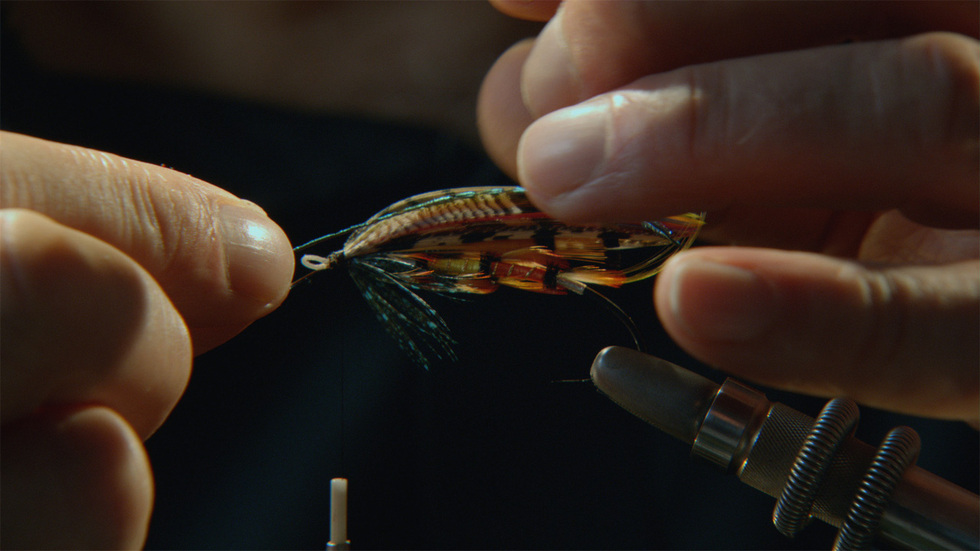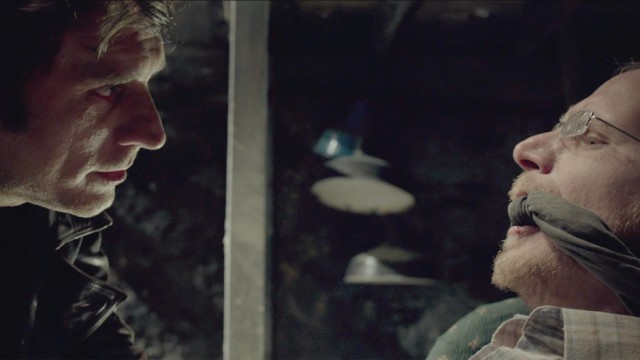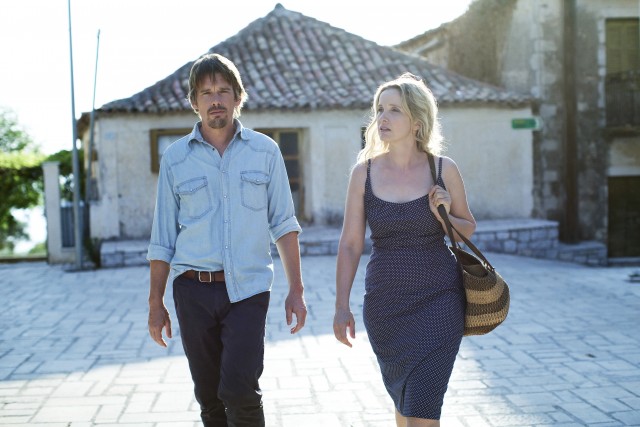
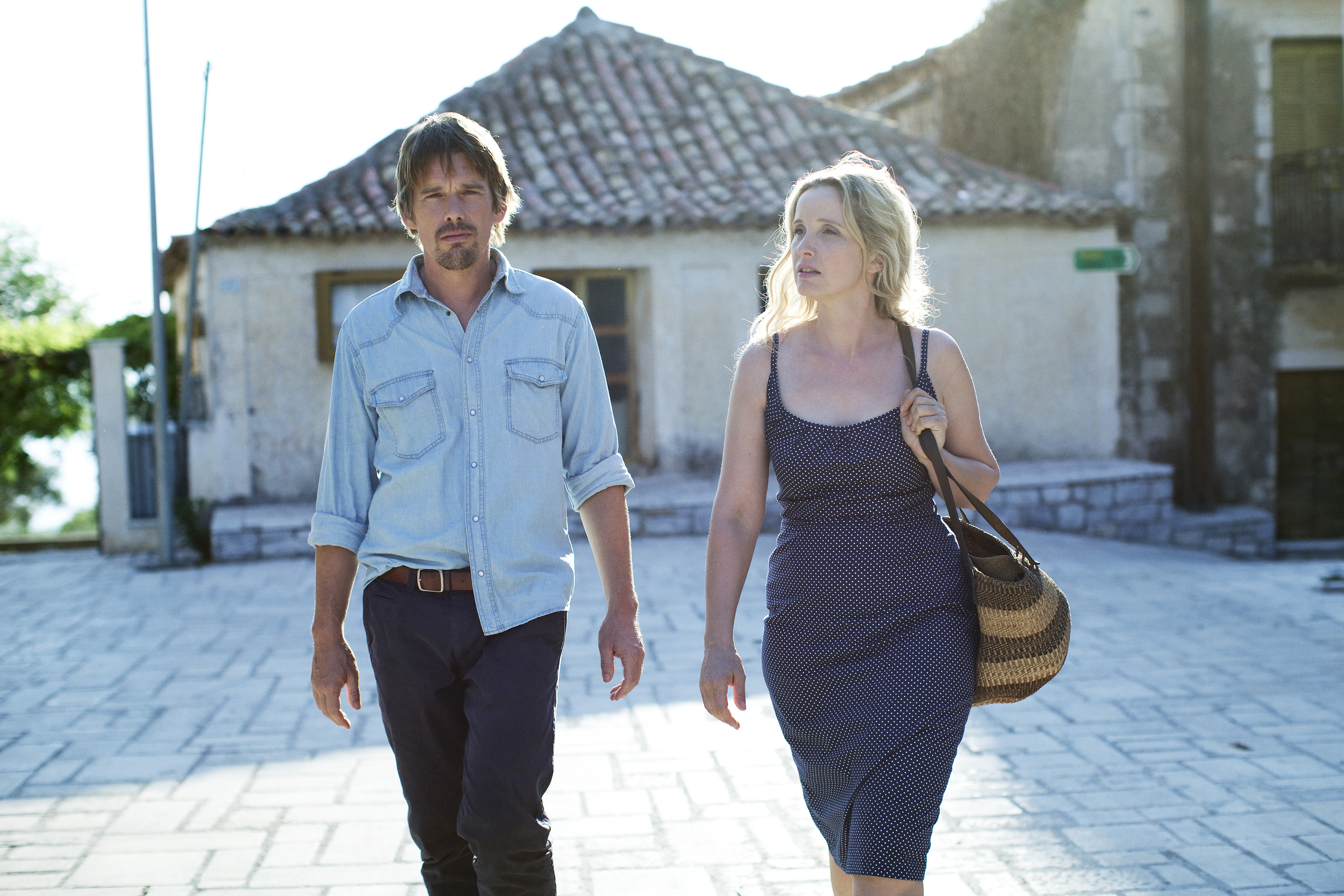
Jesse (Ethan Hawke) and Celine (Julie Delpy) are back together again in Richard Linklater’s BEFORE MIDNIGHT
BEFORE MIDNIGHT (Richard Linklater, 2013)
Wednesday, April 24, Clearview Cinemas Chelsea 8, 6:45
www.tribecafilm.com
www.sonyclassics.com/beforemidnight
 Unable to resist revisiting the characters who first fell in love in 1995’s Before Sunrise and again in 2004’s Before Sunset, Ethan Hawke and Julie Delpy reprise their roles as Jesse and Celine, respectively, in Richard Linklater’s absolutely wonderful Before Midnight. The couple first met on a train to Vienna in 1994, talking at length about their hopes and desires and planning on getting together in six months’ time, but they don’t reconnect for another nine years, when Celine comes to one of Jesse’s book signings in Paris. In real time, they walk around the City of Light, catching up on what has happened in their lives as Jesse prepares to take a plane back home to his wife and son. And now another nine years have passed, and Jesse and Celine are living together, the parents of twins (Charlotte and Jennifer Prior). As the film opens, the divorced Jesse is putting his teenage son, Hank (Seamus Davey-Fitzpatrick), on a plane after having spent the summer together in Greece. What follows is a marvelous fourteen-minute scene of Jesse driving down a mountain road as he and Celine essentially let the audience know what has occurred over the last nine years: They have twin girls (sleeping in the back), Celine has been offered an important environmental job, and Jesse is considering moving to Chicago to be closer to Hank. They return to a country estate owned by Patrick (award-winning cinematographer Walter Lassally, making his acting debut at the age of eighty-six), who is hosting an outdoor lunch with a group of friends (including French actress Ariane Labed, coproducer and filmmaker Athina Rachel Tsangari, and Xenia Kalogeropoulou, who came out of retirement to appear in her first picture since 1985). They all talk of life and love, with Celine being particularly charming. But when Jesse and Celine go off to a hotel room for what is supposed to be a romantic rendezvous, some things are said and truths revealed that complicate things.

Cowriters Julie Delpy and Ethan Hawke explore life and love in Greece in third film about Celine and Jesse
As with the first two films, Before Midnight consists of long takes of Jesse and Celine discussing their past, present, and future as cowriters Linklater (Slacker, Dazed and Confused), Delpy, and Hawke, who were nominated for an Oscar for their script for Before Sunset, continue to explore these engaging characters; both the dialogue and the acting have matured with an intelligent grace and elegance that are captivating. The couple wanders around Messinia examining their lives as only fortysomethings can, trying to figure out whether what they have is what they want. The central focus, though, once again is time, whether it is the years Jesse and Celine have spent together, the time they have left, time as a concept in Jesse’s semiautobiographical novels, or Jesse making a joke about being a time traveler. It’s been eighteen years since we first met Jesse and Celine, and we’ve grown eighteen years older too, lending fascinating perspectives that can’t help but force us to take a look at our own lives as well. The trilogy is America’s version of François Truffaut’s Antoine Doinel series, filled with humor, lyricism, and an inherent understanding of twenty-first-century realities. Will there be a fourth film in nine years? As of now, the principals aren’t saying because they just don’t know, but Before Midnight ends on just about the perfect ambiguous note.

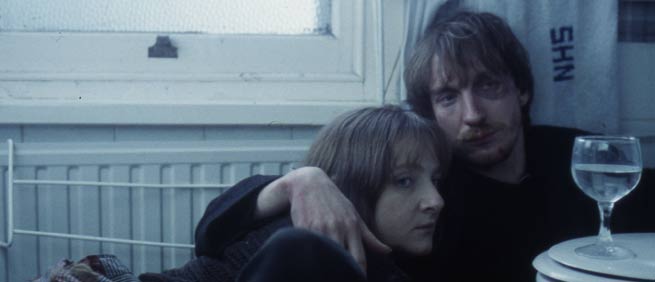
 In writer-director Mike Leigh’s controversial Naked, David Thewlis is mesmerizing as Johnny, a drifter on the run from Manchester who shows up at the London apartment of an old girlfriend, Louise (Lynda Steadman), and develops a strange attraction for Louise’s roommate, Sophie (the excellent Katrin Cartlidge). Leigh, who earned Best Director honors at Cannes for the film, fills Naked with desperate characters, desolate streets, and plenty of graphic, lurid detail. Thewlis won numerous acting awards for his brilliant portrayal of a very difficult character for the audience to care about, especially in a film that runs more than two hours. Sitting through Naked is an exhausting, infuriating, ultimately rewarding experience; among the best scenes are the philosophical conversations Johnny has with the night watchman (Peter Wight). Naked is screening in a high-definition digital projection on April 25 as part of the IFC Center series “The Modern School of Film” and will be followed by a discussion with Iron & Wine’s Sam Beam.