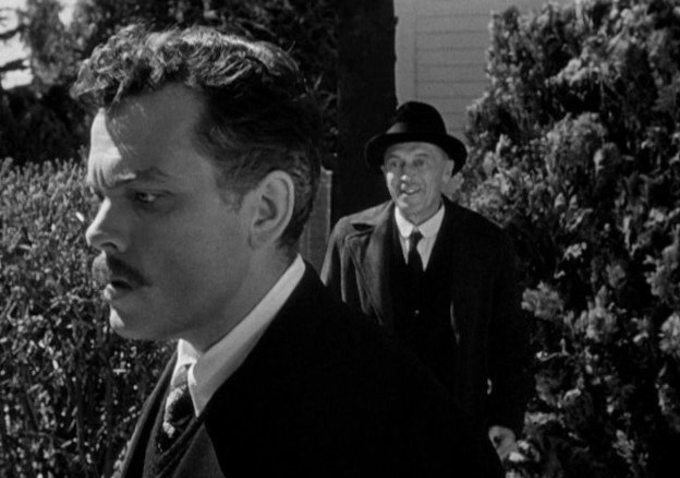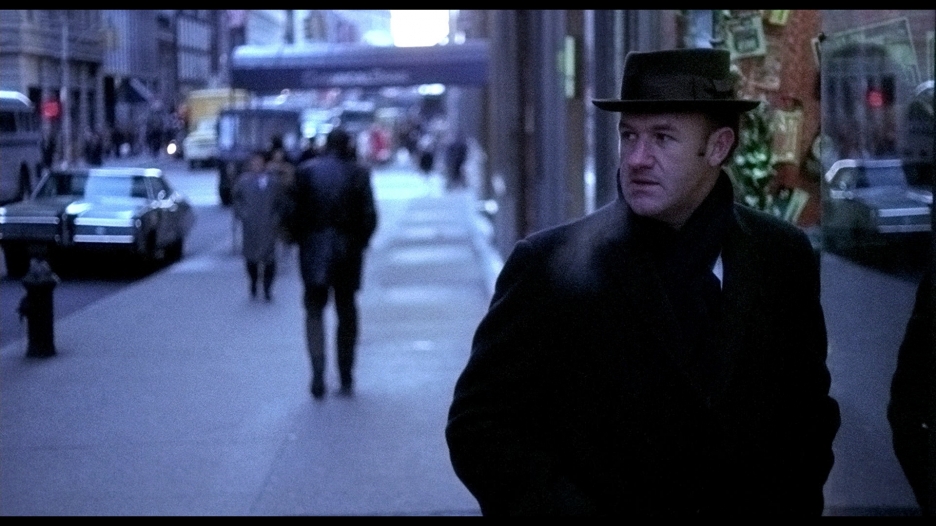
Popeye Doyle battles his inner demons and an international drug ring in New York City classic THE FRENCH CONNECTION
THE FRENCH CONNECTION (William Friedkin, 1971)
BAMcinématek, BAM Rose Cinemas
30 Lafayette Ave. between Ashland Pl. & St. Felix St.
Saturday, May 4, 2:00, 4:30, 7:00, 9:30
Series runs May 2-7
212-415-5500
www.bam.org
 William Friedkin’s Oscar-winning classic The French Connection is a whole lot more than just a car chase. But oh, what a car chase. Adapted by screenwriter Ernest Tidyman from a nonfiction book by Robin Moore, the gripping 1971 thriller is about obsession and paranoia, setting the stage for a decade filled with gritty, soul-searching films centered around troubled antiheroes. Way down on the list of actors to play Popeye Doyle, Gene Hackman won an Academy Award for his portrayal of the undercover detective willing to do anything to get his man. In this case, his targets are suave local hoodlum Sal Boca (Tony Lo Bianco) and elegant French drug kingpin Alain Charnier (Fernando Rey), less-than-affectionately known as Frog One. Sure that a major international deal is about to go down, Doyle and his partner, Cloudy Russo (Roy Scheider), trail Boca and Charnier, highlighted by a marvelous cat-and-mouse game between Doyle and Charnier on the subway and then, of course, the car chase to end all car chases, as Doyle speeds underneath an elevated train in a Pontiac LeMans, determined to catch hit man Pierre Nicoli (Marcel Bozzuffi). Shot in muted browns and grays by Owen Roizman, who photographed such other New York City tales as The Taking of Pelham One Two Three, Three Days of the Condor, and Tootsie, the film was inspired by real-life situations involving cops Eddie Egan and Sonny Grosso, both of whom appear in the film (but not as themselves). The French Connection is screening May 4 as part of the BAMcinématek series “Friedkin 70s,” which kicks off on May 2 with Sorcerer, followed on May 3 with Cruising, both of which will have showings that include a Q&A with Friedkin, who has just published his memoir, The Friedkin Connection (Harper, April 2013, $29.99). The series also includes The Boys in the Band, The Exorcist, and The Brink’s Job.
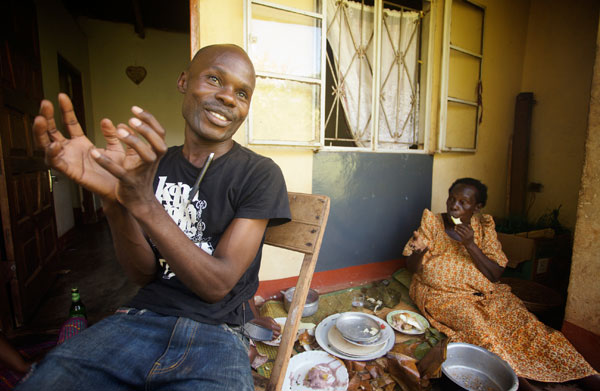
 Every June, New York, Chicago, San Francisco, and other cities celebrate gay pride as millions of marchers and spectators come together in parades, marches, and other events in which no one has to hide their sexuality. Such is not the case in Uganda, where many believe that being gay should lead to being executed — and that not turning in a gay friend or relative should result in life in prison. In the heartbreaking yet stirring Call Me Kuchu, codirectors Katherine Fairfax Wright, who also served as editor and photographer, and Malike Zouhali-Worrall, who also produced the award-winning documentary, go deep inside the LGBT community in Kampala, meeting with such gay and lesbian LGBT activists as Naome Ruzindana, Stosh Mugisha, John “Longjones” Abdallah Wambere, and movement leader David Kato, the first openly gay man in Uganda, who risk their lives on a daily basis as they fight for freedom and battle against the Anti-Homosexuality Bill, a draconian measure being strongly pushed by Member of Parliament David Bahati that threatens the lives of anyone and everyone involved in homosexual acts. As white American evangelicals come to Uganda to support the so-called Kill the Gays legislation, expelled Anglican Church bishop Senyonjo becomes a staunch defender of the LGBT community, the only religious leader to do so. Meanwhile, Giles Muhame, managing editor of Uganda’s popular Rolling Stone newspaper, proudly explains his mission of outing gays on the front cover of his publication, hoping that they get arrested, tried, convicted, and hanged by the government. But the activists won’t let that stop them. “If we keep on hiding,” Kato says, “they will say we are not here.” When tragedy strikes, everything is put into frightening perspective. Call Me Kuchu is a powerful examination of personal freedom and individual sexuality, a film that delves into the scary nature of repression, homophobia, and mob violence in an unforgiving, bigoted society. The documentary, which was the closing-night selection of the 2012 Human Rights Watch Film Festival, is scheduled to open in theaters next month, but it is having a sneak preview on May 6 in a benefit for American Jewish World Service, an organization that “works to realize human rights and end poverty in the developing world”; the event will include a cocktail reception followed by a screening of the film and a Q&A with Zouhali-Worrall, Fairfax Wright, AJWS president Ruth Messinger, and AJWS Africa program officer Gitta Zomorodi. Advance ticket sales are closing at 12 noon on Friday, but walk-ins are encouraged on Monday.