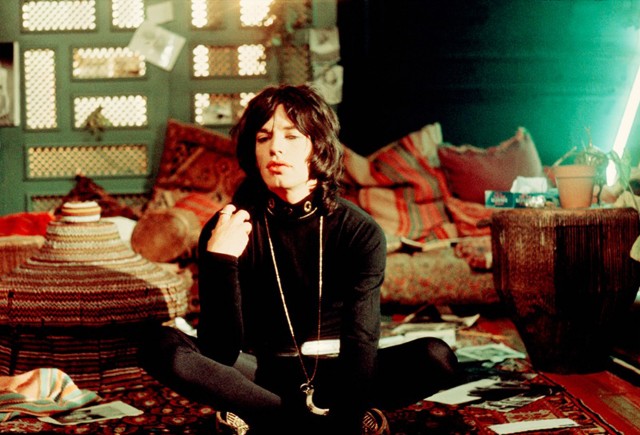
Mick Jagger puts on quite a show in Donald Cammell and Nicolas Roeg’s trippy PERFORMANCE
PERFORMANCE (Donald Cammell & Nicolas Roeg, 1970)
IFC Center
323 Sixth Ave. at West Third St.
Monday, June 3, 8:00
212-924-7771
www.ifccenter.com
 A British gangster on the run hides out with a psychedelic rock star in this strangely enticing film from Donald (The Demon Seed) Cammell and Nicolas Roeg (making his big-screen directorial debut). James Fox didn’t know what he was getting into when he signed on to play Chas, a mobster who finds sanctuary with mushroom-popping rock-diva has-been Turner, played with panache by Mick Jagger. Throw in Anita Pallenberg, a fab drug trip, and the great “Memo to Turner” scene and you have a film that some consider the real precursor to MTV, some think a work of pure demented genius, and others find to be one of the most pretentious and awful pieces of claptrap ever committed to celluloid. We fall somewhere in the middle of all of that. Performance is screening in a 35mm print June 3 at 8:00 as part of the IFC Center series “Queer/Art/Film” and will be followed by a discussion with artist, writer, documentarian, and activist Gregg Bordowitz. The monthly series, which consists of films selected by gay New York City artists, continues July 22 with Julia Loktev’s Day Night Day Night, chosen by Amadéus Leopold, and August 19 with Stephen Frears’s My Beautiful Laundrette, picked by Chitra Ganesh.
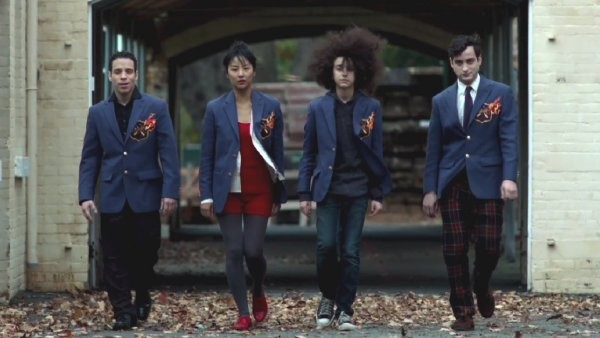
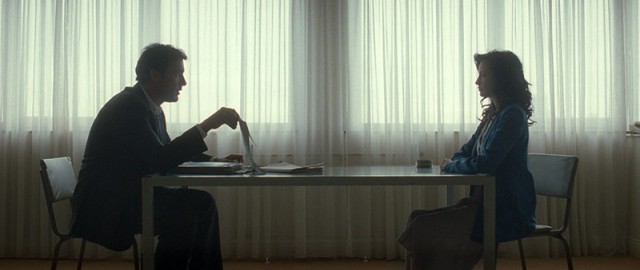


 When Bill Stone first began making Triumph of the Wall: My Life as a Work in Progress, he was hoping for a meditative documentary on the nature of expectation, exploring commitment, contemplation, and connection in both life and work, both his and his subject’s. However, he ends up with something far different, and try as he might, he just can’t get it on track. Stone follows the travails of Chris Overing, a jack of all trades who has accepted a job building a one-thousand-foot dry-stone wall for an unseen client. Overing has never done anything quite like this before, and that becomes readily apparent as what he thought would be a two-month process turns into years. During that time, Stone sticks with his subject, attempting to get him to wax poetic about what he is experiencing, maybe talk about perfection, procrastination, and the possibility of ever seeing the light at the end of the tunnel. Unfortunately, Overing doesn’t have a whole lot to say, and the vast majority of what he does say is not very philosophical. But Stone soldiers on, traveling to Scotland to talk to some professional stonemasons, and he even brings in a pair of artist friends to help work on the wall, desperate for colorful stories and more exciting human interaction. But as the frustration keeps mounting, the director stretches too far as he awkwardly, if very honestly, tries to make sense of it all. (For a much better treatise on wall building, check out Paul Auster’s 1990 novel The Music of Chance, which features a character named Stone.) At the start, Overing, Stone, and the film are filled with promise; even the director’s name makes the whole thing feel like it was meant to be. But alas, the various story lines, like so many of the stones, never quite fit together. Triumph of the Wall opens May 31 at the Quad, with Stone, Overing, and producer Fred Bohbot participating in Q&As following the 7:00 shows on Friday, Saturday, and Sunday night.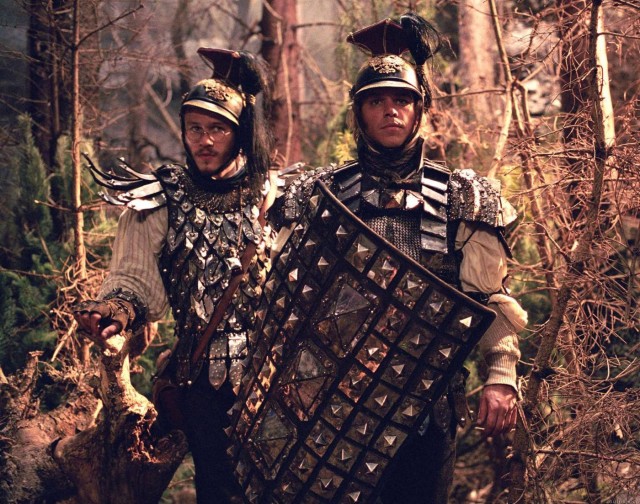
 A director of extremes, Terry Gilliam has made big-budget disasters and low-budget gems, overhyped tripe and underhyped masterpieces. The former Python’s 2005 take on the Brothers Grimm is, unfortunately, another dreadful excursion, a cold, distant reimagining of Will and Jake Grimm, who gave the world myriad fairy tales that are still beloved (and still rather frightening) today. (And this one had its share of problems with the studio again — this time with Bob and Harvey Weinstein.) Will (Matt Damon) and Jacob (Heath Ledger), the brothers Grimm, here are portrayed as con artists who travel French-occupied Germany pretending to slaughter made-up ghosts and goblins for money. But they’re soon captured by French general Delatombe (a disappointing Jonathan Pryce) and his right-hand man, the inexplicably Italian commander Cavaldi (a ridiculously overacting Peter Stormare). They are ordered to solve the real mystery of the disappearance of a group of young girls from the small village of Marbaden — or else they will be killed themselves. Screenwriter Ehren Kruger, who previously gave us such winners as Reindeer Games (John Frankenheimer, 2000) and The Ring Two (Hideo Nakata, 2005), fills the movie with references to Hansel and Gretel, Little Red Riding Hood, Sleeping Beauty, Snow White, Rapunzel, the Frog Prince, and Cinderella, but that doesn’t help save the film’s own lack of believable, endearing characters. You won’t care about anyone or anything that happens in Gilliam’s two-hour mess, which looks as if it was hacked to bits in the editing room like your mother’s chopped liver. The Brothers Grimm is screening in a 35mm print at 12:20 am on May 31 & June 1 as part of the IFC Center’s Waverly Midnights series “Terry Gilliam,” which continues through July 20 with such better Gilliam fare as Jabberwocky, The Fisher King, and Brazil.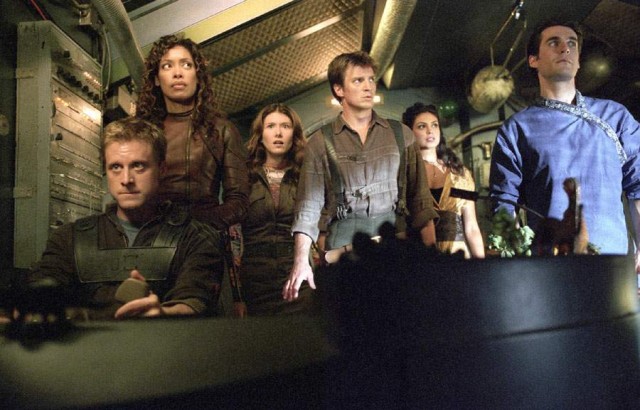
 We were huge fans of Joss Whedon’s Buffy the Vampire Slayer and Angel, so it was with much disappointment that we watched his 2002 TV show, Firefly, come and go so quickly. But the diehard fans, known as Browncoats, wanted more than the Fox network gave them, so Whedon delivered this exciting feature-length film for Universal, reuniting the cast, including Nathan Fillion as Mal, Gina Torres as Zoe, Alan Tudyk as Wash, Morena Baccarin as Inara, Adam Baldwin as Jayne, Jewel Staite as Kaylee, Sean Maher as Simon, Summer Glau as River, and Ron Glass (yes, the guy from Barney Miller) as Shepherd. The bad guy this time around is known simply as the Operative (Chiwetel Ejiofor), a cold-blooded killing machine out to destroy River, who has very dangerous special powers that the Alliance wants silenced. Also getting in the crew’s way are the Reavers, vile creatures who prefer to eat their prey alive. While the Browncoats should be thrilled with the film, so should newbies to this world, as Whedon has managed to make Serenity an involving stand-alone space Western that sci-fi fans can enjoy without knowing anything about Firefly. But after you see this thoroughly enjoyable flick, you’re likely to rush to catch up on everything you missed. Serenity is screening at BAM on May 30 at 9:50, preceded at 7:00 by Whedon’s new movie, a modern take on the Bard’s Much Ado About Nothing, as part of the BAMCinématek program “An Evening with Joss Whedon,” with Whedon taking part in a Q&A following the first film and introducing the second; although both events are sold out, there will be a standby line for any tickets that might become available.