this week in film and television

ART SEEN: THE COOL SCHOOL

THE COOL SCHOOL takes a look at the influential L.A. art scene of the 1950s and 1960s

THE COOL SCHOOL takes a look at the influential L.A. art scene of the 1950s and 1960s

THE COOL SCHOOL (Morgan Neville, 2007)
Nitehawk Cinema
136 Metropolitan Ave. between Berry St. & Wythe Ave.
Sunday, June 23, 11:15 am
718-384-3980
www.nitehawkcinema.com

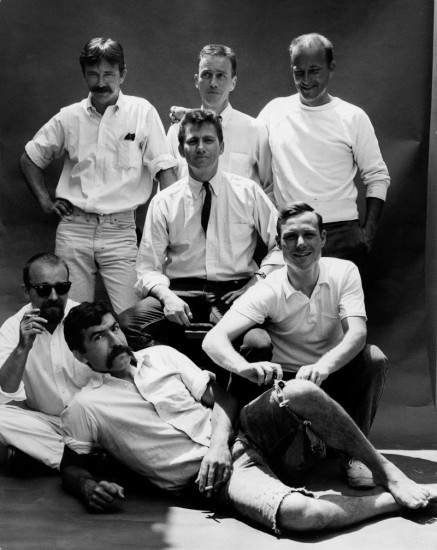
While postwar modern art was exploding in New York in the 1950s, a small, close-knit group of artists were coming together in Los Angeles, exploring abstract expressionism in a tiny gallery called Ferus. Mixing archival footage with new interviews — shot in black and white to maintain the old-time, DIY feel — director Morgan Neville delves into the fascinating world of the L.A. art scene as seen through the Ferus Gallery, which was founded in 1957 by Walter Hopps, a medical-school dropout who looked and acted like a Fed, and assemblage artist Ed Kienholz. “The work was really special,” notes Dennis Hopper, enjoying a cigar with Dean Stockwell. “And there [were] a lot of really, really gifted artists that really have to be looked at again.” Among those artists were Wallace Berman, Ed Moses, Ed Ruscha, Robert Irwin, Craig Kauffman, John Baldessari, and Larry Bell. (All of them participate in the documentary except for Berman, who died in 1976.) In addition to featuring up-and-coming West Coast painters, sculptors, and conceptual artists, Ferus also hosted a Marcel Duchamp retrospective as well as early shows by Andy Warhol, Roy Lichtenstein, Jasper Johns, and other East Coast favorites. For nearly ten years, Hopps, Kienholz, and crafty businessman Irwin Blum kept Ferus going until various personality clashes led to its demise. The film includes an engaging roundtable from 2004 in which Neville brought many of the artists together to discuss what Ferus meant to them — and the art world in general. Behind a jazzy score, Neville also speaks with collectors, curators, and critics, putting it all into perspective. The Cool School, narrated by actor and photographer Jeff Bridges, is a fun-filled trip through a heretofore little-known part of postwar American art. The film is screening June 23 at 11:15 am as part of the Nitehawk Cinema’s monthly series “Art Seen” along with Paul McCarthy’s The Black and White Tapes, artist works by Kelly Kleinschrodt and Alexa Garrity, and Henry Joost and Ariel Schulman’s brilliant video bio A Brief History of John Baldessari, narrated by Tom Waits. The series continues July 20-21 with Neil Berkeley’s Beauty Is Embarrassing.

HUMAN RIGHTS WATCH FILM FESTIVAL: TALL AS THE BAOBAB TREE

Real-life sisters Dior and Oumoul Kâ play fictional sisters facing a family crisis in TALL AS THE BAOBAB TREE

Real-life sisters Dior and Oumoul Kâ play fictional sisters facing a family crisis in TALL AS THE BAOBAB TREE

TALL AS THE BAOBAB TREE (GRAND COMME LE BAOBAB) (Jeremy Teicher, 2012)
IFC Center
323 Sixth Ave. at West Third St.
Sunday, June 23, 7:00 & 9:30
212-924-7771
www.tallasthebaobabtree.com
www.ff.hrw.org

The 2013 Human Rights Watch Film Festival comes to a close on June 23 with Jeremy Teicher’s heart-wrenching Tall as the Baobab Tree, an involving, powerful, yet gentle drama about a Senegalese family trapped by tradition in a modernizing world. Real-life sisters Dior and Oumoul Kâ star as Coumba and Debo, close siblings who live in the tiny rural village of Sinthiou Mbadane (where they actually are from). When their older brother, Silèye (Alpha Dia), falls out of a baobab tree and breaks his leg, their father (Mouhamed Diallo) doesn’t have enough money to pay for the necessary medical care so he instead sends Coumba out to do Silèye’s job of herding the cows and decides to sell off eleven-year-old Debo to suitors for marriage. Their mother (Mboural Dia) is unwilling to stand up to her husband, so Coumba hatches a plan in which her friend Amady (Cheikh Dia), who has a crush on her, will watch the herd for her secretly while she heads into the city and gets a job until she makes enough money to help Silèye heal and prevent Debo from having to marry so young. Unfortunately, not everything goes quite as planned. But through it all, no matter how difficult things get, all of the characters maintain their faith, praising peace and continually saying, “God is great.”

Teicher came up with the idea for Tall as the Baobab Tree when he was a student working on This Is Us, a documentary for the nonprofit organization CyberSmart Africa in which the children of Sinthiou Mbadane created brief digital stories about their lives. Teicher, who directed Tall as the Baobab Tree and cowrote it with Alexi Pappas, chose to focus on the very real African problem of forced marriage of young girls between the ages of eight and twelve, collaborating closely with the nonprofessional actors selected from the village, allowing their own stories to meld together, blending fact and fiction. Another central issue is the importance of education, particularly for girls, as Debo clearly would rather follow in Coumba’s footsteps and prepare for university instead of becoming a child bride. The narrative unfolds slowly and calmly, with no overemotional, melodramatic moments or any soapbox preaching, while the tender mood is enhanced by cinematographer Chris Collins’s lush photography and Salieu Suso’s Kora-based score. Presented in conjunction with the African Film Festival and Girls Not Brides: The Global Partnership to End Child Marriage, Tall as the Baobab Tree, the first feature ever filmed in the Puular language, is screening June 23 at the IFC Center at 7:00, followed by a discussion with Teicher and Human Rights Watch African division deputy director Rona Peligal, and again at 9:30, introduced by Teicher.

AUTO-CINEMA: HOLY MOTORS

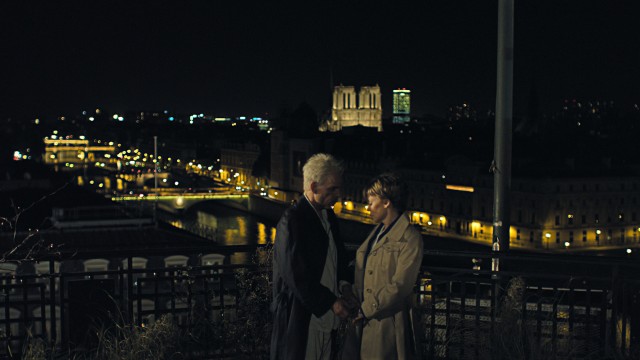
Léos Carax’s HOLY MOTORS is a dazzling tribute to Paris, cinema, and the art of storytelling

Léos Carax’s HOLY MOTORS is a dazzling tribute to Paris, cinema, and the art of storytelling

HOLY MOTORS (Léos Carax, 2012)
Anthology Film Archives
32 Second Ave. at Second St.
Saturday, June 22, 4:30, and Monday, June 24, 6:45
212-505-5181
www.anthologyfilmarchives.org
www.holymotorsfilm.com

French writer-director Léos Carax (Boy Meets Girl, Mauvais Sang) has made only five feature films in his thirty-plus-year career, a sadly low output for such an innovative, talented director, but he has now given birth to his masterpiece, the endlessly intriguing, confusing, and exhilarating Holy Motors. His first film since 1999’s POLA X, the new work is a surreal tale of character and identity, spreading across multiple genres in a series of bizarre, entertaining, and often indecipherable set pieces. Holy Motors opens with Carax himself playing le Dormeur, a man who wakes up and walks through a hidden door in his room and into a movie theater where a packed house, watching King Vidor’s The Crowd, is fast asleep. The focus soon shifts to Carax alter ego Denis Lavant as Monsieur Oscar, a curious character who is being chauffeured around Paris in a white stretch limo driven by the elegant Céline (Édith Scob). Oscar has a list of assignments for the day that involve his putting on elaborate costumes — including revisiting his sewer character from Merde, Carax’s contribution to the 2009 omnibus Tokyo! that also included shorts by Michel Gondry and Bon Joon-ho — and becoming immersed in scenes that might or might not be staged, blurring the lines between fiction and reality within, of course, a completely fictional world to begin with. It is as if each scene is a separate little movie, and indeed, Carax, whose middle name is Oscar, has said that he made Holy Motors after several other projects fell through, so perhaps he has melded many of those ideas into this fabulously abstruse tale that constantly reinvents itself. The film is also a loving tribute to Paris, the cinema, and the art of storytelling, with direct and indirect references to Franz Kafka, E. T. A. Hoffman, Charlie Chaplin, Lon Chaney, Eadweard Muybridge, Georges Franju, and others. (Scob, who starred in Franju’s Eyes Without a Face, at one point even pulls out a mask similar to the one she wore in that classic thriller.) The outstanding cast also features Kylie Minogue, who does indeed get to sing; Eva Mendes as a robotic model; and Michel Piccoli as the mysterious Man with the Birthmark. Holy Motors is screening June 22 & 24 as part of the Anthology Film Archives series “Auto-Cinema,” consisting of films that take place primarily inside cars, exploring human consciousness in ways that are less claustrophobic than one might imagine; the weeklong festival also includes Abbas Kiarostami’s Taste of Cherry and 10, David Cronenberg’s Cosmopolis and Crash, Saul Levine’s Driven (with Katha Washburn), and a shorts program with works by Alfred Leslie and Frank O’Hara, Bette Gordon and James Benning, Paul Kos and Marlene Kos, Morgan Fisher, and Andrew T. Betzer.

FILMS IN TOMPKINS: RUSHMORE

Jason Schwartzman is a different kind of teenager caught up in an adult world in Wes Anderson’s RUSHMORE

RUSHMORE (Wes Anderson, 1998)
Tompkins Square Park
Ave. A between Seventh & Tenth Sts.
Thursday, June 20, free, 6:00
718-777-6800
www.filmsintompkins.com
rushmoreacademy.com

Wes Anderson’s Rushmore is a dazzlingly dark, sublime masterpiece. Anderson (The Royal Tenenbaums, Moonrise Kingdom) created one of the all-time-great quirky indie antiheroes in Max Fischer, played with relish by Jason Schwartzman. Max is a troubled genius at the private Rushmore Academy, where his eccentricities make him somewhat of an outcast. His best friend is wealthy iconoclast Herman Blume (Bill Murray in a career-redefining role), but their relationship turns sour when it becomes apparent that they both have their hearts set on beautiful teacher Rosemary Cross (Olivia Williams). A unique take on disaffected youth, Rushmore, which also features such Anderson regulars as Luke Wilson and Seymour Cassel and was cowritten by Owen Wilson, helped launch a new wave of American independent cinema with its offbeat narrative and eclectic soundtrack, which includes songs by Donovan, the Rolling Stones, Django Reinhardt, Cat Stevens, Yves Montand, and the Faces, along with original material by Devo’s Mark Mothersbaugh. Rushmore is screening June 20 as part of the free Films in Tompkins programming in Tompkins Square Park and will be preceded by a live performance by the all-women’s AfroBrazilian Samba Reggae drumming band BatalaNYC. The summer series continues into August with such other fab films as Reservoir Dogs (with Amour Obscur), Easy Rider (with Main Street Quintet), The Big Lebowski (with Jade Pinto and the Yeahtones), and O Brother, Where Art Thou?, which was rescheduled for August 22 after getting rained out on June 13.

HUMAN RIGHTS WATCH FILM FESTIVAL: FATAL ASSISTANCE

FATAL ASSISTANCE

Documentary reveals that there’s still a whole lot to be done in Haitian recovery effort as organizations fight over details

FATAL ASSISTANCE (ASSISTANCE MORTELLE) (Raoul Peck, 2012)
Wednesday, June 19, 6:30, Film Society of Lincoln Center, Elinor Bunin Munroe Film Center, Francesca Beale Theater, 144 West 65th St. at Amsterdam Ave.
Thursday, June 20, 7:00, IFC Center, 323 Sixth Ave. at West Third St.
Festival runs June 13-23
www.ff.hrw.org

Award-winning Haitian filmmaker Raoul Peck’s Fatal Assistance begins by posting remarkable numbers onscreen: In the wake of the devastating earthquake that hit his native country on January 12, 2010, there were 230,000 deaths, 300,000 wounded, and 1.5 million people homeless, with some 4,000 NGOs coming to Haiti to make use of a promised $11 billion in relief over a five-year period. But as Peck reveals, there is significant controversy over where the money is and how it’s being spent as the troubled Haitian people are still seeking proper health care and a place to live. “The line between intrusion, support, and aid is very fine,” says Jean-Max Bellerive, the Haitian prime minister at the time of the disaster, explaining that too many of the donors want to cherry-pick how their money is used. Bill Vastine, senior “debris” adviser for the Interim Commission for the Reconstruction of Haiti (CIRH), which was co-chaired by Bellerive and President Bill Clinton, responds, “The international community said they were gonna grant so many billions of dollars to Haiti. That didn’t mean we were gonna send so many billions of dollars to a bank account and let the Haitian government do with it as they will.” Somewhere in the middle is CIRH senior housing adviser Priscilla Phelps, who seems to be the only person who recognizes why the relief effort has turned into a disaster all its own; by the end of the film, she is struggling to hold back tears. A self-described “political radical,” Peck doesn’t play it neutral in Fatal Assistance, instead adding mournful music by Alexei Aigui, somber English narration by a male voice (Peck narrates the French-language version), and a female voice-over reading melodramatic “Dear friend” letters that poetically trash what is happening in Haiti. “Every few decades, the rich promise everything to the poor,” the male voice-over says. “The dream of eradication of poverty, disease, death remains a perpetual fantasy.” Even though Peck (Lumumba, 2010 Human Rights Watch Film Festival centerpiece Moloch Tropical) attacks the agendas of the donors and NGOs while pushing an agenda of his own, Fatal Assistance is an important document that shows that just because money pours in to help in a crisis situation doesn’t mean that the things that need to be done are being taken care of properly. Fatal Assistance is the centerpiece selection of the 2013 Human Rights Watch Film Festival, where it will be screening June 19 at Lincoln Center and June 20 at the IFC Center with Peck, the former Haitian minister of culture, the 1994 winner of the festival’s Nestor Almendros Award for courage in filmmaking, and the 2001 festival Lifetime Achievement Award winner, on hand for Q&As after both presentations.

HUMAN RIGHTS WATCH FILM FESTIVAL: THE ACT OF KILLING

THE ACT OF KILLING

Proud mass murderers envision themselves as movie stars in Joshua Oppenheimer’s THE ACT OF KILLING

THE ACT OF KILLING (Joshua Oppenheimer, 2012)
IFC Center
323 Sixth Ave. at West Third St.
Tuesday, June 18, 9:30, and Wednesday, June 19, 9:00
Festival runs June 13-23
212-875-5601
www.theactofkilling.com
www.ff.hrw.org

Joshua Oppenheimer’s The Act of Killing is one of the most disturbing, and unusual, films ever made about genocide. In 1965-66, as many as a million supposed communists and enemies of the state were killed in the aftermath of a military coup in Indonesia. Nearly fifty years later, many of the murderers are still living in the very neighborhoods where they committed the atrocities, openly boasting about what they did, being celebrated on television talk shows, and even being asked to run for public office. While making The Globalization Tapes in Indonesia in 2004, the Texas-born Oppenheimer met some of these self-described gangsters and, struck by their brash, bold attitudes, decided to create a different kind of documentary. In addition to following them around as they go bowling, play golf, sing, and dance, proudly showing off how happy their lives are, Oppenheimer offered them the opportunity to tell their story as if it were a Hollywood movie. The men, whose love of American noir and Westerns heavily influenced the stylized killings they perpetrated, loved the idea and began to restage torture and murder scenes in great detail for the camera, getting in period costumes, putting on makeup, going over script details, reviewing the dailies, and playing both the violent criminals and their victims. The leader is master executioner Anwar Congo, who is perhaps the only one haunted by his deeds; although on the surface he is proud of what he did, he is tormented by constant nightmares. Such is not the case for the others, who laugh as they go over the gory details, especially paramilitary leader Herman Koto, Congo’s protégé and a man seemingly without a conscience. Meanwhile, fellow executioner Adi Zulkadry wonders whether telling the truth will actually negatively impact their legendary status. “Human rights! All this talk about ‘human rights’ pisses me off,” Congo says in one scene. “Back then there was no human rights.” Oppenheimer also depicts how frighteningly powerful the three-million-strong, government-connected Pancasila Youth is, ready to fight for the very same things that led to the genocide in the first place. It’s hard to comprehend how these men continue to walk free, and one can argue whether Oppenheimer should indeed be giving them the platform that he does. Watching these gangsters — or “free men,” as they like to call themselves, since the Indonesian word for gangster is “preman,” derived from the Dutch “vrijman” — artistically re-create scenes of horrific violence is both illuminating and infuriating on multiple levels that will leave viewers angry and incredulous. The Act of Killing is screening June 18 & 19 at the IFC Center as part of the “Focus on Asia” section of the 2013 Human Rights Watch Film Festival before opening July 19 at the Landmark Sunshine Cinema.

NORTHSIDE FILM: DAVID HOLZMAN’S DIARY

DAVID HOLZMAN’S DIARY

L. M. Kit Carson presages the YouTube Generation in DAVID HOLZMAN’S DIARY

DAVID HOLZMAN’S DIARY (Jim McBride, 1967)
UnionDocs
322 Union Ave.
Thursday, June 20, 6:30
Festival runs June 17-20
www.northsidefestival.com

New York City native Jim McBride’s directorial debut, the seminal David Holzman’s Diary, presages the YouTube Generation and reality shows in its depiction of a man obsessed with capturing virtually every moment of his life on camera. L. M. Kit Carson stars as David Holzman, a twenty-five-year-old unemployed schlemiel who goes everywhere with his 16mm camera, photographing the streets of his Upper West Side neighborhood, his model girlfriend, Penny (Eileen Dietz), and the woman in the apartment across the street. He also often turns the camera on himself as he discusses his life and moviemaking, directly and indirectly referencing Jean-Luc Godard, Alfred Hitchcock, Vincente Minnelli, Orson Welles, and Luchino Visconti. The black-and-white film is set up as if it’s a documentary, with choppy cuts and a barely audible soundtrack of a radio playing music and sharing the news of the day (July 1967). Holzman is happiest when he gets a new fish-eye lens and shows it off by carrying it through the streets above his head, offering a different perspective of the city. Like today’s world, McBride (The Big Easy, Great Balls of Fire!) brings up issues of voyeurism and privacy, because to Holzman, it’s as if nothing really exists unless it’s on film or television (or, now, the internet). Thus, it makes sense that David Holzman’s Diary is screening this week at Northside Film, on June 20 at 6:30 at UnionDocs. The four-day festival runs June 17-20 and includes some fifty films, from shorts in a DIY college competition to such full-length works as Franck Khalfoun’s Maniac with Elijah Wood, Aaron Schimberg’s Go Down Death, Jennie Livingston’s classic Paris Is Burning (with a live performance by House of Ladosha), Neil Jordan’s Byzantium, William Greaves’s 1968 Symbiopsychotaxiplasm Take One, and Nadia Szold’s Joy de V.