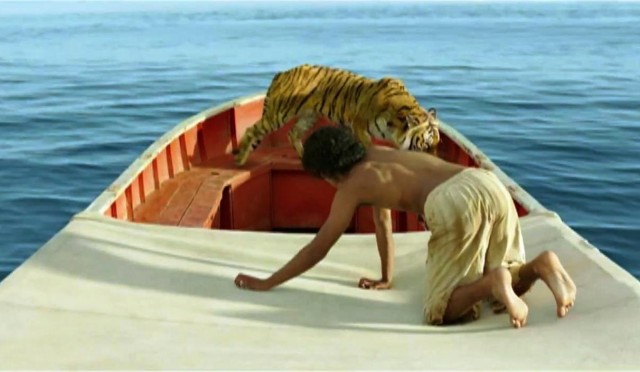
Teenager “Pi” Patel (Suraj Sharma) and Bengal tiger Richard Parker fight for survival in Ang Lee’s 3D adventure, LIFE OF PI
LIFE OF PI (Ang Lee, 2012)
East River State Park
Monday, July 1, free, 8:30
718-782-2731
www.lifeofpimovie.com
www.nysparks.com
 Based on Canadian author Yann Martel’s 2001 award-winning bestseller, Life of Pi has been adapted into an up-and-down movie that moves between the terribly boring “real” world and a man’s wildly thrilling tale of adventure on the high seas as a teenager. Rafe Sprall plays a novelist desperate for an idea to replace his abandoned book, so he has been pointed in the direction of Piscine “Pi” Patel (Indian movie star Irrfan Khan of Slumdog Millionaire). Pi proceeds to tell the writer about his childhood growing up in his family’s zoo, a time when the young boy (played through the years by Gautam Belur, Ayush Tandon, and Suraj Sharma) explored various religions, including Christianity, Hinduism, and Islam, in his search for a supreme being and meaning. But while his family is on a freighter on their way to a new life in Canada, the ship sinks, leaving Pi alone on a lifeboat with a zebra, a hyena, an orangutan, and a Bengal tiger named Richard Parker from the zoo. As Pi desperately struggles to survive, he develops a unique relationship with the tiger, having been taught by his father (Adil Hussain) that no matter how much he might think the tiger can gain emotional understanding and compassion, he is still a vicious killer. Directed by Ang Lee (Brokeback Mountain; Crouching Tiger, Hidden Dragon; The Ice Storm), the film borders on the spectacular when it is on the water, detailing the teenage Pi’s battle to stay alive, gorgeously shot by cinematographer Claudio Miranda and edited with heart-stopping excitement by regular Lee editor Tim Squyres. But the framing story, in which the elder Pi discusses his life and religious beliefs, is dry and dull, at times seeming like a vignette better left for an evangelistic cable channel. Perhaps Lee needed his longtime producing partner and cowriter, James Schamus, to help work his way through the muddle; Life of Pi is Lee’s first feature film made without Schamus, with the screenplay here written by David Magee (Finding Neverland). Nevertheless, Life of Pi still supplies enough thrills and chills, especially in 3D, to get past the psych 101 philosophizing. The film earned eleven Oscar nominations, including Best Picture, Best Director (won), Best Cinematography (won), Best Film Editing, Best Production Design, Best Visual Effects (won), Best Original Score (won), and Best Original Song. The film is screening July 1 at 8:30 as part of the free Williamsburg Summer Nights, Movies in the Park series in East River State Park.
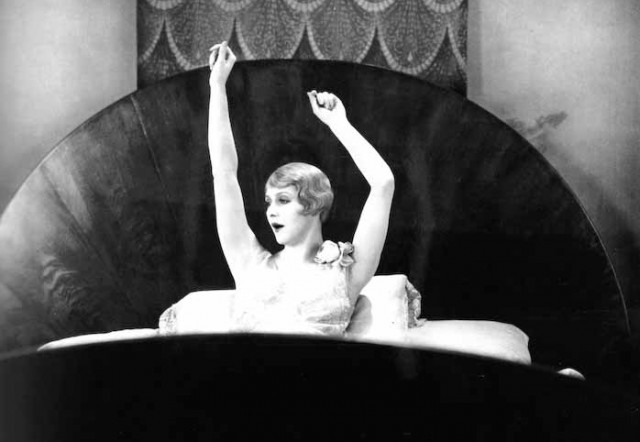
 Loosely based on a Noël Coward play that was recently made into a film starring Colin Firth, Jessica Biel, and Kristin Scott Thomas, Alfred Hitchcock’s Easy Virtue is another of the Master of Suspense’s cleverly told melodramas, a risqué tale of a woman unfairly placed in a lurid situation. Isabel Jeans stars as Larita Filton, a loving wife whose husband, Aubrey (Franklin Dyall), has commissioned her portrait by painter Claude Robson (Eric Bransby Williams). Just as Claude makes a play for Larita, she fights him off and Aubrey walks in. He misinterprets the scene, shots ring out, the artist is dead, and Claude files a highly publicized divorce case in which Larita is found guilty of misconduct. Trying to put her notorious past behind her, she heads for the Mediterranean, where she meets John Whittaker (Robin Irvine), a wealthy mama’s boy who falls instantly in love with her and brings her back to his parents’ country estate. But once there, Whittaker’s nasty mother (Violet Farebrother) and conniving sisters (Dacia Deane and Dorothy Boyd) do everything they can to ruin the relationship, seeking to uncover Larita’s history while also attempting to put her son back together with longtime family friend Sarah (Enid Stamp Taylor). Easy Virtue, which features yet another Hitchcock blonde, is a gripping film about honesty, reputation, individuality, and character as an innocent woman is forced to face undeserved consequences in the superficial world of high society. Hitchcock, who makes his cameo holding a walking stick, gliding past Larita while she sits by a tennis court, includes several wonderful touches involving circles and ovals, from a close-up of a judge’s wig to a shot through a tennis racket’s strings to a dining room dominated by a group of elongated, haloed saints on one wall. Easy Virtue is also one of Hitchcock’s dourest silent melodramas, lacking any comic relief as a wronged woman desperately tries to right her life. A DCP restoration of Easy Virtue is being screened July 2 at 7:30 in the BAM Harvey Theater as part of “The Hitchcock 9,” with live piano music by Stephen Horne. The series continues through July 3 with such other rarely shown Hitchcock silents as The Farmer’s Wife, Downhill, Champagne, and The Pleasure Garden, Sir Alfred’s debut, which has been restored with an additional twenty minutes that have been missing since its initial release.
 A summer night in Coney Island is the perfect time and place to see one of the most influential and important — and vastly entertaining — works to ever come out of the city,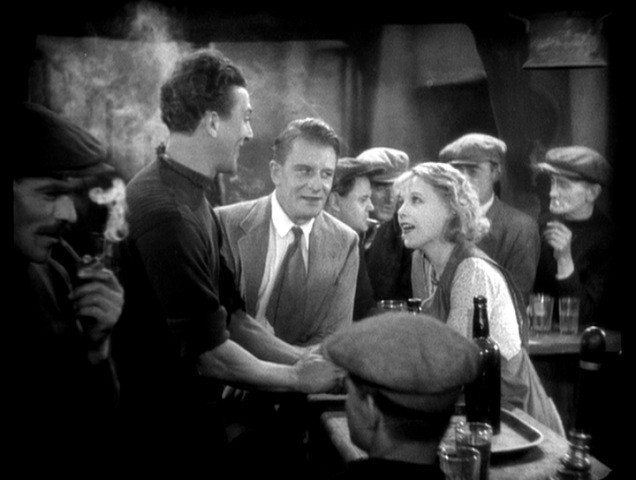
 An underrated gem, The Manxman is one of Alfred Hitchcock’s best early works from his British silent period. Based on an 1896 novel by Hall Caine, the 1929 melodrama, Hitchcock’s last fully silent film, tells the story of a romantic love triangle between two best friends, fisherman Pete Quilliam (Carl Brisson), lawyer Philip Christian (Malcolm Keen), and the woman they both love, Kate Cregeen (Anny Ondra). When Kate’s father, Caesar (Randle Ayrton), rejects Pete’s bid for his daughter’s hand, calling him a “penniless lout,” the fisherman takes to the sea, vowing to return from Africa a wealthy man worthy of marrying her. But while Pete is away, Philip and Kate grow much closer and contemplate whether they should break Kate’s promise to wait for Pete. When they learn of Pete’s death, they are ready to celebrate their love, but when the report turns out to be a mistake and Pete comes back a successful man, the drama heats up amid lies, betrayal, and public humiliation. Set on the Isle of Man but actually filmed on the Cornwall coast, The Manxman is a gripping tale that rises above pure soap opera through Hitchcock and cinematographer Jack E. Cox’s (Blackmail, The Lady Vanishes) intricate compositions and the German Expressionist acting style employed by Keen (The Lodger), who seems to have walked out of a von Sternberg film. One of the most memorable shots occurs with the three protagonists standing as if alone in Kate and Pete’s home, Kate leaning by a window, Philip bowed by the front door, and Pete in the front, head raised, confused and worried about the future. Hitchcock employs his mastery of suspense in several critical scenes, which he lets go on at length without any intertitles, forcing the viewer to wonder what is being said and then surprising them with what actually happens. Hitchcock sold The Manxman short when he told François Truffaut, “It was a very banal picture. . . . It was not a Hitchcock movie.” A DCP restoration of The Manxman, including a long-missing scene, is screening June 30 at 3:00 in the BAM Harvey Theater as part of “The Hitchcock 9,” with live music by pianist Stephen Horne and harpist Diana Rowan. The series continues through July 3 with such other rarely shown, carefully restored Hitchcock silents as The Farmer’s Wife, The Pleasure Garden, Downhill, and Champagne.
 For seven successive Tuesday nights, a serial killer who calls himself the Avenger has murdered a golden-haired woman. When a lodger (Ivor Novello) comes to rent a room from Mr. and Mrs. Bunting (Arthur Chesney and Marie Ault), the landlady soon suspects that the curious character might just be the murderer, especially when he shows an interest in their daughter, a golden-haired fashion model named Daisy (the one-named June), which angers Daisy’s beau, Joe (Malcolm Keen), a cop just assigned to the case. Based on a novel and play by Marie Belloc Lowndes, The Lodger is one of Alfred Hitchcock’s first films; he uses very few title cards in the silent work, allowing the story to tell itself. He serves up a heavy dose of red herrings in the Jack the Ripper-like tale, which drags on for quite a bit before shifting gears in the later scenes. The mediocre picture is most notable for the groundwork it lays for Hitchcock’s future films, investigating such themes as sexual obsession and innocent men on the run while displaying the director’s never-ending — and rather frightening — cinematic relationship with blondes. A DCP restoration of The Lodger is being screened June 30 at 7:30 in the BAM Harvey Theater as part of “The Hitchcock 9,” with live music by the Mont Alto Motion Picture Orchestra. The series continues through July 3 with such other rarely shown Hitchcock silents as The Manxman, The Pleasure Garden, Downhill, and Champagne.