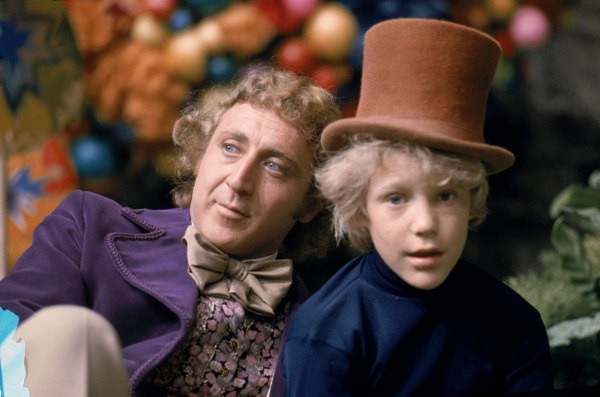
Willy Wonka (Gene Wilder) offers the experience of a lifetime to young Charlie Bucket (Peter Ostrum) in classic family film
WILLY WONKA & THE CHOCOLATE FACTORY (Mel Stuart, 1971)
Bryant Park
Sixth Ave. between 40th & 42nd Sts.
Monday, July 8, free, sunset
www.bryantpark.org
 Based on a 1964 Roald Dahl novel, Willy Wonka & the Chocolate Factory is a fanciful frolic through a children’s wonderland, filled with fear, trepidation, love, and lots of candy, both sweet and sour. Charlie Bucket (Peter Ostrum, in his only film appearance) lives with his dirt-poor family in a ramshackle room, where Grandpa Joe (Jack Albertson) can’t even get out of bed. But when goodhearted Charlie finds one of the golden tickets that will allow him to join a once-in-a-lifetime tour of Willy Wonka’s chocolate factory, Grandpa Joe is suddenly up and about, singing and dancing, and so will you be. Among the other kids with the golden tickets are the spoiled Veruca Salt (Julie Dawn Cole), the selfish Violet Beauregarde (Denise Nickerson), the tube-loving Mike Teevee (Paris Themmen), and the rather sloppy Augustus Gloop (Michael Bollner). Meanwhile, the creepy Mr. Slugworth (Günter Meisne) tries to lure the kids to the dark side as they slowly learn (well, some more than others) that there is more to life than just candy — and themselves. As they are ultimately led through this dreamland by the unpredictable Willy Wonka (Gene Wilder), they encounter chocolate rivers, bubble machines that make people float, and small Oompa Loompas who are quick to clean up any messes, of which there are several. The memorable soundtrack of this thoroughly entertaining, charming family film includes “The Candy Man Can,” “(I’ve Got a) Golden Ticket,” “Pure Imagination,” and, of course, “Oompa Loompa, Doompa-Dee-Do.” Directed by Mel Stuart, who passed away last August after a career that also included Wattstax, Four Days in November, and If It’s Tuesday, This Must Be Belgium, the film was remade by Tim Burton in 2005 starring Johnny Depp as Wonka with mixed results, but you can catch the original for free on Monday night as part of the annual summer film festival, which continues with such other classic fare as Robert Aldrich’s Hush . . . Hush, Sweet Charlotte, John Huston’s The African Queen, Billy Wilder’s A Foreign Affair, and George Cukor’s The Women.
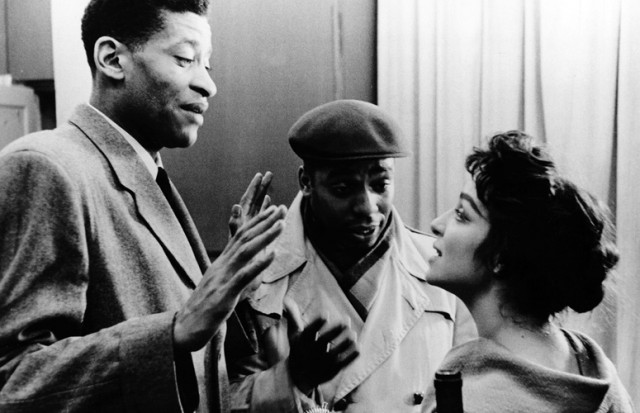
 John Cassavetes’s directorial debut, Shadows, is a landmark moment in the history of independent cinema and one of the most influential films ever made. Shot in black-and-white with a 16mm handheld camera on a modest budget of $40,000, much of which was raised following Cassavetes’s appearance on Jean Shepherd’s radio show — the credits include the line “Presented by Jean Shepherd’s Night People” — Shadows is a gritty, underground examination of race in New York City, one of the first major anti-Hollywood American movies. Although the script is credited to Cassavetes, the film is primarily improvised by a group of mostly nonprofessional or first-time actors using their real first names, set to a jazzy, moody score by Charles Mingus saxophonist Shafi Hadi. Lelia Goldoni stars as twenty-year-old Lelia, a confused young woman who loses her virginity to Tony (Anthony Ray), who thought it was a one-night stand but then decides they should start dating after she becomes clingy. However, Tony freaks out when he meets one of Lelia’s brothers, singer Hugh (Hugh Hurd), who is black. Meanwhile, their other brother, trumpeter Ben (Ben Carruthers), spends his nights with his two buddies, Dennis (Dennis Sallas) and Tom (Tom Reese), bumming money and trying to pick up chicks. Amid Bohemian parties, street fights, and visits to Central Park, Port Authority, Grand Central Terminal, and MoMA’s sculpture garden, Cassavetes and the cast explore life, love, and racism in realistic ways, even if some of the actors are a lot better than others and certain scenes fall flat. Gordon is particularly annoying through much of the film; the most interesting relationship exists between Hugh and his devoted agent, Rupert (Rupert Crosse, who spent the next thirteen years appearing in myriad television series). Look for Cassavetes in the scene in which a stranger harasses Lelia in Times Square. Shadows, which comes alive with the rhythm and energy of late 1950s New York, is being shown July 9 at 7:00 and 9:30 as part of the BAMcinématek series “Cassavetes”; the 7:00 screening will be followed by a Q&A with Goldoni, who appeared in only a few more films after Shadows (Alice Doesn’t Live Here Anymore, The Day of the Locust, the 1978 remake of Invasion of the Body Snatchers). The “Cassavetes” series runs July 6-31 with films that Cassavetes either directed and/or starred in, opening, appropriately enough, with Opening Night and continuing with such wide-ranging works as The Dirty Dozen, Edge of the City, The Killers, Machine Gun McCain, Faces, Husbands, Rosemary’s Baby, and Tempest.
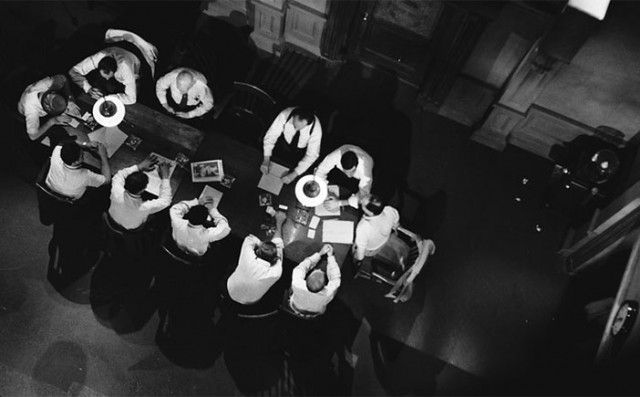
 The fate of an eighteen-year-old boy charged with the murder of his father is at stake in Sidney Lumet’s first film, the gripping, genre-defining 12 Angry Men. After a series of establishing shots, a judge sends a dozen New Yorkers into the jurors room, where they need to come to a unanimous verdict that could lead to the execution of the teen. Over the course of about ninety minutes, an all-star cast examines and reexamines the case — and their own personal biases — as the heat increases, both literally and figuratively. At first, the nameless dozen men make small talk, trying to be friendly, but it’s not long before some of them are at others’ throats, primarily the gruff Lee J. Cobb, who has it in for the calm and thoughtful Henry Fonda, who is ready to stand alone if necessary for what he believes in. The other uniformly excellent actors playing a very specific cross-section of white, male America are John Fiedler, Martin Balsam, Robert Webber, E. G. Marshall, Jack Klugman, Edward Binns, Jack Warden, Ed Begley, Joseph Sweeney, and George Voskovec. “I tell you, we were lucky to get a murder case,” Webber tells Fonda, but he won’t feel the same as the tension reaches near-violent proportions. 12 Angry Men is a searing examination of the criminal justice system as well as basic human instincts, behavior, and common decency. The Philadelphia-born Lumet, whose parents were both in the Yiddish theater, is able to tell the story in cinematic ways despite its taking place mostly in one small, sweaty room, letting the intense acting drive the narrative; the director, who was nominated for an Oscar for the film, would go on to make such other classic New York City dramas as The Pawnbroker, The Anderson Tapes, Serpico, Dog Day Afternoon, and Prince of the City. Nominated for a Best Picture Oscar and winner of the Golden Bear at Berlin, 12 Angry Men, based on an original teleplay by Reginald Rose, will be presented in a DCP restoration at Film Forum July 5-11.
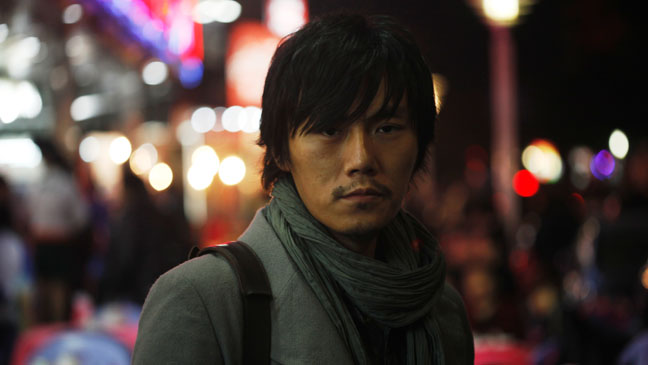
 Controversial Sixth Generation director Lou Ye, who scored an international hit with 2000’s Suzhou River but whose work is regularly banned by Chinese authorities, officially returns to his homeland with Mystery, a complex tale that weaves together two main stories in the centrally located city of Wuhan. The dark film opens with a young woman, Xiaomin (Chang Fangyuan), getting mowed down by a car racing down the highway on a rainy night. Meanwhile, the married Sang Qi (Qi Xi) tells her new friend, single mother Lu Jie (Hao Lei), that she thinks her husband, Yongzhao (Qin Hao), is having an affair, but both women soon have more surprises in store for them as an intricate web of infidelity, betrayal, obsession, lies, class, cover-ups, and payoffs slowly reveals itself. Written by Lou (Purple Butterfly, Summer Palace) with Mei Feng and Yu Fan, Mystery, a selection of the Un Certain Regard sidebar at the 2012 Cannes Film Festival and Best Picture, Best Screenwriter, and Best Newcomer (Qi Xi) winner at the Asian Film Awards, is a moody, often uneasy work that tries too hard to confuse the viewer yet still manages to be compelling as things eventually come into focus. Inspired by three stories Mei found on the internet about changing social structures on the mainland, the film ends with unexpected violence that Lou was forced to edit for the Chinese release, leading him to remove his name from that version. Mystery is having its North American premiere July 3 & 11 at the Walter Reade Theater as part of the New York Asian Film Festival, which continues through July 15 with works from China, Japan, Thailand, Korea, the Philippines, and other countries, including Jang Cheol-Soo’s Secretly Greatly, Hideo Nakata’s The Complex, Jeong Byeong-Gil’s Confession of Murder, Johnnie To’s Drug War, Takashi Miike’s Lesson of the Evil, and a retrospective of Taiwanese director Tsai Yang-Ming.