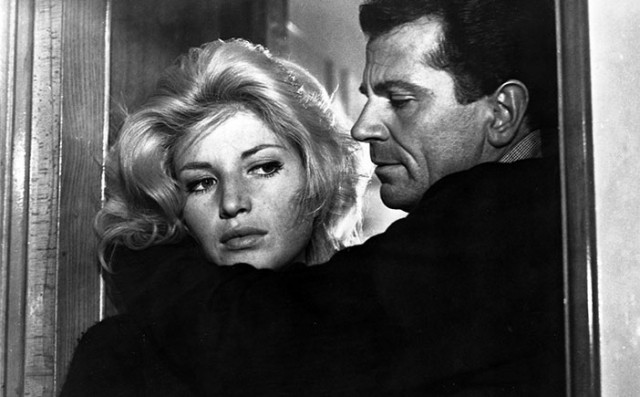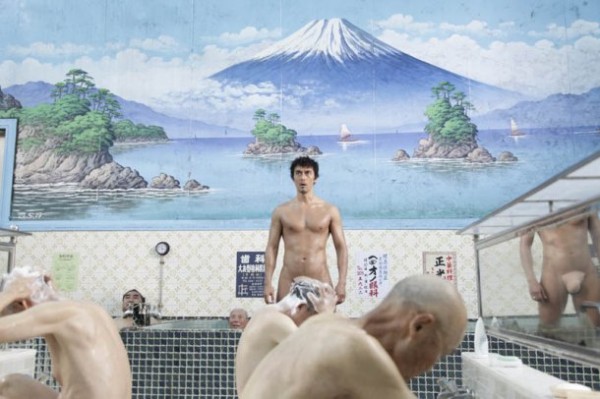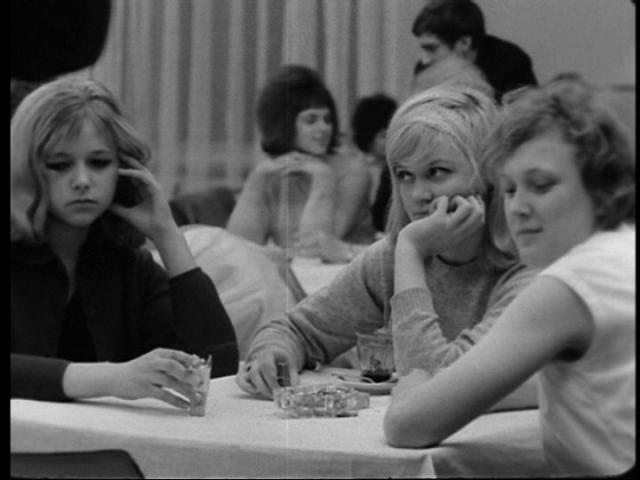
The wonderful LOVES OF A BLONDE is part of Cannes Film Festival tribute at FIAF and will be introduced by director Miloš Forman
CinémaTuesdays: LOVES OF A BLONDE (LÁSKY JEDNÉ PLAVOVLÁSKY) (Miloš Forman, 1965)
French Institute Alliance Française, Florence Gould Hall
55 East 59th St. between Madison & Park Aves.
Tuesday, July 16, $10, 12:30, 4:00, 7:30
212-355-6100
www.fiaf.org
 Released a few years before the Summer of Love and Prague Spring, Miloš Forman’s Loves of a Blonde is a very funny romantic black comedy that also has a lot to say about women’s burgeoning sexual freedom. The delightful Hanu Brejchovou stars as Andula, a young factory worker whose sexual liberation is ahead of its time in an old-fashioned small town. When a trainload of military reservists arrives, most of the single women do their best to attract the uniformed men at a big party, but Andula is more interested in pianist Milda (Vladimíra Pucholta). In a scene for the ages, three men try to pick up Andula and her two friends, with hysterical results. Later, when Andula visits Milda in Prague, she meets the piano player’s parents (Milada Jezková and Josef Sebánek), who are a droll riot. A Czech New Wave classic that evokes Godard and Truffaut, Loves of a Blonde, which was nominated for an Oscar for Best Foreign Language Film, caused a sensation when it played the New York Film Festival and introduced Forman (One Flew Over the Cuckoo’s Nest, Amadeus) to the world. Notably, assistant director and cowriter Ivan Passer, who also worked with Forman on the Oscar-nominated The Firemen’s Ball, defected to America following Prague Spring and went on to make such films as Born to Win and Cutter’s Way. Loves of a Blonde is screening July 16 as part of the FIAF CinémaTuesdays series “Highlights of Cannes Film Festival with Gilles Jacob,” comprising works chosen by festival president Jacob in honor of the glamorous event’s sixty-fifth anniversary, and the one and only Forman himself will be at Florence Gould Hall to introduce the 7:30 show. [ed note: Unfortunately, Forman has had to cancel his appearance.] The series continues July 23 with Luis Buñuel’s Viridiana before concluding July 30 with Robert Bresson’s Pickpocket.
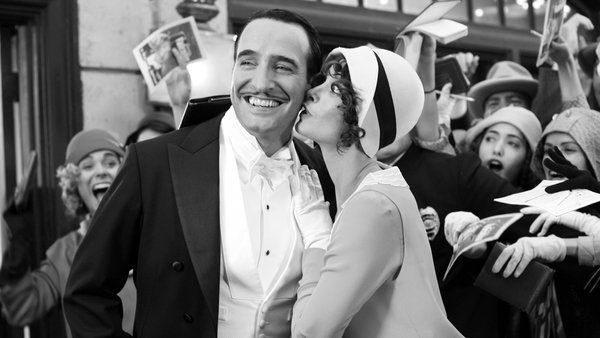
 French director Michel Hazanavicius has followed his two OSS 117 espionage parodies, Cairo, Nest of Spies and Lost in Rio, with another genre exercise, this time taking on silent film in the charming international hit The Artist. Reteaming Jean Dujardin and Bérénice Bejo from Cairo, Nest of Spies, Hazanavicius tells the story of the end of silent cinema through the clever use of the genre’s own familiar conventions. Dujardin stars as George Valentin, a silent-film idol who believes that talking pictures will just be a passing fad. Bejo, who is married to Hazanavicius, plays Peppy Miller, a young, peppy Hollywood hopeful who embraces the arrival of the sound era, rising as fast as Valentin is falling. It’s a different take on the classic A Star Is Born theme, with plenty of inside jokes and cute references about the movies, although purposefully using clichés doesn’t excuse the film from often being too clichéd itself; many of the scenes are far too predictable, offering few genuine surprises as the plot unfolds. However, Hazanavicius and his crew nail the period both aurally and visually, with splendid costumes by Mark Bridges, production design by Laurence Bennett, set decoration by Robert Gould, cinematography by Guillaume Schiffman, and music by Ludovic Bource. Excellent support is supplied by James Cromwell as Valentin’s loyal valet, John Goodman as cigar-chomping producer Al Zimmer, and Uggie as Valentin’s ever-faithful dog, Jack. Nominated for ten Academy Awards and winning seven, including Best Picture, Best Actor, Best Original Screenplay, Best Cinematography, Best Costume Design, and Best Original Score, The Artist is a fabulously made though flawed and overrated film that is a charming celebration of the movies — and a great way to get people into theaters to experience the myriad pleasures of black-and-white silent cinema. The film is screening for free on July 15 in East River State Park as part of the “Williamsburg Summer Nights, Movies in the Park” series, which continues with Up on July 22 before concluding with Skyfall on July 29.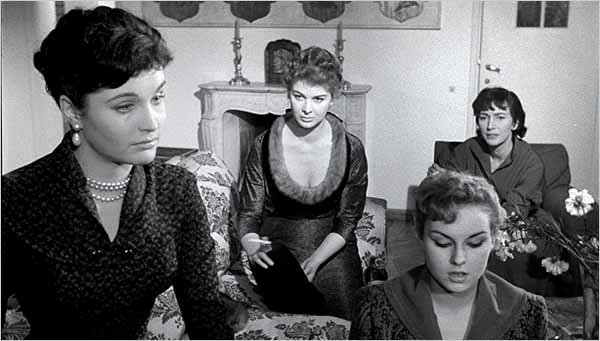
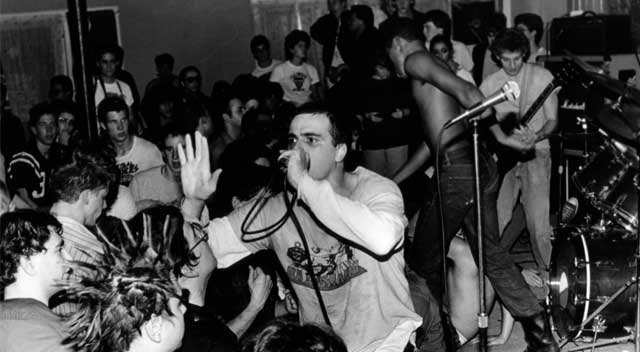
 A must-see for fans of loud, fast, angry music circa 1980-86, American Hardcore looks at one of the smaller but nonetheless influential movements in American music. A basic doc in the classic do-it-yourself sensibility that informed so much of the music scene it chronicles, American Hardcore features interviews with Henry Rollins, lead singer of Black Flag; H.R., the mercurial, difficult, but brilliant lead singer for the Bad Brains; Mike Watt of the Minutemen; and various personnel from the Circle Jerks, Minor Threat, and 7 Seconds. Tommy Stinson of the Replacements and Flea of the Red Hot Chili Peppers weigh in as well. The abundance of old concert footage is fabulous, but director Paul Rachman and writer Steven Blush discovered much of it in shoeboxes in basements during their low-budget cross-country trip while making the movie, so the overall production quality is not high ― which in some ways works better overall. The film does a good job of lovingly showing just how home-grown and amateurish the scene was and debating the importance of the scenes in Houston, Minneapolis, DC, Boston, and Southern California. The finale with a graphic artist and cover designer calling for the next generation of hardcore is a riot. American Hardcore is screening July 13 and 14 at 12 noon as part of the Nitehawk Cinema series “Music Driven”; the Saturday show will be followed by a Q&A with director Rachman, while Blush will be on hand for a Q&A after Sunday’s screening. (In addition to writing the American Hardcore book, Blush has also created one of the great music sites,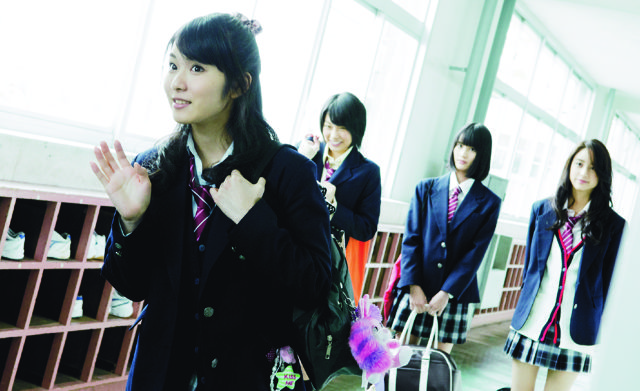
 Life goes completely out of whack when a massively popular student suddenly and mysteriously disappears in Daihachi Yoshida’s splendid examination of the trials and travails of high school, The Kirishima Thing. With no advance warning, superstar athlete and dreamy stud Kirishima can’t be found, missing class and volleyball practice, thoroughly confusing his friends and teammates. His girlfriend, the beautiful Risa (Mizuki Yamamoto), doesn’t know where he is. Risa’s clique of cool girls, including Sana (Mayu Matsuoka), Mika (Kurumi Shimizu), and Kasumi (Ai Hashimoto), start growing apart. The not extremely talented Koizumi (Taiga) is forced to replace Kirishima on the volleyball team. Aya (Suzuka Ohgo) plays sax on a rooftop while actually spying on her secret crush, the handsome Hiroki (Masahiro Higashide), who is Sana’s girlfriend and Kirishima’s best friend. Another of Kirishima’s friends, Ryuta (Motoki Ochiai), shows up to school with ridiculously curly hair. And Kasumi begins spending more time with nerd-geek Ryoya (Ryunosuke Kamiki), who decides to defy his film teacher by going ahead and making the zombie flick Student Council of the Living Dead. Tensions heat up, fears rise to the surface, and standard hierarchical relationships go significantly off kilter as Kirishima’s unexplained absence affects everyone’s position in high school society and makes them reexamine the purpose of their young lives. Based on the omnibus novel Kirishima, Bukatsu Yamerutteyo (“Did You Hear Kirishima Quit?”) by Ryo Asai, The Kirishima Thing cleverly deals with genre clichés as Yoshida (Permanent Nobara, The Wonderful World of Captain Kuhio) and cowriter Kohei Kiyasu tackle the myriad issues that face teenagers on a daily basis, evoking both Beckett and Kurosawa through a John Hughes-like lens with scenes that are retold from multiple viewpoints but don’t provide any firm answers. Winner of Best Picture, Best Director, Most Popular Film, and Outstanding Achievement in Editing at the 2013 Japan Academy Prize awards show, The Kirishima Thing is screening July 14 at 7:30 at Japan Society as part of the Japan Cuts series, a copresentation with the New York Asian Film Festival.