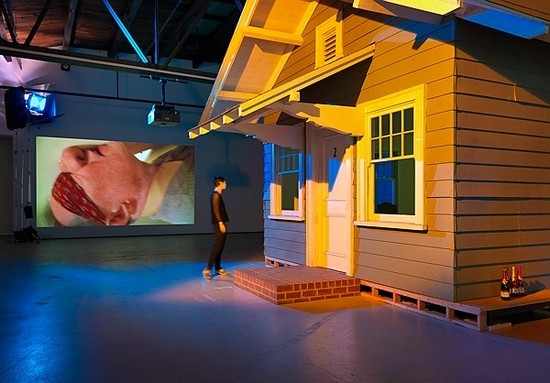
Paul McCarthy and Damon McCarthy’s “Rebel Dabble Rabble” multimedia installation goes behind the scenes of the making of an American myth (photo courtesy Hauser & Wirth)
Paul McCarthy and Damon McCarthy: Rebel Dabble Babble, Hauser & Wirth, 511 West 18th St., Monday – Friday through July 26, free
Paul McCarthy and Damon McCarthy: WS, Park Avenue Armory, 643 Park Ave., through August 4, $15
Paul McCarthy: Life Cast, Hauser & Wirth, 32 East 69th St., Monday – Friday through July 26, free
LA-based artist and provocateur Paul McCarthy takes a giant dump and smears it all over the Wonderful World of Disney, Hollywood, and American mythology in a pair of shows that are most definitely not for children or the faint of heart. Hauser & Wirth continues their spring/summer of McCarthy with “Rebel Dabble Babble,” the follow-up to his earlier indoor “Sculptures” and outdoor “Sisters” exhibitions. Asked by James Franco to participate in a show he was curating about Nicholas Ray’s iconic 1954 film Rebel without a Cause, McCarthy, teaming with his son, Damon, instead developed the related installation “Rebel Dabble Babble,” which McCarthy describes as “Art as a dangling participle.” The multimedia presentation, spread throughout Hauser & Wirth’s vast Eighteenth St. space, consists of carefully constructed re-creations of the staircase in the Stark house from Ray’s film and the Chateau Marmont bungalow where the director and his stars might or might not have become involved in some very heavy debauchery. On those intricately designed sets, the McCarthys used multiple cameras to capture lurid craziness as actors portraying James Dean, Natalie Wood, and Sal Mineo, as well as their Rebel characters, Jim Stark, Judy, and Plato, get involved in raunchy festishistic sexual rituals and surreal going-on in which the act of filming is part of the narrative. The central cast features Franco as Jim/James, Elyse Poppers as Judy/Natalie, and Jay Yi as Plato/Sal, with a bulbous-nosed Paul McCarthy playing Jim’s father and Ray and Suzan Averitt as Jim’s mother and Natalie’s mother. The doubling theme goes a step further when things get rather hot, including nudity, intense sexuality, and various forms of actual penetration; in true Hollywood form, the McCarthys bring in body doubles, including real porn stars, to perform these acts. The multichannel films are projected onto the walls of the gallery, each scene shot from multiple angles, overwhelming the viewer as anger, repression, obsession, voyeurism, brutality, incest, and more take center stage. At the top of the Stark stairs in a small bedroom, a video depicts Poppers begging visitors to pleasure her, while her double graphically pleasures herself in another gallery space. In the back room, hundreds of photos detail the goings-on, showing you what you might have missed — which could be good or bad, depending on your own limits and desires. The films are purposely amateurish, revealing the foibles of the medium, especially in an age in which anyone can make a movie and put it on the internet.

Paul McCarthy offers a unique take on the classic Show White fairy tale at the Park Ave. Armory (photo by James Ewing)
At the Park Ave. Armory, the McCarthys have installed the impressively ambitious “WS,” continuing their exploration of American mythology as seen through the lens of Walt Paul, the artist’s alter ego, a bizarre combination of Walt Disney and Paul McCarthy. In “WS,” which stands for “White Snow,” McCarthy again uses the theme of doubling as he tells a decidedly adult version of the story of Snow White and the seven dwarfs, combining the Brothers Grimm tale with the 1937 Disney animated movie, adding in elements of debauchery and pornography that are far from family friendly. (No one under eighteen is allowed in, even with a parent or guardian.) “Desire device / Dream device / Pretend device,” McCarthy writes in a poem in the exhibition program, and he investigates those three concepts and many more in an immersive installation that includes a forest, huge multichannel screens, a series of small rooms that are like peep shows, and a three-quarters scale model of the house he grew up in. Evoking the child’s journey into adulthood, “WS” consists of some twenty hours of films, with the main footage in the vast hall more or less following the general narrative of the Disney movie, albeit with sex, nudity, feces smearing, alcohol-fueled orgies, nine dwarfs (Humpey and Too Happy have been added) and three White Snows (Elyse Poppers, Aiden Ashley, Charlotte Stokely) in addition to a fourth, Real Doll White Snow who gets in on the festivities as well. McCarthy plays Walt Paul, who ends up in several rather uncomfortable positions. Visitors experience the bacchanalia by peering into windows and cut-out holes in the walls of the house where the sensationalistic proceedings occurred, ambling through the woods, climbing stairs, and wandering through nearly private screenings of a bizarre cooking show, an alternative Adam and Eve, a drinking party, White Snow performing fellatio on a microphone, and the prince pulling his pud. All of the characters have ridiculous, bulbous noses, mocking the idea of Hollywood’s ability to transform reality through makeup and other forms of fakery. The piece is supplemented by display cases that mimic Snow White’s glass coffin, a gift shop that sells Disney merchandise signed by Walt Paul, and a video interview with Paul, Damon, cocurator Hans-Ulrich Obrist, and consultant Tom Eccles.
At first it might seem that Paul McCarthy’s “Life Cast” has little to do with “WS” and “Rebel Dabble Rabble,” but it turns out that in many ways it is central to the Salt Lake City-born artist’s current installations, which he refers to as works in progress. The exhibition, on view at Hauser & Wirth’s 69th St. space, features a quartet of remarkably lifelike casts of Elyse Poppers, who plays one of the Snow Whites in “WS” and Natalie Wood / Judy in “Rebel Dabble Babble.” Visitors are initially greeted by “That Girl: T.G. Asleep,” in which the Poppers figure, made out of silicone, paint, and hair, is lying on her back, completely naked. It’s impossible not to look for signs of life — the blink of an eye, a slightly rising chest— even though she’s not real. Indeed, the next part of the show, “T.G. Awake,” consists of three more versions of Poppers, this time sitting up, resting on her hands, eyes wide open. The title is a direct reference to the classic television sitcom That Girl, in which Marlo Thomas played an independently minded wannabe actress living in New York City. In the back room, McCarthy has made a cast of himself (“Horizontal”), his older, heavy, hairier body — kind of an anti-Sleeping Beauty — not nearly as attractive as Poppers’s, appearing more dead than asleep. In both “W.S.” and “Rebel Dabble Babble,” McCarthy reveals some of the tricks of the trade, sometimes showing the camera and microphone, not hiding certain elements that went into the creation of his crazed works; similarly, “Life Cast” includes an upstairs room where a pair of multichannel videos, “T.G. Elyse,” reveal in exacting detail how two of the Poppers figures were made, a tediously slow process that resulted in strikingly realistic sculptures that offer a sharp counterpoint to the wildly fantastical creatures and situations of “W.S.” and “RDB.” Taken together, the three shows continue McCarthy’s decades-long, often controversial exploration of American mythology and consumerism, social interaction, and pop culture touchstones in ways that are not always pretty but are entertaining as hell.
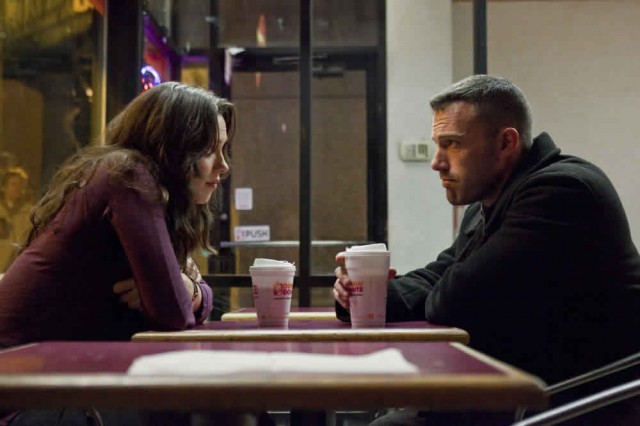
 Ben Affleck, who displayed great skill as a director in his debut feature, 2007’s Gone Baby Gone, did it again with his follow-up, the romantic thriller The Town. Affleck, who also cowrote the script, stars as Doug MacRay, the leader of a small group of bank robbers in tough Charlestown, Massachusetts, the bank robbery capital of America. As the film opens, the thieves are just hitting a bank and are forced to take a hostage, manager Claire Keesey (Rebecca Hall). After later letting her go unharmed, they soon realize that she lives in their neighborhood and might be able to recognize one of them, so Doug starts hanging around her, pretending to be interested in her so he can tap her for information. Meanwhile, Boston cop Dino (Titus Welliver) and FBI Special Agent Frawley (Jon Hamm) are getting closer to the gang, who continue to pull off daring heists regardless of the heat on them. Although there are a handful of plot holes you could drive an armored truck through, The Town ends up being a compelling action film and love story, with car chases, massive shootouts, and a tender relationship as Doug begins to fall for Claire, and vice versa, even though the truth threatens to blow everything apart. Also threatening to blow everything apart is Doug’s right-hand man, Jem (Jeremy Renner, channeling James Cagney in White Heat), who likes hurting and killing way too much. Affleck, who as a director allows his actors a large amount of freedom, has gotten fine performances across the board; the cast also includes Pete Postlethwaite as an underworld florist, Chris Cooper as Doug’s long-incarcerated father, Blake Lively as a drug-dealing tramp, and Boston rapper Slaine, who contributed songs to the soundtrack as well. The film, based on the Chuck Hogan novel Prince of Thieves, also benefits from Affleck’s genuine affection for the place where he grew up, shooting on location and setting the finale in a world-famous landmark. It’s been fascinating watching Affleck come of age in public, from his early days acting in such films as School Ties, Mall Rats, and Dazed and Confused to his wildly successful directing career, with his third film, Argo, being named Best Picture at this year’s Oscars. The Town is screening July 19 and August 5 as part of the MoMA series “A View from the Vaults: Warner Bros. Today,” consisting of thirty-one films from the last twenty years of movies coming out of the famed studio, including the Harry Potter, Dark Knight, and Lord of the Ring series as well as such wide-ranging fare as Spike Jonze’s Where the Wild Things Are, Ted Braun’s Darfur Now, Tim Burton’s Dark Shadows, Todd Phillips’s The Hangover, and Zack Snyder’s Watchmen.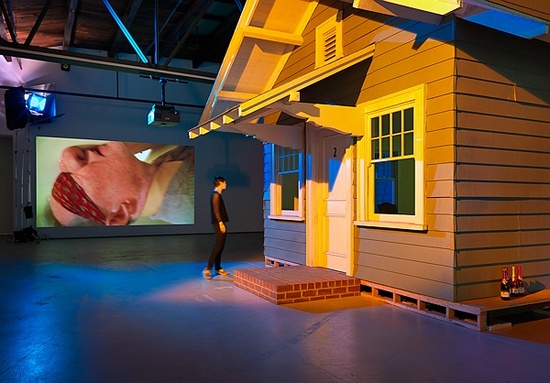
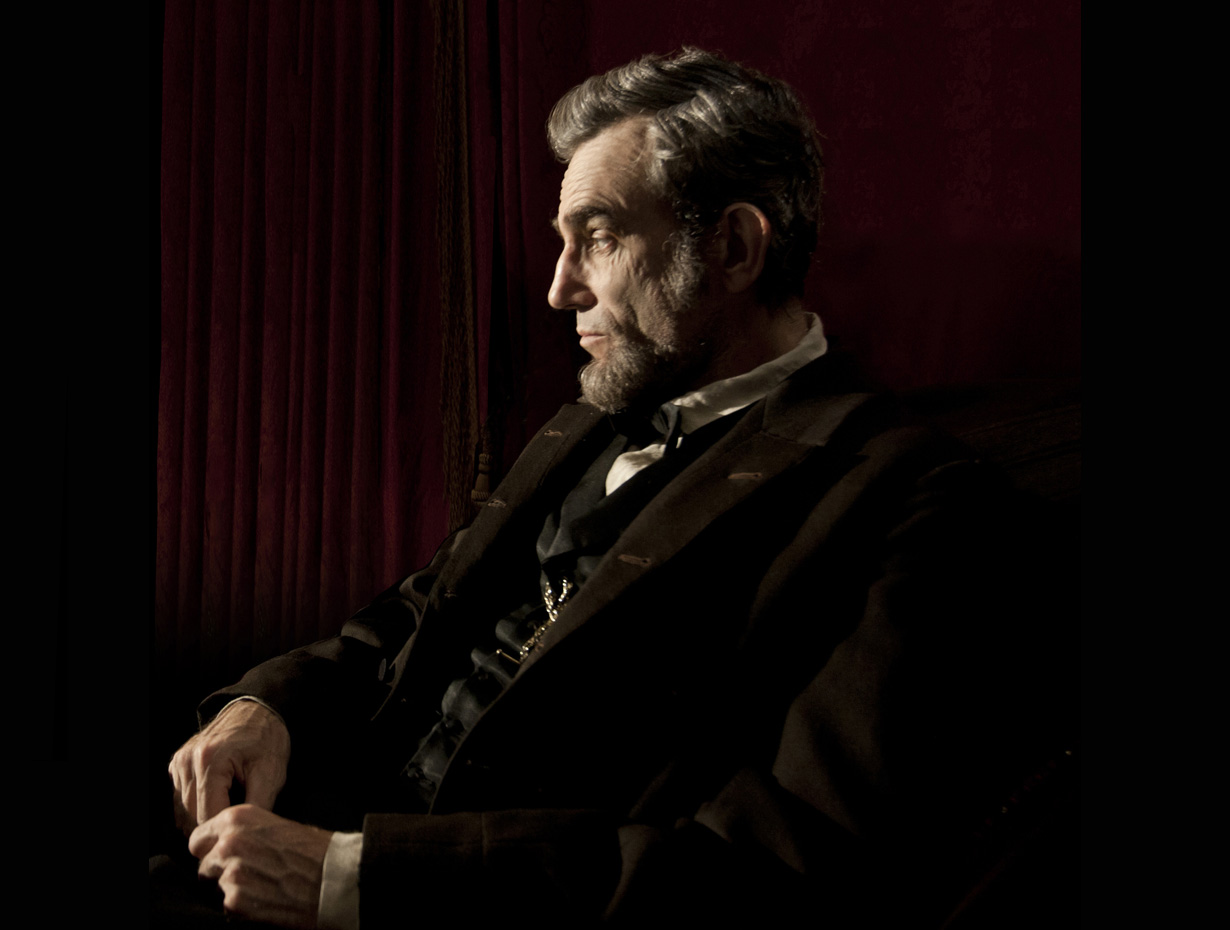
 Over the years, a handful of fine actors have portrayed Abraham Lincoln, including Walter Huston in D. W. Griffiths’s 1930 Abraham Lincoln, Henry Fonda in John Ford’s 1939 Young Mr. Lincoln, Raymond Massey in John Cromwell’s 1940 Abe Lincoln in Illinois, and Emmy winner Hal Holbrook in the 1974 miniseries Sandburg’s Lincoln, as well as George A. Billings in Phil Rosen’s 1924 The Dramatic Life of Abraham Lincoln and Benjamin Walker in Timur Bekmambetov’s 2012 Abraham Lincoln: Vampire Hunter. But no one has ever quite captured the essence of the sixteenth president of the United States of America as Daniel Day-Lewis does in his Oscar-winning performance in Steven Spielberg’s Lincoln. Day-Lewis is mesmerizing as Lincoln, a tall, goodhearted soul trying to end slavery and the Civil War. Based on Doris Kearns Goodwin’s 2005 book, Team of Rivals: The Political Genius of Abraham Lincoln, the film begins in January 1865, as newly reelected Honest Abe is caught in a tenuous situation: He can work to pass the Thirteenth Amendment, which would abolish slavery, or meet with a contingent from the South (which includes Jackie Earle Haley as Confederate vice president Alexander H. Stephens) to reach a peaceful settlement, but it is unlikely he can do both. Secretary of State William H. Seward (David Strathairn) wants him to forget about the amendment, believing passage in the House of Representatives would be impossible, but Lincoln is determined to do what is right, even if it takes a trio of shady lobbyists (James Spader, John Hawkes, and Tim Blake Nelson) to help get it done. Spielberg and screenwriter Tony Kushner (Angels in America) depict Lincoln as a careful, caring man who loves going off on tangents, telling stories, parables, and even dirty jokes. He lies on the floor with his young son, Tad (Gulliver McGrath), tries to calm his wife, Mary (Sally Field), whom he calls Molly and is still haunted by the death of their son Willy, and attempts to convince their older son, Robert (Joseph Gordon-Levitt), not to join the Union Army. Day-Lewis plays Lincoln as a strong yet fragile man torn apart on the inside much like the country is torn apart over the issue of slavery — as shown particularly in the House, where radical Republican leader Thaddeus Stevens (Tommy Lee Jones) is enjoying a vicious battle of words with Democratic standard-bearer Fernando Wood (Lee Pace) that is every bit as contentious as the current Congress. The uniformly fine cast, filled with stage veterans, also includes Holbrook as Francis Preston Blair, Jared Harris as Ulysses S. Grant, Michael Stuhlbarg as George Yeaman, Colman Domingo as Harold Green, Stephen McKinley Henderson as William Slade, Walton Goggins as Wells A. Hutchins, Gregory Itzin as John Archibald Campbell, and Stephen Spinella as Asa Vintner Litton. Unfortunately, Spielberg can’t leave well enough alone, pulling at the heartstrings with an unnecessary opening sequence and a tragically overwrought finale; without those scenes, Lincoln had a chance to become a classic; with them, it is merely a solid film that sheds fascinating new light on a critical moment in U.S. history, portrayed by a master craftsman with immense skill, the first actor to completely disappear into the part of this genuine American hero.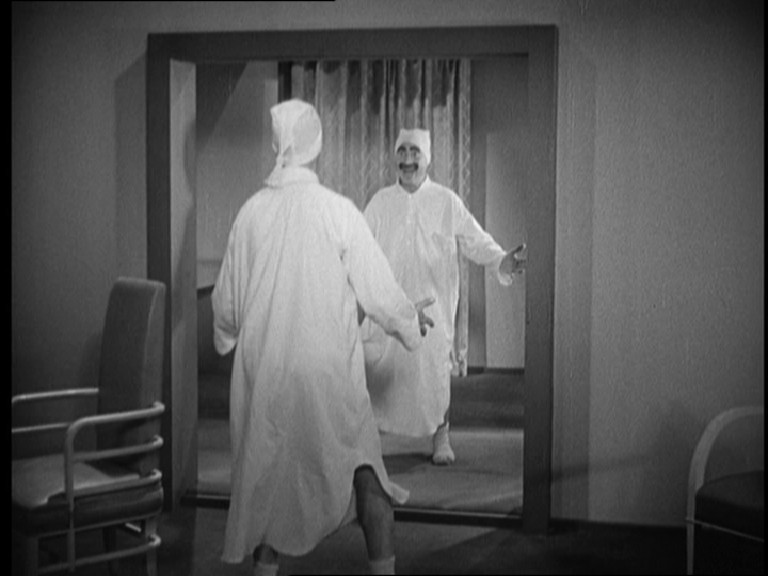
 One of the wackiest films ever made, Duck Soup stars the Marx Brothers at their absolute best. Groucho is a riot as Rufus T. Firefly, the leader of the strange little country of Freedonia, which is prepared to go to war if necessary with its neighbor Sylvania, represented by blowhard ambassador Trentino (Louis Calhern), who has designs on wealthy Freedonian philanthropist Gloria Teasdale (Margaret Dumont). Meanwhile, spies Chicolini (Chico) and Pinky (Harpo) harass a street vendor (poor Edgar Kennedy), mock Firefly in front of a pseudo-mirror, and just have a jolly old time everywhere they go. But there’s more to the film than outrageous slapstick and wild and woolly quotes; there’s some very deft criticism of politics, government, and, most of all, war. Hail, hail, Freedonia! Duck Soup is screening in Riverside Park on July 17, preceded by viral videos, as part of the free “Summer on the Hudson: Movies under the Stars” series, the theme of which this year is “Song & Dance,” which continues with The 5,000 Fingers of Dr. T, Fiddler on the Roof, and the 1986 version of Little Shop of Horrors. For a day-by-day listing of free summer movie screenings in New York City, go