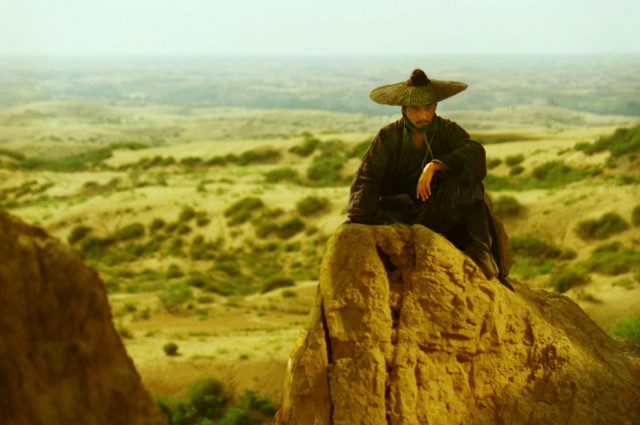
ASHES OF TIME REDUX is another strikingly beautiful work from director Wong Kar-wai and cinematographer Chistopher Doyle
ASHES OF TIME REDUX (Wong Kar-wai, 2008)
Museum of the Moving Image
35th Ave. at 36th St., Astoria
Sunday, July 21, free with museum admission, 2:00
718-777-6800
www.movingimage.us
www.sonyclassics.com
 Back in 1993, writer-director Wong Kar-wai’s Ashes of Time was released, a thinking man’s martial arts epic inspired by Jin Yong’s The Eagle-Shooting Heroes novels. With numerous versions in circulation and the original negatives in disrepair, Wong (Chungking Express, In the Mood for Love) decided to painstakingly reedit and restore the film fifteen years later, renaming it Ashes of Time Redux. The plot – which is still as confusing as ever — revolves around Ouyang Feng (Leslie Cheung), a loner who lives in the desert, where people come to him when they need someone taken care of. Every year he is visited by Huang Yaoshi (Tony Leung Ka Fai), who keeps him informed of the world outside jianghu — especially about his lost love (Maggie Cheung). Meanwhile, Murong Yang (Brigitte Lin) has demanded that Ouyang kill Huang for having jilted his sister, Murong Yin (also played by Lin), who in turn hires Ouyang to kill Yang. There’s also a blind swordsman (Tony Leung Chiu Wai), a peasant girl with a basket of eggs (Charlie Young), a poor, rogue swordsman (Jacky Cheung), and a bottle of magic wine that can erase memories. Or something like that. But what’s most impressive about Ashes of Time Redux is Christopher Doyle’s thrilling, swirling cinematography, which sweeps the audience into the film, and Wu Tong’s rearranged score, based on the original music by Frankie Chan and Roel A. Garcia and featuring soaring cello solos by Yo-Yo Ma. The film is screening July 21 as part of the Museum of the Moving Image series “Wong Kar-wai,” which continues with such other works by the Hong Kong Second Wave auteur as Days of Being Wild, As Tears Go By, In the Mood for Love, 2046, and his latest, The Grandmaster, for a special “Fist and Sword” event with Wong present.
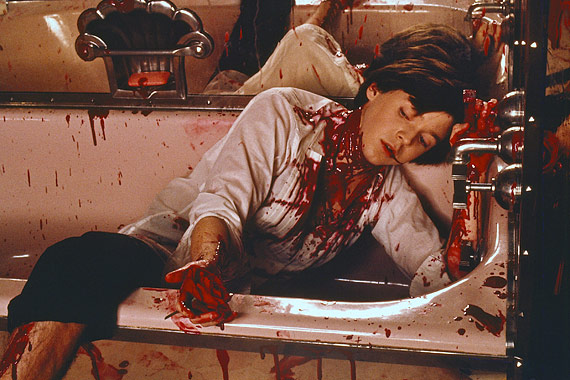
 Bud Cort (Harold) and Ruth Gordon (Maude) are magnificent in this glorious black comedy from director Hal Ashby (The Last Detail, Shampoo, Being There) and writer Colin Higgins (Foul Play, 9 to 5). Harold is an eighteen-year-old rich kid obsessed with death, regularly flirting with suicide. Maude is a fun-loving, free-spirited senior citizen approaching her eightieth birthday. Ashby throws in just the right amount of post-1960s social commentary, including a very funny antiwar scene, without becoming overbearing, as this could have been a maudlin piece of sentimental claptrap, but instead it’s far from it. Even the Cat Stevens soundtrack (“If You Want to Sing Out, Sing Out,” “Tea for the Tillerman,” “Where Do the Children Play?”) works. Harold and Maude is a tender, uproarious, bittersweet tale that is one of the best of its kind, completely unforgettable, enlightening, and, ultimately, life-affirming in its own odd way. Harold and Maude is screening in a DCP projection July 22 at 8:00 as part of the IFC Center series “Queer/Art/Film” and will be followed by a discussion with Chilean multidisciplinary artist, musician, and director Sebastián Silva (Crystal Fairy, Iwannawin & Friends). The monthly series, which consists of films selected by gay New York City artists, concludes August 19 with Stephen Frears’s My Beautiful Laundrette, picked by Brooklyn-born visual artist Chitra Ganesh.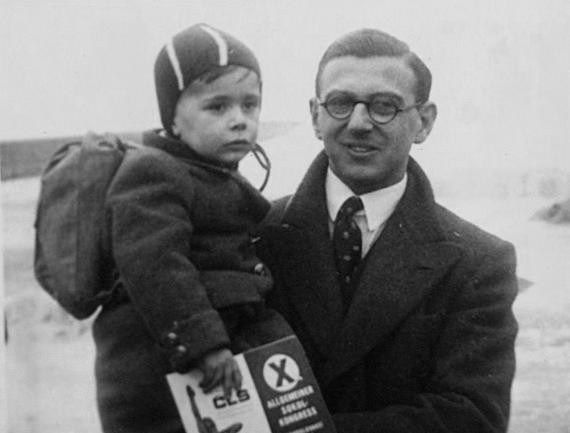
 “There are some stories which we are not only an audience to, but may become their participants,” Canadian journalist Joe Schlesinger says at the beginning of Matej Mináč and Patrik Pašš’s poignant, powerful documentary Nicky’s Family. Schlesinger is one of hundreds of Czech and Slovak men and women who, as children, were saved from the Nazis by unassuming Englishman Nicholas Winton on the eve of World War II. Winton’s story remained virtually unknown for sixty years, until his wife found a suitcase in the attic filled with documentation detailing her husband’s quiet heroism. Over the last fifteen years, the “British Schindler” has been celebrated around the world, being knighted by the queen, meeting many of the people he helped save, and inspiring children who are not directly part of “Nicky’s Family” to help others in what is called the “Winton virus of good.” It’s an unforgettable story centered around a man who didn’t set out to be a hero and still appears to be somewhat uncomfortable with all the accolades, which include being nominated for the Nobel Peace Prize. The film interviews such members of Nicky’s Family as Alice Masters, Ben Abeles, Liesl Silverstone, Dr. Lenata Laxova, Tom Berman, and Tom Schrecker, who have made significant contributions to society that might have never happened had they not been rescued as children by Winton. Director-producer-cowriter Mináč and producer-cowriter-editor Pašš include unnecessary staged re-creations of some of the events of 1938 that actually detract from the central narrative, and the documentary overplays the emotional card in its final scenes, but it tells a story that needs to be told, of a remarkable man who, even at age 104, continues to be an inspiration and proves that one person can indeed make a difference.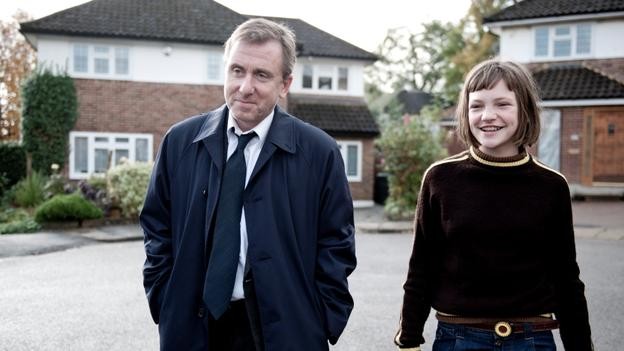
 Theater director Rufus Norris makes quite a statement with his feature debut, Broken. Named Best British Independent Film at the 2012 British Independent Film Awards, Broken was adapted from Daniel Clay’s 2008 novel, itself directly inspired by Harper Lee’s To Kill a Mockingbird. On a small cul-de-sac in North London, eleven-year-old Skunk (newcomer Eloise Laurence) is horrified as she watches one of her neighbors, the recently widowed Mr. Oswald (Rory Kinnear), beat her friend, Rick (Robert Emms), to a bloody pulp. It turns out that one of Oswald’s troublesome daughters falsely accused Rick, who is developmentally disabled, of rape, setting in motion a series of events that turn Skunk’s world inside out. Skunk’s mother ran off with another man several years earlier, so she lives with her father, Archie, who is a mild-mannered, caring lawyer, her older brother, Jed (Bill Milner), and their au pair, Kasia (Zana Marjanović), who is in a relationship with Mike (Cillian Murphy), one of Skunk’s teachers. Soon Skunk and tough kid Dillon (George Sargeant) are hanging out at a car dump and considering their first kiss, but things get more complicated when Mike saves Skunk from a beating by Sunrise Oswald (Martha Bryant), who then tells her father that the teacher raped her. With things spinning out of control, Skunk desperately tries to find a balance in her life as she approaches adolescence, perhaps a little too quickly. Written by Irish screenwriter and playwright Mark O’Rowe (Terminus, Boy A), Broken is an involving, sensitively told drama about growing up, the transition from childhood to adulthood, and family responsibility, featuring strong performances and complex, believable situations. In her film debut, Laurence is captivating, even providing the vocals to Damon Albarn/Electric Wave Bureau’s beautiful “Colours” over the closing credits. The intentional parallels to To Kill a Mockingbird, both in plot and the characters’ names — Skunk/Scout, Jed/Jem, Archie/Attacus — do not get in the way, instead offering a modern-day perspective on parenting, personal responsibility, and community.