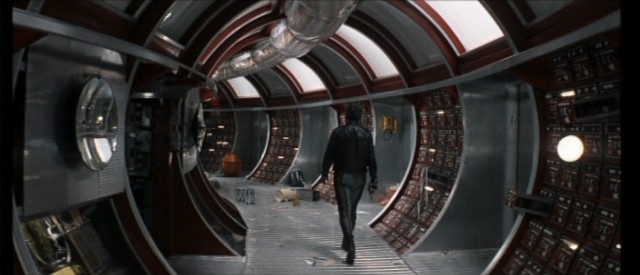
Reality gets twisted up in outer space in Andrei Tarkovsky’s SOLARIS
SOLARIS (Andrei Tarkovsky, 1972)
Film Forum
209 West Houston St.
Monday, August 12, 1:00, 4:10, 7:15
Series runs through September 5
212-727-8110
www.filmforum.org
 In Andrei Tarkovsky’s Solaris, the Russian 2001: A Space Odyssey, Natalya Bondarchuk and Donatus Banionis star as a different kind of couple caught up in something very strange that is going on in outer space, unexplainable to both the characters in the film and the people in the audience. Banionis plays Dr. Kris Kelvin, a psychologist who is sent to the Solaris space station to decide whether to put an end to the solaristics project that Burton (Vladislav Dvorzhetsky) complicated twenty years before. What he discovers is one death, two possibly insane men, and his supposedly dead wife (Bondarchuk). Ambiguity reigns supreme in this gorgeously shot (in color and black and white by cinematographer Vadim Yusov) and scored (by Eduard Artemyev) film that, while technically science fiction, is really about the human conscience, another gem from master Russian director Tarkovsky (Ivan’s Childhood, Andrei Rublev, Nostalghia). See it whether or not you checked out Steven Soderbergh’s underrated remake with George Clooney and Natascha McElhone.
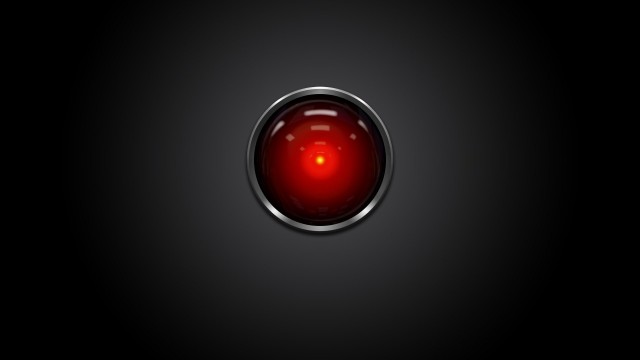
Stanley Kubrick’s 2001: A SPACE ODYSSEY helps cast a light on far-out sci-fi summer series at Film Forum
Based on Stanislaw Lem’s novel, Solaris is screening August 12 as part of Film Forum’s “Son of Summer Sci-Fi, Fantasy & Horror” series, which returns to the indie house for the first time in seventeen years. The festival continues through September 5 with such great double features as Jason and the Argonauts and The 7th Voyage of Sinbad, The Thing from Another World and It! The Terror from Beyond Space, Psycho and Peeping Tom, The Fearless Vampire Killers and The Abominable Dr. Phibes, the 1958 and 1978 versions of Invasion of the Body Snatchers, the 1958 and 1986 versions of The Fly, and other creepy classics in addition to 2001: A Space Odyssey.

 When Leslie Braverman suddenly dies at the ripe old age of forty-one, four of his childhood friends reunite to attend the funeral in this very different kind of road movie. Morroe Rieff (George Segal), Barnet Weinstein (Jack Warden), Felix Ottensteen (Joseph Wiseman), and Holly Levine (Sorrell Booke) have one helluva time trying to get to temple on time as they battle traffic, a crazy cabbie (Godfrey Cambridge), and other urban impediments on their way from Sheridan Square to Brooklyn — even though they don’t know exactly which funeral house to go to. Jessica Walter as Inez Braverman, Phyllis Newman as Miss Mandelbaum, and Alan King as a wacky rabbi add to the fun. Based on Wallace Markfield’s 1964 novel, To an Early Grave, this charming little cult fave was written by longtime television variety show scribe Herb Sargent (Saturday Night Live, The Tonight Show Starring Johnny Carson), directed by Sidney Lumet (Serpico, Dog Day Afternoon), and shot by Boris Kaufman (one of Dziga Vertov’s brothers). This very funny absurdist comedy will sneak up on you when you least expect it. Bye Bye Braverman is screening August 11 as part of the Museum of the Moving Image series “Fun City: New York in the Movies 1967-75,” guest curated by J. Hoberman, which runs August 10 – September 1 and includes such other Big Apple films as Cotton Comes to Harlem, The French Connection, Coogan’s Bluff, The Taking of Pelham One Two Three, and Gordon Parks Jr.’s Superfly, which will be followed by a “Changing the Picture” discussion with actress Sheila Frazier, Bow Legged Lou, Paul Anthony, and George Logan, moderated by Warrington Hudlin.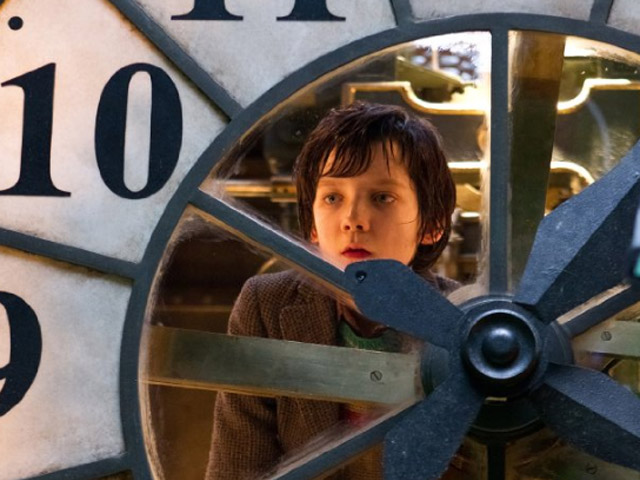
 Martin Scorsese wears his cinematic heart on his sleeve in his first family-friendly film, Hugo. Based on Brian Selznick’s Caldecott-winning 2007 illustrated historical-fiction novel The Invention of Hugo Cabret, the 3-D movie follows the adventures of the title character, a homeless orphan boy (Asa Butterfield) who survives by his wits in a Paris train station in the early 1900s. He spends his days stealing small bits of food, winding the big clock, avoiding Inspector Gustav (Sacha Baron Cohen), and trying to find parts for an automaton he is rebuilding, hoping it will have a message for him from his father (Jude Law). He soon makes his only friend, a girl named Isabelle (Chloë Grace Moretz) who is being raised by her godparents, the bitter Papa Georges (Ben Kingsley) and his wife, Mama Jeanne (Helen McCrory). When it turns out that Papa Georges is the one and only Georges Méliès, who made the world’s first science-fiction film, A Trip to the Moon, among hundreds of others, then was thought to have died in obscurity, all of his work destroyed, Hugo and Isabelle, along with the help of film historian René Tabard (Michael Stuhlbarg), are determined to resurrect Papa Georges and his reputation. Gorgeously shot by Robert Richardson and featuring marvelous period sets by Dante Ferretti, Hugo is beautiful to look at, the camera roaming through the immense train station and up the tall clock tower like in a Jules Verne story. Such side plots as the budding romances between a café owner (Frances de la Tour) and the newspaper seller (Richard Griffiths) and between Gustav and a shy flower girl (Emily Mortimer) feel forced, and the main narrative meanders its way into treacly territory as all the parts slowly come together. At its heart, Hugo is a movie about the love of movies, paying tribute to the early cinema of Méliès, Harold Lloyd, and others but it gets too stuck on the underlying theme of the preservation of old films, one of Scorsese’s driving forces. Still, Hugo is a visual treat in which Scorsese makes the most of 3-D technology, particularly in the first half, before things get a little too sticky (and slickly) sweet, even for a children’s film. Hugo, which was nominated for eleven Oscars and won five technical awards — Best Cinematography, Best Art Direction, Best Visual Effects, Best Sound Editing, and Best Sound Mixing — is screening August 10 as part of the South Street Seaport’s “Front/Row” “See/Change” series, which continues August 14 with The Amazing Spider-Man, August 17 with Chicago, and August 21 with Back to the Future. For a day-by-day listing of free summer movie screenings throughout New York City, go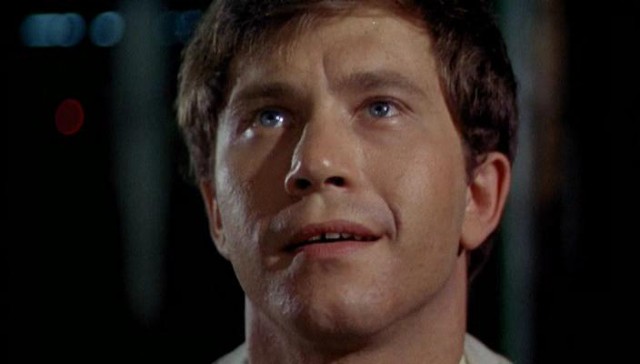

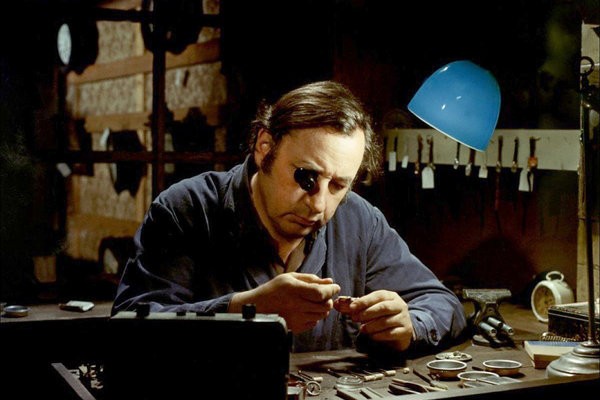
 Based on Georges Simenon’s novel L’horloger de Saint-Paul, Bertrand Tavernier’s first feature-length film is a quiet, introspective triumph from start to finish. Philippe Noiret stars as the title character, Michel Descombes, a widowed clockmaker who is told by a police inspector (Jean Rochefort) that his son, Antoine (Jacques Denis), has killed a man and is on the run with a woman named Liliane (Christine Pascal). A despondent Michel struggles to understand what led his son to commit such a crime, examining deep inside himself in the process. The many scenes that center on the clockmaker and the inspector discussing life in general terms are simply wonderful, except when the cop talks about the movies, which takes the audience out of the film, especially when they mention La Grande Bouffe, Noiret’s previous work. Otherwise, The Clockmaker is an absolute gem, with Tavernier’s subtle narrative style guiding Noiret (Nuovo Cinema Paradiso, Le vieux fusil) to one of the greatest understated performances you’re ever likely to see. Winner of the Silver Bear at the 1974 Berlinale, The Clockmaker is screening August 8, 10, and 11 as part of the Anthology Film Archives series “Cine-Simenon: Georges Simenon on Film,” consisting of fourteen cinematic adaptations of books by the Belgian-born French-language creator of Inspector Maigret, including Marcel Carné’s La Marie du Port and Three Rooms in Manhattan, Patrice Leconte’s Monsieur Hire, Henry Hathaway’s The Bottom of the Bottle, Claude Chabrol’s Betty, and Burgess Meredith’s The Man on the Eiffel Tower.