this week in film and television

THE WAY, WAY BACK

THE WAY, WAY BACK

Duncan (Liam James) is not exactly looking forward to summer on the beach in Jim Rash and Nat Faxon’s thoughtful coming-of-age drama

THE WAY, WAY BACK (Nat Faxon & Jim Rash, 2013)
In theaters now
www.foxsearchlight.com

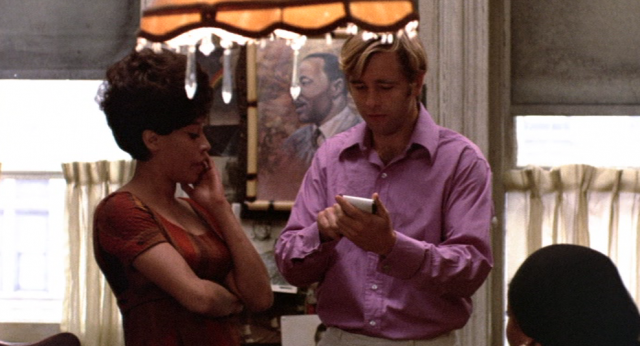
Jim Rash and Nat Faxon’s The Way, Way Back is a gentle, deeply affecting, and tender coming-of-age drama about an awkward adolescent boy having difficulties dealing with his parents’ divorce and his mother’s new boyfriend. Liam James stars as fourteen-year-old Duncan, who is forced to spend the summer in a Massachusetts beach resort town with his mother, Pam (Toni Collette); Trent (Steve Carell), the man she is considering settling down with; and Trent’s stuck-up daughter, Steph (Zoe Levin), who resents having to watch over the brooding, nearly silent Duncan. Everyone has to deal with their neighbor, the wildly wacky Betty (a wildly wacky Allison Janney), who continually chastises her son, Peter (River Alexander), because of his odd right eye and whose daughter, Susanna (AnnaSophia Robb), is the only one who seems to recognize what Duncan is going through. To get away from it all, Duncan heads off to a local water park (the actual Water Wizz), where he is taken under the wing of one of the managers, Owen (Sam Rockwell), who hasn’t really grown up himself yet, a man-child who is always goofing around with his fellow employees, the customers, and his boss, Caitlyn (Maya Rudolph). As Duncan starts finding out some disturbing truths about his mother, Trent, and Trent’s friends Kip (Rob Corddry) and Joan (Amanda Peet), he also learns a lot about life in general and his situation specifically.

Duncan (Liam James) learns about life and love from Owen (Sam Rockwell) in THE WAY, WAY BACK

Duncan (Liam James) learns about life and love from Owen (Sam Rockwell) in THE WAY, WAY BACK

Evoking such films as Greg Mottola’s underrated Adventureland and Wes Anderson’s cult classic Rushmore, The Way, Way Back is an honest, poignant examination of one boy’s summer to remember. James (Psych, The Killing) gives a riveting performance as Duncan, a kid who is turning away from a world that keeps letting him down. But just as he’s giving up on trusting adults, be becomes friends with a man who doesn’t seem to take anything seriously, until he does, played with hysterically reckless abandon by Rockwell, channeling Stripes-era Bill Murray. Although the film is set in the modern day, Rash and Faxon, who teamed up with director Alexander Payne to win the Best Adapted Screenplay Oscar for The Descendants, give The Way, Way Back an engaging retro feel, from the references to 1980s music (Bonnie Tyler’s “Holding Out for a Hero,” REO Speedwagon’s “I Can’t Fight This Feeling Anymore”) to Trent’s mint Buick woody station wagon. Rash (Craig Pelton on Community) and Faxon (Ben in Ben and Kate) — who also appear in the film as Water Wizz employees, Rash playing the very strange Lewis and Faxon as the hunky Roddy — also manage to save several scenes that threaten to become uncomfortable and take away from the otherwise believable plot twists. Carell and Collette, who were brother and sister in Little Miss Sunshine, here make a good couple, a pair of adults who still have some growing up of their own to do. The opening scene, with Duncan sitting in the way, way back of the station wagon, facing where they’ve been, not where they’re going, sets a marvelous tone for this small gem.

GRAVITY AND GRACE: MONUMENTAL WORKS BY EL ANATSUI

El Anatsui’s hanging works welcome visitors to fascinating show (photo by twi-ny/mdr)

El Anatsui’s hanging works welcome visitors to fascinating retrospective (photo by twi-ny/mdr)

Brooklyn Museum
Morris A. and Meyer Schapiro Wing and Iris and B. Gerald Cantor Gallery, fifth floor
200 Eastern Parkway at Washington St.
Wednesday – Sunday through August 18, suggested donation $12
212-864-5400
www.brooklynmuseum.org

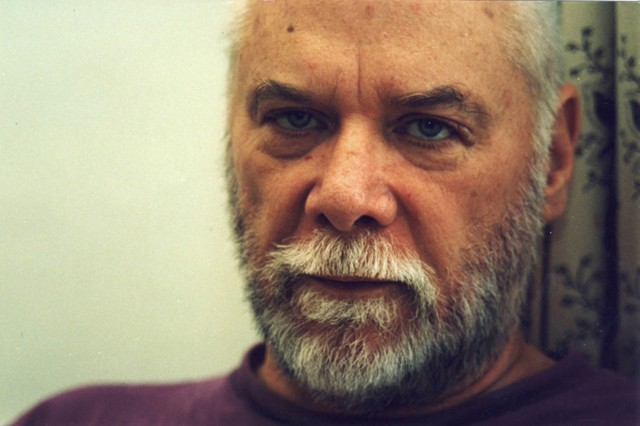
Over the last decade, Ghana-born, Nigerian-based abstract artist El Anatsui has been gaining international fame for his unique sculpture-paintings that hang from ceilings and walls and climb across floors. The works, which often resemble maps, are composed of aluminum liquor bottle caps of a multitude of colors, woven together with copper wire by a team of assistants into patterns that Anatsui then puts together to form larger pieces that evoke African history, mass consumption, environmentalism, and the intimate physical connection between people all over the world. This continuing series welcomes visitors to the outstanding Brooklyn Museum exhibition “Gravity and Grace: Monumental Works by El Anatsui,” which also looks back at the artist’s past while revealing his fascinating process.

El Anatsui’s “Waste Paper Bags” look back at African history while also evoking modern-day environmentalism (photo by twi-ny/mdr)

El Anatsui’s “Waste Paper Bags” look back at African history while also evoking modern-day environmentalism (photo by twi-ny/mdr)

Much of Anatsui’s oeuvre changes every time it’s shown at a new location, hung a little differently, without the same type of lighting, allowing them to be experienced anew; they also benefit from being viewed from a distance and then close up, offering varying perspectives. The show is expertly laid out, from the mazelike hallway entrance to the side-by-side “Red Block” and “Black Block” to the inclusion of several videos that show Anatsui at work in his studio and walking around, seeking out found objects and ideas for future projects. “I don’t believe in artworks being things that are fixed,” the artist and longtime teacher has said. “You know, the artist is not a dictator.” Indeed, painted wood reliefs such as “Motley Crowd” and “Amewo (People)” from the 1980s and ’90s are meant to be altered, with curators encouraged to rearrange the blocks of wood as they see fit. It’s all part of Anatsui’s “nomadic aesthetic” and dedication to the “nonfixed form,” representing multiple materials in varying shapes and sizes while also celebrating personal freedom. His titles also capture an international flavor, with such names as “Drifting Continents,” “Earth’s Skin,” and “Amemo (Mask of Humankind).” And make sure to get up close to “Ozone Layer,” which has the added bonus of air being blown in through the wall, creating sound and movement.

“Red Block” and “Black Block” hover behind “Peak” in beautifully curated show (photo by twi-ny/mdr)

“Red Block” and “Black Block” hover behind “Peak” in beautifully curated exhibition (photo by twi-ny/mdr)

The exhibition, Anatsui’s first solo show in a New York museum, also features charcoal and graphite drawings, acrylic works on paper, and “Waste Paper Bags,” a collection of large-scale sculptures made of discarded aluminum printing plates that relate to Nigerian culture as well as go-bags that Ghanaian refugees packed when escaping their country in a hurry. It’s a terrific show that has been extended two weeks through August 18; there is also still time to see his “Broken Bridge II” outdoor wall piece on the High Line, which runs through September. Admission to the Brooklyn Museum is free on August 4 for the monthly First Saturdays program, the theme of which is Caribbean, with live performances by Casplash, Los Hacheros, and Zing Experience, curator talks, screenings of the omnibus film Ring Di Alarm and Storm Saulter’s Better Mus’ Come, an artist talk with Miguel Luciano, dance workshops, a discussion with author Nelly Rosario about her debut novel, Song of the Water Saints, and pop-up gallery talks focusing on specific works by Anatsui.

WONG KAR-WAI: DAYS OF BEING WILD

DAYS OF BEING WILD is Wong Kar-wai’s first collaboration with master cinematographer Christopher Doyle

DAYS OF BEING WILD is Wong Kar-wai’s first collaboration with master cinematographer Christopher Doyle

DAYS OF BEING WILD (A FEI JING JUEN) (Wong Kar-wai, 1990)
Museum of the Moving Image
35th Ave. at 36th St., Astoria
Sunday, August 4, free with museum admission, 5:30
718-777-6800
www.movingimage.us

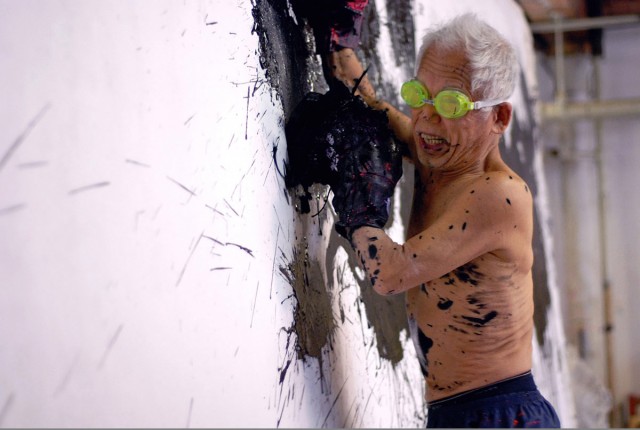
Wong Kar-wai’s second film, Days of Being Wild, following the surprising success of his debut feature, As Tears Go By, was a popular failure, as Hong Kong audiences were not yet ready for his introspective, character-driven, nonlinear style. (However, it did win five Hong Kong Film Awards, including Best Picture and Best Actor.) Days is Wong’s first film with master cinematographer Christopher Doyle, who has since shot all of Wong’s work, including Chungking Express, Fallen Angels, Happy Together, and In the Mood for Love. The late Leslie Cheung, who jumped out a hotel window in 2003, stars as Yuddy, a disaffected, beautiful youth who lures in women and then, after they fall in love with him, verbally mistreats them and cheats on them. Among his conquests are the gorgeous Su-Lizhen (Maggie Cheung), often shot in magnificent close-up, and the trampy Mimi (Carina Lau), who is jealous of Su, who takes comfort in telling her tale of woe to local police officer Tide (Andy Lau). Meanwhile, Yuddy, who was raised by a former prostitute, is obsessed with finding his birth mother, two facts that just might be part of the reason he treats women as he does. Set in 1960, the film’s leitmotif involves time and memory, with clocks ticking loudly and lots of long, lingering looks. The story goes a bit haywire in the latter sections, although the ending is a gem. (Look for Tony Leung there.) Days of Being Wild is screening August 4 at 5:30 as part of the Museum of the Moving Image series “Wong Kar-wai,” which continues with such other works by the Hong Kong Second Wave auteur as My Blueberry Nights, As Tears Go By, In the Mood for Love, 2046, and his latest, The Grandmaster, for a special “Fist and Sword” event with Wong present.

2 GUNS

2 GUNS

Denzel Washington and Mark Wahlberg take a break in action buddy comedy 2 GUNS

2 GUNS (Baltasar Kormákur, 2013)
Opens Friday, August 2
www.2guns.net

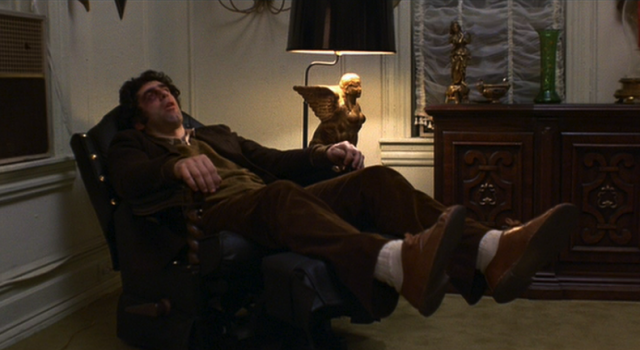
Denzel Washington and Mark Wahlberg are fun to watch in the action comedy flick 2 Guns, but unfortunately the ever-twisting plot is so overloaded with gaping holes that the film ends up shooting nothing but blanks. Washington stars as Bobby Trench, a DEA agent working deep undercover to capture a big-time Mexican drug warlord. Little does he know that the “partner” he recruited, Marcus Stigman, is actually a Navy SEAL who is undercover as well, thinking that he is the one playing Bobby and not the other way around. When the two men rob the cleverly named Tres Cruces (Three Crosses) bank, they suddenly find themselves with a whole lot more money than expected and realize they were both set up by their superiors and colleagues, not knowing anymore who they can trust among a cast of characters that includes DEA agent Jessup (Robert John Burke), Navy lt. commander Quince (James Marsden), and drug kingpin Papi Greco (Edward James Olmos). And entering the fray is the nasty, mysterious Earl (Bill Paxton), who is ready to do whatever’s necessary to get back what he claims is his stash, taking delight in his own brand of Russian roulette as a torture method. But things get more and more ridiculous as double crosses turn into triple crosses and quadruple crosses and the conspiracy keeps reaching higher and higher, with writer Blake Masters (Brotherhood) and director Baltasar Kormákur (Jar City, Contraband with Wahlberg) trying to channel such genre classics as John Dahl’s Red Rock West and The Last Seduction, Quentin Tarantino’s Pulp Fiction, and Richard Donner’s Lethal Weapon, but 2 Guns, which is based on Steven Grant’s comic-book series, turns out to be a disappointing retread that is far too (undeservedly) pleased with itself. Grant and Boom! Studios have just published a sequel, 3 Guns; here’s hoping that if they turn that into a movie as well, the filmmakers concentrate more on the cool main characters than the increasingly stupid, overblown set pieces that ruin what could have, and should have, been a much better summer blockbuster.

RURAL ROUTE FILM FESTIVAL: TALL AS THE BAOBAB TREE

Real-life sisters Dior and Oumoul Kâ play fictional sisters facing a family crisis in TALL AS THE BAOBAB TREE

Real-life sisters Dior and Oumoul Kâ play fictional sisters facing a family crisis in TALL AS THE BAOBAB TREE

TALL AS THE BAOBAB TREE (GRAND COMME LE BAOBAB) (Jeremy Teicher, 2012)
Museum of the Moving Image
35th Ave. at 36th St., Astoria
Saturday, August 3, free with museum admission, 2:00
Festival runs August 2-4
718-777-6800
www.movingimage.us
www.tallasthebaobabtree.com

The 2013 Human Rights Watch Film Festival came to a close this past June 23 with Jeremy Teicher’s heart-wrenching Tall as the Baobab Tree, an involving, powerful, yet gentle drama about a Senegalese family trapped by tradition in a modernizing world. Real-life sisters Dior and Oumoul Kâ star as Coumba and Debo, close siblings who live in the tiny rural village of Sinthiou Mbadane (where they actually are from). When their older brother, Silèye (Alpha Dia), falls out of a baobab tree and breaks his leg, their father (Mouhamed Diallo) doesn’t have enough money to pay for the necessary medical care so he instead sends Coumba out to do Silèye’s job of herding the cows and decides to sell off eleven-year-old Debo to suitors for marriage. Their mother (Mboural Dia) is unwilling to stand up to her husband, so Coumba hatches a plan in which her friend Amady (Cheikh Dia), who has a crush on her, will watch the herd for her secretly while she heads into the city and gets a job until she makes enough money to help Silèye heal and prevent Debo from having to marry so young. Unfortunately, not everything goes quite as planned. But through it all, no matter how difficult things get, all of the characters maintain their faith, praising peace and continually saying, “God is great.”

Teicher came up with the idea for Tall as the Baobab Tree when he was a student working on This Is Us, a documentary for the nonprofit organization CyberSmart Africa in which the children of Sinthiou Mbadane created brief digital stories about their lives. Teicher, who directed Tall as the Baobab Tree and cowrote it with Alexi Pappas, chose to focus on the very real African problem of forced marriage of young girls between the ages of eight and twelve, collaborating closely with the nonprofessional actors selected from the village, allowing their own stories to meld together, blending fact and fiction. Another central issue is the importance of education, particularly for girls, as Debo clearly would rather follow in Coumba’s footsteps and prepare for university instead of becoming a child bride. The narrative unfolds slowly and calmly, with no overemotional, melodramatic moments or any soapbox preaching, while the tender mood is enhanced by cinematographer Chris Collins’s lush photography and Salieu Suso’s Kora-based score. The first feature ever filmed in the Puular language, Tall as the Baobab Tree is screening August 3 at 2:00 at the Museum of the Moving Image as part of the Rural Route Film Festival, with Teicher present to talk about the work, which will be preceded by Ross Whitaker’s Home Turf and Laska Jimsen’s Beaver Creek Yard. The festival, which is dedicated to films made about environments away from urban centers, runs August 2-4 and also features a Les Blank tribute, a DCP restoration of Werner Herzog’s Fitzcarraldo, Diego Rougier’s Salt, Marlo Poras’s The Mosuo Sisters, and Veit Helmer’s Baikonur, in addition to live performances in the museum’s new courtyard by the Frontier Needs Heroes, Gimagua, Vlada Tomova’s Bulgarian Voices Trio, and the Spookfish.

SAY A LITTLE PRAYER: THE MAGICIAN

THE MAGICIAN

A traveling troupe of illusionists is forced to defend itself in Ingmar Bergman’s THE MAGICIAN

CABARET CINEMA: THE MAGICIAN (ANSIKTET) (Ingmar Bergman, 1958)
Rubin Museum of Art
150 West 17th St. at Seventh Ave.
Friday, August 2, free with $7 bar minimum, 9:30
212-620-5000
www.rmanyc.org

Ingmar Bergman’s darkly comic 1958 film The Magician is one of the Swedish auteur’s lesser-known, underrated masterpieces, an intense yet funny, and fun, work about art, science, faith, death, and the power of the movies themselves. When Vogler’s Magnetic Health Theater comes to town, the local triumvirate of Dr. Vergérus (Gunnar Björnstrand), police commissioner Starbeck (Toivo Pawlo), and Consul Egerman (Erland Josephson) brings the traveling troupe in for questioning, forcing them to spend the night as guests in Egerman’s home. The three men seek to prove that mesmerist Albert Emanuel Vogler (Max von Sydow), his assistant, Mr. Aman (Ingrid Thulin), a witchy grandmother (Naima Wifstrand), and their promoter, Tubal (Åke Fridell), are a bunch of frauds. The interrogations delve into such Bergmanesque topics as science vs. reason, good vs. evil, life and death, and the existence of God. As various potions are dispensed to and tricks played on a staff that includes maid Sara (Bibi Andersson), cook Sofia Garp (Sif Ruud), and stableman Antonsson (Oscar Ljung) in addition to Starbeck’s wife (Ulla Sjöblom) and Egerman’s spouse (Gertrud Fridh), a series of romantic rendezvous take place, along with some genuine horror, leading to a thrillingly ambiguous ending.

Max von Sydow is mesmerizing as mesmerist and Ingmar Bergman alter ego Albert Emanuel Vogler in THE MAGICIAN

Max von Sydow is mesmerizing as mesmerist and Ingmar Bergman alter ego Albert Emanuel Vogler in THE MAGICIAN

Von Sydow is mesmerizing as the mesmerist, a silent, brooding man in a sharp beard and mustache, his penetrating eyes a character all their own. (The original title of the film is Ansiktet, which means “Face.”) His showdowns with Dr. Vergerus serve as Bergman’s defense of the art of film itself, an illusion of light and shadow and suspension of belief. Meanwhile, Tubal and wandering drunk Johan Spegel (Bengt Ekerot) offer comic relief and a needed level of absurdity to the serious proceedings. The film is superbly shot in black-and-white by cinematographer Gunnar Fischer, maintaining an appropriately creepy and mysterious look throughout. It also introduces character names into Bergman’s canon, appellations such as Vogler, Vergérus, and Egerman, that will show up again in such future works as Persona (with Liv Ullmann as actress Elisabet Vogler, who has stopped speaking, and Björnstrand as Mr. Vogler), Hour of the Wolf (with Thulin as Veronica Vogler, a former lover haunting von Sydow’s painter Johan Borg), Fanny and Alexander (with Jan Malmsjö as Bishop Edvard Vergérus), and After the Rehearsal (with Josephson as theater director Henrik Vogler and Lena Olin as actress Anna Egerman). Winner of the Special Jury Prize at the 1959 Venice Film Festival, The Magician is screening August 2 at the Rubin Museum, introduced by sociologist and Union Theological Seminary assistant professor Samuel Cruz, PhD, concluding the Cabaret Cinema series “Say a Little Prayer,” held in conjunction with the exhibition “Count Your Blessings,” which opens August 2 and explores the use of prayer beads in various Buddhist traditions.

WHEN COMEDY WENT TO SCHOOL

WHEN COMEDY WENT TO SCHOOL

Jerry Lewis is among the comedians reminiscing about the famous Catskills era in WHEN COMEDY WENT TO SCHOOL

WHEN COMEDY WENT TO SCHOOL (Mevlut Akkaya & Ron Frank, 2013)
IFC Center, 323 Sixth Ave. at West Third St., 212-924-7771
JCC in Manhattan, 334 Amsterdam Ave. at West 76th St., 646-505-5708
July 31 – August 6
www.whencomedywenttoschool.com

In the new documentary When Comedy Went to School, Mickey Freeman describes what it’s like to “die” onstage, that terrible feeling of experiencing flop sweat while bombing in front of a live audience. Unfortunately, this film is dead on arrival, dripping wet. Made by Mevlut Akkaya (director and producer), Ron Frank (director, producer, and editor), and Lawrence Richards (writer and producer), the thankfully short film, which clocks in at a mere seventy-seven minutes, purports to tell the history of the Catskill comedians at such resorts as Kutsher’s, Grossinger’s, and the Concord. The filmmakers speak with such comic giants as Jerry Lewis, Sid Caesar, Mort Sahl, Dick Gregory, Jackie Mason, and Jerry Stiller, who describe what it was like in the Borscht Belt’s heyday of the 1950s and 1960s. There are also plenty of archival clips of those men as well as Rodney Dangerfield, Woody Allen, Henny Youngman, Milton Berle, Bob Hope, and Lenny Bruce (however, very few from actual Catskills performances), with additional commentary from Joe Franklin, Larry King, and Hugh Hefner. But timing is everything in comedy, something When Comedy Went to School is sorely lacking; the film drags and sputters as Akkaya, Frank, and Richards — onscreen host and narrator Robert Klein is the poor soul relegated to reading the increasingly dull script — try to delve into the social and historical aspects of the Catskills, from the comedians themselves to the people who owned the resorts and the families that went there year after year, but it’s slow moving, repetitive, and, worst of all, boring. Although some of the comedians have interesting anecdotes — Lewis steals the show with his insights on the relationship between performer and audience — most of it falls flat, reminiscent of the old vaudeville convention of bringing out the weakest act to clear the house after the stars are done. When Comedy Went to School runs July 31 to August 6 at the JCC in Manhattan and the IFC Center, with Akkaya, Frank, and Richards on hand to talk about the film at the 7:05 show on opening night at IFC; the trio will be back at IFC for the 7:05 screening on August 1, joined by Klein and Cory Kahaney.