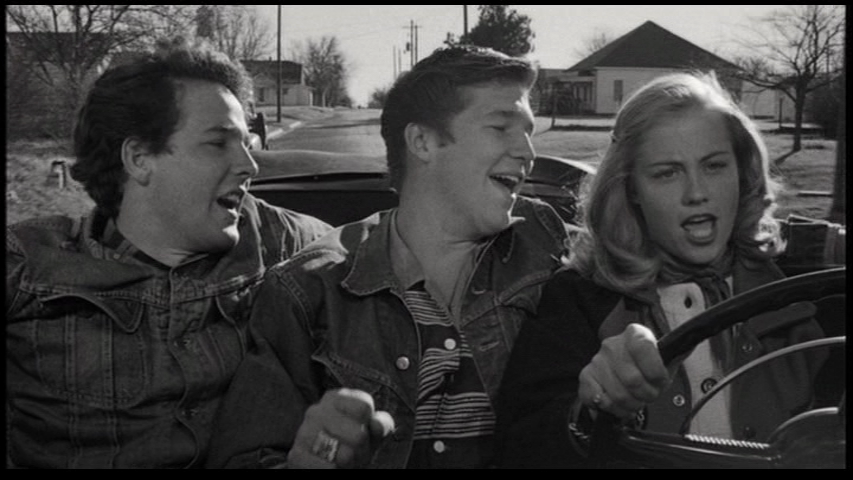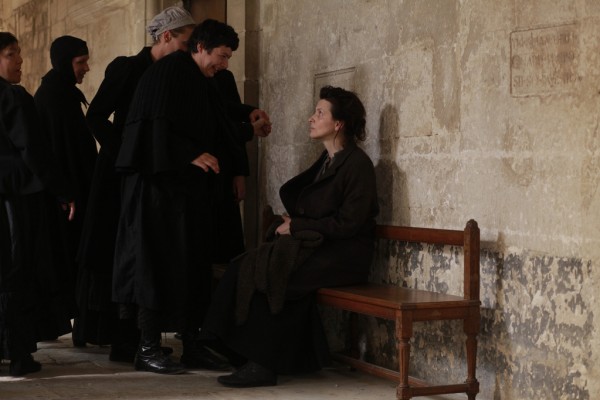
Juliette Binoche stars as sculptor and mental patient Camille Claudel in heartbreaking film
CAMILLE CLAUDEL 1915 (Bruno Dumont, 2013)
Film Forum
209 West Houston St.
October 16-29
212-727-8110
www.filmforum.org
www.kinolorber.com
 Juliette Binoche gives a gut-wrenching performance as the traumatized title character in Bruno Dumont’s heartbreaking Camille Claudel 1915. The film takes place over the course of several days in 1915, as the sculptor and former mistress of Auguste Rodin awaits a visit from her younger brother, poet, devout Christian, and diplomat Paul Claudel. Camille has been moved to an asylum in Montdevergues, where she prepares her own meals for fear of being poisoned on orders from Rodin, who she believes is still trying to ruin her life and career twenty years after their personal and professional relationships ended. Run by nuns, the asylum is home primarily to deeply disturbed women incapable of taking care of themselves and barely able to speak coherent sentences. Claudel, a loner who was committed by her family shortly after the death of her father, desperately wants to be released and get her life back, but everything seems to be poised against her. Binoche, her pale face appearing to have been chiseled like one of Claudel’s sculptures, plays Camille with a subtle yet stern beauty, giving several long, impassioned speeches that writer-director Dumont (Twentynine Palms, L’humanité) and cinematographer Guillaume Deffontaines shoot in single takes, the camera remaining still, Camille framed like a painting. Throughout the film, Camille is seen amid mostly blacks, grays, browns, and whites, a monochromatic color scheme that echoes her work. The film has a cinéma vérité feel, as much of the sparse dialogue is improvised, many of the nuns are nurses at the asylum, and several of the patients are actually committed there, lending a neo-Realist quality to the austere setting. The film, which is “freely adapted from” Paul’s writings and letters, Camille’s letters, and medical records, is not a biopic; instead, it’s a fascinating study of a talented artist and the mental anguish that ultimately overwhelmed her.
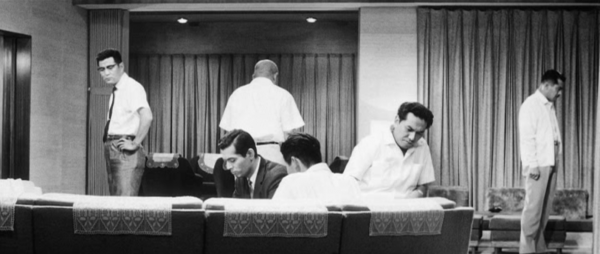
 On the verge of being forced out of the company he has dedicated his life to, National Shoes executive Kingo Gondo’s (Toshirō Mifune) life is thrown into further disarray when kidnappers claim to have taken his son, Jun (Toshio Egi), and are demanding a huge ransom for his safe return. But when Gondo discovers that they have mistakenly grabbed Shinichi (Masahiko Shimazu), the son of his chauffeur, Aoki (Yutaka Sada), he at first refuses to pay. But at the insistence of his wife (Kyogo Kagawa), the begging of Aoki, and the advice of police inspector Taguchi (Kenjiro Ishiyama), he reconsiders his decision, setting in motion a riveting police procedural that is filled with tense emotion. Loosely based on Ed McBain’s 87th Precinct novel King’s Ransom, Akira Kurosawa’s High and Low is divided into two primary sections: the first half takes place in Gondo’s luxury home, orchestrated like a stage play as the characters are developed and the plan takes hold. The second part of the film follows the police, under the leadership of Chief Detective Tokura (Tatsuya Nakadai), as they hit the streets of the seedier side of Yokohama in search of the kidnappers. Known in Japan as Tengoku to Jigoku, which translates as Heaven and Hell, High and Low is an expert noir, a subtle masterpiece that tackles numerous socioeconomic and cultural issues as Gondo weighs the fate of his business against the fate of a small child; it all manages to feel as fresh and relevant today as it probably did back in the ’60s.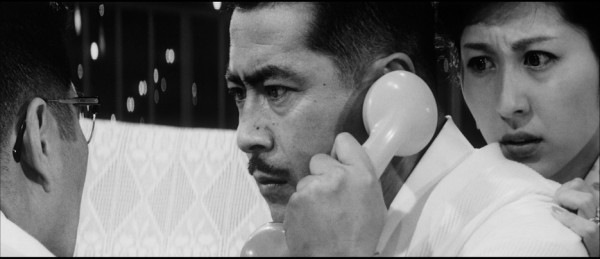
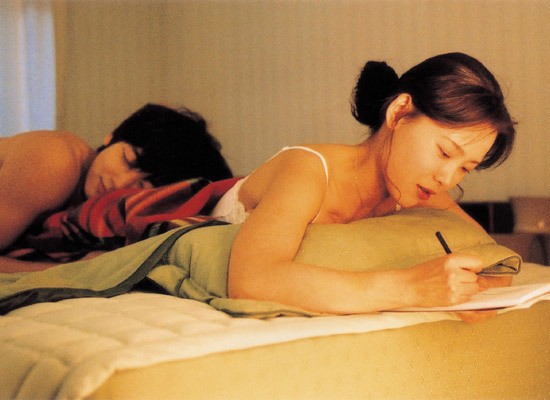
 Korean Cultural Service continues its three-part tribute to South Korean auteur Park Cheol Soo, who died in a traffic accident earlier this year at the age of sixty-four, with the erotically charged The Green Chair. Shortly after being arrested for having sex with a minor, thirty-two-year-old Kim Mun-hee (Seo Jung) rejoins her barely underage lover, nineteen-year-old Hyun (Shim Ji-ho), as they continue their torrid affair, which led to Mun-hee’s divorce. Mun-hee is sentenced to one hundred hours of social service, working in a ward with women suffering from dementia. A concerned police detective (Sun Wook-hyun) and a sneaky journalist (Kim Jun-han) try to keep close tabs on the lovers, so Hyun and Mun-hee soon end up at the country home of her best friend, Jean (Oh Yun-hong), as things keep heating up, both sexually and emotionally. Park fills the first half of The Green Chair with beautiful shots of Mun-hee’s and Hyun’s naked bodies in artistic arrangements, almost like they are one. But in the second half, things get a bit more abstract, culminating in a bizarre, surreal party that incorporates some of the stranger elements of the French New Wave. The Green Chair ends up being a satisfying, if at times extremely confusing and even maddening, exploration of fantasy, desire, and responsibility, not shy in the least. The Green Chair is screening for free October 15 at Tribeca Cinemas as part of the Korean Movie Night series “Remembering Park Cheol Soo: A Korean Filmmaking Legend,” which began October 1 with Park’s 301, 302 and concludes October 29 with B.E.D.