Hou Hsiao-hsien’s CAFÉ LUMIERE is part of Ozu tribute at Lincoln Center
CAFÉ LUMIERE (COFFEE JIKOU) (Hou Hsiao-hsien, 2004)
Film Society of Lincoln Center
144 and 165 West 65th St. between Eighth Ave. & Broadway
Wednesday, December 4, Francesca Beale Theater, 4:30, and Tuesday, December 10, Walter Reade Theater, 5:00
Series runs December 4-12
212-875-5050 / 212-875-5166
www.filmlinc.com
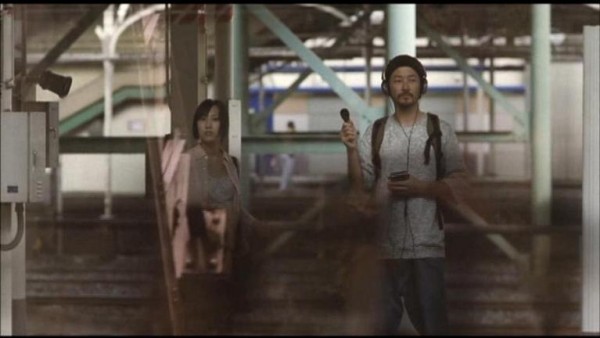
 Taiwanese auteur Hou Hsiao-hsien pays tribute to master filmmaker Yasujirō Ozu’s centenary with Café Lumiere, a beautifully lyrical yet elegantly simple drama about a young woman making her way through life. Pop star Yo Hitoto stars as Yoko, a woman who spends much of her time riding trains and trolleys to visit bookstore owner Hajime (the always excellent Tadanobu Asano) and to find out more about Chinese composer Jiang Wenye. She also returns home to her stepmother (Kimiko Yo) and father (Nenji Kobayashi); the latter doesn’t react when he finds out that Yoko is pregnant and does not intend to marry her boyfriend. In fact, there are barely any emotional reactions at all, although there are plenty of trains taking the characters where they seemingly want to be. Cinematographer Lee Pingping shot Café Lumiere on location with natural sound and lighting; his camera often lingers statically on a scene as the characters walk in and out of the carefully composed frame and are heard off-screen, in long takes, furthering the illusion of reality — mimicking the truth Ozu strove for in his work. In essence, the film has no beginning, no middle, and no end; it is 104 dazzling minutes in the life of a fascinating woman and her friends and relatives. Café Lumiere is screening December 4 at 4:30 and December 6 at 7:30 as part of the Film Society of Lincoln Center festival “Ozu and His Afterlives,” which honors the 110th anniversary of the master filmmaker’s birth and the 50th anniversary of his death; he died on his birthday at the age of sixty in 1963. The series features Ozu’s An Autumn Afternoon and Equinox Flower in addition to seven works that were either directly or indirectly inspired by Ozu and his unique style, including Hirokazu Kore-eda’s Still Walking, Jim Jarmusch’s Stranger Than Paradise, Aki Kaurismäki’s The Match Factory Girl, Claire Denis’s 35 Shots of Rum, Pedro Costa’s In Vanda’s Room, and Wim Wenders’s Tokyo-Ga.
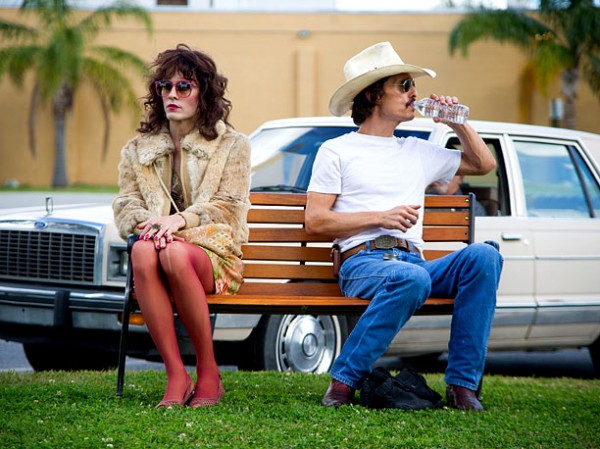
 When foul-mouthed homophobic womanizing racist Ron Woodroof (a career redefining Matthew McConaughey) suddenly finds out he has contracted the AIDS virus and has thirty days to live, he is determined to do whatever it takes to stay alive. Soon he has set up a small operation where people with HIV and AIDS can obtain medications that the FDA has not approved but that appear to help control the disease. Based on a true story that was documented in a
 When half-siblings Joni (Mia Wasikowska) and Laser (Josh Hutcherson) decide to track down their anonymous sperm-donor father, their two moms, Jules (Julianne Moore) and Nic (Annette Bening), are justifiably concerned with how that might affect their close-knit family. And when the donor ends up being a motorcycle-riding, free-spirited hottie (Mark Ruffalo) who would like to become part of the kids’ lives, it doesn’t take long for some major dysfunction to set in. The third feature-length narrative written or cowritten and directed by Lisa Cholodenko, following 1998’s High Art and 2002’s Laurel Canyon (she directed 2004’s Cavedweller but did not write it), The Kids Are All Right is another intimate drama that explores deeply personal relationships with grace and intelligence — along with a little lesbianism. Bening is strong as the man of the house, overly determined to control and protect her family; Moore is beguiling as the other mother, wanting to develop her own business as a landscape architect; and Wasikowka, who was so outstanding in the HBO series In Treatment, impresses again as the prodigal daughter preparing to go to college. Ruffalo, however, is too flat, and the film takes several missteps, including a final scene that is sadly predictable, detracting from an otherwise fresh and original story. The Kids Are All Right is screening at the Museum of the Moving Image on December 1 at 7:00 as part of the weekend series “Julianne Moore,” which pays tribute to the award-winning actress known for taking on challenging roles, showing six of her films, including the Coen brothers’ The Big Lebowski, Steven Spielberg’s The Lost World: Jurassic Park, Paul Thomas Anderson’s Boogie Nights, and Todd Haynes’s Safe and Far from Heaven.
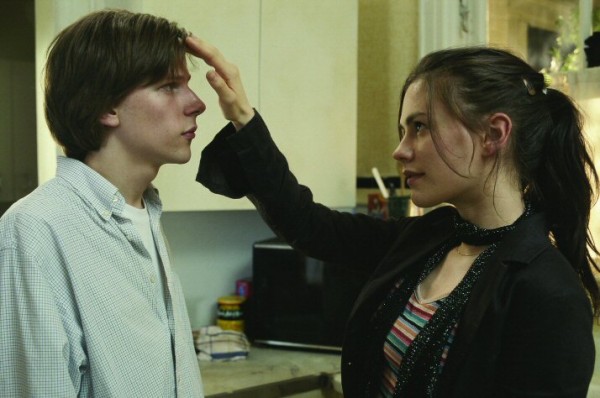
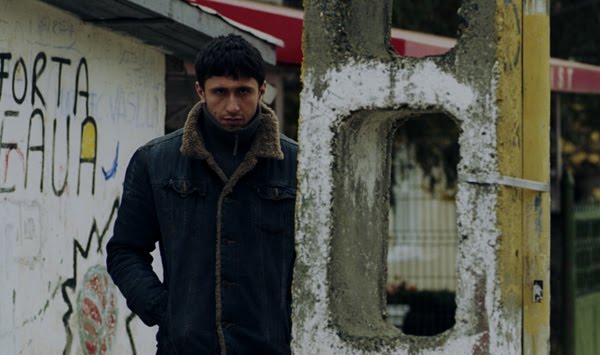
 The first half of Corneliu Porumboiu’s Police, Adjective is as dreadfully boring as Detective Cristi’s (Dragos Bucur) assignment, tailing a student, Victor (Radu Costin), who enjoys a joint with two of his friends every day after school. While Cristi wants to nail the kid’s supplier, the cop’s boss has him on a tight deadline, insisting he arrest Victor if the investigation continues to go nowhere, but Cristi strongly disagrees with putting the teenager away for up to seven years for a crime he believes will soon be abolished by the government. However, the film picks up considerably as Cristi seeks help from various contacts, getting caught up in red tape and public servants who would really rather not be bothered. And when he get called in by the chief (Vlad Ivanov from 4 Months, 3 Weeks, and 2 Days) and gets a long lecture in linguistics, well, you won’t be able to control yourself from laughing out loud. Porumboiu keeps the pace very slow and very steady, but hang in there, because the end is a riot. Police, Adjective, which won the Un Certain Regard Jury Prize at the Cannes Film Festival, screened at the New York Film Festival and at MoMA as part of the “Contenders, 2009,” series, and was Romania’s official entry for the Foreign Language Film Academy Award, is being shown December 2 at 3:00 at the Francesca Beale Theater as part of the Film Society of Lincoln Center series “Making Waves: New Romanian Cinema 2013,” which runs November 29 to December 3 and consists of works dating from 1962 to 2013 by such directors as Calin Peter Netzer, Nae Caranfil, Tom Wilson, Adrian Sitaru, Laura Capatana-Juller, Dan Pita, and Mircea Veroiul. Also on the schedule are the rest of Porumboiu’s films, including 12:08 East of Bucharest, the shorts trio Liviu’s Dream, A Trip to the City, and Gone with the Wine, and his latest, the closing-night selection When Evening Falls on Bucharest or Metabolism, which is being presented December 3 at 6:00 and will be followed by a Q&A with the director.