Humans and machines do battle in Andrew Bujalski’s fun throwback, COMPUTER CHESS
COMPUTER CHESS (Andrew Bujalski, 2013)
MoMA Film, Museum of Modern Art
11 West 53rd St. between Fifth & Sixth Aves.
Monday, December 23, 7:00
Series continues through January 16
Tickets: $12, in person only, may be applied to museum admission within thirty days, same-day screenings free with museum admission, available at Film and Media Desk beginning at 9:30 am
212-708-9400
www.computerchessmovie.com
www.moma.org
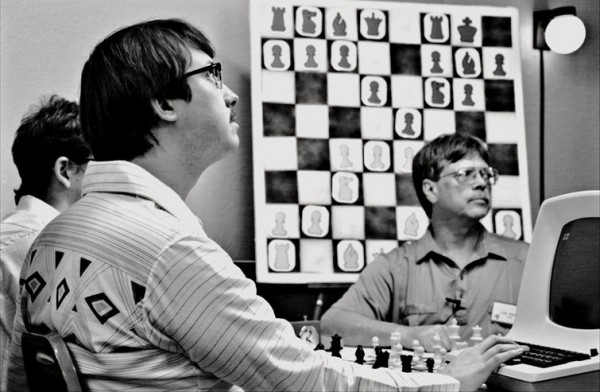
 Earlier this year, the Park Ave. Armory was home to The Machine, a high-tech live drama depicting the 1997 battle between chess grandmaster Garry Kasparov and IBM’s Deep Blue computer. Andrew Bujalski takes viewers back to 1980, the very early days of man vs. machine, in the decidedly low-tech indie flick Computer Chess. Shot in grainy black-and-white in sixteen days by Bujalski regular Matthias Grunsky (Nights and Weekends) using the early analog Sony AVC 3260 tube video camera, the very funny comedy follows a weekend chess competition hosted by grandmaster Pat Henderson (Gerald Peary), who has invited a group of computer programmers to play one another, with the winner getting the opportunity to match up against him in the ultimate challenge. Bujalski (Funny Ha Ha, Mutual Appreciation), Grunsky, and production designer Michael Bricker get the era just right as a bunch of nerdy dudes, including Patrick Riester as perpetually nervous virgin Peter Bishton, Wiley Wiggins as pompous Martin Beuscher, Robin Schwartz as mousy Shelly Flintic, Gordon Kindlmann as the worshipped Tom Schoesser, and Myles Paige as Michael Papageorge, the anticorporate independent programmer who can’t find anywhere to sleep, interact over games of chess that show while they deal well with computers, they have a lot to learn about real life. Throw in an EST-like sexual reawakening seminar led by guru Keneiloe (Tishuan Scott) at the same low-rent hotel and things start getting even further complicated. Winner of the Alfred P. Sloan Feature Film Prize at Sundance, Computer Chess is a splendidly rendered cinema vérité mockumentary about making, and not making, connections, both human and mechanical, preprogrammed and improvised, a fun trip back to a more innocent time before the digital age took over. (Anyone remember MS-DOS?) And it’s particularly riotous seeing these old computer beasts being lugged, pushed, pulled, and carried, somewhat larger and heavier than today’s laptops and handheld devices. Computer Chess is screening December 23 at 7:00 as part of MoMA’s annual series “The Contenders,” which consists of exemplary films that MoMA believes will stand the test of time, continuing with such works as Lucien Castaing-Taylor’s Leviathan, Sofia Coppola’s The Bling Ring, and Destin Cretton’s Short Term 12.
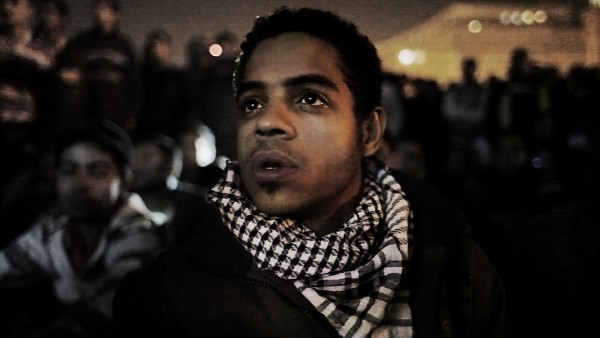
 “During the early days, we agreed to stay united no matter what,” Ahmed Hassan tells those around him in Jehane Noujaim’s powerful and important documentary The Square. “When we were united, we brought down the dictator. How do we succeed now? We succeed by uniting once again.” But Ahmed, one of several Egyptian revolutionaries who Noujaim follows for two years in the film, finds that it is not that easy to bring everyone together, as the government leaders continue to change and factions develop that favor the military and the Muslim Brotherhood. Putting her own life in danger, Noujaim (The Control Room, Startup.com) is right in the middle of it all as she shares the stories of Ahmed, a young man who is determined to see the revolution through until peace and justice prevail; Magdy Ashour, a member of the Muslim Brotherhood who must choose between his own personal beliefs and that of his power-hungry organization; and Khalid Abdalla, the British-Egyptian star of The Kite Runner and United 93 who becomes an activist like his father, serving as the revolution’s main link to the international community through the media and by posting videos. In The Square, a 2013 New York Film Festival selection, Noujaim also introduces viewers to human rights lawyer Ragia Omran, protest singer Ramy Essam, and filmmaker Aida El Kashef, none of whom is willing to give in even as the violence increases.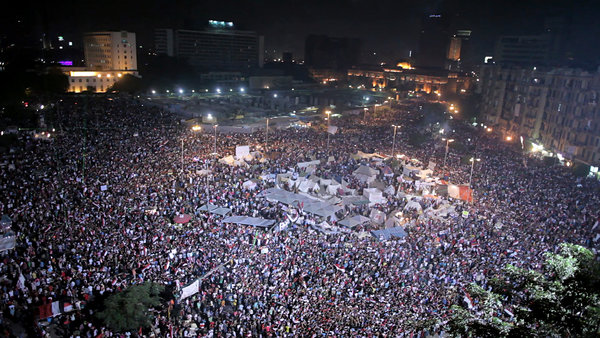
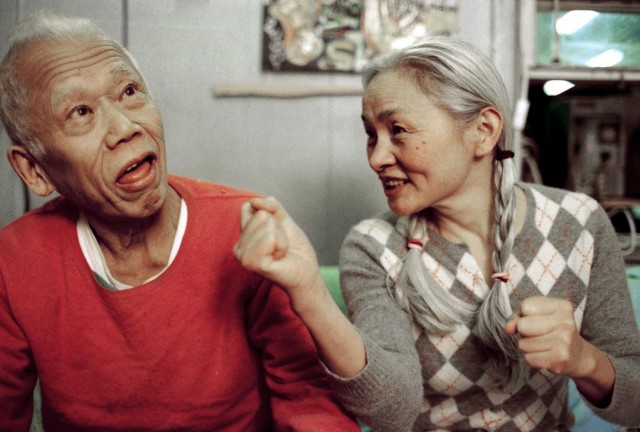
 Zachary Heinzerling’s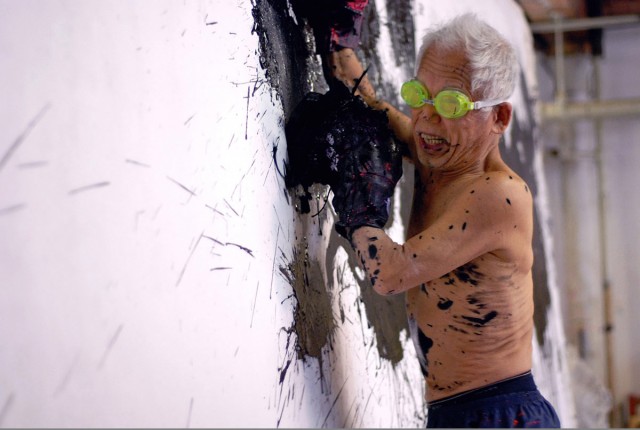
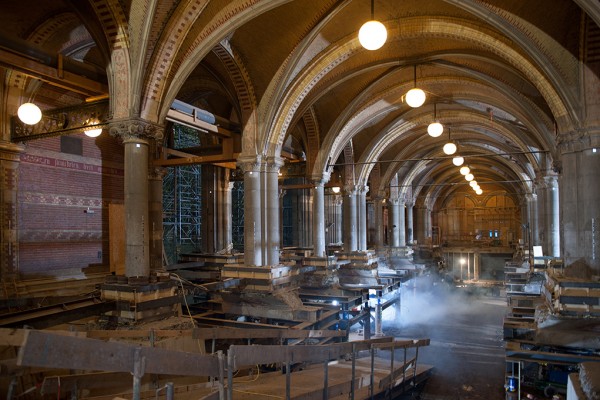
 In 2003, Amsterdam’s crown jewel, the Rijksmuseum, was closed to begin a major renovation. Little did everyone know at the time that the project would be delayed for years and go hundreds of millions of dollars over budget. Dutch director Oeke Hoogendijk captures all the surprisingly gripping fun and intrigue in the two-part, four-hour documentary The New Rijksmuseum. Hoogendijk brings her camera into every architectural meeting, monetary debate, and contractor dilemma, gaining remarkable access as no one shies away from sharing their personal and professional feelings on everything from the heated battle with community cycling activists over public use of the building’s entrance as a bike passage to such exacting details as paint color, smoothness of the walls, the art-historical value of certain works, and staying true to Pierre Cuypers’s 1885 building. The first documentary follows museum director Ronald de Leeuw as the process gets under way and continually gets mired in such issues as bidding contests that end up having only one participating company and the city’s dislike for a modern study center addition. In the second film, Wim Pijbes takes over as museum director in 2008, and his problems quickly mount as well as construction work eventually starts and deadlines approach. “I spend more time on cyclists than Rembrandt,” he acknowledges. “It’s my fate.” The interplay among such architects as Antonio Cruz, Antonio Ortiz, and Jean-Michel Wilmotte, a succession of project managers, curators of individual museum galleries, and the director is simply fascinating as they all give their very frank opinions on the renovation of the home of such treasures as Rembrandt’s “The Night Watch” and Vermeer’s “The Milkmaid.” There’s also a whole lot of hysterical eye rolling. Hoogendijk’s two films are part mystery, part thriller, part absurdist comedy, but at the heart of it all is a deep love of art and the understanding of its cultural importance. “You gain all this knowledge only to forget it all again, but the essence remains with you,” says Asian Pavilion curator Menno Fitski. “You don’t have to remember everything you see in a museum. The experience is what makes you feel like a better human being.” The New Rijksmuseum will change the way you experience museums, especially the next time you walk through MoMA, the Met, the Louvre, or any other major cultural institution, and perhaps most of all, it will make you want to go to Amsterdam and see the new Rijksmuseum itself. The two parts are being shown at Film Forum through January 1; although you can see them separately for the price of one admission, it’s a lot more exciting watching them back to back, immersing yourself in this crazy, complicated love story.
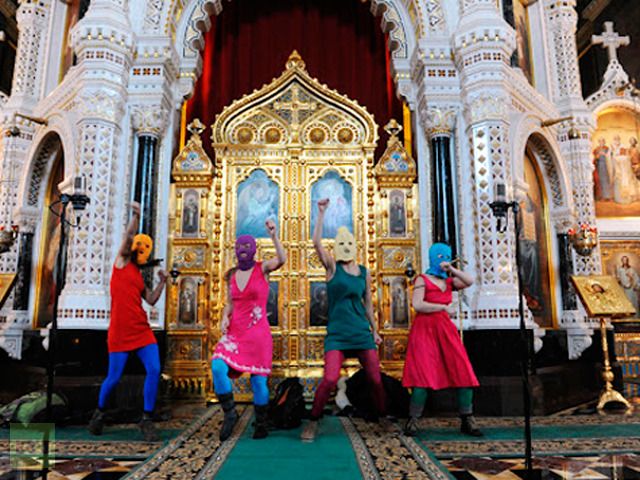
 The slogan “Free Pussy Riot!” is being shouted around the world — and was even seen on Madonna’s back — ever since the Russian government arrested three members of punk collective Pussy Riot after they staged an anarchic performance of less than one minute of “Mother Mary, Banish Putin!” at Christ the Savior Cathedral in Moscow on February 21, 2012. British documentary producer Mike Lerner and Russian filmmaker Maxim Pozdorovkin follow the sensationalistic trial of Pussy Riot leaders Maria “Masha” Alyokhina, Nadezhda “Nadia” Tolokonnikova, and Yekaterina “Katia” Samutsevich as they each face years in prison for social misconduct and antireligious behavior for what some consider a sacrilegious crime and others view as freedom of speech. The three women do a lot of eye rolling and smiling in court as they are enclosed in a glass booth, proud and unashamed of what they did, continuing to make their points about the separation between church and state, feminism, freedom, and the seemingly unlimited power of Vladimir Putin. Lerner and Pozdorovkin speak with Masha’s mother and Nadia’s and Katia’s fathers, all of whom fully support their daughters’ beliefs and discuss what their children were like growing up. Meanwhile, other members of Pussy Riot and men and women across the globe take to the streets and airwaves to try to help free the incarcerated trio, who are responsible for such songs as “Kill the Sexist,” “Death to Prison, Freedom to Protests,” and “Putin Lights Up the Fires.” Pussy Riot: A Punk Prayer is screening December 20-21 as part the Film Society of Lincoln Center series “For Your Consideration: Documentary Oscar Hopefuls,” which runs December 20-26 and consists of all fifteen nonfiction features that have made the Academy Awards short-list, including Cutie and the Boxer, Dirty Wars, Stories We Tell, Blackfish, and 20 Feet from Stardom. The festival will be followed December 27 – January 2 by “For Your Consideration: Foreign Oscar Hopefuls,” comprising such international fare as Wong Kar-wai’s The Grandmaster, Thomas Vinterberg’s The Hunt, Kleber Mendonça Filho’s Neighboring Sounds, and Haifaa Al Mansour’s Wadjda.