
Brazilian Oscar hopeful NEIGHBORING SOUNDS examines changing community in changing times
NEIGHBORING SOUNDS (O SOM AO REDOR) (Kleber Mendonça Filho, 2011)
Solomon R. Guggenheim Museum
1071 Fifth Ave. at 89th St.
Friday, December 27, free with museum admission of $22, 3:00
212-423-3587
www.cinemaguild.com
www.guggenheim.org
 Inspired by actual events that took place in his hometown of Recife, Brazil, Kleber Mendonça Filho’s Neighboring Sounds is an engaging slice-of-life examination of class differences and a community in the midst of social and economic change. When Clodoaldo (Irandhir Santos) and Fernando (Nivaldo Nascimento) go door-to-door offering their services as overnight security guards protecting the street, only Francisco (W. J. Solha), an aging, wealthy sugar baron who owns much of the surrounding property, and his grandson João (Gustavo Jahn) refuse to participate in the shady proposal, but Francisco insists that they keep their hands off another of his grandsons, Dinho (Yuri Holanda), who is responsible for a spate of car-stereo robberies. This suburban neighborhood, ever more in the architectural shadow of bigger high rises going up all around them, is filled with little secrets and minor resentments. A mechanic keys an expensive car when the owner is rude to him. Clodoaldo and a maid (Clébia Souza) make use of a fancy gated house he is taking care of while the owners are away. Sisters fight over the size of a flat-screen television. And a co-op board wants to fire their longtime night watchman without a severance package because he has taken to napping on the job. Meanwhile, João, who has two children by the daughter of the family’s maid, has started a relationship with the more acceptable Sofia (Irma Brown), but the privileged João still lives in the past; when he shows an apartment in one of Francisco’s condos, he points out what would be the maid’s room, assuming everyone can afford domestic help. And Bia (Meve Jinkings) finds a different kind of domestic help, buying large quantities of pot from the water guy, finding unique ways to deal with her neighbor’s howling dog, and using household appliances to pleasure herself. A film critic who has previously made documentaries, Filho, who wrote, directed, and coedited (with João Maria) Neighboring Sounds, has populated his debut full-length feature with believable characters caught up in realistic situations, along with just the right dose of black comedy. The film was shot with natural sound at a relaxed pace, inviting viewers into this intriguing fictional tale filled with real-world implications, involving a decaying past and modern issues of safety and surveillance. While João might be the moral conscious of the story, it is Jinkings’s Bia who steals this small gem of a film, her unique methods of daily survival a joy to behold. Neighboring Sounds is screening December 27 at 3:00 as part of the Guggenheim Museum program “Cinematic Sites” and will be introduced at 2:45 by series organizer Paul Dallas; the screening is being held in conjunction with the exhibition “Participatory City: 100 Urban Trends from the BMW Guggenheim Lab,” which continues through January 5, when Wu Tsang’s Wildness will be shown. You can also catch the film on December 31 at 5:15 and January 1 at 8:30 at the Elinor Bunin Munroe Film Center as part of the Film Society of Lincoln Center series “For Your Consideration: Foreign Oscar Hopefuls.”

 In the summer of 2005, four navy SEALs went deep into the mountains of Afghanistan to assassinate a Taliban leader responsible for the recent death of twenty marines. Writer-director Peter Berg tells the story of Operation Red Wings and the remarkably brave quartet in Lone Survivor, an ultraviolent action thriller that very well could be used as a training and propaganda film for the next generation of super-soldiers. Close-knit navy SEALs Marcus Luttrell (Mark Wahlberg), Michael P. Murphy (Taylor Kitsch), Danny Dietz (Emile Hirsch), and Matthew Axelson (Ben Foster) are lying in wait for Ahmad Shah (Yousuf Azami) when they are discovered by a trio of goatherders. Forced to decide between letting the possibly innocent men go or killing them so the mission can continue, they choose the former and start to leave the area, but they soon find themselves in the midst of a bloody firefight, one of the most brutal ever depicted on film. Ultimately, only one of them is left, and Lt. Commander Erik S. Kristensen (Eric Bana) and the rest of the team are ready to go in and try to bring him home alive. Berg, who made the exciting Saudi Arabia-set al-Qaeda thriller
 Hong Kong Second Wave grandmaster filmmaker Wong Kar Wai once again chooses style over substance in his latest work, the visually sumptuous but ultimately confusing martial arts drama The Grandmaster. Wong regular Tony Leung Chiu-Wai (Days of Being Wild, Ashes of Time, In the Mood for Love) stars as Ip Man, the real-life Wing Chun master who eventually taught such students as Bruce Lee. The film follows Ip Man from his early days in Foshan, where he is chosen to defend the south against the more famous masters of the north, through the Second Sino-Japanese War and his move to Hong Kong. Along the way there are gorgeously filmed fight scenes (shot by cinematographer Philippe Le Sourd and choreographed by Yuen Woo-ping) involving “The Razor” Yixiantian (Chang Chen), Ma San (Zhang Jin), and, most intimately, Gong Er (Zhang Ziyi), daughter of retired master Gong Yutian (Wang Qingxiang), as challengers to Ip Man display their martial arts disciplines in attempts to defeat Wing Chun. An early battle in the rain is particularly breathtaking, bathed in alluring silver tones. But the screenplay, written by Wong with Zou Jingzhi and Xu Haofeng, never really delves deep enough into Ip Man’s character, giving especially short shrift to his relationship with his wife, Cheung Wing-sing (Song Hye-kyo), and children.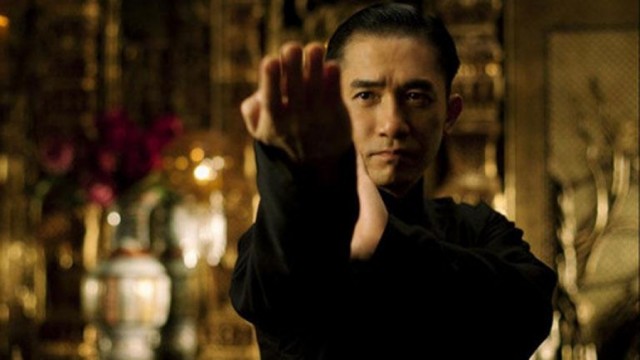



 Gabriela Cowperthwaite’s Blackfish is a deeply disturbing, immensely heartbreaking, and intensely maddening documentary that looks into the deaths of several orca trainers killed by Tillikum, a six-ton killer whale who has been performing in captivity for a quarter of a century, at such locations as Sealand in San Diego and SeaWorld in Orlando. Inspired by Tim Zimmerman’s