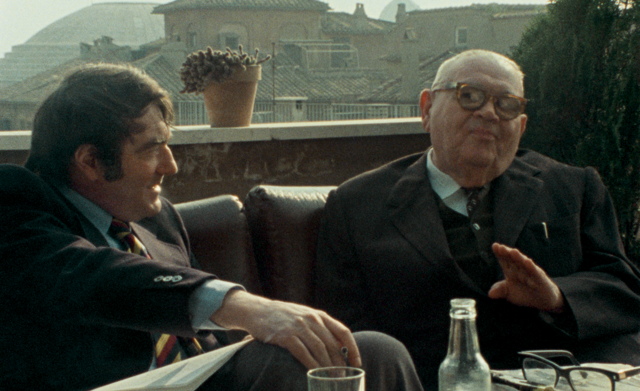
Claude Lanzmann and Benjamin Murmelstein discuss the Holocaust in revealing documentary
THE LAST OF THE UNJUST (LE DERNIER DES INJUSTES) (Claude Lanzmann, 2013)
Lincoln Plaza Cinema
1886 Broadway at 63rd St.
Opens Friday, February 7
212-757-2280
www.lincolnplazacinema.com
www.cohenmedia.net
 For forty years, French filmmaker Claude Lanzmann has been documenting the Holocaust and the birth of the state of Israel in such provocative and powerful films as Israel, Why; Sobibor, October 14, 1943, 4 P.M.; and his nine-and-a-half-hour masterpiece, Shoah. In 1997, he made A Visitor from the Living, built around a 1979 interview with International Red Cross worker Maurice Rossel, who led a delegation inspecting the Nazis’ so-called “model ghetto” of Theresienstadt, which turned out to be a glorified concentration camp. Lanzmann returns to the Czech camp in The Last of the Unjust, an utterly fascinating 218-minute documentary consisting of a series of interviews he conducted in Rome in 1975 with Rabbi Benjamin Murmelstein, the only Jewish Elder to survive the Holocaust. For years, Murmelstein, who was appointed directly by and reported to Obersturmbannführer Adolph Eichmann, has been declared a Nazi collaborator, by writer Hannah Arendt and many others, even being arrested, imprisoned, and tried by Czech authorities. But in The Last of the Unjust, he paints a vivid portrait of everyday life in Theresienstadt, claiming he was not a collaborator but instead was doing whatever he could to improve conditions for the Jews there.
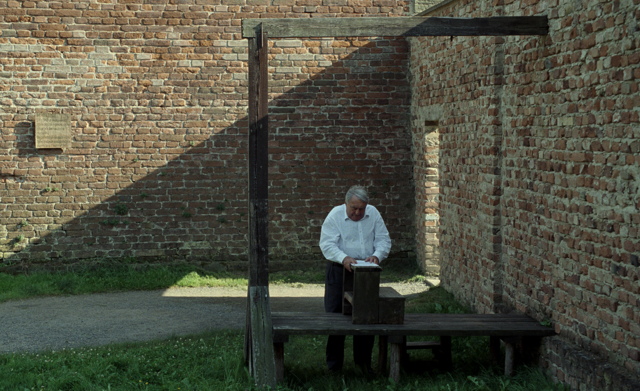
Claude Lanzmann visits Theresienstadt in film about the model ghetto’s last Jewish Elder
He poignantly describes not knowing about gas chambers and trains to Auschwitz and proudly defends his actions, referring to himself as the “last of the unjust.” Murmelstein has a spectacular memory, vividly recalling specific moments, answering all of Lanzmann’s questions with a bold honesty and correcting long-held misbeliefs concerning Theresienstadt. A cool, cigarette-smoking Lanzmann is seen in the old interviews and he also appears in new footage shot as he visits the camp and other relevant locations, geographically linking the past and the present. Between Murmelstein’s amazing storytelling ability and Lanzmann’s sharing of his personal perspective, the film never gets boring or repetitive over the course of its three-and-a-half-hour length. In the written introduction, Lanzmann states, “It took me a long time to come to the realization that I didn’t have the right to keep this to myself.” He has indeed done a great service by not keeping this to himself, making yet another poignant document of the Holocaust as seen through the eyes of a unique and thoroughly intriguing witness.
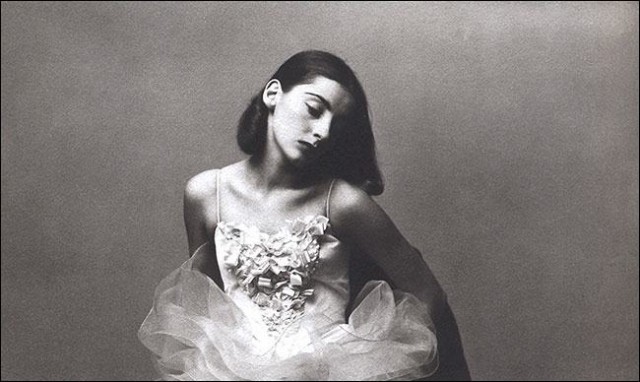
 “Tanny’s body created inspiration for choreographers,” one of the interviewees says in Nancy Buirski’s documentary Afternoon of a Faun: Tanaquil Le Clercq. “They could do things that they hadn’t seen before.” The American Masters presentation examines the life and career of prima ballerina Tanaquil Le Clercq, affectionately known as Tanny, who took the dance world by storm in the 1940s and ’50s before tragically being struck down by polio in 1956 at the age of twenty-seven. Le Clercq served as muse to both Jerome Robbins, who made Afternoon of a Faun for her, and George Balanchine, who created such seminal works as Western Symphony, La Valse, and Symphony in C for Le Clercq — and married Tanny in 1952. In the documentary, Buirski (

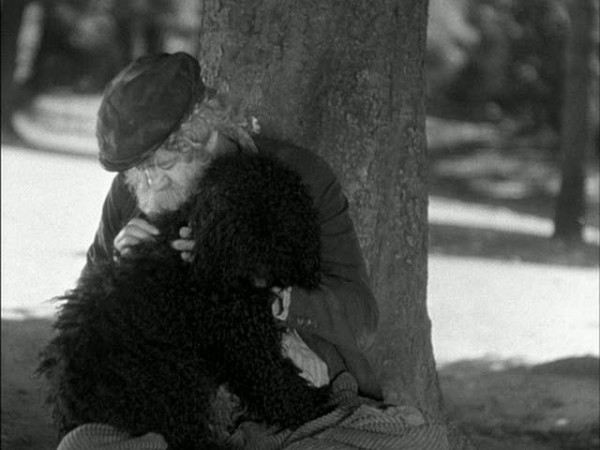
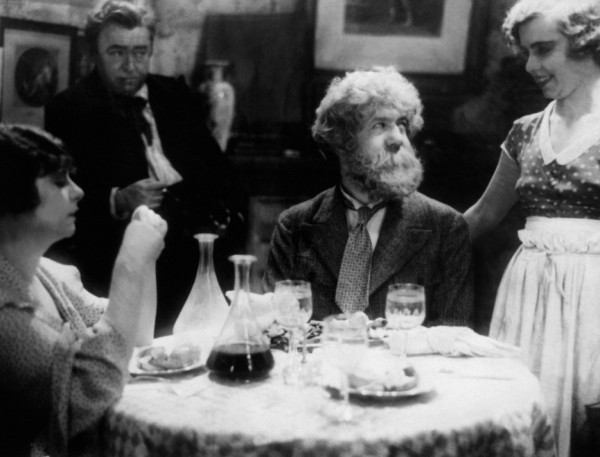
 After his dog runs away, a homeless tramp jumps into the Seine, only to be rescued by a bookseller who brings him home to stay with his family in Jean Renoir’s 1932 masterpiece, Boudu Saved from Drowning. Adapted by Renoir from René Fauchois’s play — the brief opening scene takes place onstage, announcing that what is to follow is essentially a fable — the depression-era social satire centers on the relationship between the wacky, unpredictable bum, Priapus Boudu (Michel Simon, who also played the lead in the play), and Edouard Lestingois (Charles Granval), a bourgeois bookstore owner cheating on his wife, Emma (Marcelle Hainia), with one of their maids, Anne-Marie (Sévérine Lerczinska). Lestingois first spots Boudu while looking through his telescope at the masses on the Pont des Arts, like a filmmaker shooting a documentary; “I’ve never seen such a perfect tramp!” he declares. (Indeed, Renoir regularly comments on the art of filmmaking in Boudu, especially with his use of music, nearly all of which is eventually revealed to be coming from natural sources.) Lestingois helps save the suicidal Boudu, nursing him quickly back to health and letting him stay at the house, much to the chagrin of his wife. Rather than being thankful, Boudu is a whirling dervish of ill manners, breaking dishes, using fancy lingerie to shine his shoes, and daring to eat sardines with his hands. Despite Boudu’s rudeness, Edouard, Emma, and Ann-Marie are all drawn to him in different ways, particularly Edouard, who dresses Boudu in his clothes as if he were a kind of doppelgänger, an alternate version with a completely different set of expectations and responsibilities. But there’s no controlling the bushy-haired Boudu, who reacts to all stimuli like a child who does whatever he wants, not caring about the consequences. One of the keys to the film is that very barrier, the question as to whether Boudu is a conniving tramp who knows exactly what he’s doing or just a pitiable poor soul with no self-control. Boudu — and, therefore, Simon, who gives a towering, spectacular performance, one of the greatest of early cinema — is part Charlie Chaplin, part Buster Keaton, part Little Rascal, and the influence of the character extends to Denis Lavant’s underground creature in Léos Carax’s Merde short in the Tokyo! omnibus and Eddie Murphy’s Billy Ray Valentine in John Landis’s Trading Places. (The film has also been remade twice; Paul Mazursky’s Down and Out in Beverly Hills stars Nick Nolte as the tramp, while Gérard Depardieu plays the role in Gérard Jugnot’s 2005 Boudu.)