
The illegal interracial marriage of Mildred and Richard Jeter and their fight for justice is at center of powerful documentary
THE LOVING STORY (Nancy Buirski, 2011)
Maysles Cinema
343 Malcolm X Blvd. between 127th & 128th Sts.
Friday, February 14, $10 suggested donation, 7:30
212-582-6050
www.mayslesinstitute.org
www.lovingfilm.com
 On June 2, 1958, Richard Loving and Mildred Jeter got married in Washington, DC. Shortly after returning to their Virginia home, Loving, a white man, and Jeter, a black and Native American woman, were arrested and imprisoned by the local sheriff, facing prison sentences because interracial marriage was illegal in their home state. Banished from Virginia, they spent nine years fighting in the courts, and their remarkable tale is now being told in the 2012 Oscar shortlisted documentary The Loving Story. First-time director Nancy Buirski, who founded the Full Frame Documentary Film Festival, and editor Elisabeth Haviland James weave together never-before-seen archival footage shot by photojournalist Grey Villet, old news reports and interviews, and family home movies with new interviews with the Loving children and lawyers Bernard S. Cohen and Philip J. Hirschkop, who were ready to take the case to the U.S. Supreme Court if necessary. One of the many fascinating aspects of the film is that Richard and Mildred had no desire to be trailblazers fighting miscegenation laws; they were just a man and a woman who had fallen in love at first sight and wanted to live happily ever after, in a community that fully accepted their situation. They of course have the perfect last name, because The Loving Story is a story of love and romance as much as it is about an outdated legal system, bigotry, and white supremacy. And it is more relevant than ever, with the issue of same-sex marriage dividing much of the nation. Told in a procedural, chronological format, The Loving Story is also absolutely infuriating, since this all happened not very long ago at all, with many of the protagonists and antagonists still alive — and race still being such a central issue in America. An HBO production, The Loving Story is having a special Valentine’s Day screening at the Maysles Cinema. (Buirski’s second film, Afternoon of a Faun: Tanaquil Le Clercq, is playing at Lincoln Center through February 13.)

 Based on Andrew Lau and Alan Mak’s awesome Infernal Affairs (2002), Martin Scorsese’s relatively faithful remake, The Departed, moves the relentless action and intrigue from Hong Kong to the mean streets of Boston, where it is hard to tell cop from criminal. Just out of the academy, Colin Sullivan (Matt Damon) rises quickly to detective in the Special Investigations Unit, but he’s actually in cahoots with master crime lord Frank Costello (Jack Nicholson). Meanwhile, Billy Costigan (an excellent Leonardo DiCaprio), training to become a cop, is sent deep undercover (including a prison stint) to infiltrate Costello’s gang, with only Captain Queenan (Martin Sheen) and Sergeant Dignam (a very funny and foul-mouthed Mark Wahlberg) aware of the secret mission. Sullivan and Costigan are like opposite sides of the same persona; in between them stands Costello — and Madolyn (Vera Farmiga), a psychiatrist who is in a relationship with one and is doctor to the other. As both the cops and the criminals search desperately for their respective rats, no one can trust each other, leading to lots of blood and a spectacular finale. Nicholson has a field day as the aging gangster, chewing up mounds of scenery in his first film with Scorsese, who returned to peak form with his best work since 1990’s Goodfellas. The film was nominated for five Oscars, winning four, for Best Director, Best Film Editing (Thelma Schoonmaker), Best Adapted Screenplay (William Monahan), and Best Picture, while Wahlberg was nominated for Best Supporting Actor.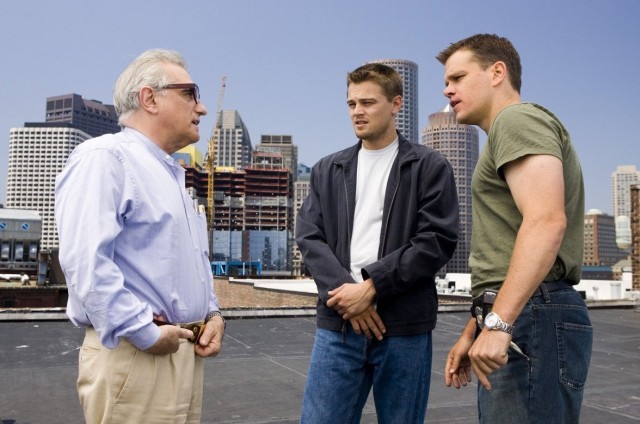
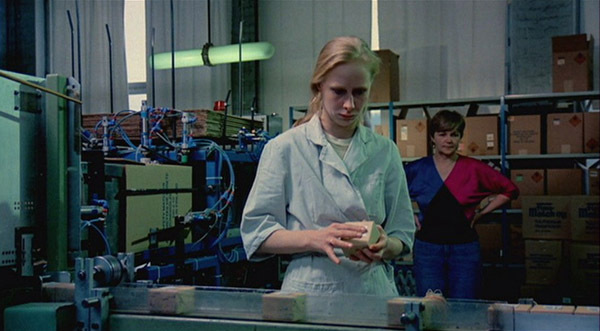
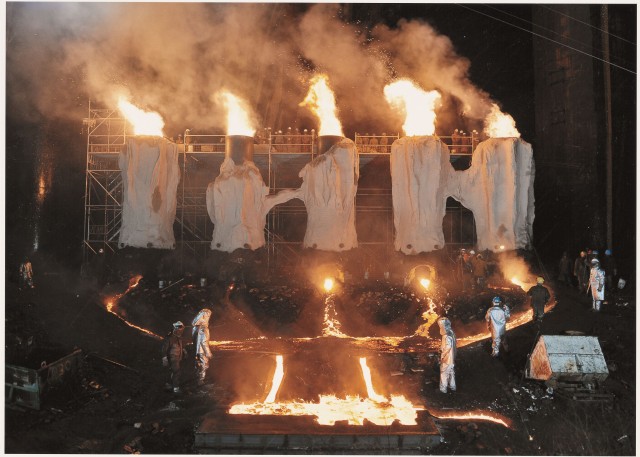


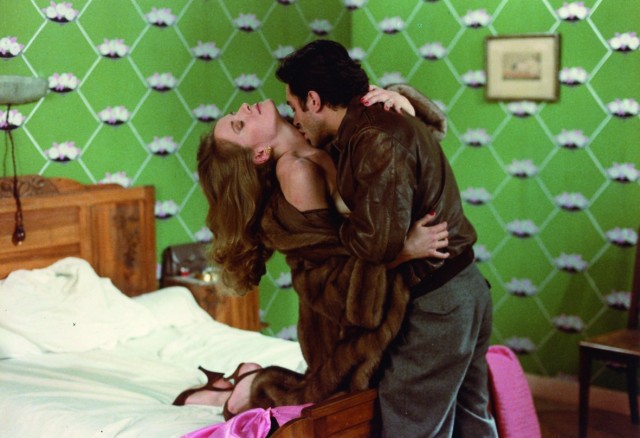
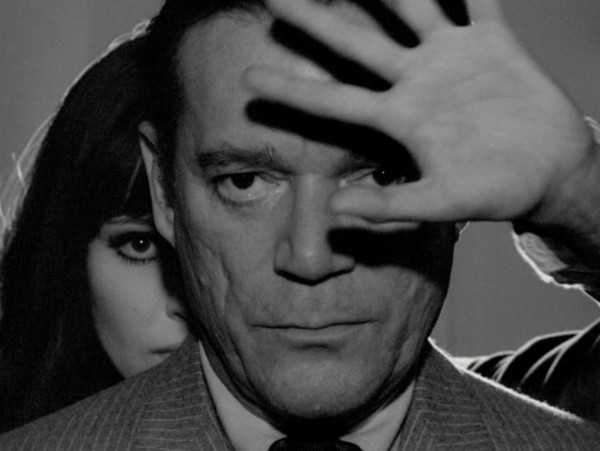
 “Sometimes, reality is too complex for oral communication. But legend embodies it in a form which enables it to spread all over the world,” a growly, disembodied, mechanical-like voice says at the beginning of Jean-Luc Godard’s futuristic sci-fi noir thriller, Alphaville: Une étrange aventure de Lemmy Caution. Godard’s 1965 black-and-white masterpiece takes place in an unidentified time period in a dark, unadorned, special-effects-free Paris. A tough-as-nails man in hat and trench coat named Lemmy Caution (Eddie Constantine) has arrived in Alphaville from the Outlands, claiming to be journalist Ivan Johnson, on assignment from the Figaro-Pravda newspaper. But his real mission is to first find fellow agent Henry Dickson (Akim Tamiroff), then capture or kill Alphaville leader and death-ray inventor Professor Vonbraun (Howard Vernon), the former Leonard Nosferatu. A Guadalcanal veteran who drives a Ford Galaxie, Caution — a character Constantine played in a series of films based on the novels of Peter Cheyney, including This Man Is Dangerous, Dames Get Along, and Your Turn, Darling — is a no-nonsense guy who takes nothing for granted. “All things weird are normal in this whore of cities,” he tells a blond seductress third class, who apparently comes with his hotel room. Documenting everything he sees with an Instamatic flash camera, Caution (perhaps a stand-in for Godard himself?) is soon visited by Natasha Vonbraun (Anna Karina), the professor’s daughter, setting off on an Orwellian journey through a grim city where poetry and emotion, and such words as “love,” “why,” and “conscience,” are banned in favor of “because” and “Silence. Logic. Security. Prudence,” where the hotel Bible is actually an ever-changing dictionary and enemies of the state are killed in swimming pools and pulled out by clones of Esther Williams, all overseen by a computer known as Alpha 60 (whose text, based on writings by Jorge Luis Borges, is eerily spoken by a man without a larynx, using a mechanized voice box).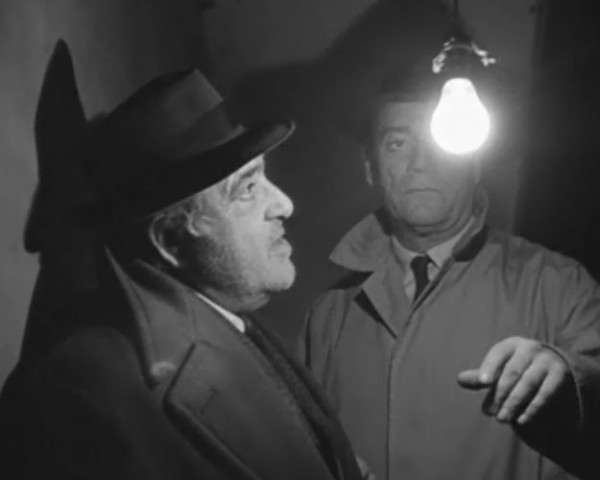

 After screening at more than seventy-five international film festivals over the past two years, Juan Carlos Maneglia and Tana Schémbori’s Paraguayan thriller, 7 Boxes, is getting its official U.S. theatrical release February 7, opening at Cinema Village. The low-budget film, which was made for about half a million dollars and broke box-office records in its native country, is set in and around Municipal Market No. 4 in Paraguay’s capital city, Asunción, where seventeen-year-old Victor (Celso Sebastián Franco Ferreira) pushes a rickety wheelbarrow, helping people with their purchases, sometimes accompanied by his friend Liz (Lali González). Always on the lookout to make a quick buck in order to afford a cell phone and a television, Victor gets a call from Gus (Roberto Cardozo), asking him to make an important delivery because Gus’s usual accomplice, Nelson (Víctor Sosa Traverzi), cannot be reached and it’s an emergency. So Victor jumps at the opportunity, not caring what’s in the boxes even though he knows something shady’s going on, instead simply taking half of a hundred-dollar bill, the second half of which will be given to him upon completion of his task. But it’s not going to be very easy, because when Nelson finds out about it, he is determined to do whatever it takes to steal the deal for himself. Meanwhile, Victor’s sister, Tamara (Nelly Dávalos), is concerned not only about the trouble her younger brother might be in but also about her pregnant coworker, Leti (Katia García), who is getting no help from the father, Gus, who is more worried about what his bosses, the comic-relief duo of Don Dario (Paletita) and Luis (Nico García), are going to do to him when they learn how nothing has gone quite as planned. Maneglia and Schémbori’s debut feature, following a long career in shorts and television, has its moments, but there are far too many head-scratching plot holes, red herrings, inconsistencies, and hard-to-believe twists that detract from the film’s energy, which works best when it focuses on Victor and his desire to better his station, through technology. While Victor is a sympathetic character, played with a wide-eyed innocence by Franco, his nemesis, Nelson, is a lost cause from the start, desperate to make money to buy medicine for his sick child but never really having a moral center. Still, it’s an admirable achievement coming from a country that has produced so few full-length films. Maneglia and Schémbori will be at Cinema Village for Q&As after the 7:10 screenings on February 7 & 8.