this week in film and television

VENGEANCE IS HERS: MS. 45

MS. 45

A mute rape victim (Zoë Tamerlis Lund) seeks revenge DEATH WISH-style in Abel Ferrara’s MS. 45

MS. 45 (Abel Ferrara, 1981)
BAMcinématek, BAM Rose Cinemas
30 Lafayette Ave. between Ashland Pl. & St. Felix St.
February 7-9
Series runs through February 18
718-636-4100
www.bam.org
www.drafthousefilms.com

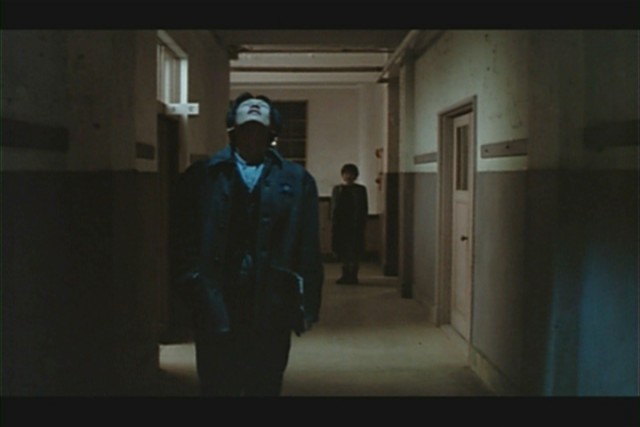
Abel Ferrara’s third film, following the 1976 pornographic 9 Lives of a Wet Pussy Cat and the 1979 gorefest The Driller Killer, is a low-budget grindhouse female revenge fantasy set on the gritty streets of New York City. In Ms. 45 (also known as Angel of Vengeance), Zoë Tamerlis Lund makes her screen debut as Thana, a mute woman working as a seamstress in the Garment District. After being raped twice in one day on separate occasions, she soon goes all Death Wish / Taxi Driver on men seeking a little more from women. Thana — named after Freud’s death instinct, Thanatos, the opposite of the sex instinct, Eros — grabs herself a .45 and quickly proves she is one helluva shot as she goes out in search of potential victims in Chinatown, Central Park, and the very place where Woody Allen and Diane Keaton sat on a bench, romantically looking out at the Queensboro Bridge in an iconic moment from Manhattan. Ferrara, who plays the masked rapist, captures the nightmarish feel of the city at the time, where danger could be lurking around any corner, with the help of James Lemmo’s lurid, pornlike cinematography and Joe Delia’s jazz-disco soundtrack. Lund would go on to cowrite Ferrara’s Bad Lieutenant, in which she plays a junkie named Zoë, before drugs killed her in 1999 at the age of thirty-seven. A cult classic that keeps getting better with age, Ms. 45 is screening in a new digital projection February 7-9 as part of the BAMcinématek series “Vengeance Is Hers,” twelve days of films featuring fabulous woman protagonists and antagonists, including Sissy Spacek in Carrie, Sandrine Bonnaire in Secret Defense, Olivia de Havilland in The Heiress, Lily Ho and Betty Pei Ti Ting in Intimate Confessions of a Chinese Courtesan, and Pam Grier in Coffy.

AFTERNOON OF A FAUN: TANAQUIL LE CLERCQ

Tanaquil le Clercq

The tragic career of dancer Tanaquil Le Clercq is examined in documentary about Balanchine and Robbins muse

AFTERNOON OF A FAUN: TANAQUIL LE CLERCQ (Nancy Buirski, 2013)
Film Society of Lincoln Center, Elinor Bunin Munroe Film Center
144 West 65th St. between Broadway & Amsterdam Ave.
February 5-13
212-875-5601
www.filmlinc.com
www.facebook.com/tannyfilm

“Tanny’s body created inspiration for choreographers,” one of the interviewees says in Nancy Buirski’s documentary Afternoon of a Faun: Tanaquil Le Clercq. “They could do things that they hadn’t seen before.” The American Masters presentation examines the life and career of prima ballerina Tanaquil Le Clercq, affectionately known as Tanny, who took the dance world by storm in the 1940s and ’50s before tragically being struck down by polio in 1956 at the age of twenty-seven. Le Clercq served as muse to both Jerome Robbins, who made Afternoon of a Faun for her, and George Balanchine, who created such seminal works as Western Symphony, La Valse, and Symphony in C for Le Clercq — and married Tanny in 1952. In the documentary, Buirski (The Loving Story) speaks with Arthur Mitchell and Jacques D’Amboise, who both danced with Le Clercq, her childhood friend Pat McBride Lousada, and Barbara Horgan, Balanchine’s longtime assistant, while also including an old interview with Robbins, who deeply loved Le Clercq as well. The film features spectacular, rarely seen archival footage of Le Clercq performing many of the New York City Ballet’s classic works, both onstage and even on The Red Skelton Show. The name Tanaquil relates to the word “omen” — in history, Tanaquil, the wife of the fifth king of Rome, was somewhat of a prophetess who believed in omens — and the film details several shocking omens surrounding her contracting polio. The film would benefit from sharing more information about Le Clercq’s life post-1957 — she died on New Year’s Eve in 2000 at the age of seventy-one — but Afternoon of a Faun is still a lovely, compassionate, and heartbreaking look at a one-of-a-kind performer. A selection of the 2013 New York Film Festival, Afternoon of a Faun returns to the Film Society of Lincoln Center for its official theatrical release February 5-13, with Q&As following the 6:45 screenings on February 5 with D’Amboise and former Alliance of the Arts president Randall Bourscheidt, moderated by producer Ric Burns, on February 7 with Mitchell and Bourscheidt, and on February 8 with Mitchell.

THE LADY FROM SHANGHAI

Orson Welles

Orson Welles and Rita Hayworth get caught up in romantic intrigue in THE LADY FROM SHANGHAI

THE LADY FROM SHANGHAI (Orson Welles, 1948)
Film Forum
209 West Houston St.
Through Thursday, February 6
212-727-8110
www.filmforum.org

Orson Welles followed up the creepy black-and-white Holocaust thriller, The Stranger, with this colorful, in-your-face noir about a rogue Irish sea captain and the gorgeous wife of a crippled rich man. Welles plays the shifty seaman, Michael O’Hara, with an in-and-out Irish accent; his estranged wife, Rita Hayworth, is simply breathtaking as the femme fatale, Elsa “Rosalie” Bannister; Everett Sloane is terrifically annoying as Elsa’s husband, wealthy lawyer Arthur Bannister; and Glenn Anders shows off one of the great all-time voices as Grisby, Bannister’s unsuspecting partner. Like The Stranger, the film suffers from awkward moments — Welles famously fought with studio head Harry Cohn over the editing and various stylistic touches — but even as minor Welles it’s an awful lot of fun. Columbia wanted Welles to make sure to show off Hayworth’s beauty, which was recently on display in such hits as Gilda and Cover Girl, so he goes way overboard, changing her hair color and zooming in far too close far too often. Based on Sherwood King’s novel If I Die Before I Wake, The Lady from Shanghai is a wicked tale of crime and corruption, lust and revenge. “Talk of money and murder,” O’Hara says at one point. “I must be insane, or else all these people are lunatics.” In another scene, Elsa says to him, “I’m not what you think I am. I just try to be like that.” The film is worth seeing for the spectacular ending alone, which takes place in a funhouse hall of mirrors. A new digital restoration of The Lady from Shanghai continues through February 6 at Film Forum, screening with Greg Ford and Mark Kausler’s 2004 cell-animated cartoon short, It’s the Cat.

NYC FABMANIA WEEK

fabmania

On February 7, 1964, John Lennon, Paul McCartney, George Harrison, and Ringo Starr landed at JFK to a wild welcome as they came to America for the first time to appear on The Ed Sullivan Show. New York City is paying tribute to that seminal moment in the history of the Fab Four with Fabmania Week, featuring a host of special events celebrating this golden anniversary. The centerpiece of it all is the fortieth anniversary of the Fest for Beatles Fans, taking place February 7-9 at the Grand Hyatt in Midtown ($32.50-$225). Among the many guests are Cousin Brucie (broadcasting live), Donovan, Billy J. Kramer, Peter Asher, Chad & Jeremy, Freda Kelly, Bob Guren, and Allan Tannenbaum; the Fest also features a re-creation of the Cavern Club, screenings of Ryan White’s Good Ol’ Freda, a marketplace of memorabilia, look-alike and costume contests, and yoga sessions in an ashram, in addition to book signings, art exhibitions, and other tributes. On February 6, Donovan, Asher, Kramer, Kelly, Vince Calandra, and moderator Martin Lewis will take part in the friends-of-the-Beatles panel discussion “It Was 50 Years Ago Today . . . Celebrating 50 Years of the Beatles in the USA” at the 92nd St. Y ($15-$29, 8:15). The Morrison Hotel Gallery exhibit “50th Anniversary of the Beatles’ First US Tour,” curated by Julian Lennon, opens on February 7 and runs through February 28, consisting of twenty-five images, some never before shown in public, of John, Paul, George, and Ringo taken by such photographers as Ken Regan, Charles Trainor, Curt Gunther, Robert Whitaker, Rowland Scherman, and Terry O’Neill.

Curt Gunther’s photograph of the Beatles playing with slot cars is included in Morrison Hotel Gallery exhibit curated by Julian Lennon (photo © Curt Gunther, 1964)

Curt Gunther’s photograph of the Beatles playing with slot cars is included in Morrison Hotel Gallery exhibit curated by Julian Lennon (photo © Curt Gunther, 1964)

The New York Public Library for the Performing Arts will be home to the multimedia exhibition “Ladies and Gentlemen . . . the Beatles!” from February 6 through May 10, examining the effects Beatlemania had on American pop culture during the mid-1960s, comprising interviews, instruments, posters, music, and an oral history booth where fans can share their own memories; there will also be a free symposium on February 9 in the library’s Bruno Walter Auditorium with presentations by Bruce Spizer (“The Beatles Are Coming! The Birth of Beatlemania in America”), Dennis Elsas (“It Was 50 Years Ago Today — The Beatles Invade America”), Chuck Gunderson (“Some Fun Tonight! The Backstage Story of the 1964 Summer North American Tour”), Allan Kozinn (“Studio Days / Touring Years”), and Russ Lease (“The Drop-T Logo and the Most Significant Drumkit in Popular Music History”), emceed by curator Robert Santelli. On February 8, the Town Hall will hold the “America Celebrates the Beatles’ 50th Anniversary All-Star Concert” ($63-$272, 7:30), with a wide-ranging lineup playing songs by and inspired by the Liverpudlian quartet, including Melissa Manchester, Tommy James, Al Jardine, Danny Aiello, Marshal Crenshaw, Larry Kirwin, Aztec Two-Step, Melanie, along with appearances by such Beatles fans as Dick Cavett, Len Berman, the Amazing Kreskin, and Charles Grodin. And on February 8 & 9 at 1:00, the Paley Center will present “The Beatles Invasion 50-Year Celebration: See the Fab Four on the Big Screen, Yeah, Yeah, Yeah,” with showings of the complete Ed Sullivan Show broadcast from February 9, 1964, and the Maysles brothers’ original What’s Happening! The Beatles in the U.S.A. documentary.

REMASTERED AND RESTORED — TREASURES OF FRENCH CINEMA: BOUDU SAVED FROM DROWNING

Jean Renoirs BOUDU SAVED FROM DROWNING is a very different kind of shaggy dog tale

Jean Renoir’s BOUDU SAVED FROM DROWNING is a very different kind of shaggy dog tale

CINÉSALON: BOUDU SAVED FROM DROWNING (BOUDU SAUVÉ DÉS EAUX) (Jean Renoir, 1932)
French Institute Alliance Française, Florence Gould Hall
55 East 59th St. between Madison & Park Aves.
Tuesday, February 4, $13, 4:00 & 7:30
212-355-6100
www.fiaf.org

After his dog runs away, a homeless tramp jumps into the Seine, only to be rescued by a bookseller who brings him home to stay with his family in Jean Renoir’s 1932 masterpiece, Boudu Saved from Drowning. Adapted by Renoir from René Fauchois’s play — the brief opening scene takes place onstage, announcing that what is to follow is essentially a fable — the depression-era social satire centers on the relationship between the wacky, unpredictable bum, Priapus Boudu (Michel Simon, who also played the lead in the play), and Edouard Lestingois (Charles Granval), a bourgeois bookstore owner cheating on his wife, Emma (Marcelle Hainia), with one of their maids, Anne-Marie (Sévérine Lerczinska). Lestingois first spots Boudu while looking through his telescope at the masses on the Pont des Arts, like a filmmaker shooting a documentary; “I’ve never seen such a perfect tramp!” he declares. (Indeed, Renoir regularly comments on the art of filmmaking in Boudu, especially with his use of music, nearly all of which is eventually revealed to be coming from natural sources.) Lestingois helps save the suicidal Boudu, nursing him quickly back to health and letting him stay at the house, much to the chagrin of his wife. Rather than being thankful, Boudu is a whirling dervish of ill manners, breaking dishes, using fancy lingerie to shine his shoes, and daring to eat sardines with his hands. Despite Boudu’s rudeness, Edouard, Emma, and Ann-Marie are all drawn to him in different ways, particularly Edouard, who dresses Boudu in his clothes as if he were a kind of doppelgänger, an alternate version with a completely different set of expectations and responsibilities. But there’s no controlling the bushy-haired Boudu, who reacts to all stimuli like a child who does whatever he wants, not caring about the consequences. One of the keys to the film is that very barrier, the question as to whether Boudu is a conniving tramp who knows exactly what he’s doing or just a pitiable poor soul with no self-control. Boudu — and, therefore, Simon, who gives a towering, spectacular performance, one of the greatest of early cinema — is part Charlie Chaplin, part Buster Keaton, part Little Rascal, and the influence of the character extends to Denis Lavant’s underground creature in Léos Carax’s Merde short in the Tokyo! omnibus and Eddie Murphy’s Billy Ray Valentine in John Landis’s Trading Places. (The film has also been remade twice; Paul Mazursky’s Down and Out in Beverly Hills stars Nick Nolte as the tramp, while Gérard Depardieu plays the role in Gérard Jugnot’s 2005 Boudu.)

BOUDU

Michel Simon gives one of the great performances of early cinema in Jean Renoir’s masterful social satire

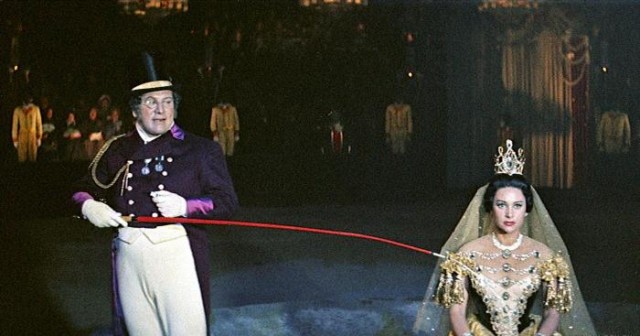
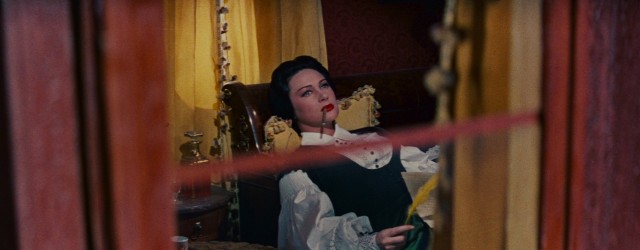
Renoir, who had previously worked with Simon on La Chienne and On purge bébé, frames each shot with careful precision, from squeezing in a large group trying to help the unconscious Boudu to a more open scene in which a fancifully dressed couple is picnicking in the park, reminiscent of an Impressionist painting, calling to mind, of course, Renoir’s father, Pierre-Auguste. Indeed, the younger Renoir sets apart his interiors from his exteriors in the film quite distinctly; indoors, Boudu feels closed in, unable to sleep in a bed, while outdoors he seems much more at home. At one point he rests off the ground in the doorway to the bookstore, neither inside nor out, caught in between the two worlds. But he ultimately makes his choice, and it’s really the only one available to him. A new digital restoration of Boudu Saved from Drowning is screening February 4 at 4:00 & 7:30 as part of the FIAF CinéSalon series “Remastered & Restored: Treasures of French Cinema”; the later screening will be introduced by screenwriter and director Henry Bean (Internal Affairs, The Believer), and both shows will be followed by a wine reception. The three-month festival continues with such other recently restored French classics as Max Ophüls’s Lola Montès (introduced by Lola Montes Schnabel), Jacques Demy’s Une chambre en ville (introduced by Adam Gopnik), and Claude Chabrol’s The Color of Lies (introduced by Jacques Gamblin).

12 O’CLOCK BOYS

Pug

Tough-talking teen Pug is determined to become a Twelve O’Clock Boy

12 O’CLOCK BOYS (Lotfy Nathan, 2013)
AMC Empire 25, 234 West 42nd St. between Seventh & Eighth Aves., 212-398-2597
Angelika Film Center, 18 West Houston St. at Mercer St., 212-995-2570
Opens Friday, January 31
www.12oclockboys.com

For twenty years, Baltimore has been defined by such television series as Homicide: Life on the Street, The Corner, and The Wire, shows filled with rampant violence and drugs. This past November, the U.S. Census Bureau released data showing that the poverty rate from 2010 to 2012 in the city of Baltimore was more than twenty-five percent. During that same period, debut filmmaker Lofty Nathan embedded himself with a group of teens and young twentysomethings who ride two- and four-wheel dirt bikes through the streets and parks of Charm City, popping vertical wheelies that point up at the sky. Nathan documents their activities in 12 O’Clock Boys, offering an inside look at this dangerous phenomenon (which has spread to other inner cities as well). “This is our tradition, our culture, this is what we do. Can’t nobody take it from us. This is our release,” one rider says as he puts on a mask. “Baltimore City Sunday: F@ck city council, f@ck the police. I pity them that try to stop us. This is our sh*t.” Indeed, the police are rarely far away, either in marked cars or helicopters, but they are limited in how they can chase the riders because of public safety concerns. Nathan focuses in on twelve-year-old Pug, a tough-talking, smart street kid who starts skipping school, instead dedicating his every waking moment to trying to become a Twelve O’Clock Boy. Meanwhile, there’s little his mother, Coco, a former exotic dancer raising five children on her own, seems to be able to do to stop him. It’s sad to see Pug make this choice, turning his back on education while declaring the police to be the enemy, but Nathan makes no moral judgments about him or any of the other boys and men who take part in this illegal activity, which seems to exist primarily to fight authority. He also doesn’t delve into the political, socioeconomic, and racial factors that have impacted the rise of such a scenario. Instead, he lets Pug, Superman, Shawn Sean, Wheelie Wayne, and Albert Lemon — a former copy now running a regional security outfit — speak for themselves. And it’s a scary story, one that, regardless of which side you’re on, can only have a tragic outcome if something isn’t done about it.

THALIA DOCS: THE GREAT FLOOD

THE GREAT FLOOD (Bill Morrison, 2011)
Symphony Space, Leonard Nimoy Thalia
2537 Broadway at 95th St.
Sunday, February 2 (3:00), 9 (8:00), 16 (8:00), $14
212-864-5400
www.symphonyspace.org
www.icarusfilms.com

Sound and image meld together beautifully in Bill Morrison’s meditative, elegiac The Great Flood. Inspired by John M. Barry’s 1997 book Rising Tide: The Great Mississippi Flood of 1927 and How It Changed America, Morrison teamed up with improvisational musician Bill Frisell on the project. The two had previously worked together on a pair of short works, The Mesmerist and The Film of Her, after meeting at the Village Vanguard when Morrison was a dishwasher at the jazz club where Frisell was playing. Morrison, who specializes in using deteriorated and degraded archival footage and experimental scores, scoured the National Archives, the Library of Congress, the Hoover Presidential Library, and other sources to come up with remarkable scenes of the flooding of the Mississippi in 1927. Divided into such chapters as “Sharecroppers,” “Swollen Tributaries,” “Evacuation,” “Aftermath,” and “Watershed,” with snippets of informational text but without narration, the film follows the southern blacks who were most affected by the massive flood, being forced to shore up the levees around white areas, losing their own homes, and ultimately heading north as part of the Great Migration, bringing the Delta blues with them. Guitarist Frisell, joined by Ron Miles on cornet, Tony Scherr on guitar and bass, and Kenny Wollesen on drums and vibes, has composed a gorgeous, moving score, heavily influenced by a trip his band and Morrison took in early 2011 up the Mississippi, with the group playing in multiple cities while the river threatened to flood again. Each chapter, from an overhead view of a computerized map that details the 1927 flood to a fast and furious foray through the Sears Roebuck catalog, from a Baptist church procession to a series of rare clips of such bluesmen as Big Bill Broonzy, Son House, Sonny Boy Williamson, and Robert Lockwood, features a different piece of music, highlighted by Frisell’s always inventive guitar and Miles’s deeply expressive horn. Of course, as the images pass by, it’s impossible not to think of Hurricanes Katrina and Sandy and be awed by the devastating power of nature, as well as realize how little has changed with regard to the reaction of politicians and who the victims tend to be. But the film is rarely mournful; instead, there’s often a celebratory quality about it, centered on people’s natural instinct to survive. Following its recent theatrical release at the IFC Center, The Great Flood is next scheduled to run February 2, 9, and 16 as part of the Symphony Space series Thalia Docs, with Morrison, who has also created such other unique cinematic experiences as Spark of Being, Decasia, and The Miners’ Hymns, on hand for a Q&A after the February 9 show.