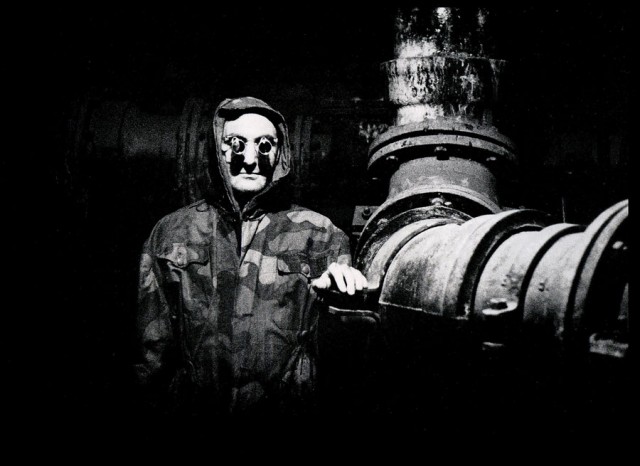
Chris Marker’s LA JETÉE is a postapocalyptic thriller about movies and memory, told almost exclusively through still images
LA JETÉE (Chris Marker, 1962) and CHAFED ELBOWS (Robert Downey Sr., 1966)
Anthology Film Archives
32 Second Ave. at Second St.
Friday, February 28, 7:30
Series runs February 28 – March 4
212-505-5181
www.anthologyfilmarchives.org
“Photography is truth,” Michel Subor tells Anna Karina in Jean-Luc Godard’s Le Petit Soldat, “and cinema is truth twenty-four times a second.” Anthology Film Archives explores the relationship between photography and cinema — films are called “movies” for a reason — in the new series “Motion(less) Pictures,” five days of films that make innovative use of still images in telling their stories. The festival begins February 28 at 7:30 with the inspired pairing of two wildly different low-budget, experimental works, Chris Marker’s La Jetée and Robert Downey Sr.’s Chafed Elbows. Marker’s nearly half-hour postapocalyptic dystopian thriller is set in a world that calls “past and future to the rescue of the present.” Told almost completely in dark, eerie black-and-white photographs — the camera moves only once, pulling back on the opening establishing shot of the titular pier at Paris’s Orly airport, and at another point a woman opens her eyes in bed — La Jetée explores time and memory as a WWIII survivor (Davos Hanich) in the underground Palais de Chaillot galleries revisits an event that occurred with a woman (Hélène Chatelain) on the jetty. The film, referred to in the credits as “un photo-roman,” is narrated by Jean Négroni, with the only dialogue occasional unintelligible whispering by the German scientists in charge of the mysterious operation; the soundtrack also includes lush music from Trevor Duncan and a repeated thumping that mimics heartbeats. The film explores both art as memory and memory as art as well as the cinema itself; Marker (Sans Soleil, Le joli mai) references Alfred Hitchcock’s Vertigo when the man and woman look at the rings of a Sequoia tree, while La Jetée has gone on to influence such films as Terry Gilliam’s 12 Monkeys, the Matrix trilogy, and countless other movies and videos. It’s a mesmerizing work that brings fresh insight upon each viewing.
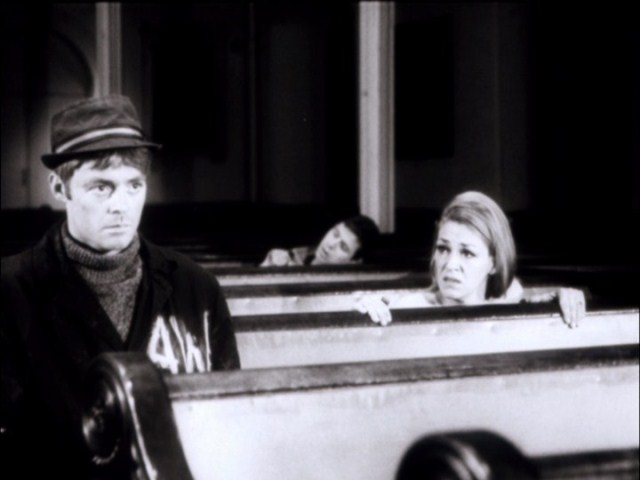
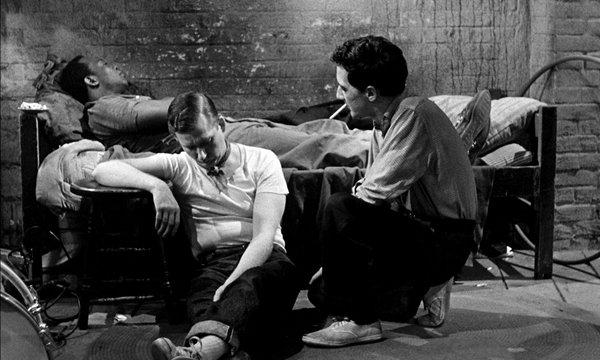
Walter Dinsmore (George Morgan) is harassed by a church sock sniffer (Elsie Downey) in Robert Downey Sr.’s hyperactive cinematic collage, CHAFED ELBOWS
“What’s the difference between fiction and nonfiction?” Dr. Oliver Sinfield (Lawrence Wolf), also known as Baldy, asks in Downey’s Chafed Elbows. “About a dollar,” his oddball patient, Walter Dinsmore (George Morgan), responds. Where La Jetée is enigmatic and foreboding, Chafed Elbows is crazy and hyperactive. The hour-long film, consisting of still images and live action that shifts between color and black-and-white in manic collages, follows the wacky adventures of Walter as he suffers through his annual November and January breakdowns in New York City. He has sex with his mother (Elsie Downey, Robert’s wife, who plays all the women in the movie), gives birth to money via a Caesarean through his hip, encounters a sock sniffer, shoots a cop, becomes an actor and a singer, and meets the Virgin Mary and St. Peter. Along the way, Downey (Putney Swope, Greaser’s Palace) takes on art, psychiatry, incest, race relations, sexual obsession, health care, the NYPD (which is thanked in the credits for being a “hindrance”), and the Hollywood system — the film is so low budget that he had it developed at a local drugstore. He also shares an inside joke when Walter stops by a theater that advertises Downey’s Sweet Smell of Sex, prints of which are now lost. Most of the film is dubbed extremely poorly (on purpose), with Wolf providing thirty-four voices, each one more playfully annoying than the last. And Downey is relentless in his skewering of clichés; when Dinsmore comes upon a man painting a white line down the middle of an alley street, the man says, “You gotta draw the line somewhere.” Like La Jetée, Chafed Elbows is also an examination of the past, present, and future of the art of cinema, pushing boundaries while refusing to draw any lines; they are seemingly two widely disparate works that strangely have more in common than one might think when seen together. “Motion(less) Pictures” continues through March 4 with screenings of films by Lynda Benglis, Peter Bo Rappmund, John Baldessari, Jean-Pierre Gorin and Godard, Hollis Frampton, Michael Snow, Morgan Fisher, and others.
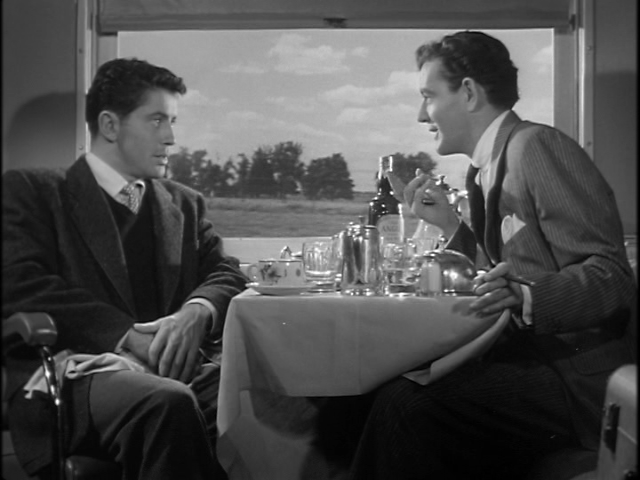
 Film Forum’s “The Complete Hitchcock” continues with one of Alfred Hitchcock’s most multilayered, complex tales, the 1951 psychological double-murder thriller Strangers on a Train. Shortly after introducing himself to amateur tennis star Guy Haines (Farley Granger) on a train, mama’s boy Bruno Anthony (an appropriately creepy Robert Walker) concocts a supposedly foolproof plan in which Bruno will kill Guy’s unfaithful wife, Miriam (Laura Elliott), so Guy can marry his socialite girlfriend, Anne Morton (Ruth Roman), one of the daughters of a U.S. senator (Leo G. Carroll). In return, Guy will kill Bruno’s father (Jonathan Hale). Bruno believes he has devised the perfect crisscross murder, with neither man having a clear motive and nothing for the cops to find to link them together. While Bruno is serious, Guy thinks he’s just a loon (Walker had in fact been recently released from a psychiatric clinic after suffering a nervous breakdown and died at the age of thirty-two before the film even opened), but after the psychopathic Bruno actually does kill Miriam — photographed in an unforgettable way by cinematographer Robert Burks, shown in a pair of broken eyeglasses — he starts shadowing Guy, insisting he keep his part of the bargain and kill Mr. Anthony, something Guy never intended on doing. Soon the cops are involved, along with a broken alibi, a key, and a critical cigarette lighter, leading to a spectacular conclusion on a merry-go-round.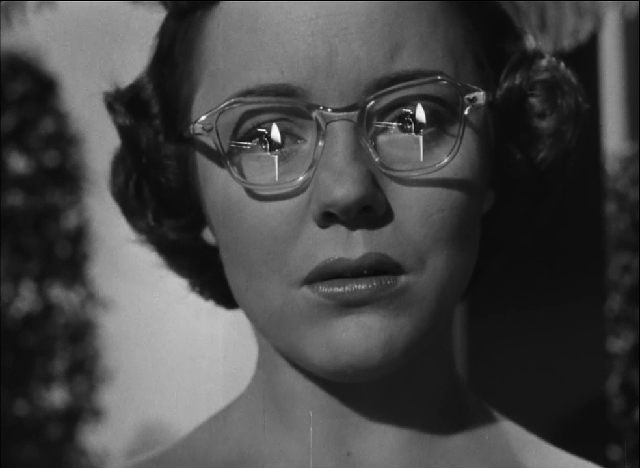
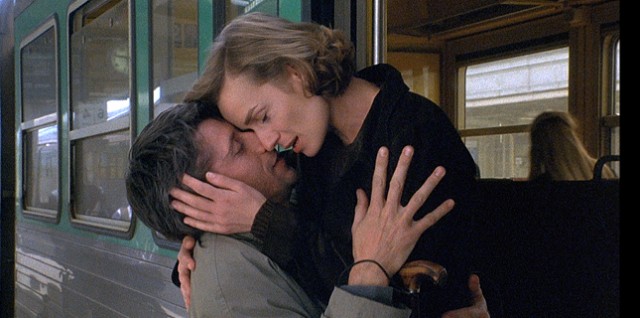
 “The mask reveals more than the face,” Germain-Roland Desmot (Antoine de Caunes) says in French New Wave auteur Claude Chabrol’s 1999 thriller A Color of Lies, which is actually an investigation into the concept of truth. In seaside Breton, a ten-year-old girl has been found in the woods, raped and murdered. New police inspector Lesage (Valeria Bruni Tedeschi) believes the culprit is painter and art teacher René Sterne (Jacques Gamblin), the last person known to see the girl alive, but he is staunchly defended by his caring wife, Vivianne (Sandrine Bonnaire), who is striking up a close friendship with Desmot, a self-obsessed local celebrity who writes books and appears on television shows. When a second death is linked to René, Lesage thinks she’s got her man, but the truth is not so easy to uncover in this ever-more complex mélange. Cowritten by Chabrol (Les Cousins, Les Biches) and Odile Barski and shot in an ominous 1970s atmosphere by Eduardo Serra (The Girl with a Pearl Earring, Blood Diamond) that explodes with bursts of deep blues and reds, The Color of Lies is a dark mystery about love, art, obsession, and truth, centered by Bonnaire’s (Vagabond, Monsieur Hire) radiant performance as a dedicated woman facing a critical moment of doubt. Gamblin (Laissez-passer) is effective as René, a cynical, unpredictable man who walks with a cane; on the surface, it is easy to assume he is guilty of anything anyone accuses him of, but his wife’s love adds sympathy and hope that he is not the murderer. The Color of Lies is filled with tricky plot twists emanating from the trompe-l’oeil painting style employed by René in his work, and by Chabrol throughout the film, creating a false reality, like masks that people wear to try to hide the truth behind them. A digitally remastered version of The Color of Lies is screening February 25 at 4:00 & 7:30 as part of the FIAF CinéSalon series “Remastered & Restored: Treasures of French Cinema”; the later screening was supposed to be presented by costar Gamblin, who had to cancel, so a new presenter will be announced. Both shows will be followed by a wine reception. The three-month festival continues with such other recently restored French films as Claire Denis’s Chocolat (introduced by Mahen Bonetti), Jean-Pierre Melville’s Two Men in Manhattan (introduced by Phillip Lopate), and Henri-Georges Clouzot’s The Truth.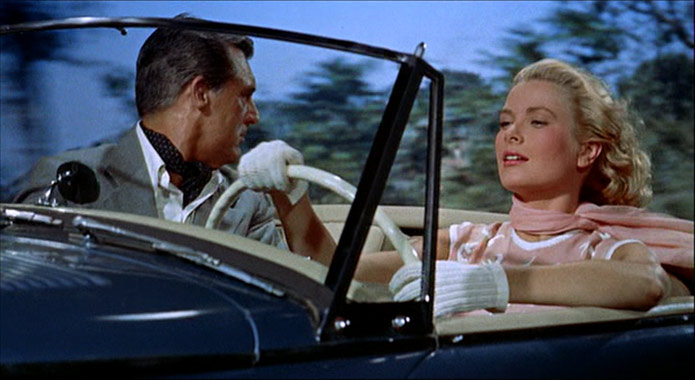
 Is he or isn’t he? In Alfred Hitchcock’s glamorous thriller set on the French Riviera, Cary Grant stars as John Robie, a famous burglar known as the Cat who has supposedly retired but is suddenly believed to be responsible for a rash of new jewelry thefts. Determined to prove his innocence and catch the real thief, he enlists the help of Lloyd’s of London insurance agent H. H. Hughson (John Williams), who supplies him with a list of women on the Riviera who have expensive baubles ripe for the taking. At the top of the list are the Americans Jessie Stevens (Jessie Royce Landis) and her gorgeous daughter, Francie (a radiant Grace Kelly), who teases Robie, hinting that she might in fact be the Cat — if he isn’t. As Robie avoids the cops and looks to his old friends in the French Resistance for further help, the tension heats up, leading to a climax that takes place on the rooftops of the French Riviera. Grant’s third of four outings with Hitchcock and Kelly’s third and final turn with the suspense master is an exciting “who’s doing it” featuring the dream pairing of two of Hollywood’s most beautiful and talented superstars, filled with just the right amount of comedy and romance in a glorious setting. Look for Alfie to make his appearance early on, causing Grant to do a double take in the back of a bus. To Catch a Thief is screening February 23-24 as part of Film Forum’s “The Complete Hitchcock,” which runs through March 27 and includes all of the Master of Suspense’s feature narratives; the series also encompasses “The Hitchcock 9,” which continues through May 4 and consists of all nine of Hitch’s surviving silents, each one accompanied by Steve Sterner on piano. In addition, the Paley Center will be hosting