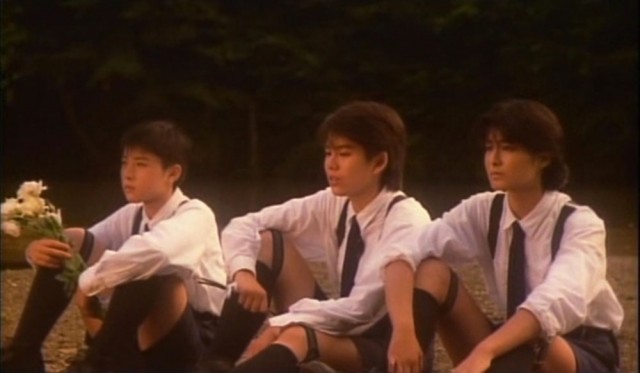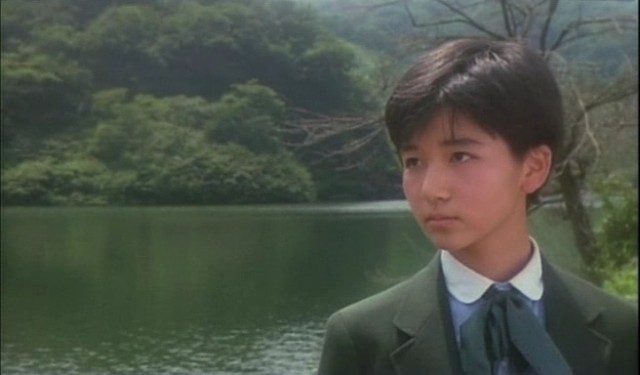
Yuichi Sumida (Shota Sometani) and Keiko Chazawa (Fumi Nikaido) face similar situations in different ways in Sion Sono’s HIMIZU
HIMIZU (Sion Sono, 2011)
Film Society of Lincoln Center, Elinor Bunin Munroe Film Center
144 West 65th St. between Broadway & Amsterdam Ave.
March 14-20
212-875-5601
www.filmlinc.com
www.sonosion.com
 “I know all things. I know pink cheeks from wan. I know death, who devours all. I know everything. Everything but myself,” Keiko Chazawa (Fumi Nikaido) says at the beginning of Himizu over a sweeping shot of the destruction wrought by the 2011 Tōhoku earthquake and tsunami and Fukushima nuclear meltdown. Keiko is a strange, deeply troubled teen stalking another strange, deeply troubled teen, Yuichi Sumida (Shota Sometani), following him around school, covering her bedroom walls with things he has said, and hanging out at his family’s extremely low rent boat basin. Yuichi’s mother (Makiko Watanabe) tramps herself out while his father (Ken Mitsuishi), who owes money to yakuza boss Kaneko (Denden), regularly shows up drunk and tells Yuichi that he blames his terrible life on his son, that he wishes Yuichi were never born. Meanwhile, Keiko’s mother (Asuka Kurosawa) is building a gallows in her house, hoping that her daughter will use it to kill herself. Somehow, amid all this craziness and pain — and extreme violence — writer-director Sion Sono (Bad Film, Suicide Club) manages to tell a poignant tale of adolescence as the older generation in Japan is leaving a discouraging future for the younger generation, which is fraught with hopelessness and fear of what will be left for them. The horribly abused Yuichi walks through life like a zombie, not fighting back as he is beaten up by his father and the yakuza. He is surrounded by an unusual group of adults who he allows to live on his property in tents, as they have lost everything in the economic crisis. They’re a wacky bunch, led by the somewhat sage Yoruno (Tetsu Watanabe), that serves as a kind of surrogate family for both Yuichi and Keiko, wanting only the best for them despite Yuichi’s coldness and unwillingness to accept any kind of help. But Yuichi soon simmers until he ultimately explodes, and when he does, everyone had better watch out.
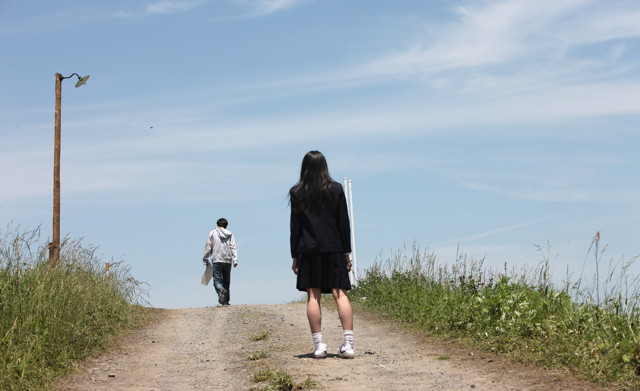
Teens face an uncertain future in HIMIZU
Himizu, the title of which refers to a species of Japanese mole, is based on Minoru Furuya’s manga, with Sono making major changes to the script after the earthquake, incorporating yet more disaster into the lives of Yuichi and Keiko. Sometani (Parasyte) and Nikaido (Sono’s Why Don’t You Play in Hell?) excel as the teens, her character’s obsessiveness working well against his laissez-faire attitude; the two were named Best New Actors at the Venice Film Festival for their performances. The supporting cast, which also includes Mitsuru Fukikoshi, Megumi Kagurazaka, Yosuke Kubozuka, Taro Suwa, and Setchin Kawaya, contributes to the film’s cultlike charm, although it is too long, with several false endings, and Tomohide Harada’s score tends to be overly sentimental. But those drawbacks are more than offset by Sôhei Tanikawa’s beautiful cinematography, which is filled with lasting images, perhaps none so memorable as the tilted shack that sticks out from the middle of the lake, a constant reminder of what was — and perhaps what will be. Himizu is having a special engagement March 14-20 at the Film Society of Lincoln Center, accompanied by Sono’s Guilty of Romance, the conclusion of his Hate trilogy, which began with Love Exposure and continued with Cold Fish.
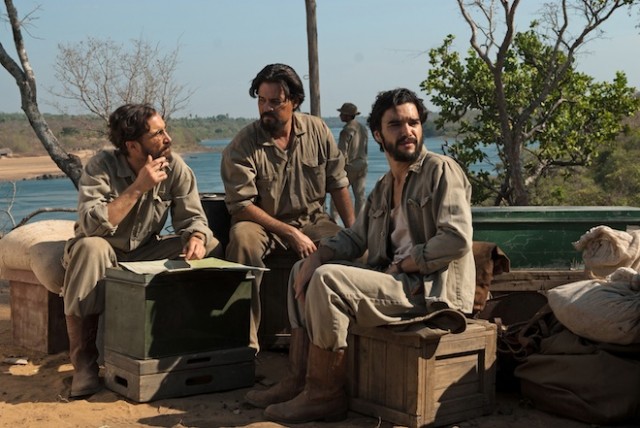
 In 1943, brothers Orlando (Felipe Camargo), Cláudio (João Miguel), and Leonardo Villas-Bôas (Caio Blat) posed as uneducated peasants known as peons in order to get extremely low-paying jobs working on an expedition into the untamed lands of Central Brazil along the Xingu River. They were looking for excitement and adventure, and over the course of twenty years they ended up finding more than they ever could have imagined. Their story is told in Cao Hamburger’s (The Year My Parents Went on Vacation) award-winning festival favorite Xingu, which follows the three twentysomethings as they make first contact with the indigenous peoples of these regions, tribes that have never seen the white man before. As the close siblings make friends with the men, women, and children in the Xingu villages, the Brazilian government keeps asking for more and more out of the brothers, wanting them to push out the Indians so they can set up airstrips and military bases. Orlando, Cláudio, and Leonardo are suddenly in a difficult position, understanding that they are both “the poison and the antidote,” trying to protect the cultural heritage of these Native Brazilians while their bosses are breaking promise after promise. Produced by Fernando Meirelles (City of God,

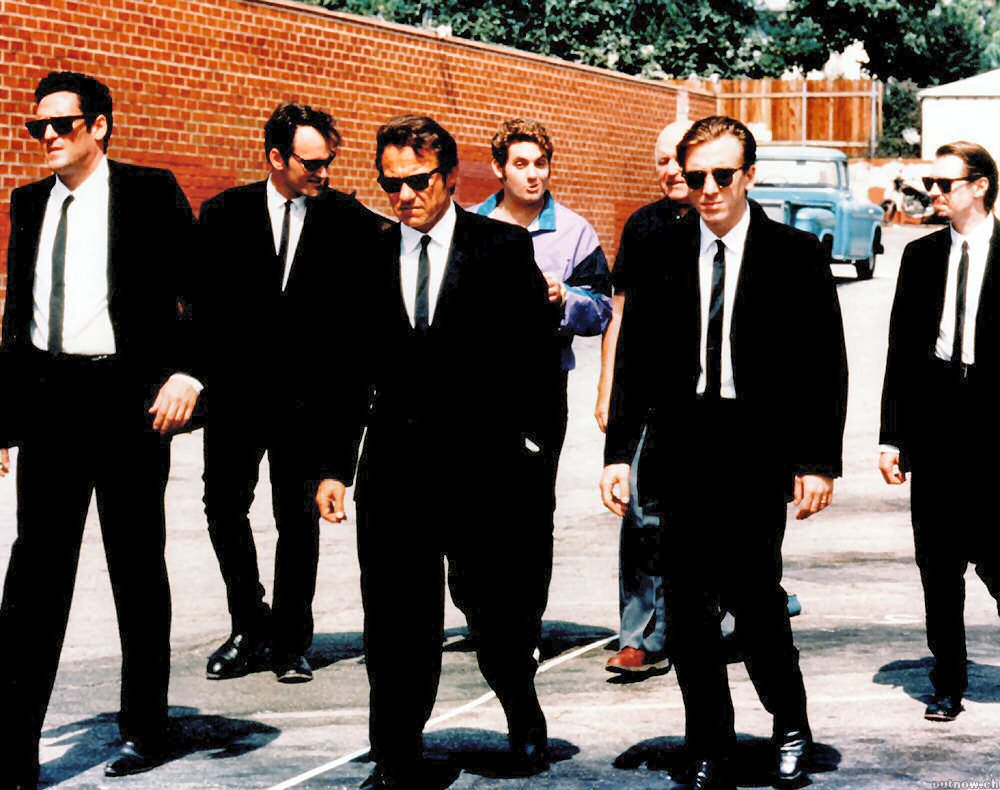
 Why does Steve Buscemi have to be Mr. Pink? Because Quentin Tarantino said so. Former video-store clerk Tarantino burst onto the indie film scene with the ultraviolent genre picture Reservoir Dogs, about a diamond heist gone horribly wrong, with big nods to Stanley Kubrick’s The Killing, Joseph Sargent’s The Taking of Pelham One Two Three, and other American noirs. You know there’s a problem if Mr. White (Harvey Keitel) has to be called in to clean up the mess made by Mr. Blonde (Michael Madsen), Mr. Blue (Eddie Bunker), Mr. Brown (Tarantino), Mr. Orange (Tim Roth), and, of course, Mr. Pink, all of whom are dressed in ultra-cool black-and-white suits, which makes all the red look that much richer. The robbery was organized by Joe (Lawrence Tierney) and his son, Nice Guy Eddie (Chris Penn), who has some pretty serious issues of his own. Double crosses, Madonna discussions, and a torture scene set to the Stealers Wheel song “Stuck in the Middle with You” make things go from funny to frightening in hysterical blasts of bloody irony as tensions mount and the criminals debate whether they were set up. Reservoir Dogs served as quite a debut for writer-director Tarantino, instantly making him an indie-film hero and sending him on his way, to be followed by his great script for True Romance and his Palme d’Or winner, Pulp Fiction, pulling off quite a triple play in three awesome years to start a career. Reservoir Dogs is screening at midnight on March 14 & 15 as part of the IFC Center’s “Late-Night Favorites” series, which continues with David Lynch’s Eraserhead March 21-22 and Kubrick’s The Shining March 28-29.

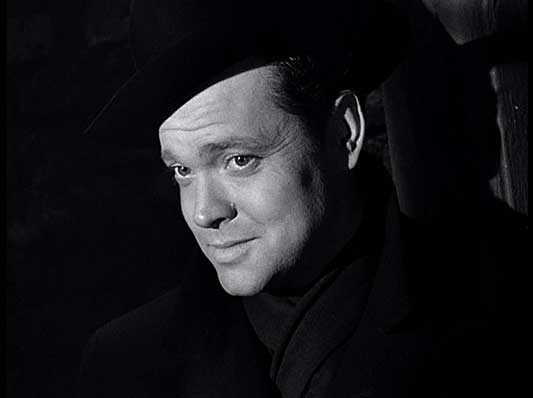
 Carol Reed’s thriller is quite simply the most entertaining film you’re ever likely to see. Set in a divided post-WWII Vienna amid a thriving black market, The Third Man is heavy in atmosphere, untrustworthy characters, and sly humor, with a marvelous zither score by Anton Karas. Joseph Cotten stars as Holly Martins, an American writer of Western paperbacks who has come to Vienna to see his old friend Harry Lime (Orson Welles), but he seems to have shown up a little late. While trying to find out what happened to Harry, Martins falls for Harry’s lover, Anna (Alida Valli); is told to get out of town by Major Calloway (Trevor Howard) and Sergeant Paine (Bernard “M” Lee); meets a stream of Harry’s more interesting, mysterious friends, including Baron Kurtz (Ernst Deutsch) and Popescu (Siegfried Breuer); and is talked into giving a lecture to a literary club by old Mr. Crabbin (Wilfrid Hyde-White). Every scene is a finely honed work of art, filled with long shadows, echoing footsteps, dripping water, and unforgettable dialogue about cuckoo clocks and other strangeness. SPOILER: The shot in which Lime is first revealed, standing in a doorway, a cat brushing by his feet, his tongue firmly in cheek as he lets go a miraculous, knowing smile, is one of the greatest single moments in the history of cinema.