this week in film and television

DOCUMENTARY IN BLOOM: BROTHERS HYPNOTIC

Documentary follows Hypnotic Brass Ensemble as brothers travel the world sharing their artistic vision

Documentary follows Hypnotic Brass Ensemble as brothers travel the world sharing their artistic vision

NEW FILMS PRESENTED BY LIVIA BLOOM: BROTHERS HYPNOTIC (Reuben Atlas, 2013)
Maysles Cinema
343 Malcolm X Blvd. between 127th & 128th Sts.
March 24-30, 7:30
212-582-6050
www.mayslesinstitute.org
www.hypnoticbrassfilm.com

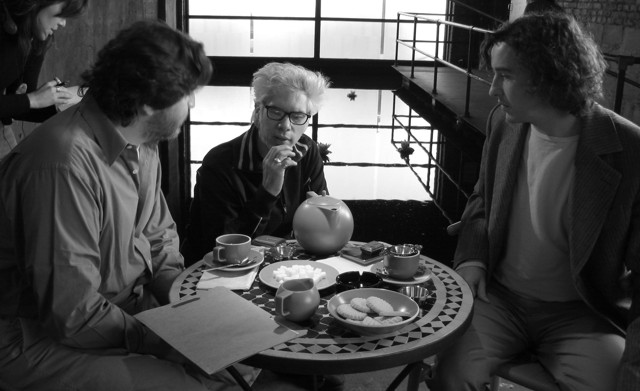
A real family affair, the Hypnotic Brass Ensemble includes eight sons of jazz musician Kelan Phil Cohran, a trumpeter who played with such legends as Jay McShann and Sun Ra, cofounded the Association for the Advancement of Creative Musicians, and started the Affro-Arts Theatre in Chicago. HBE’s compelling story is told in Reuben Atlas’s spirited feature documentary debut, Brothers Hypnotic, which is having its exclusive U.S. theatrical premiere March 24-30 as part of Livia Bloom’s “Documentary in Bloom” series at Harlem’s Maysles Cinema. Atlas followed the band for four years, from its hometown of Chicago to Amsterdam, from Ireland to London, and to numerous spots in New York City, a kind of second home for the group, which consists of siblings Gabriel “Hudah” Hubert on trumpet, Saiph “Cid” Graves on tenor trombone, Amal “Baji” Hubert on trumpet, Tycho “L.T.” Cohran on bass/sousaphone, Jafar “Yosh” Graves on trumpet, Uttama “Rocco” Hubert on euphonium, Seba “Clef” Graves on bass trombone, and Tarik “Smoove” Graves on trumpet (in addition to Christopher Anderson on drums). Atlas shows the band playing its unique blend of funk, jazz, and hip-hop at major festivals, in clubs, on the street, in the subway, and in the studio. Their music comes together organically, as evidenced onstage and on such albums as Flipside, Bulletproof Brass, and The Brothas, highlighted by such original songs as “War,” “Balicky Bon,” “Touch the Sky,” “Black Boy,” and “Party Started.” The members of HBE talk about what it was like being raised by two mothers on Chicago’s South Side (the eight brothers come from three different women; their father has nearly two dozen children total) and a father who would get them up at six in the morning to start rehearsing in what became the Phil Cohran Youth Ensemble. They discuss their father’s legacy and their career strategies, in particular an offer from Atlantic Records; meet with managers Knox Robinson and Mark Murphy; and, later, hang with Blur frontman Damon Albarn, who runs the independent label Honest Jon’s. Along the way, they get to play with Yasin Bey (Mos Def) and Prince while striving to maintain their artistic integrity and high moral values. It’s a feel-good tale that turns poignant when they reconvene with their father near the end of the film. Atlas and members of the band will be on hand for Q&As following the March 28 and 29 screenings; HBE will also be performing live at the Knitting Factory in Brooklyn on March 29 and 30.

NEW DIRECTORS / NEW FILMS 2014: OF HORSES AND MEN

OF HORSES AND MEN

Human nature is explored through the eyes of horses in wildly entertaining Icelandic tale

OF HORSES AND MEN (HROSS Í OSS) (Benedikt Erlingsson, 2013)
Film Society of Lincoln Center, Walter Reade Theater
165 West 65th St. between Eighth Ave. & Broadway
Monday, March 24, 6:30
Series runs through March 30
212-875-5050
www.newdirectors.org

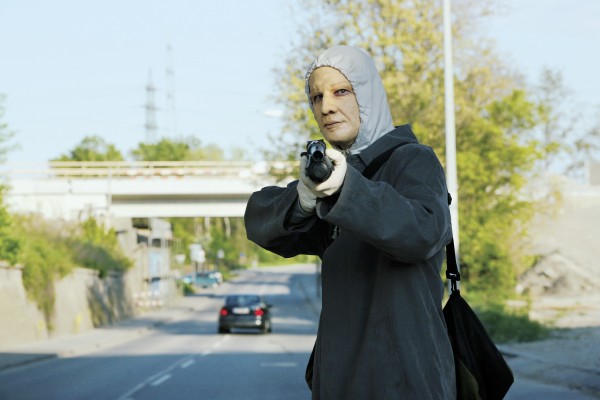
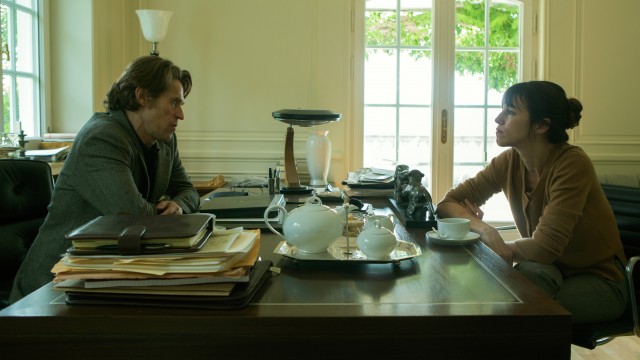
Iceland’s entry for the 2013 Academy Awards, Benedikt Erlingsson’s black comedy, Of Horses and Men, takes an absurdist look at the relationship between humans and horses, incorporating love, sex, pain, responsibility, friendship, religion, and death in darkly comic and heart-rending ways. In a tight-knit community spread across a sweeping rural landscape in Iceland, horses are far more plentiful than people. One morning, Kolbeinn (Ingvar E. Sigurdsson) goes for a ride aboard his gorgeous white mare as men, women, and children come outside to watch him pass by like it’s a parade. But a shocking, unexpected encounter with Solveig’s (Charlotte Bøving) black stallion sets into motion a series of interconnected vignettes, each successive one featuring a minor character from a previous scene. Lust, land disputes, gender distinction, and other agreements and disagreements lead to either tragedy or joy, but, of course, this being Iceland, the former is far more prevalent, especially as more and more Brennivin (Black Death) and other drink is consumed. Writer-director Erlingsson’s debut feature is gorgeously photographed by Bergsteinn Björgúlfsson, whose camera moves lovingly over the green fields and mountainous valleys, treating the horses like Hollywood sirens, zooming in on their eyes to show the reflection of the people who seek to control them, equating the basic animal instincts of both species. The horses in the film are no mere props; Erlingsson, who grew up in a theatrical family and has directed numerous stage productions (in addition to owning a horse, whom he called his “life companion,” for thirty years until recently having to put her down), treats the animals like characters in their own right, revealing their, dare we say, humanity. Produced by Icelandic cinema legend Friðrik Þór Friðriksson (Children of Nature, Mamma Gógó), Of Horses and Men is a dark, wildly entertaining treatise on human nature among a rather quirky and unusual equestrian set. The film is being shown March 24 at 6:30 at the Walter Reade Theater as part of Lincoln Center and MoMA’s annual “New Directors / New Films” series, with Erlingsson on hand to participate in a postscreening Q&A.

THE HITCHCOCK NINE: THE RING

THE RING

Alfred Hitchcock boxing picture sounds the bell at Film Forum as part of massive festival celebrating the Master of Suspense

THE RING (Alfred Hitchcock, 1927)
Film Forum
209 West Houston St.
Sunday, March 23, 3:00, Monday, March 24, 7:30, and Sunday, May 4, 3:30
The Complete Hitchcock: February 21 – March 27
The Hitchcock 9: February 21 – May 4
212-727-8110
www.filmforum.org

When one thinks of Alfred Hitchcock, such psychological thrillers as North by Northwest, Psycho, Vertigo, Notorious, and Rear Window come to mind, not The Manxman, Easy Virtue, The Pleasure Garden, and The Farmer’s Wife. But it is these early, British silent films that are the focus of Film Forum’s “The Hitchcock 9,” which is part of the larger series “The Complete Hitchcock,” consisting of every other picture Sir Alfred made, including those abovementioned films. The dual festival features DCP restorations of nine romantic melodramas made by the Master of Suspense, each one with live musical accompaniment by pianist Steve Sterner. The series continues with 1927’s The Ring, a tantalizing tale of a love triangle set in the world of boxing, a favorite sport of Hitchcock’s. When Bob Corby (Ian Hunter) shows up at a county fair and takes a liking to Mabel (Lillian Hall-Davis), who sells tickets to see her fiance, “One-Round” Jack Sander (Carl Brisson), battle all comers for a cash prize, Corby decides to get in the ring with Sander to impress Mabel; little do they know that Corby is a professional. Soon the two men are also fighting outside the ring, to win the heart of their beloved. Comic relief is supplied by Gordon Harker as Jack’s trainer, who makes some very funny faces throughout. One can see Hitchcock’s visual style emerging in The Ring, as he employs little dialogue in favor of dramatic montages, ghostly superimpositions, and shadowy lighting. The intriguing work, produced at Elstree Studios and the first film to be released by Gainsborough Pictures, also deals with issues of class and financial success, themes that will become prevalent in much of Hitchcock’s oeuvre.

DARREN ARONOFSKY: BLACK SWAN

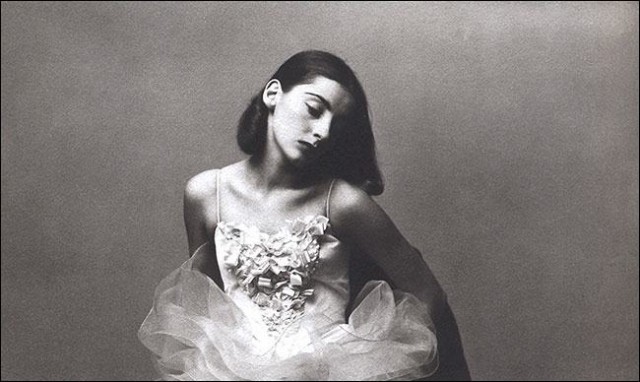
Nina, Nina, ballerina discovers that the mirror has at least two faces in BLACK SWAN

BLACK SWAN (Darren Aronofsky, 2010)
Museum of the Moving Image
35th Ave. at 36th St., Astoria
Sunday, March 23, free with museum admission, 7:00
Series runs March 21-27
718-777-6800
www.movingimage.us
www.foxsearchlight.com/blackswan

A companion piece to 2008’s multilayered The Wrestler, in which a rejuvenated Mickey Rourke plays an aging athlete trying to regain control of his body and his life while attempting to reestablish a connection with his daughter, Darren Aronofsky’s Black Swan is an even more complex psychological study of just how far the mind and body can go to get what it wants and needs. Natalie Portman stars as Nina Sayers, a member of a Manhattan-based ballet company who is vying for the lead role in a new production of Tchaikovsky’s classic 1877 ballet, Swan Lake, the tragic tale of a princess transformed into a white swan who must find true human love to be released, complicated by an evil magician, a black swan rival, and a handsome prince. Nina lives a sheltered existence dominated by her failed-ballerina mother, Erica (Barbara Hershey), squeezed into a cramped New York City apartment and not allowed to have a social life. Womanizing choreographer Thomas Leroy (Vincent Cassel) is convinced that Nina can dance the white swan but has severe doubts that she has it within her to dance the black swan, even after selecting her to replace former prima ballerina Beth MacIntyre (Winona Ryder). Desperate to bring out Nina’s dark side, Leroy creates a competition between her and free-spirited dancer Lily (Mila Kunis), a sexy, tattooed young dancer who lives life on the edge. As opening night approaches, Nina must reach deep inside herself if she is to attain her dream, leaving all her fears and insecurities behind.

Lily (Mila Kunis) helps Nina (Natalie Portman) explore her darker side in BLACK SWAN

A gripping thriller that works on multiple levels, Black Swan is a superbly crafted examination of innocence and experience, good and evil, loyalty and betrayal that goes far beyond the basic black and white. Aronofsky and co-screenwriters Mark Heyman and Andrés Heinz delve into the nature of duality and the very creation of art itself, as the story of Black Swan mimics that of Swan Lake, and Nina continually sees doppelgangers of herself in mirrors and other people, especially Lily and Beth. As Nina struggles to bring out the black swan within her, her body literally bleeds, evoking both birth and death, her hallucinations and fantasies walking the fine line between dream and nightmare. As serious and frightening as Black Swan can be, however, Aronofsky has also infused it with cheesy horror-movie scares, referencing such diverse films as Carrie and The Turning Point, All About Eve and Single White Female, Repulsion and The Red Shoes, The Fly and Rosemary’s Baby, a potent mix of Polanski and Cronenberg filtered through Balanchine and Baryshnikov. (The cheesiness factor also extends to character names; it takes both gumption and supreme confidence to name your star ballerina Nina.) Even the casting touches on the idea of the double; Nina is replacing Beth much the way Portman is now getting the kind of roles Ryder used to get. Once again Aronofsky has proved himself to be one of cinema’s most inventive directors, a master visual storyteller not afraid to take chances both with himself and with the audience. Nominated for four Oscars — Portman took home the picture’s only statuette, for Best Actress — Black Swan is screening March 23 at 7:00 as part of the Museum of the Moving Image’s weekend tribute to Aronofsky in celebration of the release of his latest film, Noah. The series also includes Requiem for a Dream, Pi, The Fountain, and The Wrestler before concluding with a members-only preview of his new biblical epic on March 27.

DARREN ARONOFSKY: THE WRESTLER

Mickey Rourke makes an Oscar-nominated comeback as a wrestler trying to get his life back on track in Darren Aronosky film

THE WRESTLER (Darren Aronofsky, 2008)
Museum of the Moving Image
35th Ave. at 36th St., Astoria
Sunday, March 23, free with museum admission, 4:30
Series runs March 21-27
718-777-6800
www.movingimage.us
www.thewrestlermovie.com

Brooklyn native Darren Aronofsky, writer-director of the brilliant Pi (1998) and Requiem for a Dream (2000) and the muddled mess The Fountain (2006), scores a major takedown with the marvelous comeback film The Wrestler. Former boxer Mickey Rourke, who made a name for himself in such 1980s films as Diner, Rumble Fish, The Pope of Greenwich Village, 9½ Weeks, and Barfly, stars as the Christ-like figure Randy “the Ram” Robinson, an aging professional wrestler who was the sport’s biggest name in the 1980s but is now a washed-up has-been living in a trailer park wrestling for embarrassingly small paydays at tiny local venues, still lured by the love of the sparse crowds and the respect of his opponents. After suffering a heart attack following one of his matches, the fifty-something Ram is suddenly faced with a life outside the ring. He tries to get back in his daughter’s (Evan Rachel Wood) life, attempts a relationship with stripper Cassidy (Marisa Tomei), and even gets a regular job in a supermarket, but the possibility of returning to the ring for the twentieth anniversary of his biggest match ever, his 1989 battle against the Ayatollah (Ernest Miller) in Madison Square Garden, weighs hard on his mind. Winner of the Golden Lion at the Venice Film Festival, The Wrestler, shot in an arresting grainy style, is a masterfully told tale with multiple layers, as the Ram’s potential comeback mimicks Rourke’s own return to his acting glory days. Rourke, who won a Golden Globe and was nominated for an Oscar for his effort, is such a natural in the role that it is hard to believe it was not written specifically for him; in fact, Nicolas Cage was first attached to the project. (Bruce Springsteen’s title song, which plays over the closing credits, took home the Golden Globe for Best Original Song but failed to garner an Oscar nod.) The film is set in the real-life world of Combat Zone Wrestling and the Ring of Honor, featuring such actual wrestlers as the Necro Butcher, who has a thing for barbed wire and staple guns. The heart-wrenching, beautiful, brutal film is screening March 23 at 4:30 as part of the Museum of the Moving Image’s weekend tribute to Aronofsky in celebration of the release of his latest film, Noah. The series also includes Requiem for a Dream Pi, The Fountain, and Black Swan before concluding with a members-only preview of his new biblical epic on March 27.

DIVERGENT

DIVERGENT

Four (Theo James) offers pointers to Tris (Shailene Woodley) as she trains to become Dauntless in DIVERGENT

DIVERGENT (Neil Burger, 2014)
Opens Friday, March 21
www.divergentthemovie.com

First things first: In another part of our life, we are directly involved in the publication of Veronica Roth’s bestselling Divergent trilogy. Does that mean we can be impartial when it comes to reviewing the first of three films based on her books? We certainly hope so. In a near-future dystopian Chicago following a devastating war, people are divided into five factions: the selfless Abnegation, the honest Candor, the peaceful Amity, the intelligent Erudite, and the brave Dauntless. Upon turning sixteen, every individual participates in a Choosing Ceremony in which they decide which faction they will serve for the rest of their lives. But Tris (Shailene Woodley) is clearly different. Raised by her parents (Ashley Judd and Tony Goldwyn) in Abnegation, she shows an aptitude for more than one faction after taking the life-determining test all teens must endure: Her multifaceted personality means she’s Divergent. Test administrator Tori (Maggie Q) reveals that Divergence is a death sentence in this ever-more-fascistic society and that she must keep it a secret. She ultimately chooses to become Dauntless, going through rigorous training led by Four (Theo James), who sees something special in her even as she continually fails at feats of strength. But soon she is using her intellect to rise in the ranks as she tries to find her place in a world that, as she discovers, is powered by evil and corruption. “Human nature is the enemy,” Erudite leader Jeanine Matthews (Kate Winslet) tells her.

Tris (Shailene Woodley) and Christina (Zoë Kravitz) set out on the next phase of their life in DIVERGENT

Tris (Shailene Woodley) and Christina (Zoë Kravitz) set out on the next phase of their life in DIVERGENT

Directed by Neil Burger (The Illusionist, Limitless), who will not be helming the sequels, Insurgent and Allegiant, Divergent has more than its fair share of plot holes and red herrings, but they are overcome by a strong lead performance by Woodley, a promising young actress who has previously appeared in such well-received fare as The Descendants and The Spectacular Now — and will next star in the adaptation of John Green’s The Fault in Our Stars alongside Ansel Elgort, who plays her brother, Caleb, in Divergent. Woodley captures the pitfalls and missteps of an adolescent on the verge of adulthood, facing the deeply entrenched apprehensions and anxieties that will follow her through life, in many ways a wildly imagined metaphor for the daughter leaving the nest, beginning with SAT testing and selecting a college, then searching for the right clique as she desperately tries to fit in somewhere. Perhaps not coincidentally, Roth began writing the book while still in college herself. No mere Hunger Games ripoff, Divergent is about the fears we all carry with us and must face time and time again in the choices we make on our path to finding out who we are.

NYMPHOMANIAC: VOLUME 1

NYMPHOMANIAC

Joe (Stacy Martin) learns about sexual pleasure in Lars von Trier’s controversial NYMPHOMANIAC

NYMPHOMANIAC: VOLUME 1 (Lars von Trier, 2013)
Film Society of Lincoln Center, Elinor Bunin Munroe Film Center, 144 West 65th St. between Broadway & Amsterdam Ave., 212-875-5600
Landmark Sunshine Cinema, 143 East Houston St. between First & Second Aves., 212-330-8182
Opens Friday, March 24
www.magpictures.com

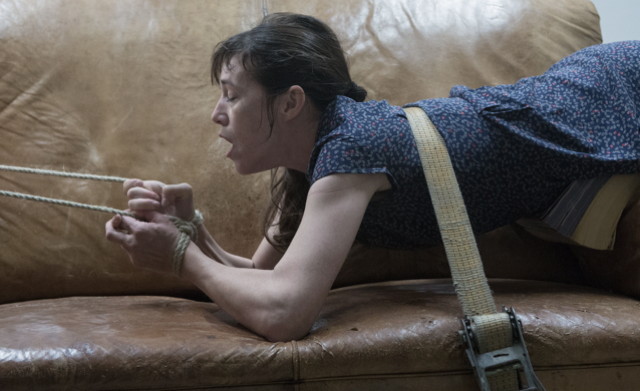
In Breaking the Waves, Danish Dogme 95 cofounder Lars von Trier’s 1996 breakthrough, Stellan Skarsgård plays a paralyzed man who convinces his wife (Emily Watson) to have sexual liaisons with other men and then tell him about the encounters in graphic detail. In von Trier’s latest controversial, polarizing work, Nymphomaniac: Volume 1, Skarsgård stars as Seligman, a single man who takes in a woman named Joe (Charlotte Gainsbourg) who is soon sharing her own sexual adventures with him, in extremely graphic detail. After finding Joe severely beaten in an alley, Seligman nurses her back to health while carefully listening to her life story. She repeatedly says she is a bad, irredeemable human being because of the things she has done, which started to go off the rails when she was a small child discovering the pleasure sensations to be had in her nether regions. Her sordid tale is told in flashbacks, as her younger self (Barking at Trees’ Stacy Martin) goes from lover to lover to lover to lover to lover ad infinitum. (The specific numbers are plastered over the screen.) Along the way, Seligman offers his own interpretation of her life, praising her sense of freedom while comparing her sexuality to fly-fishing, which von Trier (Dancer in the Dark, Melancholia, Antichrist) relates in a playful way that is at first absurdly silly but actually ends up coming together. Unfortunately, however, Martin is far too bland as Joe as she beds victim after victim, including Jerôme (a miscast Shia LaBeouf), perhaps the only one who truly loves her. And then the film abruptly ends, showing clips from Volume 2, which opens on April 4. As it turns out, there are multiple versions of Nymphomaniac: The four-hour edit, which has been shown internationally and at festivals, has been broken up into two parts in the United States, while a five and a half hour director’s cut will be released later this year. The result is that Nymphomaniac: Volume 1 feels like an unfinished movie, like something is missing, and indeed two hours (and more) are yet to come. The official press notes proudly confirm that “the films contain graphic depictions of sexuality to a degree unprecedented in a mainstream feature film,” while a disclaimer in the credits says that all scenes involving actual penetration, and there are several, were performed by body doubles. What does it all mean? We’re not really sure yet, because until we see Volume 2, we don’t feel comfortable either recommending or dismissing Volume 1 (which also features Christian Slater and Connie Nielsen as Joe’s parents and Uma Thurman as a scene-stealing wronged wife). But perhaps it says something that we still even want to see the second half, but then again, we’ve always been completionists, as well as gluttons for cinematic punishment.