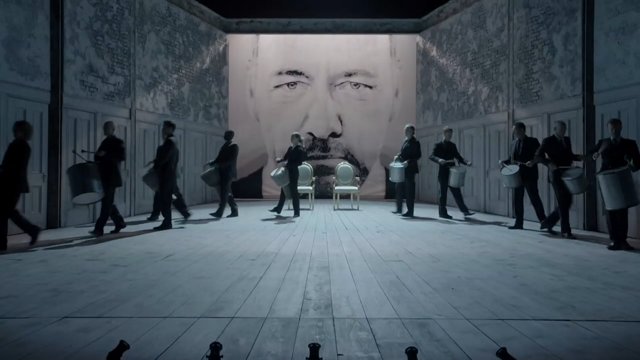
Kevin Spacey will be at the Tribeca Film Festival discussing documentary about RICHARD III production he starred in at BAM
Tribeca Film Festival
Multiple downtown locations
April 16-27, free – $33.50
646-502-5296
www.tribecafilm.com
Started by Robert De Niro, Craig Hatkoff, and Jane Rosenthal in 2002 as a way to help rebuild Lower Manhattan, the Tribeca Film Festival continues to mature as it reaches toward adolescence. The 2014 edition runs April 16-27 with world premieres, panel discussions, street fairs, workshops, and plenty of red carpet arrivals. Below is a guide to twenty highlights, beginning with ticket information. Hot items go fast, so, on your mark, get set…
Sunday, April 13
Individual tickets go on sale to downtown residents at ticket outlets only, proof of residence below Canal St. required, 11:00 am
Monday, April 14
Individual tickets go on sale to general public, all methods, 11:00 am
Monday, April 14
through
Thursday, April 17
Advance free tickets available for Film for All Friday (April 25), consisting of free screenings of thirty-five festival films at multiple locations (follow instructions here)
Thursday, April 17
Tribeca Drive-In: Mary Poppins (Robert Stevenson, 1964), Brookfield Place (World Financial Center), free, 8:00
Friday, April 18
CANCELLED: Tribeca Talks Directors Series: Lee Daniels with Robin Roberts, SVA Theater 1 Silas, 3:00
Tribeca Drive-In: Splash (Ron Howard, 1984), Brookfield Place (World Financial Center), free, 8:00
Saturday, April 19
Tribeca Talks After the Movie: Champs (Bert Marcus, 2014), screening followed by discussion with Mike Tyson, Evander Holyfield, and Lou DiBella, SVA Theater 1 Silas, $33.50, 3:00
Tribeca Drive-In: Next Goal Wins (Mike Brett & Steve Jamison, 2014), Brookfield Place (World Financial Center), free, 8:00
Saturday, April 19
through
Sunday, April 27
Meet the Filmmakers, workshops and discussions, Apple Store, SoHo and West 14th St., free, times and schedule to be announced
Sunday, April 20
Tribeca Talks Pen to Paper: Calling the Shots, with Marshall Curry, Ira Sachs, Orlando von Einseidel, and Sofia Norlin, moderated by Eric Kohn, Union Square B&N, free, 1:00
Monday, April 21
Tribeca Talks After the Movie: Now: In the Wings on a World Stage (Jeremy Whelehan, 2014), screening followed by discussion with Jeremy Whelehan, Kevin Spacey, and other members of the Richard III troupe, BMCC Tribeca PAC, $33.50, 6:00
Tuesday, April 22
Future of Film: Your Brain on Story — The Technologies of Immersion, with Jason Silva, and Future of Film: Your Brain on Story — Part Two: Psychos We Love, with Bryan Cranston, Terence Winter, and James Fallon, moderated by Cynthia McFadden, SVA Theater Two Beatrice, $33.50, 2:30
Thursday, April 24, 12 noon
through
Saturday, April 26, 6:00
Journey to the West at MoMA PS1: Journey to the West (Tsai Ming-Liang, 2014), MoMA PS1 geodesic VW Dome, free with museum admission
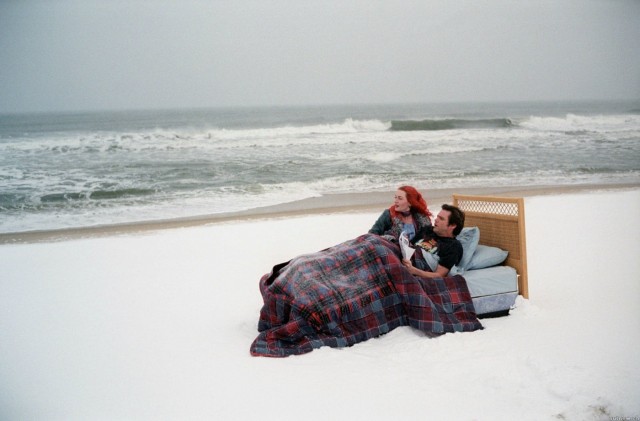
ETERNAL SUNSHINE OF THE SPOTLESS MIND will have special tenth anniversary screening at 2014 Tribeca Film Festival
Friday, April 25
Possibilia: Endless Paths for Interactive Filmmaking: live interactive screening of Possibilia (Daniels) and screening of The Gleam (Daniels & Billy Chew), followed by discussion with members of the cast and crew, SVA Theater Beatrice, free with advance ticket, 2:30
Film for All Friday, free screenings of thirty-five festival films at multiple locations, advance tickets available April 14-17 (follow instructions here)
Saturday, April 26
Tribeca Family Festival Street Fair, with live performances, local food, games, and free screenings of The Wizard of Oz (Victor Fleming, 1939) at 11:00 am, shorts from the Tribeca Film Institute at 1:00, and Stories in Animation by StoryCorps at 3:00
Tribeca/ESPN Sports Day, with members of local professional sports teams, sports film screenings, athletic skill games, and more, North Moore St. between Greenwich & West Sts., free, 10:00 am – 6:00 pm
Tribeca Talks After the Movie: Eternal Sunshine of the Spotless Mind (Michel Gondry, 2004), tenth anniversary screening followed by discussion with Anthony Bregman, Daniella Schiller, and others, moderated by Ira Flatlow, SVA Theater 2 Beatrice, $33.50, 3:00
Tribeca Talks After the Movie: Supermensch: The Legend of Shep Gordon (Mike Myers, 2013), screening followed by discussion with Michael Douglas and Shep Gordon, SVA Theater 1 Silas, $33.50, 5:30
Sunday, April 27
Tribeca Talks After the Movie: Compared to What: The Improbable Journey of Barney Frank (Sheila Canavan & Michael Chandler, 2014), screening followed by discussion with Barney Frank and Alec Baldwin, SVA Theater 1 Silas, $33.50, 2:30
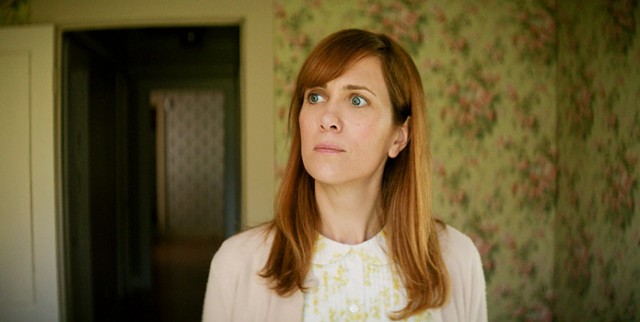
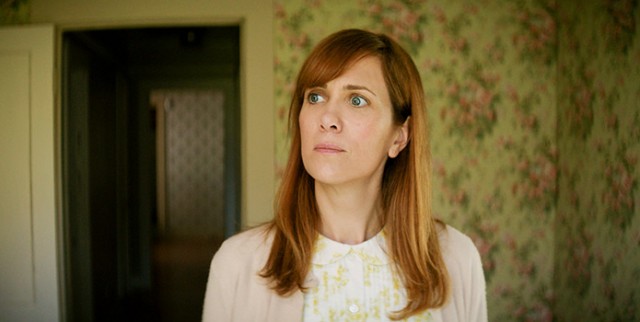
 SNL alum Kristen Wiig gives a chilling breakthrough dramatic performance in Hateship Loveship. Wiig (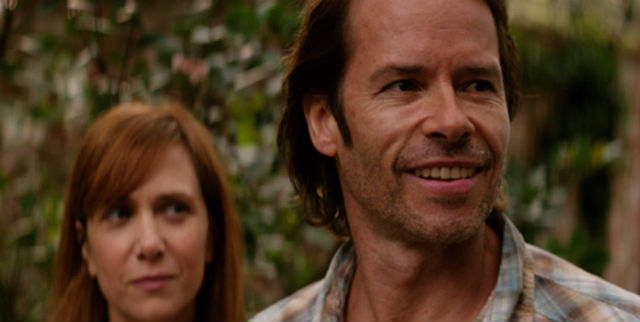
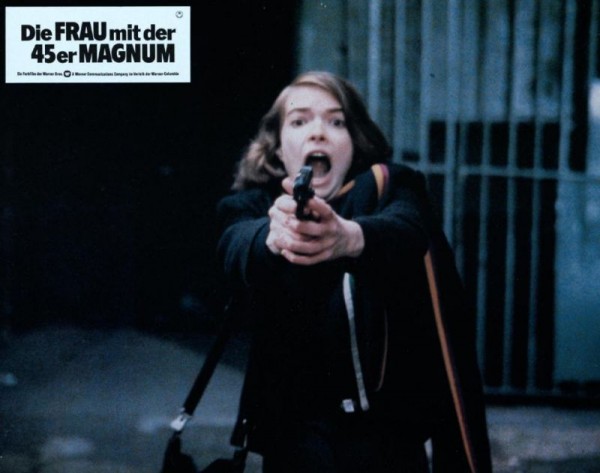
 If you missed the new digital restoration of Ms. 45 at BAMcinématek’s “Vengeance Is Hers” festival in February, you have another chance to catch it this weekend when it screens as part of the IFC Center’s weekly “Waverly Midnights: Late-Night Favorites” series on April 11-12. Abel Ferrara’s third film, following the 1976 pornographic 9 Lives of a Wet Pussy Cat and the 1979 gorefest The Driller Killer, is a low-budget grindhouse female revenge fantasy set on the gritty streets of New York City. In Ms. 45 (also known as Angel of Vengeance), Zoë Tamerlis Lund makes her screen debut as Thana, a mute woman working as a seamstress in the Garment District. After being raped twice in one day on separate occasions, she soon goes all Death Wish / Taxi Driver on men seeking a little more from women. Thana — named after Freud’s death instinct, Thanatos, the opposite of the sex instinct, Eros — grabs herself a .45 and quickly proves she is one helluva shot as she goes out in search of potential victims in Chinatown, Central Park, and the very place where Woody Allen and Diane Keaton sat on a bench, romantically looking out at the Queensboro Bridge in an iconic moment from Manhattan. Ferrara, who plays the masked rapist, captures the nightmarish feel of the city at the time, where danger could be lurking around any corner, with the help of James Lemmo’s lurid, pornlike cinematography and Joe Delia’s jazz-disco soundtrack. Lund would go on to cowrite Ferrara’s Bad Lieutenant, in which she plays a junkie named Zoë, before drugs killed her in 1999 at the age of thirty-seven. Ms. 45 is a cult classic that keeps getting better with age — and yes, that is a man dressed as Mr. Met at the Halloween party.
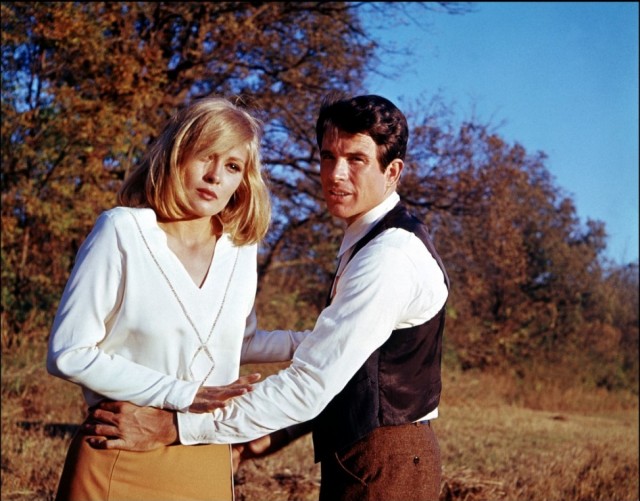
 Arthur Penn changed the course of Hollywood — and world cinema — in 1967 with Bonnie and Clyde, a film previously offered to such Nouvelle Vague luminaries as François Truffaut and Jean-Luc Godard. Cowritten by David Newman (Superman I-III) and Robert Benton (Kramer vs. Kramer), the film mythologizes the true story of depression-era bank robbers Clyde Barrow and Bonnie Parker, played magnificently by Warren Beatty and Faye Dunaway. At its heart, Bonnie and Clyde is a passionate yet unusual love story, filled with close-ups of the gorgeous Dunaway, who is first seen naked, running to her bedroom window confident and carefree, more a modern 1960s woman than a poor 1930s small-town waitress. Meanwhile, Barrow might know how to shoot a gun, but he’s a dud in bed; “I ain’t much of a lover boy,” he tells Bonnie early on, so their passion plays out in fast-moving car chases and shootouts rather than under the covers (while also playing off of Beatty’s already well-deserved reputation as a ladies’ man). They pick up an accomplice in gas-station attendant C. W. Moss (Michael J. Pollard) and are soon joined by Clyde’s brother, Buck (Gene Hackman), and his wife, Blanche (Estelle Parsons), and continue their rampage as heroic, happy-go-lucky hold-up artists, leading up to one of the most influential and controversial endings ever put on celluloid, an unforgettable finale of violent and poetic beauty. Penn, editor Dede Allen, and cinematographer Burnett Guffey redefined the gangster picture with their creative use of slow motion, long takes, and crowded shots, defying Hollywood conventions in favor of unique and innovative storytelling devices, allowing the film to work on multiple levels. Bonnie and Clyde is screening April 9-11 at 1:30 as part of MoMA’s ongoing series “An Auteurist History of Film,” which continues April 16-18 with John Boorman’s Point Blank and April 23-25 with Luis Buñuel’s Belle de Jour.