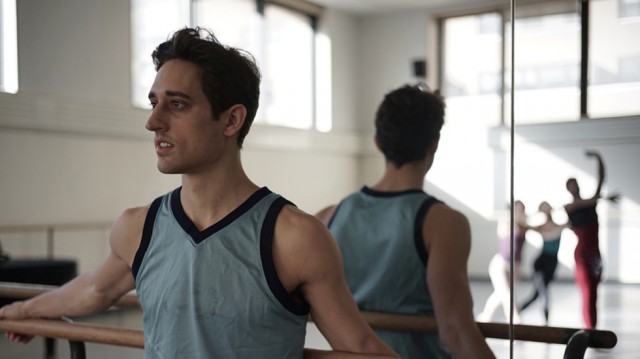
Viewers are taken behind the scenes as Justin Peck creates a new work for New York City Ballet
BALLET 422 (Jody Lee Lipes, 2014)
Tuesday, April 22, AMC Loews Village 7, $20.50, 7:00
Wednesday, April 23, Bow Tie Cinemas Chelsea, $20.50, 6:30
Sunday, April 27, AMC Loews Village 7, $20.50, 11:30 am
www.tribecafilm.com
 In Ballet 422, Jody Lee Lipes takes viewers behind the scenes as twenty-five-year-old New York City Ballet dancer Justin Peck choreographs the 422nd original piece for the prestigious company, Paz de la Jolla. One of fifty dancers in the Corps de Ballet, which the film calls “the lowest rank” of the NYCB, Peck was named by company head Peter Martins to be the New York Choreographic Institute’s first active choreographer-in-residence for the 2011-12 season, and he is the only current NYCB dancer to choreograph for the company. Documentarian and cinematographer Lipes (NY Export: Opus Jazz, Tiny Furniture) focuses on the fascinating collaboration that goes into creating a ballet. “As a former soloist with New York City Ballet, I had long dreamed about pulling back the veil on the making of a new ballet,” producer Ellen Bar explains on the film’s Hatchfund page, which has raised more than $55,000 for the project. “Even as a dancer who was often part of the choreographic process, I never saw the other artistic and technical elements develop until the very end. Wouldn’t it be amazing to invite audiences into a world they can never visit in person and to let them watch it unfold in real time?” Lipes does just that, showing Peck and ballet master Albert Evans working out specific moves with principal dancers Sterling Hyltin, Amar Ramasar, and Tiler Peck; costumers Reid Bartelme and Harriet Jung discussing materials with the performers; Mark Stanley detailing the lighting design; and Peck meeting with conductor Andrews Sill, who reveals that the orchestra is not particularly fond of playing the ballet’s musical score, Czech composer Bohuslav Martinu’s “Sinfonietta la Jolla.”
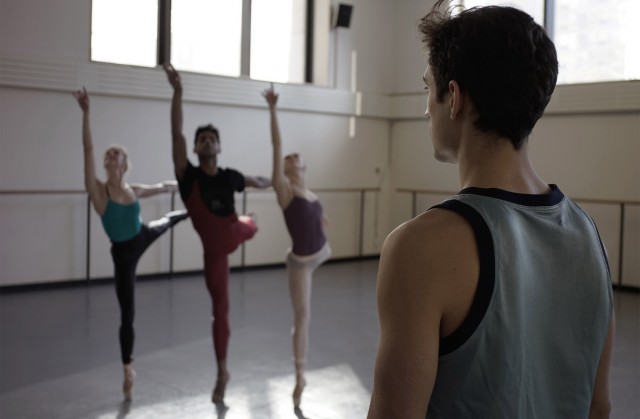
Sterling Hytlin, Amar Ramasar, and Tiler Peck rehearse with Justin Peck on 422nd original piece for New York City Ballet
There are no talking heads in the film, no experts chiming in on the beauty and intricacy of ballet, no one pontificating on how unusual it is for such a young dancer to already be choreographing his fifth work for the company, following Year of the Rabbit, Tales of a Chinese Zodiac, In Creases, and Capricious Movements. No one stops and looks into the camera, sharing their fears, hopes, or dreams; Lipes doesn’t even identify who’s who, instead allowing the drama to play out sans editorial comment. A few times, the camera goes with Peck as he puts on his backpack and heads home to his unglamorous Queens apartment, and the surprise ending puts everything in fabulous perspective. You don’t have to love ballet or know anything about it to enjoy Ballet 422, an intimate, compelling inside look into the creative process, but don’t be surprised if you soon find yourself ordering tickets for an upcoming NYCB production — perhaps even Peck’s Year of the Rabbit, which is being performed by NYCB on April 30 and May 3 at the David H. Koch Theater.
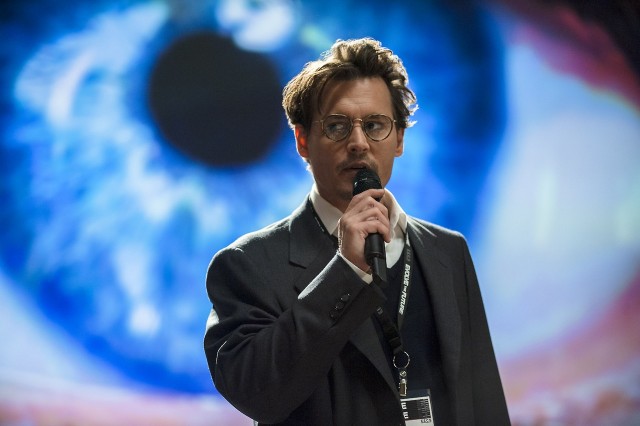
 In 2005, futurist Ray Kurzweil wrote The Singularity Is Near: When Humans Transcend Biology, forecasting the next stages of artificial intelligence and its effects on humanity. That idea is taken to a whole new level in Wally Pfister’s overblown and ultimately ridiculous Transcendence. Johnny Depp stars as Dr. Will Caster, an AI expert targeted by R.I.F.T. (Revolutionary Independence from Technology), a terrorist group led by Bree (Kate Mara) that is calling for “Evolution without Technology.” After a conference, Will is shot, and his wife, Evelyn (Rebecca Hall), and best friend, Max (Paul Bettany), consider uploading Will’s brain into his supercomputer, PINN (Physically Independent Neural Network), before he dies. While Evelyn wants to keep her lover alive any way possible, Max considers the potential ramifications if they succeed. And succeed they do, beyond their wildest expectations — and far beyond any kind of plausibility, leaving the audience openmouthed in amazement.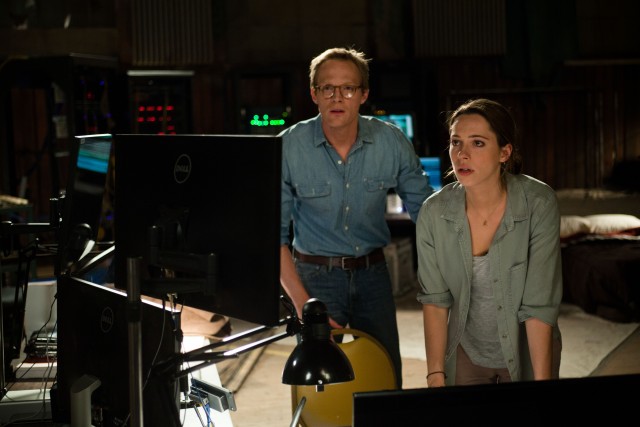

 In her 2010 book Good as Gold: 1 Woman, 9 Sports, 10 Countries, and a 2-Year Quest to Make the Summer Olympics, athlete and journalist Kathryn Bertine detailed her attempts to participate in the 2008 Summer Games in Beijing. A former figure skater who shared her experiences on ice in 2003’s All the Sundays Yet to Come, Bertine has now made her first documentary, Half the Road: The Passion, Pitfalls & Power of Women’s Professional Cycling. Filmed for less than $10,000 and then funded by an
 John Boorman’s Point Blank is an oxymoronic psychedelic film noir, a violent psychological thriller about a determined man dead set on vengeance. Lee Marvin — on quite a hot streak following Cat Ballou, Ship of Fools, The Professionals, and The Dirty Dozen — stars as the one-named Walker, a sincere, old-fashioned man who is double-crossed by his wife, Lynne (Sharon Acker), and friend, Mal Reese (John Vernon, in his film debut), when a deal goes bad on Alcatraz. Searching for Reese, Walker hooks up with Lynne’s sister, Chris (Angie Dickinson), a sexy femme fatale who owns a hot club in the Bay Area. As Walker makes his way up the criminal organization ladder in his quest to get the $93,000 he’s owed, he leaves behind a bloody trail that keeps getting messier and messier. Adapted by Alexander Jacobs and David and Rafe Newhouse from Donald Westlake’s first Parker novel, The Hunter, Boorman’s film is like the antihero Walker himself, purposefully out of time and place. Walker is essentially an anachronism as he makes his way through Point Blank, evoking John Wayne’s Ethan Edwards in John Ford’s classic Western The Searchers. The Summer of Love seems to have had no effect on Walker, who still primarily dresses in dull colors — until Chris brings out the color in him, particularly in one memorable scene in which they both are wearing bright yellow and spy on Reese’s hideaway through a yellow telescope. Film noir is by definition set in a black-and-white world, but Walker can’t hide from the old ways anymore, as he shows when groovy colored lights flash on him in Chris’s club.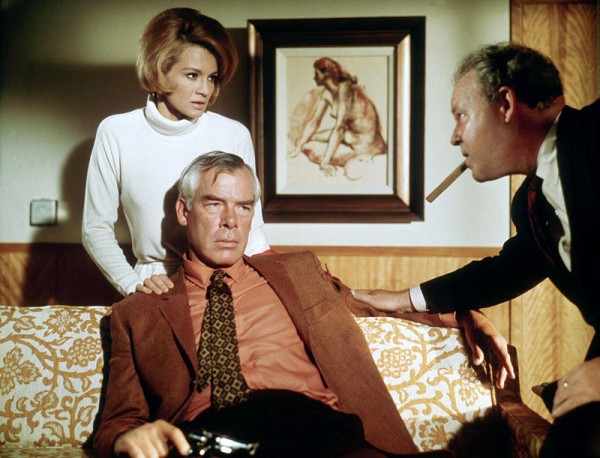
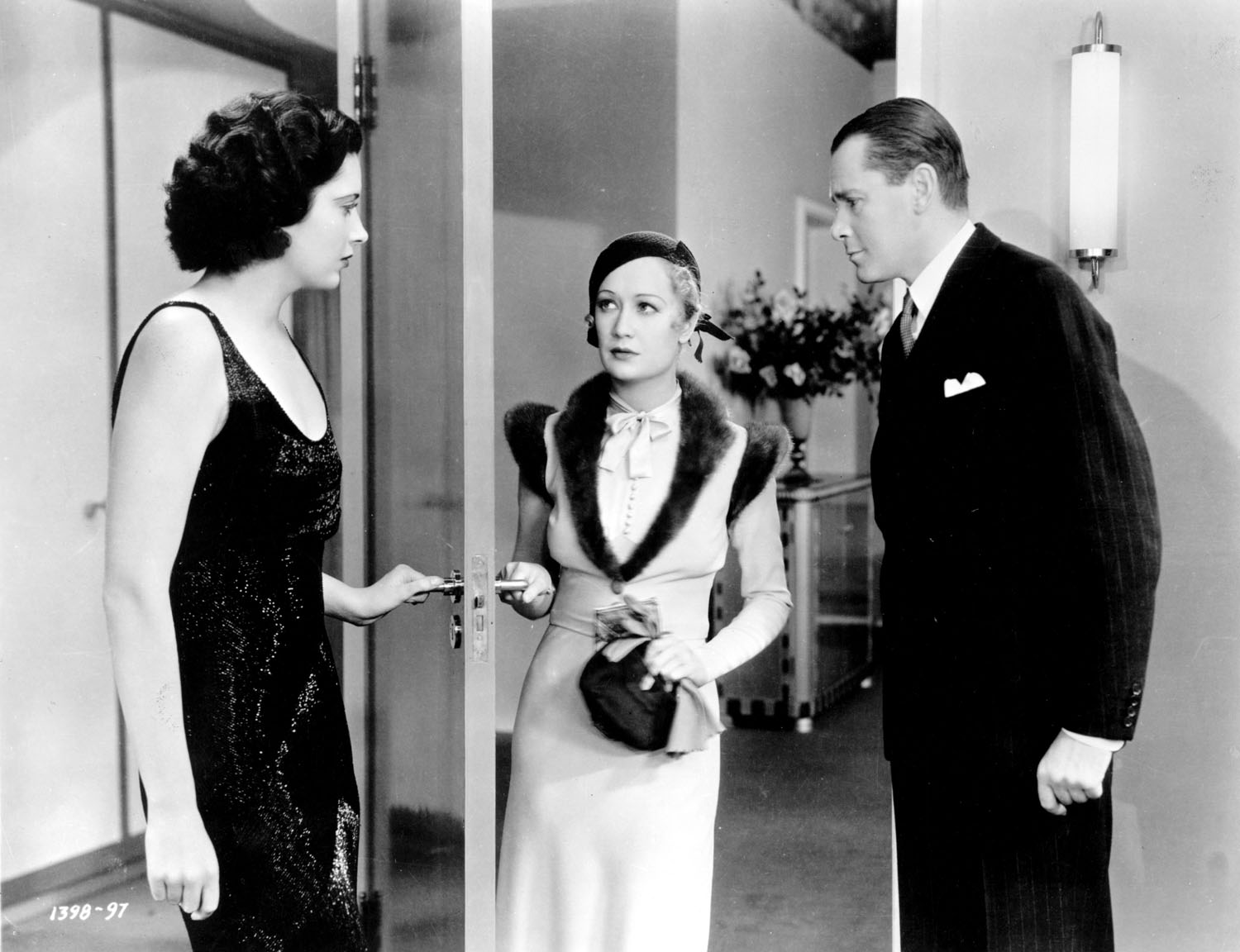
 “Beginnings are always difficult,” suave thief Gaston Monescu (Herbert Marshall) says at the beginning of Trouble in Paradise, but it’s not difficult at all to fall in love with the beginning, middle, and end of Ernst Lubitsch’s wonderful pre-Code romantic comedy. It’s love at first heist for Gaston and Lily (Miriam Hopkins) as they try to outsteal each other on a moonlit night in Venice. Soon they are teaming up to fleece perfume heir Madame Mariette Colet (Kay Francis) of money and jewels as the wealthy socialite takes a liking to Gaston despite her being relentlessly pursued by the hapless François Filiba (Edward Everett Horton) and the stiff Major (Charles Ruggles). Displaying what became known as the Lubitsch Touch, the Berlin-born director has a field day with risqué sexual innuendo, particularly in the early scene when Gaston and Lily first meet (oh, that garter!) and later as Madame Colet’s affection for Gaston grows, along with Lily’s jealousy. Loosely based on the 1931 play The Honest Finder by Aladár László, which was inspired by the true story of Romanian con man George Manolescu, the 1932 film remained out of circulation for decades during the Hays Code, and it’s easy to see why. Trouble in Paradise is screening April 18-20 at 11:00 am as part of the IFC Center series “American Hustlers: Grifters, Swindlers, Scammers & Cheats” series, which continues April 25-27 with Preston Sturges’s The Lady Eve before concluding May 2-4 with Stephen Frears’s The Grifters.