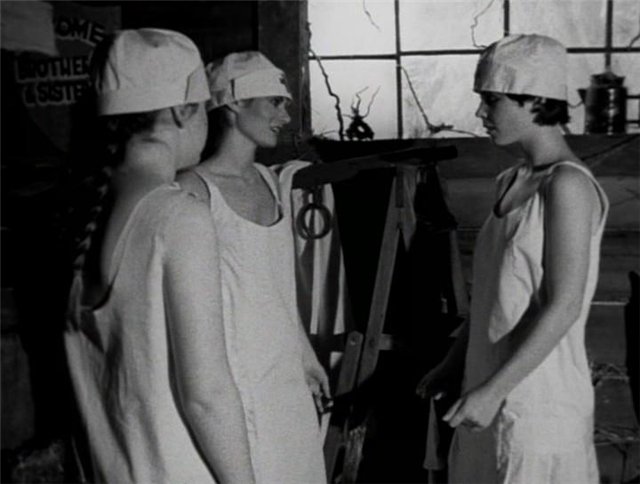
A trio of nurses deal with a deadly epidemic in early Guy Maddin cult classic, TALES FROM THE GIMLI HOSPITAL
CABARET CINEMA: TALES FROM THE GIMLI HOSPITAL (Guy Maddin, 1988)
Rubin Museum of Art
150 West 17th St. at Seventh Ave.
Friday, May 9, free with $10 K2 minimum, 9:30
Series continues through August 29
212-620-5000
www.rmanyc.org
 In his first feature-length film, Canadian DIY master Guy Maddin reaches into Icelandic sagas for the ultra-low-budget Tales from the Gimli Hospital. In many ways a kind of Scandinavian Frankenstein as if directed by Ingmar Bergman and George A. Romero, the seventy-two-minute mostly black-and-white Expressionist film is a story within a story (at times within another story) that an old woman, Amma (Margaret Anne MacLeod), is telling her grandchildren (Heather and David Neale) in a hospital room where their mother lies very ill. The dark, lurid fairy tale, set in “a Gimli we no longer know,” is about Einar the Lonely (assistant director Kyle McCulloch), a shy fish smoker who does not know how to relate to other people, particularly women. Felled by an epidemic, he is brought to Gimli Hospital in Manitoba, where other men battle this dread disease, which leaves stitchlike scars on their face and body. Einar is discouraged that the patient in the bed next to him, the portly Gunnar (Michael Gottli), is treated much nicer by the nurses than he is, but he is helpless to do anything about it. Gunnar is soon telling Einar the story of his true love, Snjófridur (Angela Heck), a tragic tale with a surprising twist that brings everything full circle. A unique visual stylist who regularly pays homage to the early days of cinema, Maddin, who directed and edited the picture (and wrote the script on Post-it Notes), purposely keeps things low-tech, including poor sound dubbing and bumpy, awkward cuts, incorporating such oddities as a puppet show anesthetic, Glima wrestling, fish-oil hair gel, an ominous soundtrack, and an over-the-top minstrel in blackface (McCulloch also); Maddin (My Winnipeg, Careful) also plays the weirdo surgeon who operates on Gunnar and Einar in rather strange fashion. In 2011, Maddin, who is part Icelandic, reimagined the film in the special Performa presentation Tales From the Gimli Hospital: Reframed, a reedited version with a live score by Icelandic musicians. The amateur nature of the original work led to its being rejected by the Toronto International Film Festival for ineptitude; it went on to become an instant cult classic, holding the midnight-movie slot at the Quad for nearly a year. Tales from the Gimli Hospital is screening May 9 as part of the Rubin Museum Cabaret Cinema series “Movie Medicine,” held in conjunction with the exhibition “Bodies in Balance: The Art of Tibetan Medicine”; the festival continues May 16 with John Schlesinger’s Sunday Bloody Sunday and May 23 with Michael Bastian introducing Luchino Visconti’s Death in Venice.



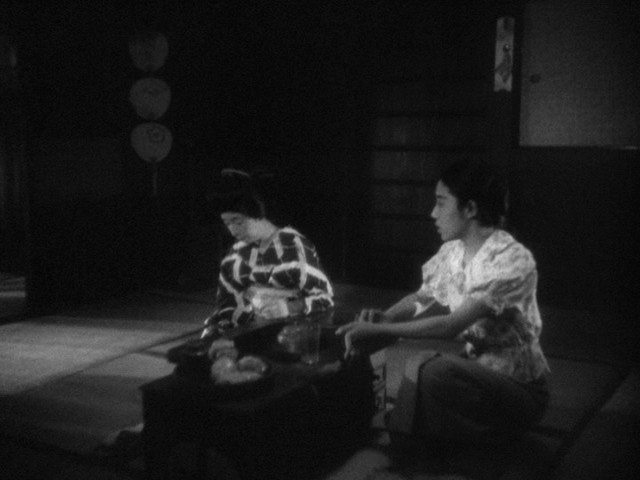
 Based on the Russian novel Yama (The Pit) by Aleksandr Kuprin, protofeminist director Kenji Mizoguchi’s Sisters of the Gion offers a poignant look at the changing desires of women in twentieth-century Japan. In the Gion District, geisha have become one-man prostitutes, taking up with one wealthy patron at a time. When Furusawa (Benkei Shiganoya) loses his business, the bankrupt man turns away from his wife and instead goes to Umekichi (Yōko Umemura), who takes him in, believing that it is her responsibility. Her younger sister, Omocha (Isuzu Yamada), is furious, arguing that geisha, and women in general, should be more than just the playthings of men. She wants her sister instead to find a rich patron who can take care of her in style. Omocha is a manipulative woman, willing to lie to get what she thinks she and Umekichi deserve, but she is not doing it for evil reasons as much as she wants to change the plight of the geisha and give more power to women. But Umekichi cannot break free of the old-fashioned ways as Omocha plays games with successful businessman Jurakudo (Fumio Okura) and his assistant, Kimura (Taizō Fukami), devising a plot that threatens to tear everything apart. Mizoguchi fills Sisters of the Gion with long shots of narrow passageways as characters try to escape from their situations but are unable to. Made in 1936, just before a war that would change Japan’s views on houses of ill repute, the film is virtually timeless for most of its too-brief sixty-nine minutes, until one man decides to take actions into his own hands and suddenly cars and the nearby city shift the overall perspective. In the end, it’s about more than just money, although it’s definitely about that, but it’s also about respect, about common decency, and about humanity, as seen from all sides. Sisters of the Gion is screening May 4 as part of the Museum of the Moving Image’s five-week tribute to the master auteur — who made more than eighty films, less than half of which still exist — which continues through June with such other works as Song of Home, Oyuki the Virgin, White Threads of the Waterfall, The Downfall of Osen, and Straits of Love and Hate.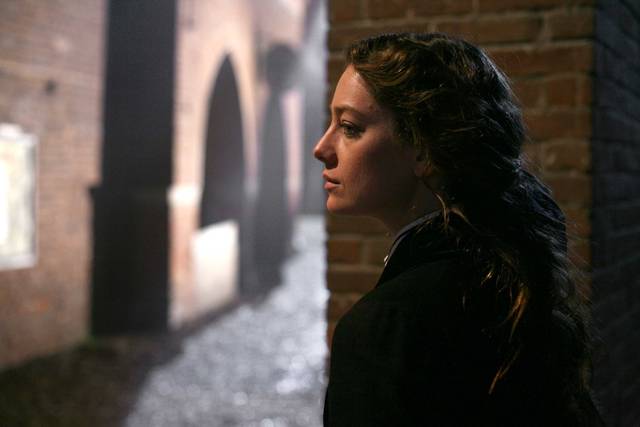
 In the historical romantic drama Vincere, Italian master filmmaker Marco Bellocchio delivers the little-known real-life story of Ida Alser (Giovanna Mezzogiorno), Benito Mussolini’s (Filippo Timi) first wife and the mother of Il Duce’s first-born son, Benito Albino (Fabrizio Costella). Alser and Mussolini first meet in Milan in 1907, when she is a fashion and beauty entrepreneur and he is a newspaper journalist championing a religion-free Socialist. They feel an immediate connection and have passionate meetings. Soon they have a child and are married. But as Mussolini’s power in the Fascist movement grows, he takes a more traditional wife (Michela Cescon) and has another child, disavowing any relationship with Ida and young Benito and going to any lengths to cover up their very existence. Set amid the swirling turmoil that pervaded Italy during the two World Wars, Vincere, featuring an epic score by Carlo Crivelli, is a beautifully shot melodrama (courtesy of cinematographer Daniele Ciprì), able to focus on two strong, unrelenting characters who know what they want – and what they don’t. Bellocchio interweaves archival newsreel footage, lending the film not only more reality but firmly placing it in historical context. Mezzogiorno is brilliant as Alser, a modern-day woman ahead of her time who fought for what she believed in and what she deserved, even if it meant going up against one of the most powerful men in the world. Vincere is screening on May 4 & 7 as part of MoMA’s Bellocchio retrospective, held in conjunction with the upcoming U.S. release of his latest film, Dormant Beauty, which opens June 6 at Lincoln Plaza. The series continues through May 7 with such other Bellocchio works as The Conviction, Vacation in Val Trebbia, A Leap in the Dark, and Dormant Beauty.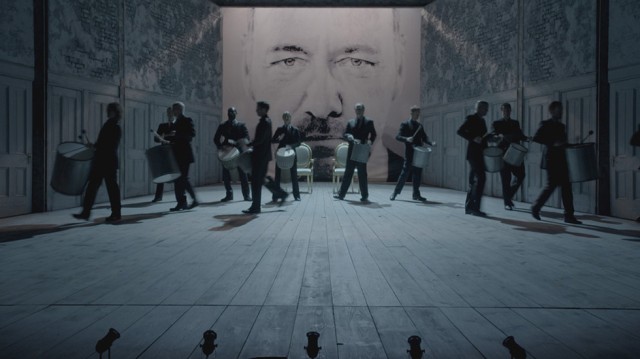
 Now: In the Wings on a World Stage, the marvelous new documentary that follows a transatlantic company as it performs Richard III around the globe, did not get its name only because it’s the first word of Shakespeare’s classic tragedy — “Now is the winter of our discontent” — nor simply because it takes place in modern times in modern dress with nods to modern technology, but also because it’s a spine-tingling celebration of the immediacy of live theater. In 2009, Sam Mendes’s Neal Street Productions, the Old Vic under the leadership of Kevin Spacey, and the Brooklyn Academy of Music, led by Joseph Melillo, formed a partnership in which British and American actors would present five classic plays over three years. Dubbed the Bridge Project, the wildly successful venture concluded in 2012 with Spacey, an American living and working in London, starring in