
Ai Weiwei, detail, “Ritual,” one of six dioramas in fiberglass and iron, from the work “S.A.C.R.E.D.,” 2011-13 (courtesy of Ai Weiwei Studio. © Ai Weiwei)
Brooklyn Museum
200 Eastern Parkway at Washington St.
Saturday, May 3, free, 5:00 – 11:00 (some events require free tickets distributed in advance at the Visitor Center; $10 reduced fee to see Ai Weiwei show)
212-864-5400
www.brooklynmuseum.org
Chinese artist Ai Weiwei has gained international fame not only for his innovative and controversial art projects but because of his ongoing battle with the authorities, which has led at one point to his famous disappearance and later house arrest. But his fight for freedom of expression continues, as evidenced by the multimedia exhibition “Ai Weiwei: According to What?,” which will be the focus of the Brooklyn Museum’s First Saturdays program on May 3. The evening will investigate the intersection of art and activism with live performances by Magnetic North, Taiyo Na, JD Samson, GHOSTLIGHT Chorus, and the great Jean Grae; a sneak preview of Andreas Johnsen’s new documentary Ai Weiwei The Fake Case; a discussion with Friends of Ai Weiwei, a group that raises awareness for freedom of expression and human rights around the world; pop-up gallery talks about art and activism; a workshop in which participants can make protest flowers in solidarity with Ai’s flower protest; an interactive dialogue about Asian American activism; and a curator talk with Sharon Matt Atkins about the Ai Weiwei exhibition. Although all of the events are free (some do require tickets that can be picked up at the Visitor Center), admission to “Ai Weiwei: According to What?” is $10, reduced from its regular $15 fee. In addition, the galleries will be open late, giving visitors plenty of opportunity to check out, without charge, “Witness: Art and Civil Rights in the Sixties,” “Swoon: Submerged Motherlands,” “Chicago in L.A.: Judy Chicago’s Early Work, 1963–74,” “Revolution! Works from the Black Arts Movement,” “Divine Felines: Cats of Ancient Egypt,” “Life, Death, and Transformation in the Americas,” “Connecting Cultures: A World in Brooklyn,” and other exhibits.
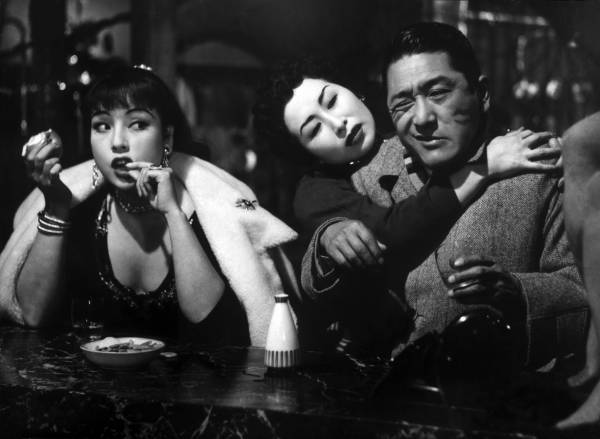
 Made the same year Japan passed a major anti-prostitution law, Kenji Mizoguchi’s final film, 1956’s Street of Shame, is a brutally honest depiction of the decidedly unglamorous life of a group of courtesans at a Tokyo brothel. “Yoshiwara has been here three hundred years,” the Mamasan (Sadako Sawamura) says early on to a police officer. “Does an unnecessary business last so long?” Originally titled Red-Light District, the black-and-white film features an outstanding cast of women playing desperate geisha with serious family and financial problems that lead them to the embarrassment of trying to physically force men off the dark, dank street and into their rooms. Hanae (Michiyo Kogure) has to deal with aging, a baby, and a suicidal husband, Yumeko (Aiko Mimasu) doesn’t want her son to know what she does to earn money to attempt to give him a decent life, Yorie (Hiroko Machida) thinks a husband in a faraway village will gain her longed-for freedom, Yasumi (Ayako Wakao) has become a loan shark to her coworkers, and young Mickey (Machiko Kyō) is quick to share her opinions about the other women but not so quick to catch on to the debasement she is lowering herself to. The protofeminist director of such previous works as Sisters of the Gion, Osaka Elegy, Women of the Night, and The Life of Oharu as well as the brilliant two-part samurai epic The 47 Ronin, Mizoguchi spent much of his career — which included more than seventy films in thirty-three years, up to his death in 1956 at the age of fifty-eight — making films about the exploitation of women, partly influenced by having seen his sister sold into prostitution by their father. It’s a shame that Street of Shame, one of Mizoguchi’s best, also turned out to be his last, but what a way to go. Street of Shame is screening May 2 as part of the Museum of the Moving Image’s five-week tribute to the master auteur — who made more than eighty films, less than half of which still exist — which continues through June with the above-mentioned works as well as Ugetsu, Sansho the Bailiff, Utamaro and His Five Women, The Story of the Last Chrysanthemums, and A Woman of Rumor.
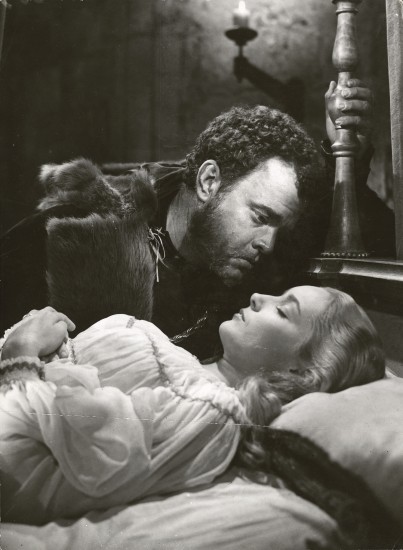
 Filmed in black-and-white over three years in multiple locations and ultimately employing five cinematographers, four editors, three Desdemonas, and two scores, it’s rather amazing that Orson Welles’s 1952 independent production of William Shakespeare’s Othello was ever completed — of course, many Welles projects were not. That the final work turned out to be a masterpiece that won the Palme d’Or at Cannes speaks yet more to Welles’s genius. A newly restored version of Othello is in the midst of a two week-run at Film Forum, in conjunction with “Celebrate Shakespeare 2014!,” a worldwide festival honoring the Bard’s 450th birthday. Welles, who directed the picture and plays the title character, streamlined the story into ninety-five minutes, getting to the heart of the most intense tale of jealousy and betrayal ever told. The film opens with shadowy shots of the dead Othello and his deceased wife, Desdemona (Suzanne Cloutier), carried aloft on biers at their dual funeral, to the sounds of an ominous piano and a mournful vocal chorus. The credits soon follow, after which Welles returns to the beginning, as the villainous ensign Iago (Micheál MacLiammóir) plots with Roderigo (Robert Coote) to convince Othello that his loyal and devoted wife is actually in love with the heroic soldier Michael Cassio (Michael Laurence).
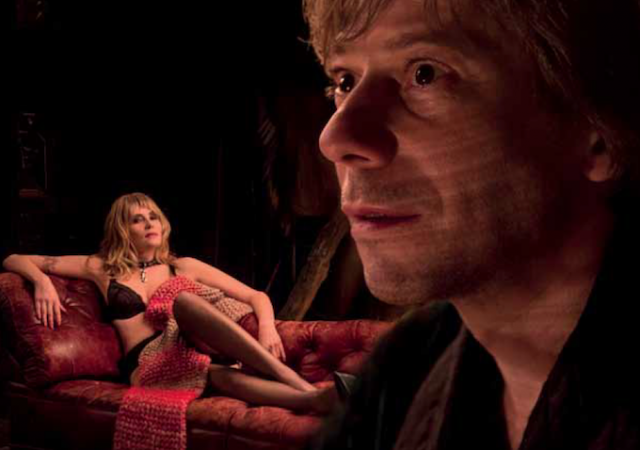
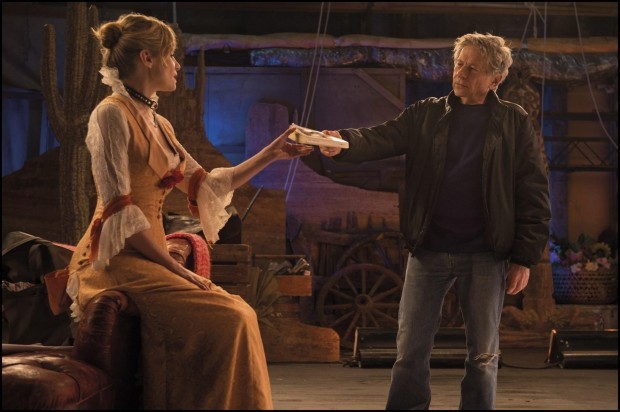
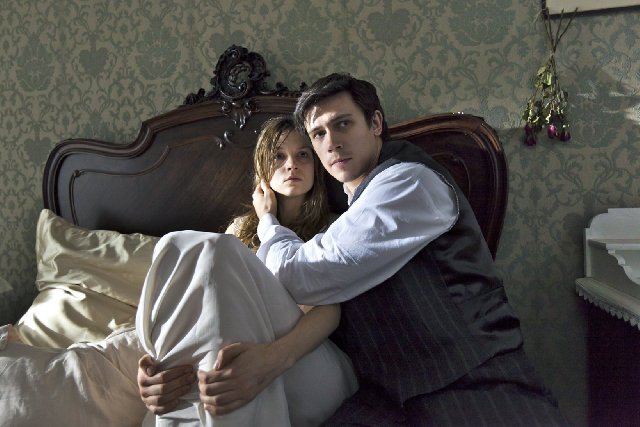
 At first glance, Dutch filmmaker Jos Stelling’s The Girl and Death might seem like a costume drama period piece, but in actuality it’s a timeless and intimate look at true love and overwhelming heartbreak. As the film opens, an aging doctor (Sergey Makovetsky) lays flowers on a footstone in a graveyard, then enters a dilapidated building, casting his memories back to his younger self. A student traveling from Moscow to Paris, Nicolai (Leonid Bichevin) stops in a rural hotel on the outskirts of Leipzig. Upon first setting eyes on the beautiful Elise (Sylvia Hoeks), he becomes instantly smitten, despite her friend Nina’s (Renata Litvinova) warnings to stay away from her. The hotel, owned by an old count (German comedian Dieter Hallervorden), also serves as a brothel, and Elise is a courtesan who “belongs” to him. But Nicolai refuses to give up his pursuit of Elise, leading to real trouble for all concerned. Stelling (The Illusionist, Duska), who cowrote the script with Bert Rijkelijkhuizen, zeroes in on the central conflict, Nicolai and Elise’s desire to be together, avoiding subplots and overt social commentary (aside from the power of money). In fact, much of their relationship is spent gazing at each other, not even saying much; Stelling never shows either one outside the hotel grounds. It is as if they exist only in this singular context, with no past, and no other present save for what is shown on-screen. That conceit also works against the film, as the viewer is too often asked to take certain events for granted or simply accept them without question. But The Girl and Death, a German, Russian, and Dutch coproduction that won three Golden Calves at the Netherlands Film Festival (for Best Picture, Best Sound Design, and Best Cinematography), is gripping nonetheless, a painful, romantic portrait of love, jealousy, loyalty, innocence, dedication, and desperation.