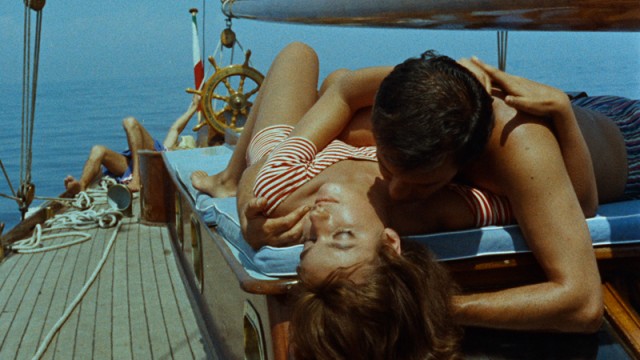
French classic PURPLE NOON will screen in Central Park on May 30
There’s nothing quite like catching a free movie in the summer in New York City, lying on a blanket in a park, gathering on an aircraft carrier, or huddling in an air-conditioned theater. The season’s free festivals are slowly being announced, with more to come. Below are the day-by-day listings of favorites as well as lesser-known festivals, including Summer on the Hudson, Rooftop Films, the Bryant Park Summer Film Festival, the Intrepid Summer Movie Series, Syfy Movies with a View, SummerScreen, Films on the Green, Outdoor Cinema at Socrates Sculpture Park, Red Hook Flicks on Valentino Pier, the Central Park Conservancy Film Festival in Central Park, Front/Row Cinema at the South Street Seaport, SummerStage, RiverFlicks, Coney Island Flicks on the Beach, Passport Thursdays at the Queens Museum, and Celebrate Brooklyn! Keep watching this page as more festivals are announced. (Films without exact start times generally begin around sunset.)
Saturday, May 17
Feature Screenings: The Iron Giant (Brad Bird, 1999), Sony Wonder Technology Lab, 3:00 (RSVP two weeks in advance)
Wednesday, May 21
Rooftop Films: Cold in July (Jim Mickle, 2014), Solar One, free for Time Warner Cable customers with RSVP, live music at 8:30, screening at 9:00, followed by Q&A with director Jim Mickle and star Michael C. Hall
Friday, May 23
Intrepid Summer Movie Series: Top Gun (Tony Scott, 1986), Intrepid flight deck
Saturday, May 24
Feature Screenings: Short Circuit (John Badham, 1986), Sony Wonder Technology Lab, 3:00 (RSVP two weeks in advance)
Friday, May 30
Movies at Crocheron Park: Super Buddies (Robert Vince, 2013), Crocheron Park, 8:00
Films on the Green: Purple Noon (René Clément, 1960), Cedar Hill in Central Park, 8:30
Saturday, May 31
Feature Screenings: Godzilla vs. Mechagodzilla (Jun Fukuda, 1974), Sony Wonder Technology Lab, 3:00 (RSVP two weeks in advance)
Front/Row Cinema: Jaws (Steven Spielberg, 1975), South Street Seaport
Wednesday, June 4
Front/Row Cinema: WALL-E (Andrew Stanton, 2008), South Street Seaport
Friday, June 6
Movies at Crocheron Park: Brave (Mark Andrews & Brenda Chapman, 2012), Crocheron Park, 8:00
Rooftop Films: Sundance Film Festival Shorts, preceded by live music by Salt Cathedral, Metro-Tech Commons, music at 8:30, screening at 9:00
Films on the Green: Les Tontons Flinguers (Georges Lautner, 1963), Washington Square Park, 8:30
Saturday, June 7
Feature Screenings: The Monuments Men (George Clooney, 2014), Sony Wonder Technology Lab, 12:15 (RSVP two weeks in advance)
Feature Screenings: After Earth (M. Night Shyamalan, 2014), Sony Wonder Technology Lab, 3:00 (RSVP two weeks in advance)
Front/Row Cinema: Rise of the Planet of the Apes (Rupert Wyatt, 2011), South Street Seaport
Wednesday, June 11
Front/Row Cinema: The Muppets Take Manhattan (Frank Oz, 1984), South Street Seaport
Friday, June 13
Movies at Crocheron Park: Tangled (Nathan Greno & Byron Howard, 2010), Crocheron Park, 8:00
Films on the Green: Buffet Froid (Bertrand Blier, 1979), Washington Square Park, 8:30
Saturday, June 14
Feature Screenings: The Past (Asghar Farhadi, 2013), Sony Wonder Technology Lab, 12:15 (RSVP two weeks in advance)
Feature Screenings: Think Like a Man (Tim Story, 2012), Sony Wonder Technology Lab, 3:00 (RSVP two weeks in advance)
Front/Row Cinema: The Breakfast Club (John Hughes, 1985), South Street Seaport
Monday, June 16
Bryant Park Summer Film Festival: Saturday Night Fever (John Badham, 1977), Bryant Park Lawn
Wednesday, June 18
Front/Row Cinema: Rango (Gore Verbinski, 2011), South Street Seaport
Thursday, June 19
BAMcinemafest Outdoor Screening, with live music and food, Pier 1, Brooklyn Bridge Park
Friday, June 20
Films on the Green: The Women on the Sixth Floor (Philippe Le Guay, 2010), Tompkins Square Park, 8:30
Saturday, June 21
Feature Screenings: The Social Network (David Fincher, 2010), Sony Wonder Technology Lab, 12:15 (RSVP two weeks in advance)
Feature Screenings: Searching for Sugar Man (Malik Bendjelloul, 2012) Sony Wonder Technology Lab, 3:00 (RSVP two weeks in advance)
Front/Row Cinema: The Perks of Being a Wallflower (Stephen Chbosky, 2012), South Street Seaport
Sunday, June 22
SummerStage: Whistle! A Tribute to Frankie Knuckles, with the Soul Summit DJs, DJ Kervyn Mark, DJ Stormin’ Norman, vocalists Kenny Bobien and Lynn Lockamy, and others, followed by a screening of the director’s cut of Hands to the Sky (Angelo Boyke & Jean-Paul Noel, 2012), Herbert von King Park, 7:00
Monday, June 23
Bryant Park Summer Film Festival: The Mark of Zorro (Rouben Mamoulian, 1940), Bryant Park Lawn
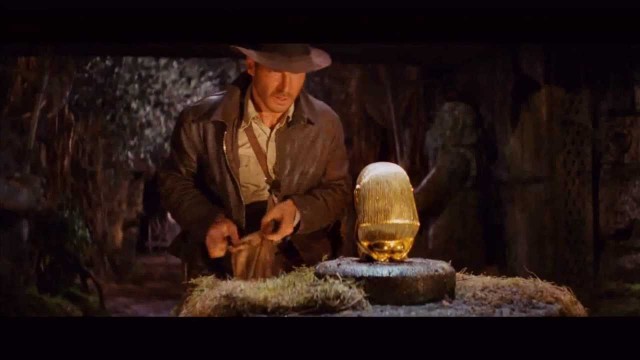
RAIDERS OF THE LOST ARK is part of free summer tribute at the Museum of Jewish Heritage
Wednesday, June 25
Close Encounters of the Spielberg Kind: Raiders of the Lost Ark (Steven Spielberg, 1981), Museum of Jewish Heritage, 6:30
Front/Row Cinema: Brave (Mark Andrews & Brenda Chapman, 2012), South Street Seaport
Friday, June 27
Films on the Green: La Haine (Mathieu Kassovitz, 1995), Tompkins Square Park, 8:30
Rooftop Films: Five Star (Keith Miller, 2014), Metro-Tech Commons, 9:00
Saturday, June 28
Feature Screenings: Cloudy with a Chance of Meatballs 2 (Cody Cameron & Kris Pearn, 2013), Sony Wonder Technology Lab, 12:15 (RSVP two weeks in advance)
Feature Screenings: The Mortal Instruments: City of Bones (Harald Zwart, 2013), Sony Wonder Technology Lab, 3:00 (RSVP two weeks in advance)
Monday, June 30
Bryant Park Summer Film Festival: A Soldier’s Story (Norman Jewison, 1984), Bryant Park Lawn
Coney Island Flicks on the Beach: Gravity (Alfonso Cuarón, 2013), beach at West Tenth St.
Wednesday, July 2
Close Encounters of the Spielberg Kind: Saving Private Ryan (Steven Spielberg, 1998), Museum of Jewish Heritage, 6:30
Outdoor Cinema: Pussy Riot: A Punk Prayer (Maxim Pozdorovkin & Mike Lerner, 2013), Socrates Sculpture Park, preceded by live music at 7:00
Front/Row Cinema: The Karate Kid (John G. Avildsen, 1984), South Street Seaport
Saturday, July 5
Pier/Party: The Avengers (Joss Whedon, 2012), South Street Seaport, preceded by Midtown Comics Fan Party at 4:00
Monday, July 7
Bryant Park Summer Film Festival: Blazing Saddles (Mel Brooks, 1974), Bryant Park Lawn
Coney Island Flicks on the Beach: Frozen (Chris Buck & Jennifer Lee, 2013), beach at West Tenth St.
Tuesday, July 8
Rooftop Films at Bronx Terminal Market: Frozen (Chris Buck & Jennifer Lee, 2013), Level 6 Garage Roof Deck, activities 7:00, film 8:30
Red Hook Flicks: Dazed and Confused (Richard Linklater, 1993), Valentino Pier
Wednesday, July 9
Close Encounters of the Spielberg Kind: Jurassic Park (Steven Spielberg, 1993), Museum of Jewish Heritage, 6:30
Outdoor Cinema: La Pirogue (Moussa Touré, 2012), Socrates Sculpture Park, preceded by live music at 7:00
Front/Row Cinema: Wreck-It Ralph (Rich Moore, 2012), South Street Seaport
SummerScreen: Back to the Future (Robert Zemeckis, 1985), McCarren Park
Summer on the Hudson: Pier I Picture Show presents Clueless (Amy Heckerling, 1995), Riverside Park, 8:30
RiverFlicks — Big Hit Wednesdays: Iron Man 3 (Shane Black, 2013), Pier 63, Hudson River Park
Thursday, July 10
Intrepid Summer Movie Series: Independence Day (Roland Emmerich, 1996), Intrepid flight deck
Syfy Movies with a View: Duck Soup (Leo McCarey, 1933), Pier 1, Brooklyn Bridge Park
Friday, July 11
RiverFlicks Family Fridays: Despicable Me 2 (Pierre Coffin & Chris Renaud, 2013), Pier 46, Hudson River Park
Rooftop Films: Broken Hearted: Twisted, Romantic Short Films, Metro-Tech Commons, 8:00
Films on the Green: The Moustache (Emmanuel Carrère, 2005), Pier 1, Riverside Park, 8:30
Saturday, July 12
Front/Row Cinema: I Am Legend (Francis Lawrence, 2007), South Street Seaport
Monday, July 14
Bryant Park Summer Film Festival: Suddenly Last Summer (Joseph L. Mankiewicz, 1959), Bryant Park Lawn
Coney Island Flicks on the Beach: E.T. the Extra-Terrestrial (Steven Spielberg, 1982), beach at West Tenth St.
Tuesday, July 15
Rooftop Films at Bronx Terminal Market: The Odd Life of Timothy Green (Peter Hedges, 2012), Level 6 Garage Roof Deck, activities 7:00, film 8:30
Red Hook Flicks: Hustle and Flow (Craig Brewer, 2005), Valentino Pier
Wednesday, July 16
Close Encounters of the Spielberg Kind: Amistad (Steven Spielberg, 1997), Museum of Jewish Heritage, 6:30
Outdoor Cinema: The Deadly Ponies Gang (Zoe McIntosh, 2013), Socrates Sculpture Park, preceded by live music at 7:00
Front/Row Cinema: Fantastic Mr. Fox (Wes Anderson, 2009), South Street Seaport
SummerScreen: Zoolander (Ben Stiller, 2001), McCarren Park
Summer on the Hudson: Pier I Picture Show presents Back to the Future (Robert Zemeckis, 1985), Riverside Park, 8:30
RiverFlicks — Big Hit Wednesdays: American Hustle (David O. Russell, 2013), Pier 63, Hudson River Park
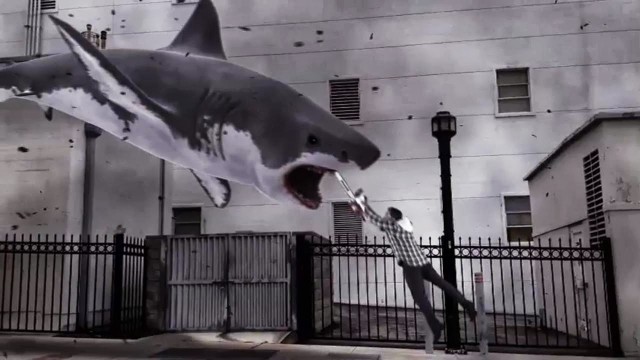
SHARKNADO will wreak havoc in Brooklyn Bridge Park on July 17
Thursday, July 17
The Historic Harlem Parks Film Festival: Brothers Hypnotic (Reuben Atlas, 2013), “Horn Section” DJ set with DJ Laylo at 7:30, film screening at 8:30, Jackie Robinson Park Bandshell
Intrepid Summer Movie Series: Gravity (Alfonso Cuarón, 2013), Intrepid flight deck
Syfy Movies with a View: Sharknado (Anthony C. Ferrante, 2013), Pier 1, Brooklyn Bridge Park
Friday, July 18
RiverFlicks Family Fridays: Ghostbusters (Ivan Reitman, 1984), Pier 46, Hudson River Park
Films on the Green: Grand Illusion (Jean Renoir, 1937), Pier 1, Riverside Park, 8:30
Saturday, July 19
Front/Row Cinema: True Grit (Joel & Ethan Coen, 2010), South Street Seaport
Monday, July 21
Bryant Park Summer Film Festival: National Lampoon’s Vacation (Harold Ramis, 1983), Bryant Park Lawn
Coney Island Flicks on the Beach: Iron Man 3 (Shane Black, 2013), beach at West Tenth St.
Tuesday, July 22
Red Hook Flicks: Hotel Transylvania (Genndy Tartakovsky, 2012), Valentino Pier
Wednesday, July 23
Close Encounters of the Spielberg Kind: Close Encounters of the Third Kind (Steven Spielberg, 1977), Museum of Jewish Heritage, 6:30
Outdoor Cinema: Umberto D. (Vittorio De Sica, 1952), Socrates Sculpture Park, preceded by live music at 7:00
The Historic Harlem Parks Film Festival: The Night James Brown Saved Boston (David Leaf, 2008), “Godfather of Soul” DJ set with DJ Chairman Mao at 7:30, film screening at 8:30, St. Nicholas Park
Front/Row Cinema: E.T. the Extra-Terrestrial (Steven Spielberg, 1982), South Street Seaport
SummerScreen: Cry-Baby (John Waters, 1990), McCarren Park
Summer on the Hudson: Pier I Picture Show presents Harold and Maude (Hal Ashby, 1971), Riverside Park, 8:30
RiverFlicks — Big Hit Wednesdays: This Is the End (Seth Rogen & Evan Goldberg, 2013), Pier 63, Hudson River Park
Thursday, July 24
Seaport Film & Food Festival: Cockpit (Mårten Klingberg, 2012), with free Swedish cuisine and drinks, South Street Seaport, 6:00
Intrepid Summer Movie Series: Pirates of the Caribbean: The Curse of the Black Pearl (Gore Verbinski, 2003), Intrepid flight deck
Syfy Movies with a View: Fantastic Mr. Fox (Wes Anderson, 2009), Pier 1, Brooklyn Bridge Park
Rooftop Films: Animation Block Party, Brookfield Place, Winter Garden, live music at 8:30, short films at 9:00
Friday, July 25
Celebrate Brooklyn! Music and Movies: Amandla: A Revolution in Four-Part Harmony (Lee Hirsch, 2002) and Second-Hand Reading (William Kentridge, 2013), with live score performed by Neo Muyanga, Prospect Park Bandshell, 7:30
RiverFlicks Family Fridays: Ghostbusters II (Ivan Reitman, 1989), Pier 46, Hudson River Park
Films on the Green: Le Magnifique (Philippe de Broca, 1973), Transmitter Park, 8:30
Rooftop Films: NY Shorts, Brookfield Place, Winter Garden, live music at 8:30, short films at 9:00
Saturday, July 26
Front/Row Cinema: Men in Black 3 (Barry Sonnenefeld, 2012), South Street Seaport
Rooftop Films: The Case of the Three Sided Dream (Adam Kahan, 2014), Brookfield Place, Winter Garden, live music at 8:30, screening at 9:00
Monday, July 28
Bryant Park Summer Film Festival: Key Largo (John Huston, 1948), Bryant Park Lawn
Coney Island Flicks on the Beach: The Lego Movie (Chris Miller & Phil Lord, 2014), beach at West Tenth St.
Tuesday, July 29
Rooftop Films at Bronx Terminal Market: Cloudy with a Chance of Meatballs 2 (Cody Cameron & Kris Pearn, 2013), Level 6 Garage Roof Deck, activities 7:00, film 8:30
AT&T Film for All: When Harry Met Sally (Rob Reiner, 1989), the Beach at Coney Island, 3059 West Twelfth St., 8:30
Red Hook Flicks: Fried Green Tomatoes (Jon Avnet, 1991), Valentino Pier
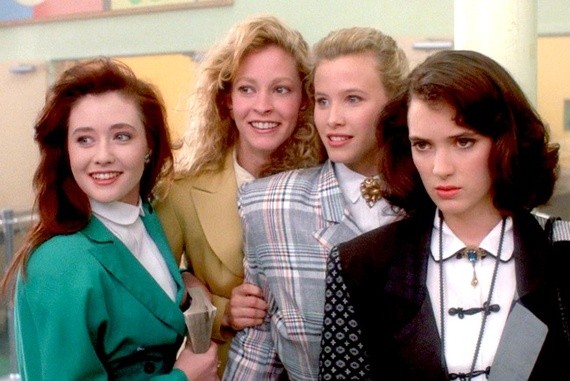
The Heathers will hatch quite a plan in McCarren Park on July 30
Wednesday, July 30
Close Encounters of the Spielberg Kind: Schindler’s List (Steven Spielberg, 1993), Museum of Jewish Heritage, 6:30
Dahesh Museum of Art Wednesday Night Movies: The Heiress (William Wyler, 1949), with free drinks and popcorn, Dahesh Museum of Art Gift Shop, 145 Sixth Ave., 6:30
Outdoor Cinema: Viola (Matias Piñeiro, 2013), Socrates Sculpture Park, preceded by live music at 7:00
Front/Row Cinema: The Goonies (Richard Donner, 1985), South Street Seaport
SummerScreen: Heathers (Michael Lehmann, 1988), McCarren Park
Summer on the Hudson: Pier I Picture Show presents The Princess Bride (Rob Reiner, 1987), Riverside Park, 8:30
RiverFlicks — Big Hit Wednesdays: The Lego Movie (Chris Miller & Phil Lord, 2014), Pier 63, Hudson River Park
Thursday, July 31
Seaport Film & Food Festival: Nosotros los Nobles (The Noble Family) (Gary Alazraki, 2013), with free Mexican cuisine and drinks, South Street Seaport, 6:00
Passport Thursdays: India, with The World Before Her (Nisha Pahuja, 2012) and dance performance by Sonali Skandan & Jiva Dance, outside Queens Museum in Flushing Meadows Park, 7:00
Intrepid Summer Movie Series: The Hunt for Red October (John McTiernan, 1990), Intrepid flight deck
Syfy Movies with a View: Beetlejuice (Tim Burton, 1988), Pier 1, Brooklyn Bridge Park
Friday, August 1
RiverFlicks Family Fridays: Cloudy with a Chance of Meatballs 2 (Cody Cameron & Kris Pearn, 2013), Pier 46, Hudson River Park
Films on the Green: 2 Autumns, 3 Winters (Sébastien Betbeder, 2013), Transmitter Park, 8:30
Saturday, August 2
Front/Row Cinema: When Harry Met Sally (Rob Reiner, 1989), South Street Seaport
Sunday, August 3
Nitehawk Outdoors — 50 Kent Festival: ¡Three Amigos! (John Landis, 1986), 50 Kent Ave., live music at 7:00, screening at sunset
Monday, August 4
Bryant Park Summer Film Festival: The Karate Kid (John G. Avildsen, 1984), Bryant Park Lawn
Coney Island Flicks on the Beach: American Hustle (David O. Russell, 2013), beach at West Tenth St.
Tuesday, August 5
Red Hook Flicks: Paris Is Burning (Jennie Livingston, 1991), Valentino Pier
Wednesday, August 6
Close Encounters of the Spielberg Kind: Jaws (Steven Spielberg, 1975), Museum of Jewish Heritage, 6:30
Dahesh Museum of Art Wednesday Night Movies: The Picture of Dorian Gray (Albert Lewin, 1945), with free drinks and popcorn, Dahesh Museum of Art Gift Shop, 145 Sixth Ave., 6:30
Outdoor Cinema: Forest of the Dancing Spirits (Linda Västrik, 2013), Socrates Sculpture Park, preceded by live music at 7:00
Front/Row Cinema: The Croods (Kirk DeMicco & Chris Sanders, 2013), South Street Seaport
SummerScreen: The Big Lebowski (Joel & Ethan Coen, 1998), McCarren Park
Summer on the Hudson: Pier I Picture Show presents Anchors Aweigh (George Sidney, 1945), Riverside Park, 8:30
RiverFlicks — Big Hit Wednesdays: Lone Survivor (Peter Berg, 2013), Pier 63, Hudson River Park
Thursday, August 7
The LOT LIC Film Series: Chop Shop (Ramin Bahrani, 2008), 43-29 Crescent St., Long Island City, 6:00
Passport Thursdays: Brazil, with O Mistério do Samba (Carolina Jabor Lula Buarque de Hollanda, 2008) and live music and dance by Batala NYC, outside Queens Museum in Flushing Meadows Park, 7:00
Intrepid Summer Movie Series: Spaceballs (Mel Brooks, 1987), Intrepid flight deck
Syfy Movies with a View: Cat on a Hot Tin Roof (Richard Brooks, 1958), Pier 1, Brooklyn Bridge Park
Friday, August 8
RiverFlicks Family Fridays: Groundhog Day (Harold Ramis, 1993), Pier 46, Hudson River Park
Saturday, August 9
Front/Row Cinema: Four Weddings and a Funeral (Mike Newell, 1994), South Street Seaport
Monday, August 11
Bryant Park Summer Film Festival: Lover Come Back (Delbert Mann, 1961), Bryant Park Lawn
Tuesday, August 12
Red Hook Flicks: Madagascar (Eric Darnell & Tom McGrath, 2005), Valentino Pier
Movies at Crocheron Park: Despicable Me 2 (Pierre Coffin & Chris Renaud, 2013), Crocheron Park, 8:00
Wednesday, August 13
SummerStage: Bobby Sanabria and screening of Chico & Rita (Tono Errando, Javier Mariscal & Fernando Trueba, 2010), Marcus Garvey Park, 6:00
Close Encounters of the Spielberg Kind: E.T. the Extra-Terrestrial (Steven Spielberg, 1982), Museum of Jewish Heritage, 6:30
Dahesh Museum of Art Wednesday Night Movies: The Moon and Sixpence (Albert Lewin, 1942), with free drinks and popcorn, Dahesh Museum of Art Gift Shop, 145 Sixth Ave., 6:30
Front/Row Cinema: Charlie & the Chocolate Factory (Tim Burton, 2005), South Street Seaport
Outdoor Cinema: 13 Assassins (Takashi Miike, 2011), Socrates Sculpture Park, preceded by live music at 7:00
SummerScreen: Audience Pick, McCarren Park
Summer on the Hudson: Pier I Picture Show presents The Outsiders (Francis Ford Coppola, 1983), Riverside Park, 8:30
RiverFlicks — Big Hit Wednesdays: The Hunger Games: Catching Fire (Francis Lawrence, 2013), Pier 63, Hudson River Park
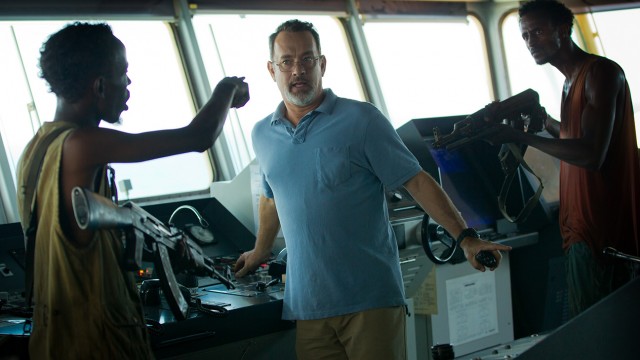
Captain Phillips lands on the Intrepid on August 14
Thursday, August 14
Seaport Film & Food Festival: Au Revoir Taipei (Arvin Chen, 2010), with free Taiwanese cuisine and drinks, South Street Seaport, 6:00
The LOT LIC Film Series: Polyester (John Waters, 1981), 43-29 Crescent St., Long Island City, 6:00
SummerStage: Bobby Sanabria and screening of Chico & Rita (Javier Mariscal, Fernando Trueba & Tono Errando, 2010), Marcus Garvey Park, 6:00
Passport Thursdays: Cuba, with Habanastation (Ian Padrón, 2012) and live music by the Cimarron Project, outside Queens Museum in Flushing Meadows Park, 7:00
Intrepid Summer Movie Series: Captain Phillips (Paul Greengrass, 2013), Intrepid flight deck
Syfy Movies with a View: Ghost Dog: The Way of the Samurai (Jim Jarmusch, 1999), Pier 1, Brooklyn Bridge Park
Friday, August 15
RiverFlicks Family Fridays: The Smurfs 2 (Raja Gosnell, 2013), Pier 46, Hudson River Park
Saturday, August 16
Front/Row Cinema: When Harry Met Sally (Rob Reiner, 1989), South Street Seaport
Sunday, August 17
SummerStage: Nuyorican Poets Café 40th Anniversary Celebration, with screening of Our Latin Thing (Leon Gast, 1972), East River Park, 6:00
SummerStage: Bellatrix! A Soul Train Tribute to Women in Music, with Ubiquita Sound System and screening of Twenty Feet from Stardom (Morgan Neville, 2013), Marcus Garvey Park, 6:00
Monday, August 18
Central Park Conservancy Film Festival – Scenes from Our City: Big (Penny Marshall, 1988), north of Sheep Meadow, 8:00
Bryant Park Summer Film Festival: The Shining (Stanley Kubrick, 1980), Bryant Park Lawn
Tuesday, August 19
Red Hook Flicks: Independence Day (Roland Emmerich, 1996), Valentino Pier
Central Park Conservancy Film Festival – Scenes from Our City: The Royal Tenenbaums (Wes Anderson, 2001), north of Sheep Meadow, 8:00
Movies at Crocheron Park: Monsters University (Dan Scanlon, 2013), Crocheron Park, 8:00
Wednesday, August 20
Dahesh Museum of Art Wednesday Night Movies: The Adventures of Sherlock Holmes (Alfred L. Werker, 1939), with free drinks and popcorn, Dahesh Museum of Art Gift Shop, 145 Sixth Ave., 6:30
RiverFlicks — Big Hit Wednesdays: Captain Phillips (Paul Greengrass, 2013), Pier 63, Hudson River Park
Front/Row Cinema: Who Framed Roger Rabbit (Robert Zemeckis, 1988), South Street Seaport
Central Park Conservancy Film Festival – Scenes from Our City: The Way We Were (Sydney Pollack, 1988), north of Sheep Meadow, 8:00
Thursday, August 21
Seaport Film & Food Festival: Amélie (Jean-Pierre Jeunet, 2001), with free French cuisine and drinks, South Street Seaport, 6:00
The LOT LIC Film Series: Strictly Ballroom (Baz Luhrmann, 1992), 43-29 Crescent St., Long Island City, 6:00
Passport Thursdays: Korea, with Approved for Adpotion (Laurent Boileau & Jung Henin, 2012) and dance performance by Song Hee Lee Dance Company, outside Queens Museum in Flushing Meadows Park, 7:00
Syfy Movies with a View: The Birds (Alfred Hitchcock, 1963), Pier 1, Brooklyn Bridge Park
Central Park Conservancy Film Festival – Scenes from Our City: Coming to America (John Landis, 1988), north of Sheep Meadow, 8:00
Friday, August 22
RiverFlicks Family Fridays: The Wizard of Oz (Victor Fleming, 1939), Pier 46, Hudson River Park
Central Park Conservancy Film Festival – Scenes from Our City: Rear Window (Alfred Hitchcock, 1954), north of Sheep Meadow, 8:00
Saturday, August 23
Front/Row Cinema: The Aviator (Martin Scorsese, 2004), South Street Seaport
Tuesday, August 26
Red Hook Flicks Neighborhood Choice: On the Waterfront (Elia Kazan, 1954), Valentino Pier
Movies at Crocheron Park: Europa Report (Sebastián Cordero, 2013), Crocheron Park, 8:00
Wednesday, August 27
Outdoor Cinema: Microcosmos (Claude Nuridsany and Marie Perénnou, 1996), Socrates Sculpture Park, preceded by live music at 7:00
Front/Row Cinema: Frozen (Chris Buck & Jennifer Lee, 2013), South Street Seaport
Thursday, August 28
The LOT LIC Film Series: The Triplets of Belleville (Sylvain Chomet, 2003), 43-29 Crescent St., Long Island City, 6:00
Syfy Movies with a View: Public Vote, Monty Python and the Holy Grail (Terry Gilliam & Terry Jones, 1975), Groundhog Day (Harold Ramis, 1993), or Who Framed Roger Rabbit (Robert Zemeckis, 1988), Pier 1, Brooklyn Bridge Park
Saturday, August 30
Front/Row Cinema: Crazy, Stupid, Love (John Requa & Glenn Ficarra, 2011), South Street Seaport
Sunday, August 31
Front/Row Cinema: Skyfall (Sam Mednes, 2012), South Street Seaport
Thursday, September 4
The LOT LIC Film Series: Lo Quattro Volte (Michelangelo Frammartino, 2010), 43-29 Crescent St., Long Island City, 6:00
Films on the Green: The French Minister (Bertrand Tavernier, 2013), Columbia University, 7:30
Thursday, September 11
The LOT LIC Film Series: Pariah (Dee Rees, 2011), 43-29 Crescent St., Long Island City, 6:00
Thursday, September 18
The LOT LIC Film Series: Wild Style (Charlie Ahearn, 1983), 43-29 Crescent St., Long Island City, 6:00
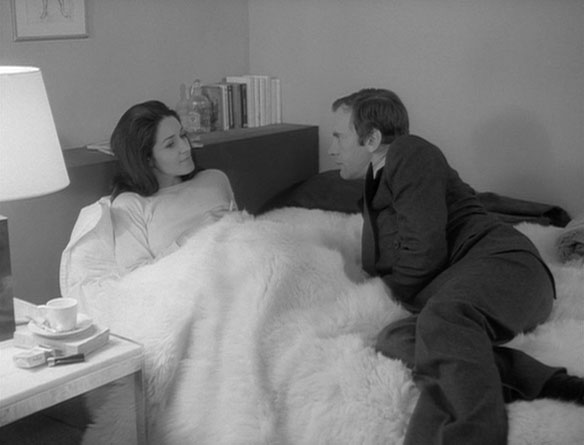
 Nominated for the Palme d’Or and a Best Foreign Language Film Oscar, My Night at Maud’s, Éric Rohmer’s fourth entry in his Six Moral Tales series (Claire’s Knee, Love in the Afternoon), continues the French director’s fascinating exploration of love, marriage, and tangled relationships. Three years removed from playing the romantic racecar driver Jean-Louis in Claude Lelouch’s A Man and a Woman, Jean-Louis Trintignant again stars as a man named Jean-Louis, this time a single thirty-four-year-old Michelin engineer living a relatively solitary life in the French suburb of Clermont. A devout Catholic, he is developing an obsession with a fellow churchgoer, the blonde, beautiful Françoise (Marie-Christine Barrault), about whom he knows practically nothing. After bumping into an old school friend, Vidal (Antoine Vitez), the two men delve into deep discussions of religion, Marxism, Pascal, mathematics, Jansenism, and women. Vidal then invites Jean-Louis to the home of his girlfriend, Maud (Françoise Fabian), a divorced single mother with open thoughts about sexuality, responsibility, and morality that intrigue Jean-Louis, for whom respectability and appearance are so important. The conversation turns to such topics as hypocrisy, grace, infidelity, and principles, but Maud eventually tires of such talk. “Dialectic does nothing for me,” she says shortly after explaining that she always sleeps in the nude. Later, when Jean-Louis and Maud are alone, she tells him, “You’re both a shamefaced Christian and a shamefaced Don Juan.” Soon a clearly conflicted Jean-Louis is involved in several love triangles that are far beyond his understanding, so he again seeks solace in church. My Night at Maud’s is a classic French tale, with characters spouting off philosophically while smoking cigarettes, drinking wine and other cocktails, and getting naked. Shot in black-and-white by Néstor Almendros, the film roams from midnight mass to a single woman’s bed and back to church, as Jean-Louis, played with expert concern by Trintignant, is forced to examine his own deep desires and how they relate to his spirituality. Fabian (Belle de Jour, The Letter) is outstanding as Maud, whose freedom titillates and confuses Jean-Louis. One of Rohmer’s best, most accomplished works despite its haughty intellectualism, My Night at Maud’s is screening May 14-16 at 1:30 as part of MoMA’s ongoing series “An Auteurist History of Film,” which continues May 21-23 with Robert Altman’s McCabe and Mrs. Miller and May 28-30 with Rainer Werner Fassbinder’s Merchant of the Four Seasons.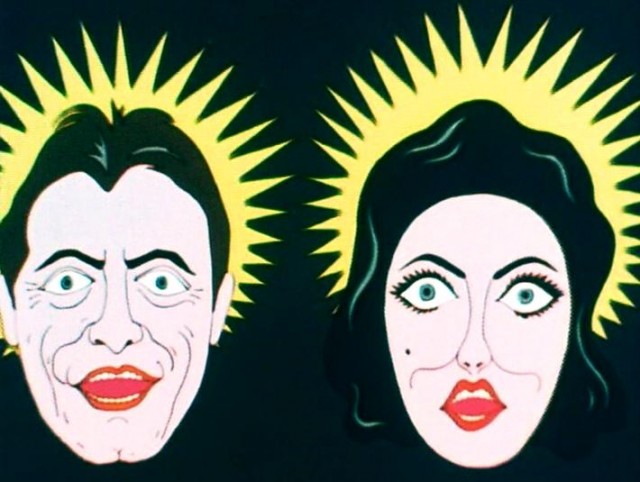
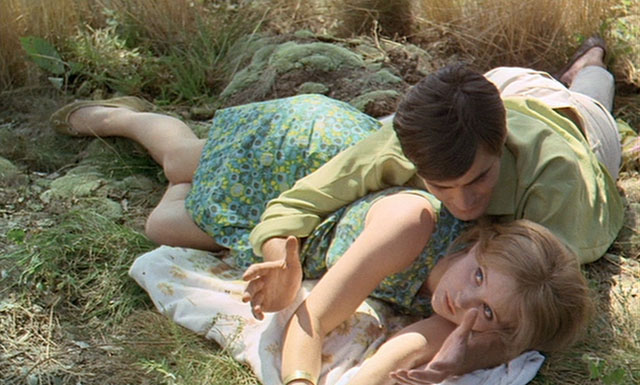
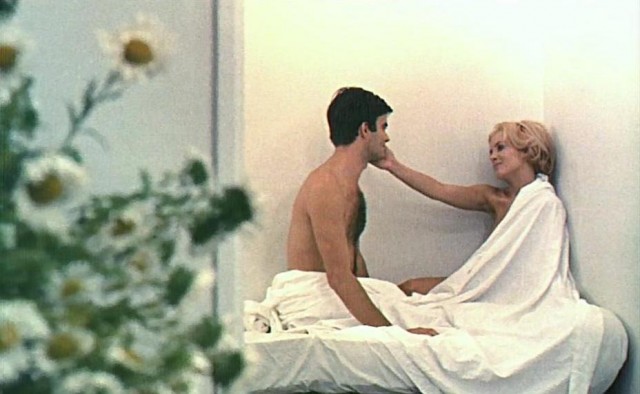
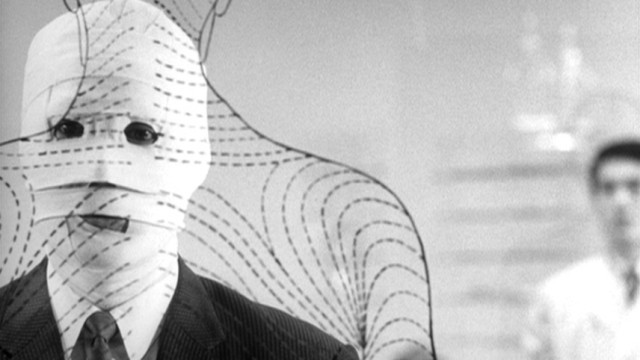
 Kôbô Abe and director Hiroshi Teshigahara collaborated on five films together, including the marvelously existential Woman of the Dunes in 1964 and The Face of Another two years later. In The Face of Another, Tatsuya Nakadai (The Human Condition, Kill!) stars as Okuyama, a man whose face has virtually disintegrated in a laboratory accident. He spends the first part of the film with his head wrapped in bandages, a la the Invisible Man, as he talks about identity, self-worth, and monsters with his wife (Machiko Kyo), who seems to be growing more and more disinterested in him. Then Okuyama visits a psychiatrist (Mikijirô Hira) who is able to create a new face for him, one that would allow him to go out in public and just become part of the madding crowd again. But his doctor begins to wonder, as does Okuyama, whether the mask has actually taken control of his life, making him as helpless as he was before. Abe’s remarkable novel is one long letter from Okuyama to his wife, filled with utterly brilliant, spectacularly detailed examinations of what defines a person and his or her value in society. Abe wrote the film’s screenplay, which tinkers with the time line and creates more situations in which Okuyama interacts with people; although that makes sense cinematically, much of Okuyama’s interior narrative, the building turmoil inside him, gets lost. Teshigahara once again uses black and white, incorporating odd cuts, zooms, and freeze frames, amid some truly groovy sets, particularly the doctor’s trippy office, and Tōru Takemitsu’s score is ominously groovy as well. As a counterpart to Okuyama, the film also follows a young woman (Miki Irie) with one side of her face severely scarred; she covers it with her hair and is not afraid to be seen in public, while Okuyama must hide behind a mask. But as Abe points out in both the book and the film, everyone hides behind a mask of one kind or another. The Face of Another is having a special screening May 17 at 3:00 at the Museum of the Moving Image and will be followed by a conversation between Nakadai and Terrence Rafferty; advance tickets are available now.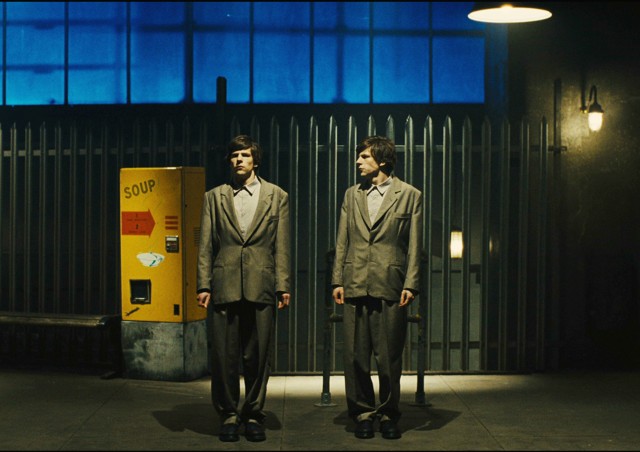
 Jesse Eisenberg stars as a lonely, timid young man trapped in an existential nightmare with his mirror-image doppelgänger in Richard Ayoade’s brilliant sophomore feature, The Double, a dark, imaginative adaptation of Fyodor Dostoyevsky’s 1846 novella, itself a riff on the work of Nikolai Gogol. “It was a little before eight o’clock in the morning when Titular Concillor Yakov Petrovich Golyadkin woke from a long sleep, yawned, stretched, and finally opened his eyes completely. He lay motionless in bed, however, for a couple of minutes more, like a man who is not yet quite sure whether he is awake or still asleep, and whether what is happening around him is real and actual or only the continuation of his disordered dreams,” Dostoyevsky’s tale begins, and Ayoade (Submarine) captures that confusion with respectful nods to Terry Gilliam’s Brazil, Orson Welles’s Kafka adaptation, The Trial, Jean-Luc Godard’s Alphaville, and David Lynch’s Eraserhead. Eisenberg (The Social Network, The Squid and the Whale) is first seen as James Simon, an intelligent but absurdly shy office drone who has trouble dealing with people; he spies on coworker Hannah (Mia Wasikowska) through a telescope, fumbles his words whenever his boss (Wallace Shawn) comes around, remains utterly silent when his excellent work goes unnoticed, and doesn’t complain when he is regularly mistreated by a gruff waitress (Cathy Moriarty) at a local diner. Even the elevator and his mother (Phyllis Somerville) don’t like him. As his identity continues to shrink, he is blindsided by the arrival of Simon James (Eisenberg), who is everything James Simon isn’t: suave, sophisticated, sexy, and ambitious, willing to say or do whatever it takes to get ahead at the office — and into young women’s apartments.