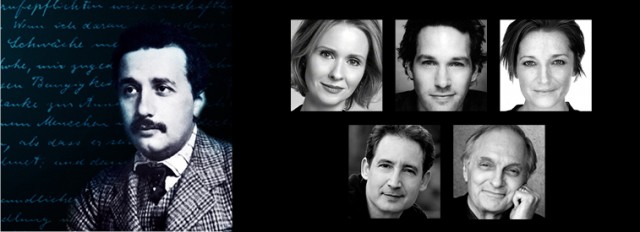
Alan Alda pays tribute to Albert Einstein with star-studded cast at 2014 World Science Festival
Multiple locations
May 28 – June 1
Free – $30
www.worldsciencefestival.com
Science is under ever-more fire from those who believe it is just a collection of opinions and unproven theories, not fact-based analysis and understanding; the World Science Festival seeks to do something about that, “cultivating a general public informed by science, inspired by its wonder, convinced of its value, and prepared to engage with its implications for the future.” The seventh annual multidisciplinary festival takes place May 28 through June 1, with readings, lectures, performances, panel discussions, interactive displays, and much more, featuring such WSF stalwarts as cofounder Brian Greene and regular presenter Alan Alda. Among the topics being examined are family trees, ales and chocolate, quantum physics, time, poison, the human brain, the Higgs boson, DNA, and the Big Bang. Although some of the programs are already sold out, there might be tickets available at the door; in addition, there are plenty of free events that require no advance registration. Below are only some of the highlights.
Wednesday, May 28
“Dear Albert,” staged reading by Alan Alda with Paul Rudd, Cynthia Nixon, and Francesca Faridany, directed by Mark Brokaw, followed by a discussion with Alda and Brian Greene, NYU Skirball Center, 8:00
Wednesday, May 28
through
Saturday, May 31
“Eye of the Storm” The Science of Weather,” with Hilary Peddicord, Xichen Li, David Holland, and Denise Holland, Gould Plaza, NYU, free, 10:00 am – 5:00 pm
Wednesday, May 28
through
Sunday, June 1
“A Comet ‘Lands’ in Brooklyn,” with Artur B. Chmielewski and NASA Jet Propulsion Lab scientists, educators, and designers discussing the Rosetta Mission, Pier 1, Brooklyn Bridge Park, free, 10:00 am – 5:00 pm (12 noon – 4:00 on June 1)
Thursday, May 29
“Science and Story: The Write Angle,” with Sean Carroll, E. L. Doctorow, Jo Marchant, Joyce Carol Oates, and Steven Pinker, moderated by John Hockenberry, Great Hall of the Cooper Union, $15-$30, 5:30
“Gravity: Watch It with Astronauts under the Space Shuttle,” first-ever screening in the Space Shuttle Pavilion of the Intrepid Sea, Air & Space Museum, followed by a discussion with Bobak Ferdowsi, Sandra Magnus, and John M. Grunsfeld, moderated by Lynn Sherr, $15-$30, 8:00
Friday, May 30
“Downloading the Brain,” with John Donoghue, Michel M. Maharbiz, George Church, and Bijan Pesaran, moderated by Gary Marcus, Grand Hall, NYU Global Center, $15-$25, 1:30
“Scientific Kitchen: Biophysics? More Like Pie-o-Physics!,” with Amy Rowat, Christina Tosi, and Bill Yosses, Momofuku Milk Bar Williamsburg, 6:30
Saturday, May 31
“The Search for Life: The 20 Year Horizon,” with Dimitar Sasselov, Sara Seager, and Jack W. Szostak, moderated by Mario Livio, Grand Hall, NYU Global Center, $15-$25, 4:00
“The Bionic Body: Going Wireless,” with Joseph J. Fins, John Donoghue, P. Hunter Peckham, and Jennifer French, moderated by Bill Blakemore, Grand Hall, NYU Global Center, $15-$25, 6:00
Saturday, May 31
and
Sunday, June 1
“Science Hack Day: Science in the City,” with Luke DuBois, Dana Karwas, Nancy Hechinger, Michael Flowers, Jin Montclare, and Julie Hecht, hosted by François Grey, MAGNET, NYU School of Engineering, free, 10:00 am
Sunday, June 1
The Ultimate Science Street Fair, with focuses on space, weather, and robots, Washington Square Park, free, 10:00 am – 6:00 pm
“Cool Jobs,” with Chad Jenkins, Michael J. Massimino, Becca Peixotto, Hannah Morris, and Mark Siddall, moderated by “Science Bob” Pflugfelder, NYU Skirball Center, $15-$30, 1:00
Kids’ Science Storytime: Meet the Authors, with Steve Metzger, “Science Bob” Pflugfelder, and Deborah Heiligman, NYU Kimmel Center, second floor, free, 2:00 – 4:00
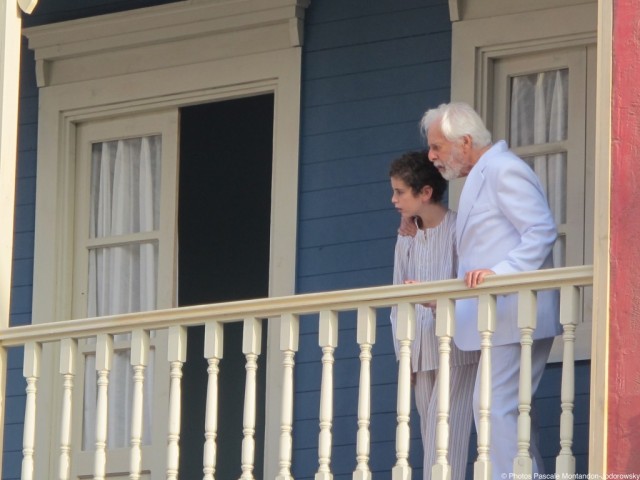
 Cult legend Alejandro Jodorowsky’s first film in twenty-three years is a deeply intimate, visually stunning journey into his childhood, a surreal Amarcord as only he can make it. In the gorgeous The Dance of Reality, the man behind such midnight-movie classics as 1970’s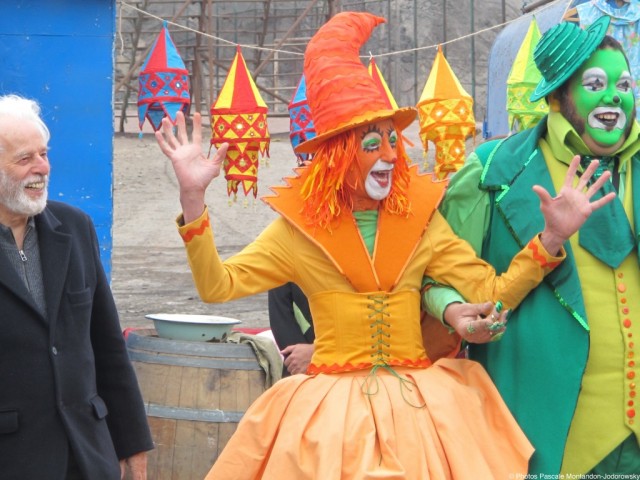
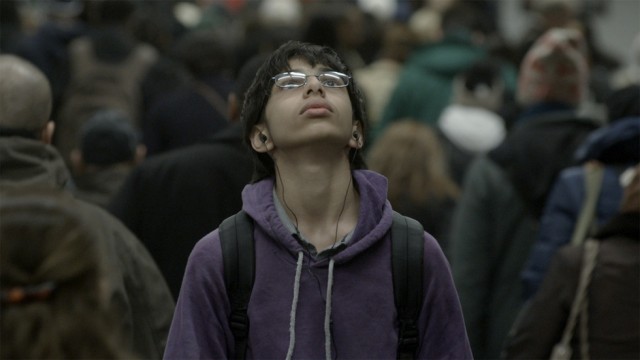
 It’s a sight New Yorkers see all too often: flyers on the streets and in the subways seeking help in finding a missing man, woman, or child, who is often autistic. Sometimes they have happy endings, like when fourteen-year-old Eliceo Cortez returned to his mother’s arms in Brooklyn. But other times, the search ends in tragedy, as when the remains of fourteen-year-old Avonte Oquendo were discovered in the East River. In his solo narrative feature debut, director Sam Fleischner tells the compelling story of thirteen-year-old Ricky (Jesus Sanchez-Velez), a boy with Asperger syndrome who wanders away one day after school, riding the subways while his mother, Mariana (Andrea Suarez Paz), desperately but calmly tries to find him. Mariana’s husband, Ricardo Sr. (Tenoch Huerta Mejía), is an illegal immigrant working on a job upstate, so he can’t come down to help, and she is hesitant to deal with the police, for obvious reasons. Meanwhile, her relationship with her teenage daughter, Carla (Azul Zorrilla), is strained because it was Carla’s job to pick up Ricky from a school that believes he would be better off in a special program elsewhere. Fleischner combines elements of his codirecting feature debut, Wah Do Dem, a fish-out-of-water tale about a Brooklyn musician who finds a new life in Jamaica, with Below the Brain, his visually stirring documentary about Brooklyn’s West Indian American Day Carnival, in the lovingly rhythmic, poetically paced Stand Clear of the Closing Doors. Fleischner cuts between Mariana’s New York City, where she has to continue to work as a cleaning woman for wealthy families even as her boy is missing, and Ricky’s skewed yet beautiful view of a city, both inviting and frightening, that he is lost in.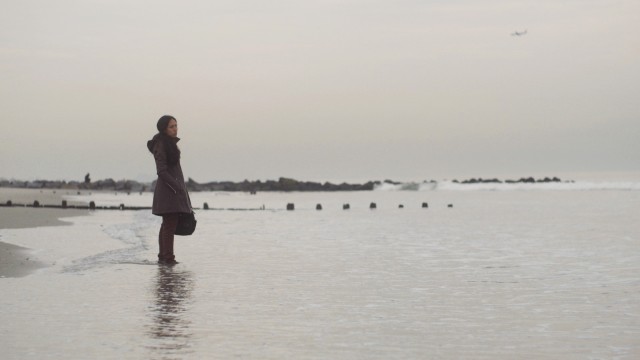
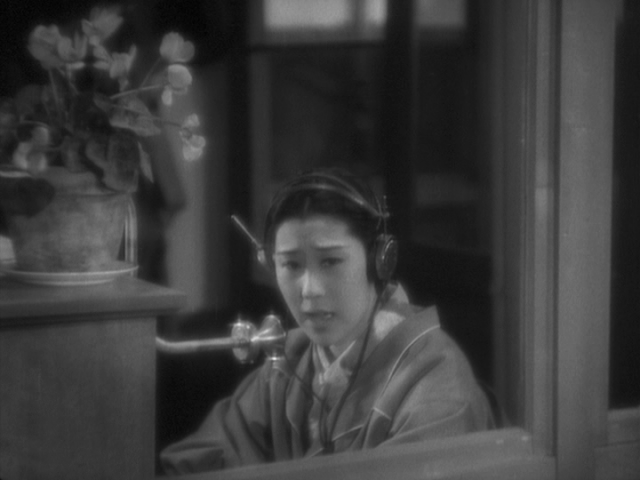

 During Yom Kippur and the Passover seder, Jews around the world proclaim that “next year, may we be in Jerusalem.” In David Gaynes’s charming documentary, Next Year Jerusalem, this dream comes true for eight men and women at the Jewish Home for the Elderly in Fairfield, Connecticut. In 2011, JHE president and CEO Andrew Banoff and Rabbi Stephen Shulman arranged for eight of their residents to make a once-in-a-lifetime ten-day trip to Israel; what made this journey different, and very special, is that the group had an average age of ninety-one, ranging from Sandy Levin, eighty-two, to Bill Wein, ninety-seven. With all their infirmities and medications, canes and wheelchairs, they prepare for a great adventure, with Gaynes behind the camera himself as they share stories about their lives, contemplate their deaths, and express their sheer joy as their anticipation grows. Shortly before they leave, Rabbi Shulman has to explain that they have to be ready not only for someone to not be able to make it to Israel but, more critical, one of them not being able to come home, given their ages and health situations. But that isn’t going to stop any of them, especially not ninety-three-year-old Selma Rosenblatt, who isn’t about to let her twisted body get in the way. Meanwhile, eighty-seven-year-old Regine Arouette, who isn’t Jewish, looks forward to visiting several Christian landmarks. (The others on the trip are Helen Downs, ninety-one; Leslie Novis, ninety; Harry Shell, ninety-two; and Bill’s wife, Juna Wein, eighty-nine.) When they all head off to Israel, accompanied by such lovingly involved caretakers as Donnette Banton, thirty-six-year-old Gaynes (Saving Hubble, Keeper of the Kohn) keeps his camera focused on the senior citizens as they visit historic sites, placing their fabulous experience front and center. Next Year Jerusalem is a charming and delightful celebration of life at the end of life, a spirit-lifting film that shows that you’re never too old to say no. “Where are the Israels for which we personally have yet to travel?” Gaynes, who also served as editor and producer, asks in his director’s statement. Next Year Jerusalem opens May 16 at the Quad, with all weekend screenings followed by a Q&A with Gaynes.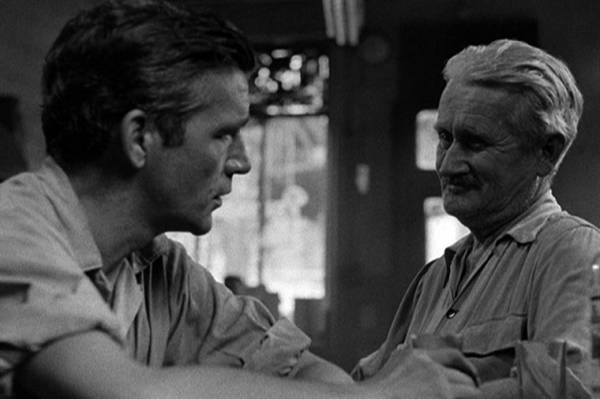
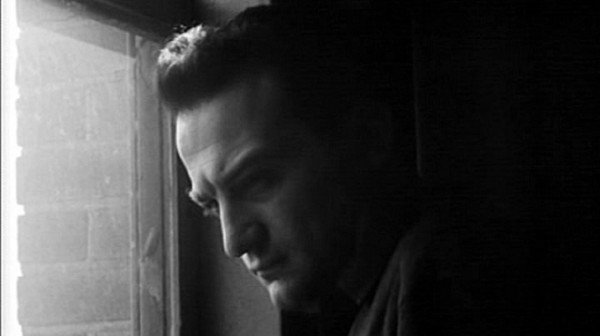
 One of the greatest cinematic documents ever made about New York, Lionel Rogosin’s On the Bowery is playing at Anthology Film Archives on May 17 and 19 as part of “From Mae West to Punk: The Bowery on Film,” a three-day series that includes feature-length works and shorts that take place in and around one of the most famous thoroughfares in the world. The recent, stunning 35mm restoration of On the Bowery offers a new look at this underground classic, which caused a stir upon its release in 1956, winning prizes at the Venice Film Festival while earning criticism at home for daring to portray the grim reality of America’s dark underbelly. After spending six months living with the poor, destitute alcoholics on Skid Row as research, idealistic young filmmaker Rogosin spent the next four months making On the Bowery, a remarkable examination of the forgotten men of New York, ne’er-do-wells who can’t find jobs, sleep on the street, and will do just about anything for another drink. Rogosin centers the film around the true story of Ray Salyer, a journeyman railroad drifter stopping off in New York City seeking temporary employment. Salyer is quickly befriended by Gorman Hendricks, who not only shows Salyer the ropes but also manages to slyly take advantage of him. Although the film follows a general structure scripted by Mark Sufrin, much of it is improvised and shot on the sly, in glorious black-and-white by Richard Bagley. The sections in which Bagley turns his camera on the streets, showing the decrepit neighborhood under the El, set to Charles Mills’s subtle, jazzy score and marvelously edited by Carl Lerner, are pure poetry, yet another reason why On the Bowery is an American treasure. The film is screening with the 1964 short How Do You Like the Bowery?, in which Alan Raymond and Dan Halas pose the title question to Bowery denizens.