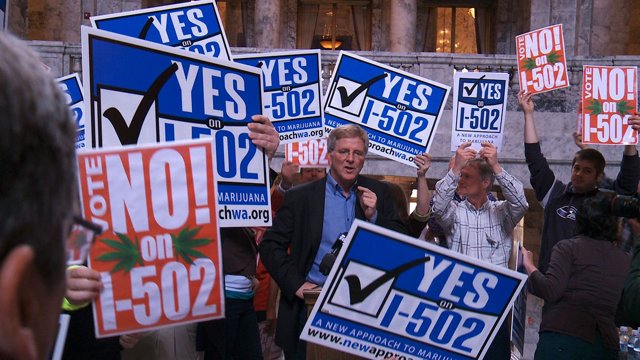
Rick Steves leads the fight for I-502 in documentary about battle over marijuana legalization in Washington State
EVERGREEN: THE ROAD TO LEGALIZATION (Riley Morton, 2013)
Cinema Village
22 East 12th St. between University Pl. & Fifth Ave.
Opens Friday, June 13
212-924-3363
www.evergreendocumentary.com
www.cinemavillage.com
 In 2012, a fierce battle over the legalization of marijuana took place in Washington State, but it turned out that the most intense fighting was not between Democrats and Republicans, liberals and conservatives, or even drug users and the “Just Say No” contingent. Instead, the controversial Initiative 502 pit medical marijuana users and purveyors against a dedicated group of men and women from across the spectrum who believed that I-502 was a necessary first step in the decriminalization of pot. Producer-director Riley Morton and producer-writer Nils Cowan take viewers behind the scenes of the hotly contested campaign in Evergreen: The Road to Legalization. The pro-I-502 group is spearheaded by ACLU drug policy director Alison Holcomb; such current and former U.S. and city attorneys as John McKay and Pete Holmes; state representative Mary Lou Dickerson; travel writer and television host Rick Steves; and substance abuse specialist Dr. Roger Roffman, who says that I-502 “not only tightly regulates where marijuana is produced and how it’s sold and to whom it’s sold; it also creates, through earmarking, programs for education and prevention and treatment and research. All of this amounts to a public health alternative to prohibition.” On the other side are Cannibis Action Coalition executive director Steve Sarich, 4Evergreen Group cofounders Josh Berman and Ramel Williams, Seattle Hempfest director Vivian McPeak, former medical marijuana dispensary owner Julie Istvan, Snohomish County Drug & Gang Task Force commander Pat Slack, and, most vehemently, defense attorney and activist Doug Hiatt, who claims, “The entire thing is about getting a win, getting this first victory so you can trumpet it and say it even if it’s just a propaganda victory.” The central issue concerns the initiative’s effect on the medical marijuana industry, both sellers and users, including a heated debate over a DUI provision that reaches a pinnacle when a group against I-502 attempts to shout down a “Vote Yes” rally in the state capitol in Olympia. Morton’s feature-length debut is a compelling look inside not only the war on drugs but the grueling process of civic reform in today’s culture, a primer on how difficult it is to institute real change in contemporary America.
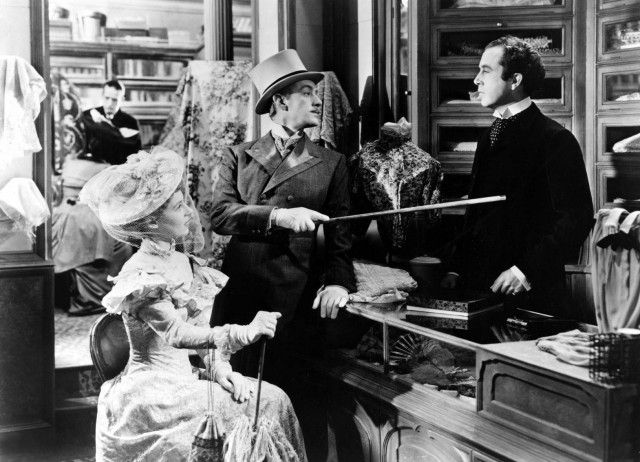
 After being spurned by their aristocrat family and watching the wealthy D’Ascoynes turn their back on his mother even in death, Louis Mazzini (Dennis Price) decides that he is not going to let them get away with such awful treatment. So Louis, the tenth Duke of Chalfont, comes up with a plot to get rid of the eight D’Ascoynes standing between him and the dukedom. In Robert Hamer’s wickedly funny black comedy Kind Hearts and Coronets, each one of those haughty D’Ascoynes is played by Alec Guinness, young and old, male and female, to deservedly great acclaim. The film is told in flashback as an elegant, distinguished Louis is writing his memoirs in prison on the eve of his execution. He eloquently describes the details of his multiple murders, as well as his unending yearning for the questionably prim and proper Sibella (Joan Greenwood), who continues her flirtations with him even after she marries Louis’s former schoolmate Lionel (John Penrose), as well as his relationship with Edith (Valerie Hobson), the wife of one of the D’Ascoynes he kills on his march to power, glory, and revenge. But his hubris leads to his downfall — and one of the most delicious twist endings in film history. Based on Roy Horniman’s 1907 novel, Israel Rank: The Autobiography of a Criminal, and adapted by Hamer (The Spider and the Fly, School for Scoundrels) and cowriter John Dighton (The Barretts of Wimpole Street), Kind Hearts and Coronets takes on British high society, class conflict, royalty, and hypocrisy with a brash dose of cynical humor and more than a hint of eroticism, pushing the sexual envelope amid all the laughter. Price is terrific as the dapper Louis, but it’s impossible to steal the show from Guinness, who is a riot as the succession of doomed D’Ascoynes. Guinness was originally asked to play four of the roles but suggested that he do them all, and thankfully Ealing Studios agreed; one of the key shots in the film is when six of the D’Ascoynes are seen together. Kind Hearts and Coronets, which was turned into the Tony-winning musical
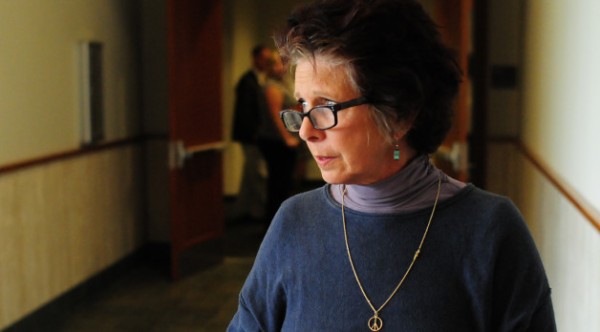
 More than thirty years after Faith McNulty’s book The Burning Bed, which was adapted into a powerful and influential 1984 film starring Farrah Fawcett, Private Violence shows that there is still a long way to go in dealing with the very real issue of battered women. In the moving, emotional documentary, director-producer Cynthia Hill tells the story of Deanna Walters, an abused North Carolina housewife working with advocates Kit Gruelle and Stacy Cox to try to put Deanna’s dangerous and abusive husband behind bars so she can have a life with her young daughter. It’s horrifying to see photos of Deanna’s severely beaten face and body, then hear that law enforcement agencies and the legal system still often regard such cases as minor domestic disputes that do not require arrests and imprisonment. At the center of the controversy is the prevailing attitude that it is somehow the woman’s fault for not simply leaving her abusive partner, instead returning again and again for more physical and psychological torture, a premise that is proved wrong in many ways. Hill (The Guest Worker, Tobacco Money Feeds My Family) concentrates on the main narrative, not talking heads and statistics, following the developments procedurally, while more is revealed about Kit as well, who suffered her own torment at the hands of an abusive husband.