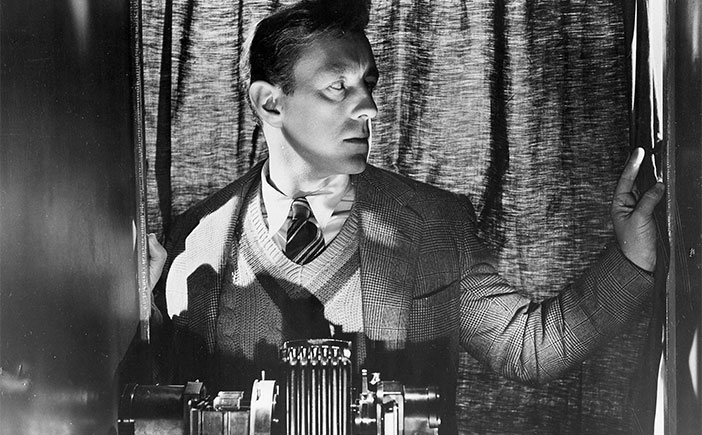
Goofy chemist Sid Stratton (Alec Guinness) is looking to revolutionize the textile industry in the Ealing classic THE MAN IN THE WHITE SUIT
THE MAN IN THE WHITE SUIT (Alexander Mackendrick, 1951)
Film Forum
209 West Houston St.
Friday, June 20, and Saturday, June 21, 2:20, 6:00, 9:45
Series continues through July 3
212-727-8110
www.filmforum.org
 Alexander Mackendrick’s splendid 1951 Ealing comedy The Man in the White Suit is a hysterical Marxist fantasy about corporations, unions, and the working man that doesn’t feel dated in the least. Alec Guinness stars as Sidney Stratton, a brilliant scientist relegated to lower-class jobs at textile mills while he works feverishly on a secret product that he believes will revolutionize the industry — and the world. After being fired by Michael Corland (Michael Gough) at one factory, Sid goes over to Birnley’s, run by Alan Birnley (Cecil Parker, whose voiceover narration begins and ends the film). As Sid develops his groundbreaking product, he also develops a liking for Birnley’s daughter, Daphne (Joan Greenwood), who is preparing to marry Corland. Meanwhile, tough-talking union leader Bertha (Vida Hope) also takes a shine to the absentminded chemist, who soon finds himself on the run, chased by just about everyone he’s ever met, not understanding why they all are so against him. Guinness is at his goofy best as Sid, a loner obsessed with the challenge he has set for himself; his makeshift, Rube Goldberg-like chemistry sets are a riot, bubbling over with silly noises like they’re in a cartoon. But at the heart of the film lies some fascinating insight on the nature of big business that is still relevant today. Nominated for an Oscar for Best Screenplay, The Man in the White Suit is an extremely witty film, expertly directed (and cowritten) by Mackendrick, who would go on to make such other great pictures as The Ladykillers and Sweet Smell of Success. It’s easy to imagine that if someone in a textile mill today came up with a similar invention as Stratton’s, the same arguments against it would arise, suppressing progress in favor of personal interest and preservation. The Man in the White Suit is being shown June 20-21 at Film Forum in a double feature with Charles Crichton’s delightful heist comedy The Lavender Hill Mob — both in 35mm restorations — as part of “Alec Guinness 100,” celebrating Sir Alec’s centennial with screenings of more than two dozen of his films, including The Bridge on the River Kwai, The Ladykillers, Our Man in Havana, Lawrence of Arabia, The Scapegoat, The Prisoner, and the 1997 Special Edition of Star Wars Episode IV: A New Hope.
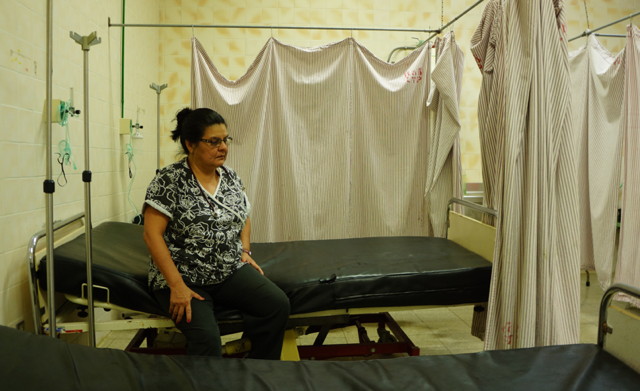
 Alessandra Zeka and Holen Sabrina Kahn delve into the very real and personal impact of Nicaragua’s total ban on abortion as seen through the eyes of a doctor forced to comply with the law in the eye-opening documentary A Quiet Inquisition. In Hospital Aleman Nicaraguense, Dr. Carla Cerrato must regularly deal with patients, many of whom are teenagers, whose pregnancies could severely harm or even kill them. But since 2006, when former president Daniel Ortega of the Sandinista National Liberation Front ran for reelection in Nicaragua, all kinds of abortions are illegal, including cases involving rape, incest, and the health of the mother and fetus. The film shows Dr. Cerrato counseling pregnant girls, attempting to come up with options that can save their lives through what are known as therapeutic abortions, but she is often thwarted by her colleagues. They refuse to carry out her orders even when the live birth of the baby is considered impossible and the death of the mother a certainty, fearing their own prosecution and imprisonment. “We are at a crossroads because of a law that impedes us from inducing a pregnancy or making a determination that can prevent further complications in the mother,” says Dr. Zamora, another OBGYN at the public hospital. He later adds, “I have fear too. My wife is pregnant. If any of these complications happen to her, as a doctor my hands would be tied. But as a person I would decide to act on it differently.” While Dr. Cerrato applauds the Sandinista revolution for helping her and other women become doctors in the first place, she now blames President Ortega and the FSLN for making deals with the Catholic Church, trading votes for the rights of women to control their own bodies. As the title of the film implies, Dr. Cerrato, a calm, good-natured woman with a realistic perspective on the situation, is fighting back in a quiet way; anything louder is liable to place her career in jeopardy.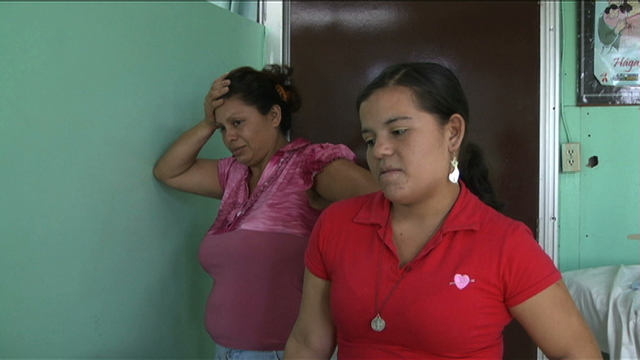
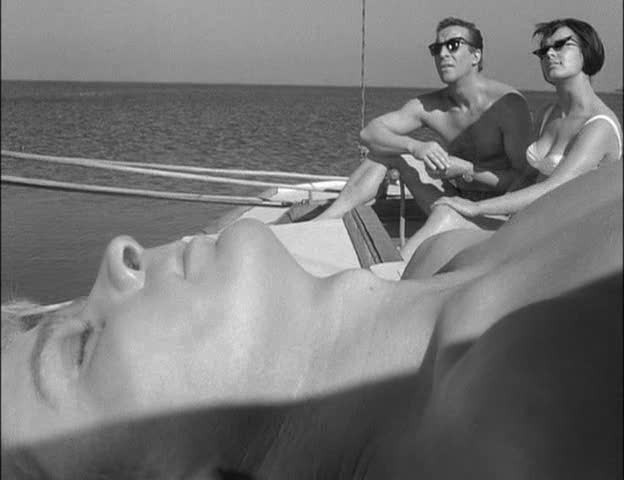

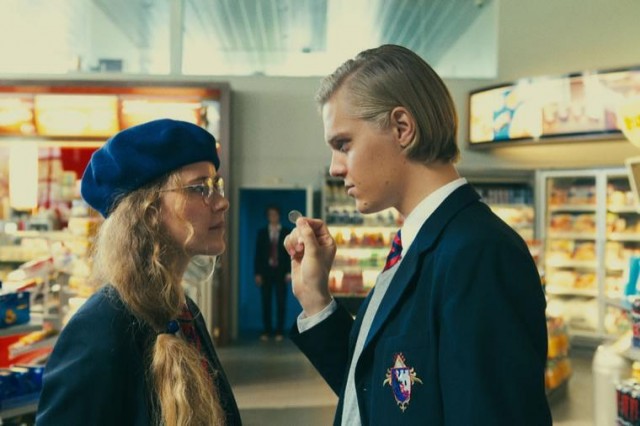
 Journalist and documentarian Frauke Finsterwalder’s twisted and dark feature-length fiction debut, Finsterworld, paints a rather unflattering portrait of a modern-day Germany still haunted by World War II. Written by Finsterwalder (Die große Pyramide, Weil der Mensch ein Mensch ist) and her author husband, Christian Kracht, the black comedy follows a dozen interrelated characters, each with his or her own personal hang-ups and fetishes, as they go through one very wild and crazy day. Claude Petersdorf (Michael Maertens) is a pedicurist who has an unnatural desire for the feet of Frau Sandberg (Margit Carstensen), a wheelchair-bound resident of an old age home. Her son, Georg Sandberg (Bernhard Schütz), and his wife, Inga (Corinna Harfouch), are a wealthy, self-obsessed couple who are embarrassed to be Germans. Their son, Maximilian (Jakub Gierszał), is a spoiled brat who, with his best friend, Jonas (Max Pellny), bullies quirky-nerdy fellow students Natalie (Carla Juri) and Dominik (Leonard Scheicher) during a class trip to a concentration camp led by teacher Lehrer Nickel (Christoph Bach), who thinks the kids can actually learn something from the sins of the past. Tom (Ronald Zehrfeld) is a cop who likes to put on a different kind of uniform at times — he’s a closet Furry. Tom’s girlfriend, Franziska Feldenhoven (Sandra Hüller), is a frustrated documentary filmmaker stuck with a boring subject. And Einsiedler (Johannes Krisch) is a hermit who captures and cares for a forest raven. Various odd actions intersect, bringing the diverse cast of characters together in strange, ultimately dangerous ways as they all keep picking at their scabs, both physical and psychological.