Woody Allen pays tribute to the city he loves in one of his best films, MANHATTAN
MANHATTAN (Woody Allen, 1979)
MoMA Film, Museum of Modern Art
The Lewis B. and Dorothy Cullman Education and Research Building
4 West 54th St. between Fifth & Sixth Aves.
August 27-29, 1:30
Tickets: $12, in person only, may be applied to museum admission within thirty days, same-day screenings free with museum admission, available at Film and Media Desk beginning at 9:30 am
212-708-9400
www.moma.org
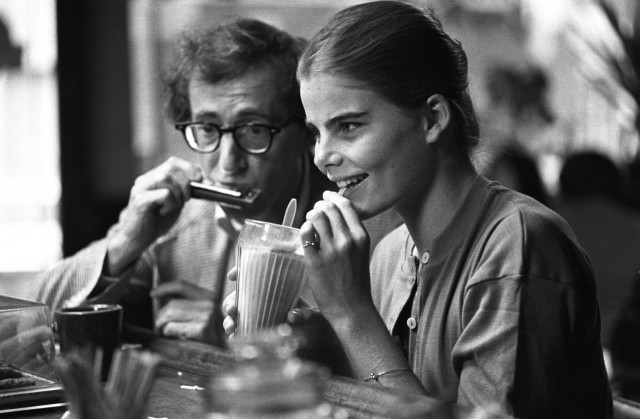
 Woody Allen’s Manhattan opens with one of the most beautiful tributes ever made to the Big Apple, a lovingly filmed black-and-white architectural tour set to the beautiful sounds of George Gershwin’s “Rhapsody in Blue.” Once again collaborating with screenwriter Marshall Brickman, master cinematographer Gordon Willis, and Oscar-winning actress Diane Keaton, Allen’s tale of a nebbishy forty-two-year-old two-time divorcee who takes up with a seventeen-year-old ingénue (Mariel Hemingway) is both hysterically funny and romantically poignant, filled with classic dialogue (Yale: “You think you’re God.” Isaac: “I gotta model myself after someone.”) and iconic shots of city landmarks. After quitting his job as a successful television writer, Isaac moves to Brooklyn, where he has to cope with brown water and expensive taxi rides, among other dispiriting things. Meanwhile, against his better judgment, he develops a liking for the elitist snob Mary Wilkie (Keaton), who is seeing his best friend, the married Yale (Michael Murphy); calls her therapist Donnie; and counts among the overrated Carl Jung, Lenny Bruce, Norman Mailer, and van Gogh, which she pronounces “van Goch.” And then he has to deal with one of his ex-wives (Meryl Streep), who left him for another woman (Ann Byrne) and is writing an intimate account of their failed marriage. Of course, it’s impossible to watch Manhattan without thinking about Allen’s relationship with Soon Yi (they’ve now been together for nearly two dozen years), but if you get past that, you’ll rediscover a wonderful, intelligent comedy about men and women neatly wrapped up in a gorgeous love letter to Gotham. “He adored New York City, he idolized it all out of proportion — no, make that, he romanticized it all out of proportion,” Isaac says at the beginning of the film, which was nominated for two Oscars (Hemingway as Best Supporting Actress and Allen and Brickman for Best Original Screenplay).
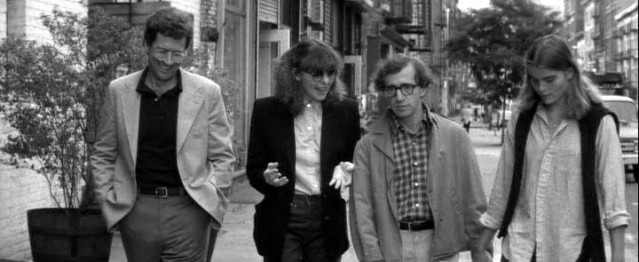
Michael Murphy, Diane Keaton, Woody Allen, and Mariel Hemingway star in Allen’s love letter to New York City
The glorious Gershwin music is performed by the New York Philharmonic, conducted by Zubin Mehta, and the Buffalo Philharmonic, under the baton of Michael Tilson Thomas. Be on the lookout for cameos by Karen Allen, Mark Linn-Baker, David Rasche, Wallace Shawn, Michael O’Donoghue, Frances Conroy, Bella Abzug, Zabar’s, the Queensboro Bridge, the Empire Diner, the Hayden Planetarium, Bloomingdale’s, MoMA’s Sculpture Garden, the Russian Tea Room, the Dalton School, John’s Pizza, the Guggenheim, and Elaine’s, among so many others. Manhattan is screening August 27-29 at 1:30 as part of the MoMA series “An Auteurist History of Film,” concluding its current season.
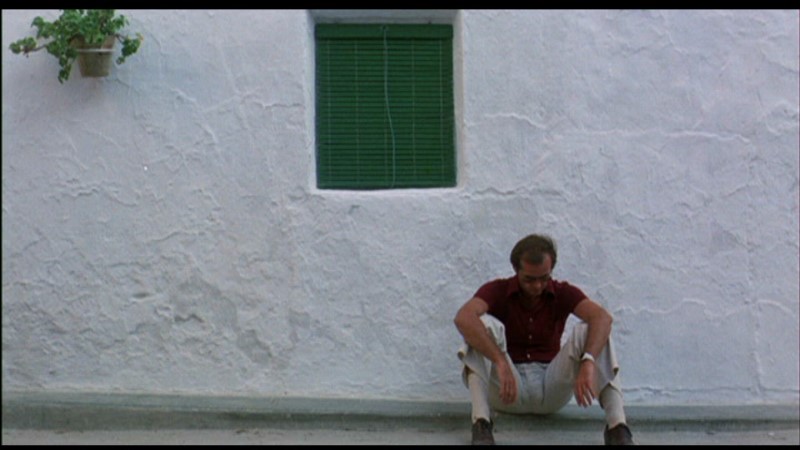
 Nominated for the Palme d’Or in Cannes in 1975, Michelangelo Antonioni’s existential suspense thriller is a fascinating character study of a lost, lonely man. Jack Nicholson stars as Locke, a successful, well-respected journalist who is researching a story on the guerrilla movement in Chad. Life isn’t as fun and exciting as it used to be for him, as witnessed by his utter helplessness after his car gets stuck in the sand. Upon returning to his hotel room, he discovers that his neighbor, Robertson (Chuck Mulvehill), is dead — and he decides to switch places with him, to stop being Locke and instead live a completely different existence. Even when he finds out that Robertson was involved in international espionage and gun running, Locke continues the deception, traveling dangerously through England, Germany, and Spain with a free-spirited young architecture student (Maria Schneider) while his wife (Jenny Runacre) and business associate (Ian Hendry) — and the police — try to find him. The Passenger is marvelously slow-paced, never in a hurry to make no point about just what the point of it all is. Nicholson glides through the film with an unease that is as unnerving as it is intoxicating as he struggles to find his way in life, a cinematic representative of something that is within each of us. The Passenger is screening in 35mm August 26 at 9:30 (followed by complementary Prym Rum drinks) as part of Nitehawk Cinema’s “One Nite Only” series and “Journalists in Film,” a collaboration with
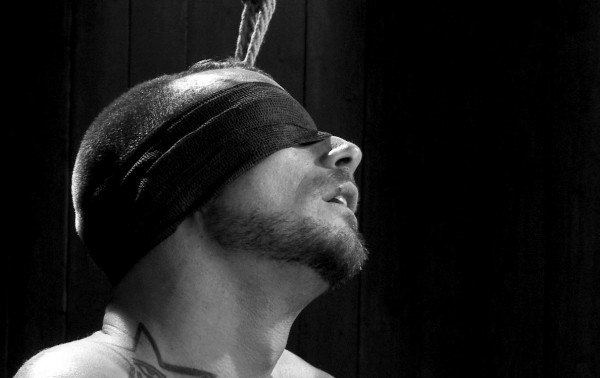
 In Kink, cinematographer and documentarian Christine Voros takes viewers behind the scenes of Kink.com, a hugely successful subscription website that specializes in fetish and BDSM (Bondage & Disclipline / Dominance & Submission / Sadism & Masochism) videos. Started in 1997 by bondage enthusiast Peter Acworth, the company, located in the two hundred thousand square foot, one-hundred-year-old San Francisco Armory, Kink.com attempts to offer a different kind of pornography for people with more discerning tastes, making videos that are as truthful and authentic as possible even when they appear to be what some would consider dangerous, depraved, and, most important, abusive to women. What makes Kink.com unique is that the stars of the videos — who are always referred to as models, not actors — can help guide the action, doing only those things that they want to do, with express instructions that all their reactions be real and to improvise as necessary. Whether pleasure or pain, there is no faking going on, and the shoot can be stopped at any time by anyone on the set if things appear to be getting out of hand, with aftercare being an important part of the process. And there are rarely ever silly plot lines and embarrassing dialogue; these videos go straight to what Kink.com’s customers — as well as the models and directors — want to see, and Voros shows it all, rather graphically. (Get ready for spanking, flogging, chaining, slapping, punching, tying up, choking, clamping, tweaking — and just wait till you get a load of the sex machines that are used on these more-than-willing and ultimately extremely satisfied subjects.)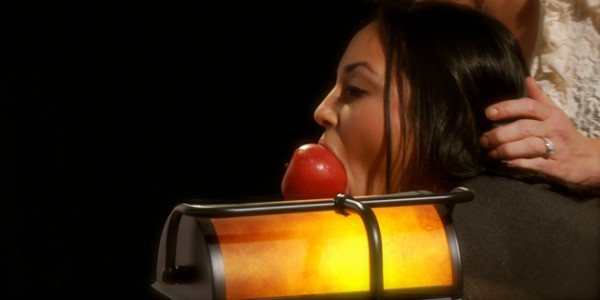
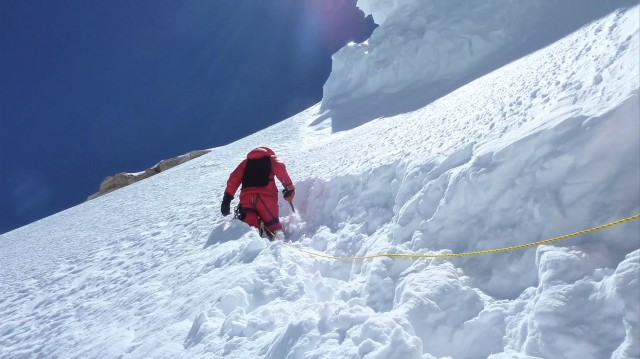
 In 1909, Prince Luigi Amedeo, the Duke of the Abruzzi, sought to climb to the summit of K2, the second highest mountain in the world after Everest, bringing with him writer Filippo de Filippi and photographer Vittorio Sella to document their journey. To celebrate the centennial of that seminal event, alpinist and mountain guide Fabrizio Zangrilli gathered a team of climbers to attempt to reach the top of K2 in 2009, bringing along first-time director Dave Ohlson to capture their daring adventure. Situated in the Karakoram mountain range along the Pakistan-China border, K2 — one of the fourteen legendary “eight-thousanders” (mountains of more than eight thousand meters) — stands 8,611 meters tall, challenging climbers with a death rate much higher than that of Everest. “The will to just try something big, something dangerous, something extraordinary — it’s part of who we are,” says one member of the team, which includes Zangrilli, Canadian mountain guide Chris Szymiec, Austrian alpinist Gerlinde Kaltenbrunner, British mountaineer Jake Meyer, and German cameraman David Göttler. As they make their way across the treacherous Karakoram Highway and through Skardu, the Baltoro Glacier, and Concordia, Ohlson cuts between thrilling still photos and film footage from the 1909 trip and the 2009 attempt, delving into the history of the spectacularly beautiful area and emphasizing how difficult it is to reach K2’s summit. “Everest and K2 aren’t even the same sport,” Szymiec says. Joined by a group of porters, they find obstacles every step of the way — and it gets even more threatening the closer they get. The film reveals the depth of the human spirit and the fierce power of nature, especially when the team has to stop when a friend dies while skiing down the mountain. Watching the seventy-five-minute documentary, you just might consider taking on K2 yourself someday — and then you’ll quickly change your mind and settle back comfortably into your chair. K2: Siren of the Himalayas opens August 22 at the Quad, with Ohlson and Jason Reid, one of the producers and editors, participating in Q&As following the 4:30 and 8:05 shows on Friday and Saturday.